

Sunday saw me visit the University of Melbourne with my two daughters and their friends. I drove down to Melbourne because the local train line was out of service and replaced with a bus. As someone who uses the train to Melbourne infrequently, it is surprising how often it is replaced with a bus when I do want to use it.
On Wednesday and Thursday, I attended the Learning First conference in Sydney about curriculum and how we might improve it in Australia. A highlight was sharing a stage with John Sweller.
Why not take out a free trial of a full subscription so that you can read all of this post?
This week’s Curios include a CEO with a mission, a long-awaited answer, some highly suggestive graphs and much more.
We learnt of the desperately sad passing of Jason Arday. No doubt, some of the reaction to the story of Arday’s professorship at Cambridge was born of racism. But there was also a genuine public interest story and those who now suggest the newspapers should not have reported it are wrong.
If the original Times Higher Education inquiries had not been met with police reports and expensive lawyers, it may have published the story a year ago and maybe events would have taken a different turn. In any case, the spotlight should always have been on Cambridge and the other institutions who used Arday for their own purposes and, unless complete credulity has infected the academy, in a way that now seems cynical.
I am in two minds on this last point. It is just possible that academics at Cambridge’s education department are so idealistic that their critical faculties failed them. This would be an irony because they are all about critical thinking. On Twitter/X, Iain Mansfield highlighted a recent piece by Hilary Cremin, head of the education department, written for CAM, the Cambridge Alumni Magazine. It is classic, unfettered progressivism circa 2005 and it reads as if the author is oblivious to developments since then in evidence-informed teaching and curriculum, if only to rebut them.
The piece is riddled with lazy clichés and it is hard to pick out just one or two examples. So, I have gone with ‘schools are like prisons’:
“Many schools function a bit like a prison, a factory or the army – perhaps because there is a general view that discipline is what it takes to provide a better future for our children…
While society has moved on, schools are stuck in this 20th-century idea of the ‘massification’ of schooling. It creates a culture of dissatisfaction, unhappiness and competition, as well as ingraining existing systems of privilege.”
But that’s not all. We read of the need to prepare students for uncertain futures. Students need to take control over their own learning, possibly with a mentor. AI should be used to make education bespoke—it’s starting to sound like Alpha School, now. And the idea of everyone doing PE at the same time is ‘really, really old-fashioned.’ This does not sound like the head of an intellectually rigorous environment. What should we expect?
In When Will They Learn?, Episode #15—“Obviously”, Caiti and I discuss NAPLAN and our experiences of researchED Melbourne. We also review an important new paper by Kean Poon and John Sweller about the way cognitive load theory can inform education for students with additional needs.
The episode is available on all major podcast platforms and you can read the show notes over at the When Will They Learn? Substack.
I had the great honour to give a presentation alongside John Sweller at the Learning First conference in Sydney.
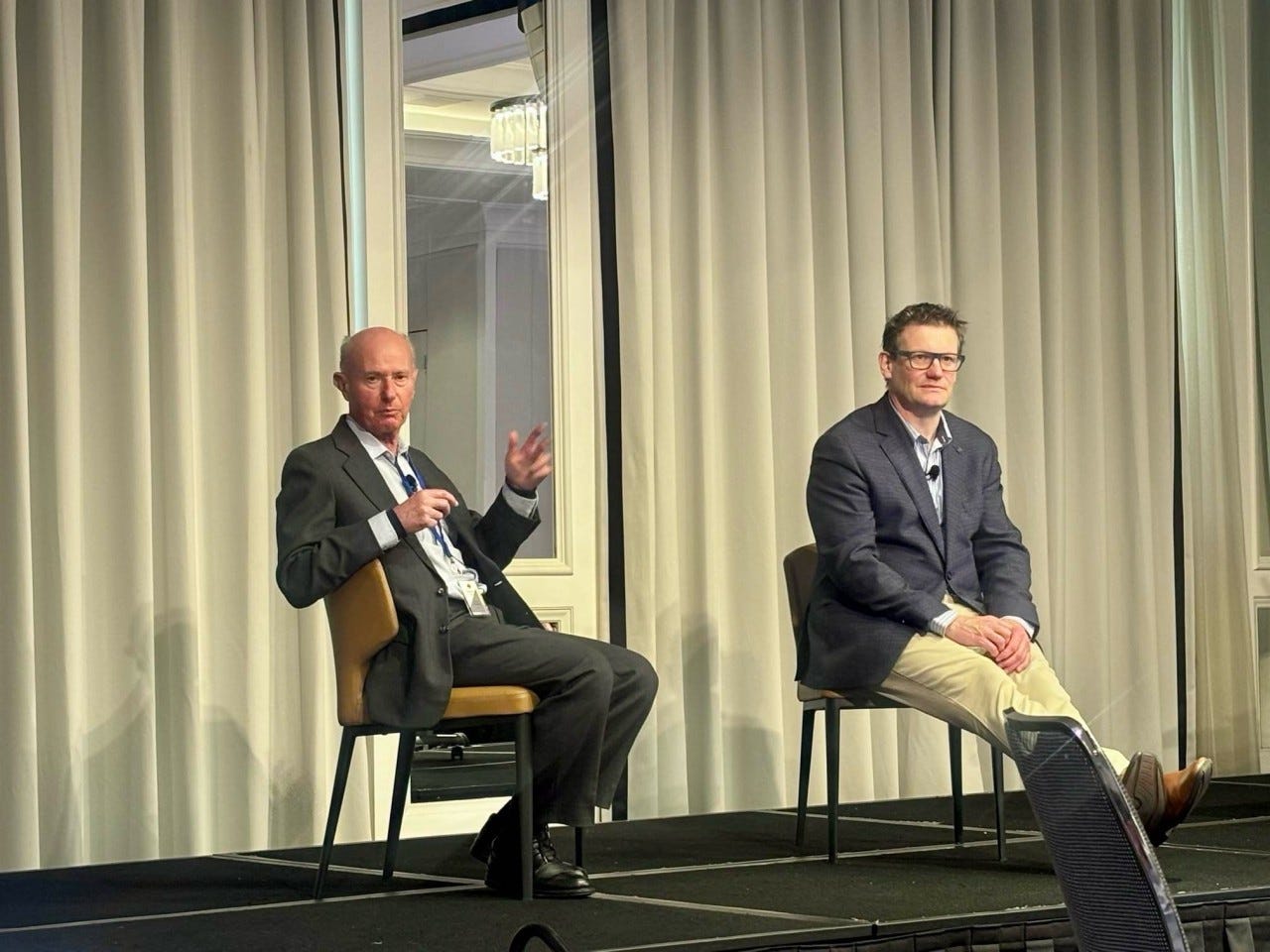
John discussed human cognitive architecture and I talked about the implications of cognitive load theory for schools. We then took questions. John does not use slides and so I decided to do the same, making it the first education talk I have given without that backdrop. I think it worked fine.
I am grateful to Ben Jensen and everyone at Learning First for this opportunity and for organising such a splendid conference.
It is not just Cambridge that is infected with bad ideas. The academy is in trouble across the Anglosphere.
Comments
Nothing yet. Say the first thing.
Sign in to join the conversation.