
Information overload is killing your productivity. It may be making you sick, too. And it’s definitely not making you happier.
What is information overload?
It’s when information input exceeds your capacity to process, use, and retain that information.
So much information that it stops being useful.
And starts being a problem.
Too many digital pings. Too many notifications. Too many unread emails.
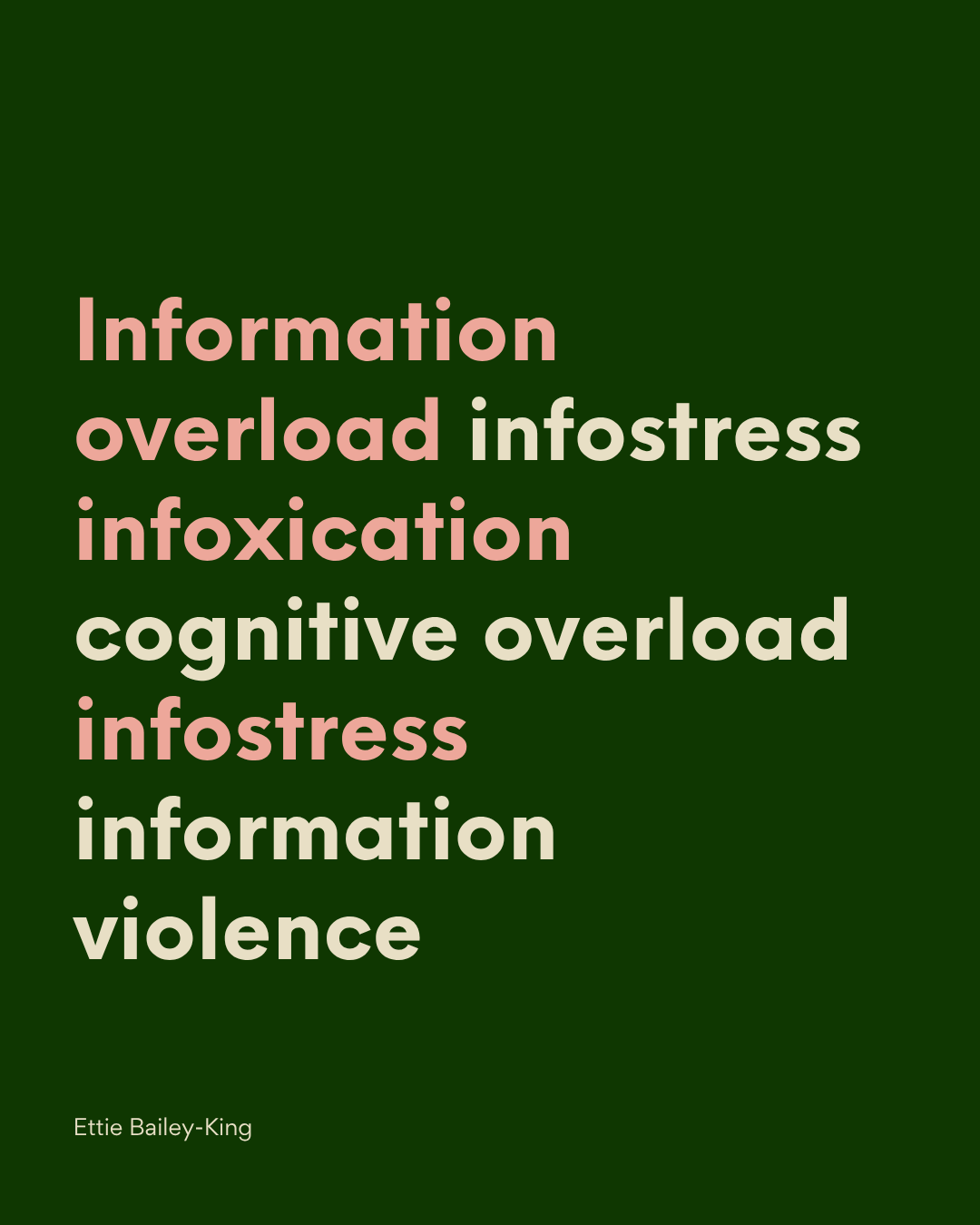
(Can’t speak, I’m infoxicated!)
It sucks:
for you, as an individual1
for all of us, collectively
Because it drains our creativity, health and productivity.
Information overload has two parts:
Information input (loads of stuff competing for your attention) +
Your subjective experience of overload (your perception that you lack the time, energy or skills to process it)
Both parts matter.
Too much information? That’s a problem.
But so is subjective perception that there’s too much of everything.
Maybe you’re getting 146 app notifications a day (as a 2024 study found).
If you turn off push notifications and get that down to just 100 notifications a day, that’s not getting to the heart of the problem.
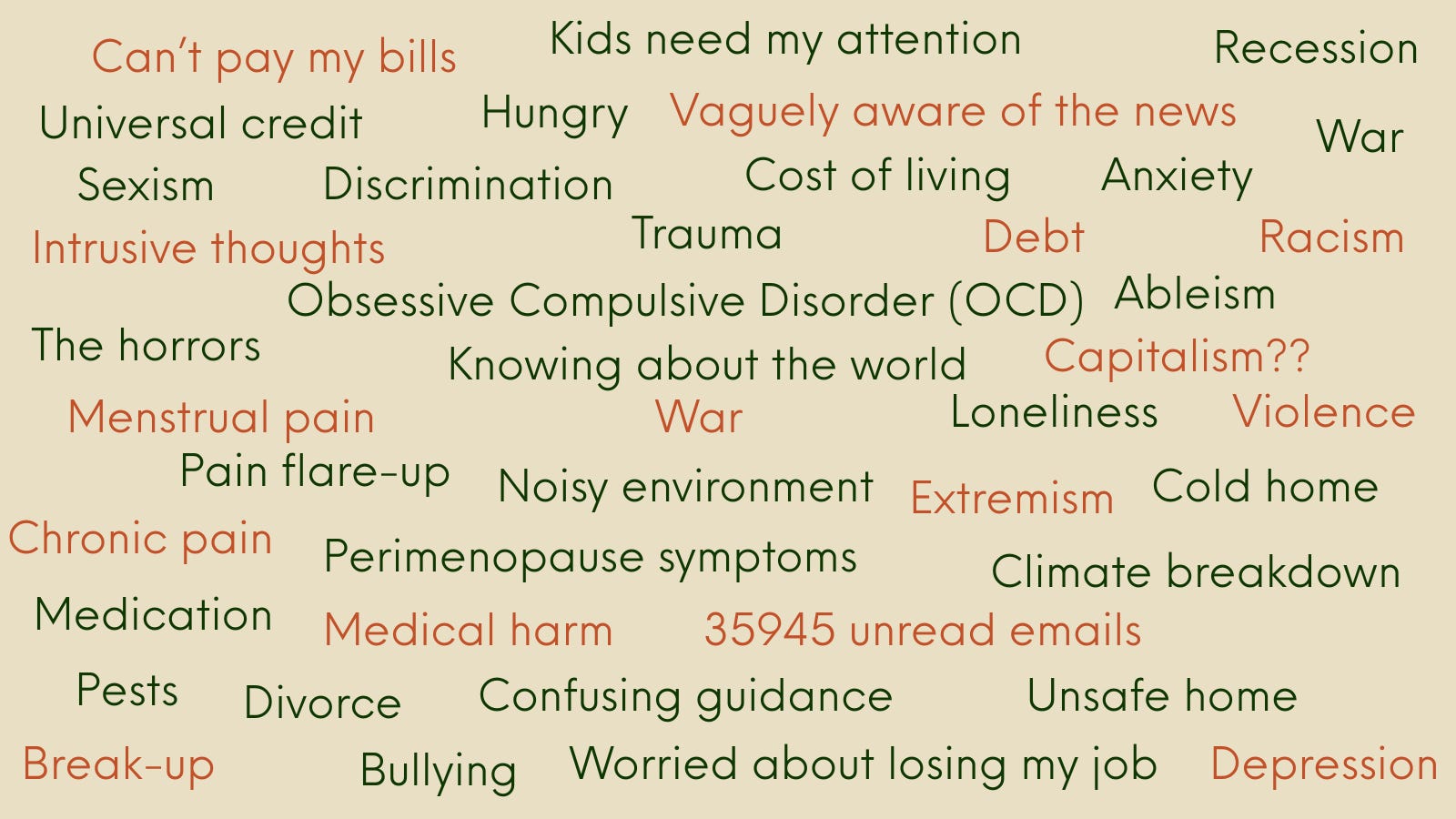
Because it’s so much bigger than just the digital pings.
It’s…
One survey of 1,300 business managers worldwide found:
Two-thirds of respondents believed that information overload had caused loss of job satisfaction, and damaged their personal relations,
One-third said it had damaged their health
Nearly half said it damaged the decision-making process, causing delays and poor decisions. (Source: Dying for Information.)
Researchers agree.
Information overload makes us:
narrow our thinking (which means less innovation and more snap judgements)
less able to spot new opportunities
less able and willing to collaborate
mentally and physically unwell.

A lot of us are absolutely frazzled.
I know I am.
Phew.
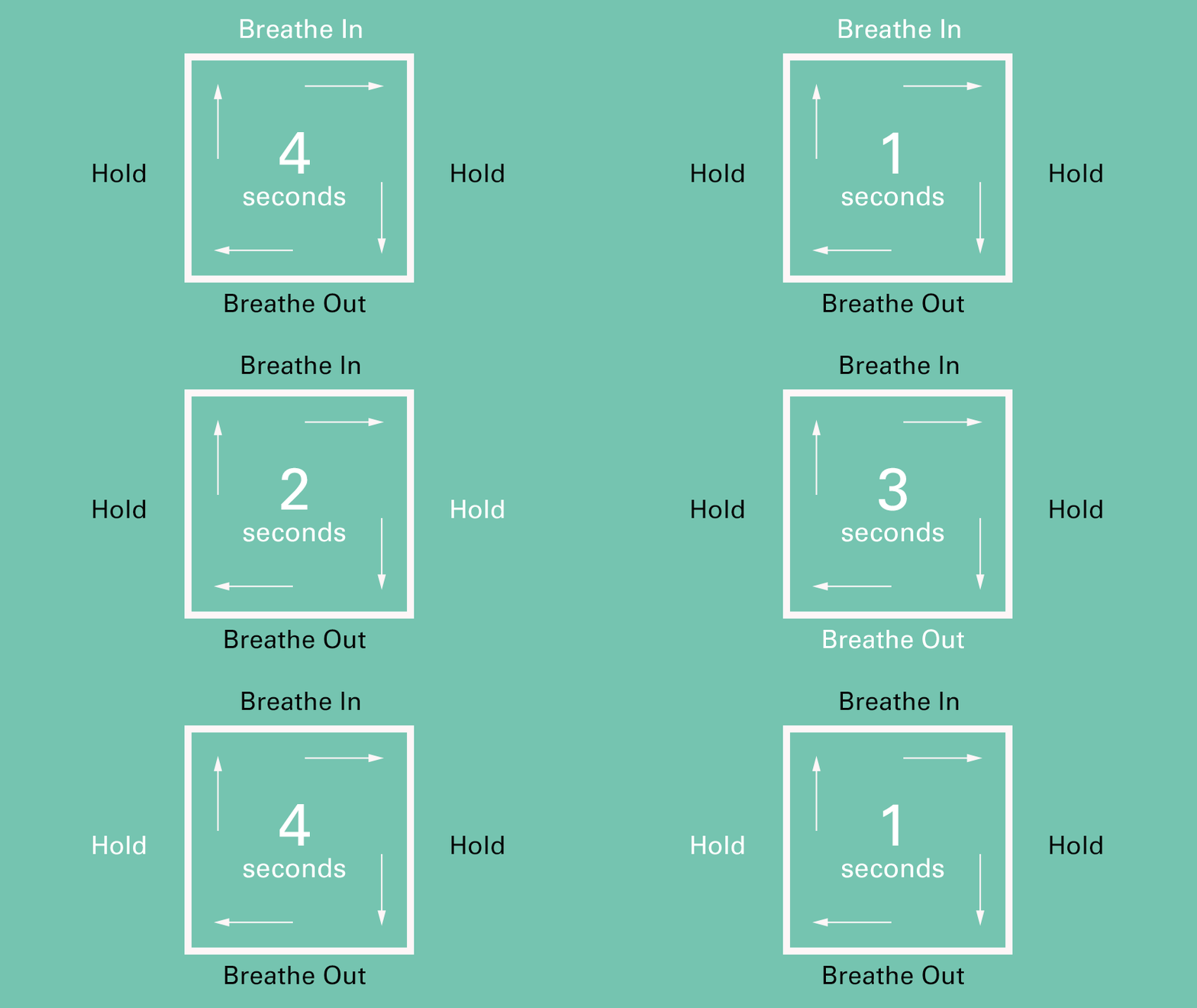
Take a moment to breathe.
People are living through intense anxiety, grief and trauma at the moment.
They still have to go to work.
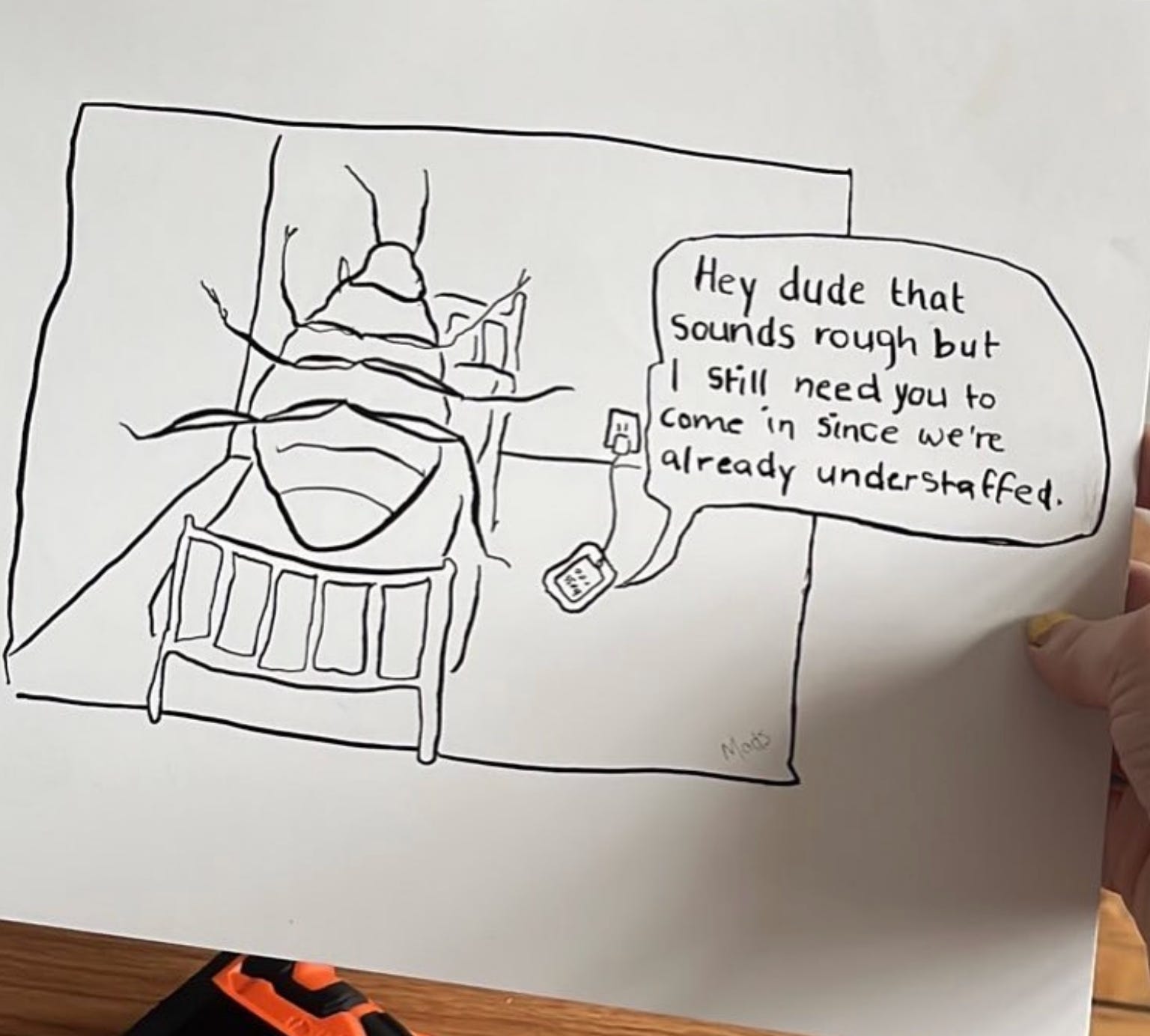
And the consequences of those mistakes can be enormous.
In my coaching work, I coach people to become more inclusive and accessible communicators.
I also coach neurodivergent and disabled people to thrive in workplaces that are not built for them.
Something I hear over and over again: “I’m so ashamed of the mistakes I keep making.”
Mistakes at work have a cost: fines and lawsuits from sending data to the wrong client. Safety violations. Lost work because of reputational damage.
And also: a human cost, to our sense of self. Our pride in ourselves.
It feels incredibly crappy to keep making mistakes.
And it makes hard to take your work seriously, improve your performance or ask for the support you need to do better.
In one of my favourite studies, researchers quizzed people about the parts of the days they enjoy the most.
What they found out is wild.
How much people enjoy an activity is hugely affected by one thing.
And it’s not the nature of the activity.
It’s how closely you pay attention to it (Mogillner, Whillans and Norton, 2018).
Attention predicts enjoyment!
What?! Does this mean I could one day love expense reports? Honestly, I doubt it.
But this has huge implications for our happiness and collaboration at work.
If you want a happy team, you need to invest in protecting their attention.
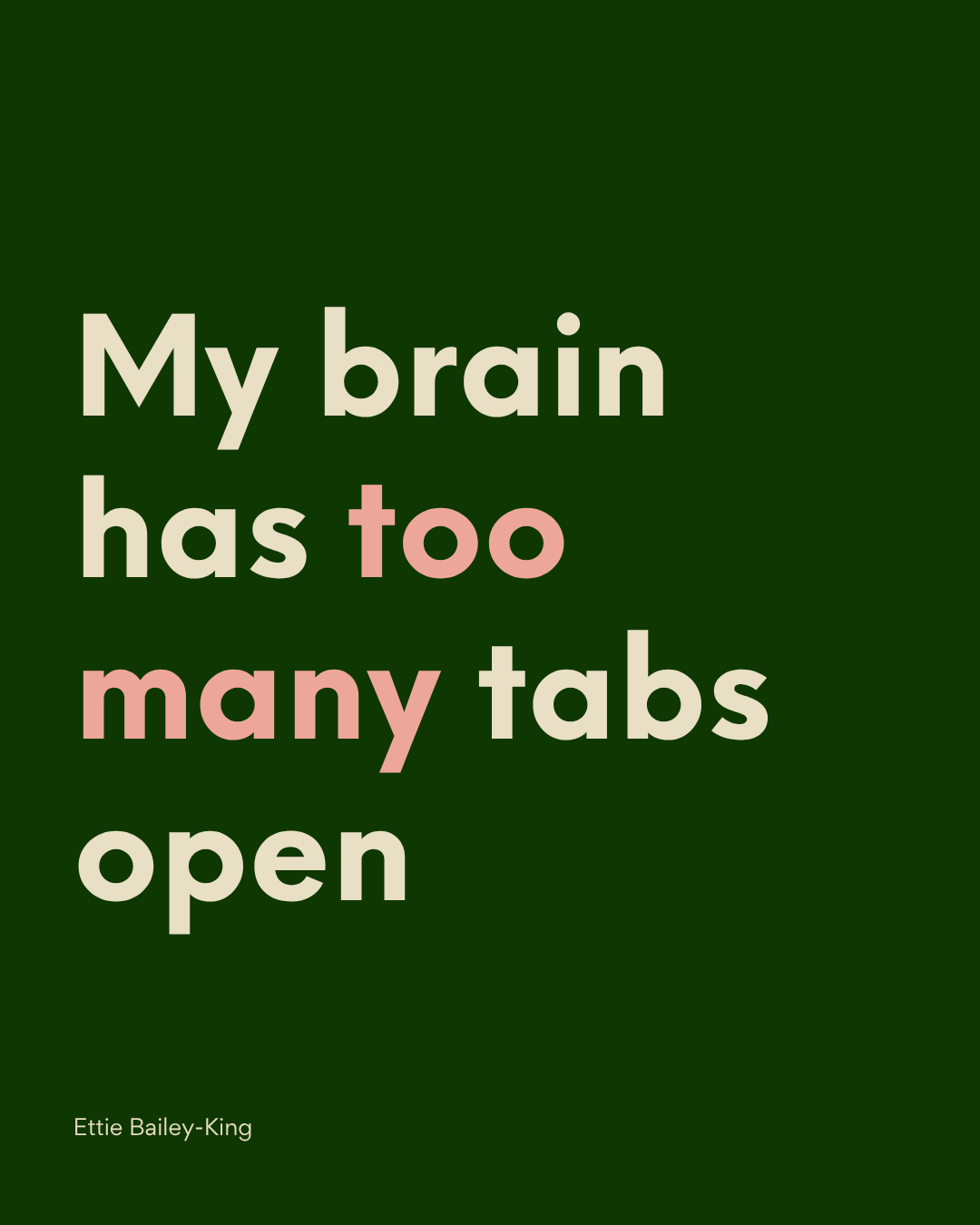
According to research by Dr. Gloria Mark, it takes an average of 23 minutes and 15 seconds to return to a deep state of focus after a single interruption.
And most of us are switching tasks more and more often.
Which shreds our working days (and our leisure time) into time confetti.
In 80 clinical trials, Dr. Glenn Wilson monitored the IQ2 of workers throughout the day.
The IQ of people who were juggling emails with work throughout the day fell by 10 points.
Wilson notes: “that’s the equivalent to missing a whole night’s sleep and more than double the 4-point fall seen after smoking marijuana.” (CNN)
“It’s like I just keep hitting snooze. But I can’t snooze all these decisions. I’m the CFO, for **** sake!”
Let’s call this person Dora.
(Because I don’t think Dora’s investors or board would like to know how many important decisions she keeps putting off!)
It’s sometimes called analysis paralysis.
We experience it for lots of reasons (as an ADHDer, I often freeze up when there’s a decision to be made).
The health impact of information overload on our mindbodies is massive.
I’ve decided not to share the details of how it causes and exacerbates serious health problems, because I’m conscious you might be reading this as a very overloaded person.
And it could be distressing if I go into all the way that information overload is harming your health.
So I’ll just say:
Information overload affects your health
Not in a good way!
Information overload erodes “pro-social” behaviours.
Studies into pro-social behaviour look at why people help others.
People who feel they lack time (experiencing “time famine”) are much less likely to help others.
In one famous study, researchers Darley and Batson found that 90% of seminary students would ignore a request for help - literally stepping over an injured person on the floor - if they were told they were running late to give a sermon.
(The sermon they were on their way to deliver was on the Christian parable of the good samaritan. It’s literally about stopping to help someone).
Overload just makes us behave… kind of badly.
Like “how dare you ask me to do that thing that is in my job description” badly.
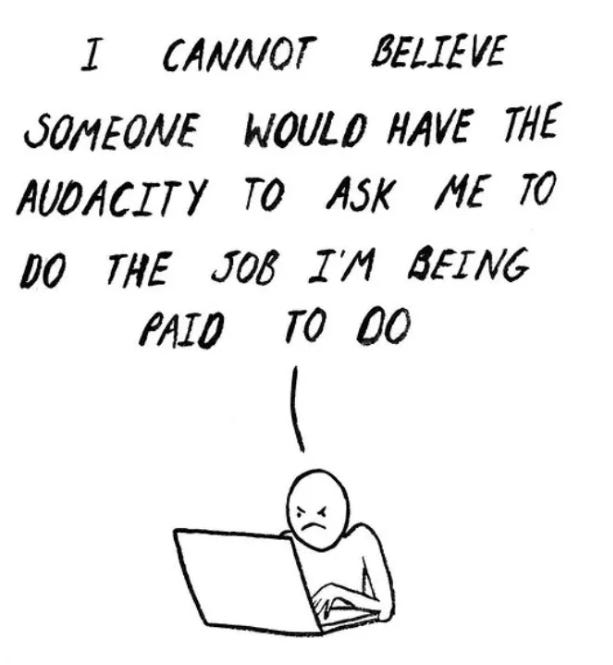
No choice about it!
Overloaded people just can’t thrive. Or survive, to be honest.
The good news?
There is tons you can do about it.
Next week, I’ll share just a few of my favourite strategies.
I would love to know.
How does information overload affect you?
What challenges does it cause in your life?
What have you tried to tackle it? (More on that next week!)
Well isn’t that convenient…
I offer masterclasses, strategies, coaching and more.
Here are some lovely things folks said about my last workshop:
“Ettie was such an engaging speaker. We got a lot of information about information overwhelm in a way that was not at all overwhelming- she’s awesome! 100% recommend” - Kezia
“Such a useful session! Absolutely amazing! The session format and content was catered to neurodiversity and was incredibly insightful throughout!” - Anonymous
"It’s like being on FaceTime with a friend that’s giving you the best advice and you feel happy and ready for the day after the call” - Louise (Louise, this is my favourite feedback of all time. Thank you!)
“Ettie provided an easy breakdown of information overwhelm, input and practical ways we can support ourselves and those we work with. Her communication style was very inclusive” - Kola
“Session was a shortcut to finding all possible advice and resources, combining 10,000h in 1.5h focused talk” - Anonymous
Here I am, just assuming you know what it feels like to be in information overload! But maybe you’re relaxed, well-rested, calm and comfortable? Maybe you slept for 9 hours last night and have drunk the perfect amount of water? Maybe. 👀
IQ testing is deeply flawed. That’s before we even get into its racist and ableist uses. So I’m not saying IQ is a definitive measure of anyone’s capabilities, just that it’s a way of measuring changes. A 10 point drop in just one kind of capacity tells us something about attention. It does not tell us everything about actual intelligence.
Comments
Nothing yet. Say the first thing.
Sign in to join the conversation.