
There are moments in life when we think we’re grieving one thing, only to discover we’re grieving something else entirely.
We tell ourselves we’re mourning the end of a career, the breakdown of a marriage, the children leaving home, the loss of our parents or the future we thought we were going to have. But with a little distance, I’ve come to believe those events are often only the catalyst. What we’re really grieving is the version of ourselves we had built around them.
That thought has stayed with me all week.
After sharing a post about women over 50 finding themselves unexpectedly out of work, hundreds of women wrote to me. At first, I assumed they were sharing stories about redundancy. They weren’t. They were sharing stories about identity.
They wrote about sitting in interviews feeling invisible. About being encouraged to remove years of experience from their résumés so they didn’t appear “too old.” Some had quietly deleted graduation dates from LinkedIn. Others admitted colouring their hair before interviews because they worried grey hair might count against them. As I read their words, I realised they weren’t simply talking about employment. They were describing what it feels like when the world begins to look at you differently, and you slowly begin to look at yourself differently too.
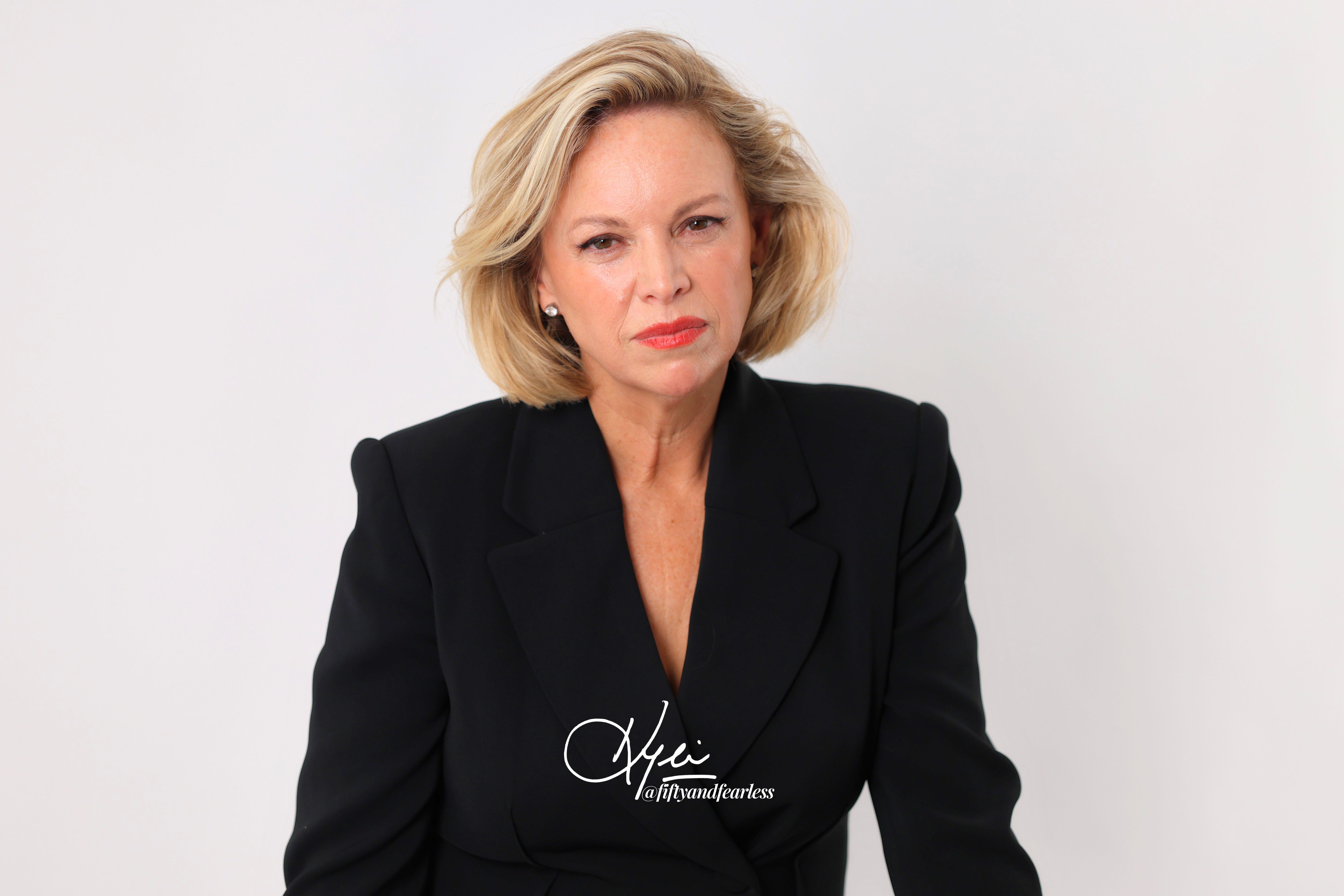
I recognised that feeling immediately because, a few years ago, I found myself standing in exactly the same place.
When I was retrenched just a few months before my fiftieth birthday, I genuinely believed another opportunity would come along. After more than thirty years in marketing, leading teams, building brands and sitting around executive tables, I wasn’t applying for jobs I hoped I could do. I was applying for jobs I knew I could do standing on my head. Yet the interviews never came. Sometimes there was a polite rejection email. More often, there was silence. On the rare occasions I received feedback, I was told I didn’t have the “right experience”. Even now, I still don’t know what that meant.
What I do know is that every rejection quietly chipped away at my confidence. Until then, opportunities had largely found me. I had been fortunate enough to spend most of my career being approached for roles rather than applying for them. Suddenly I found myself sending application after application into what felt like a black hole, wondering how three decades of experience could seemingly count for so little.
The hardest part wasn’t the rejection itself. It was the shame.
Friends and family would ask whether I was looking for work, and I developed a rehearsed response. I’d smile and tell them I wasn’t ready. It sounded confident, even intentional, but it wasn’t true. The truth was that I was applying almost every day. I just wasn’t getting interviews, and I couldn’t bear admitting that out loud. It felt easier to let people believe I had chosen not to return to work yet, than to tell them I was trying everything I knew and nobody was calling.
A few years prior, I’d watched the television series Younger. I remember laughing at the storyline because it seemed so absurd that a woman would reinvent herself as younger simply to be taken seriously in the workplace. It made for entertaining television precisely because it felt so exaggerated.
Then life has a remarkable way of holding up a mirror.
Not long afterwards, an HR professional suggested I halve my résumé because it would make me appear younger. I was also told I didn’t understand social media. Suddenly the comedy I’d watched on television no longer felt fictional. Nobody was asking me to lie about my age. They were simply encouraging me to soften the evidence of it. Remove a few years here. Edit a little experience there. Make yourself look just a little younger and perhaps you’ll have a better chance.
Looking back now, I can see that this was the moment everything changed. Not because I believed I had become less capable overnight, but because I slowly began to wonder whether everyone else believed I had. There is a profound difference between losing confidence in your ability and losing confidence in how the world sees your ability. One is internal. The other quietly reshapes your identity.
That, I think, is what so many women were really describing to me this week.
Whether their turning point had been a retrenchment, a divorce, the loss of a partner, retirement, children leaving home or caring for aging parents, the underlying question was remarkably similar.
Who am I now?
It’s one of the most confronting questions we can ever ask ourselves because, for so many of us, our identity has been built through the roles we’ve played. We become the executive, the mother, the wife, the carer, the dependable friend, the woman everyone turns to. Those roles give us purpose, but over time they can also become the way we define ourselves. When one of them disappears, it can feel as though part of us disappears with it.
For a long time, I thought I needed another job to feel like myself again. Looking back, I realise that wasn’t true at all. What I needed was to remember that my worth had never come from a job title. It had never come from someone else’s validation, a business card or the corner office. Those things had reflected parts of who I was, but they had never been the source of who I was.
The irony isn’t lost on me that, after being told I didn’t understand social media, I went on to build a global community of more than one million women in just eighteen months. My capability hadn’t suddenly appeared. It had been there all along. The only thing that changed was that I stopped waiting for someone else to recognise it.
Perhaps that’s the lesson the second half of life offers us, if we’re willing to accept it. Every ending asks us the same question: Who are you when the titles, the roles and the expectations fall away? It’s an uncomfortable question because there are no shortcuts to the answer. We have to rediscover ourselves, not through what we do, but through who we are.
Maybe that’s why I no longer think of that period as the time I lost my career.
I think of it as the time I found my way back to myself.
Because coming home to yourself isn’t about becoming someone new. It’s about stripping away everything you thought defined you until all that’s left is the woman who was there before the world told her who she needed to be.
And perhaps that woman has been enough all along.
No posts
Comments
Nothing yet. Say the first thing.
Sign in to join the conversation.