
I make material things but embed those things in story. Or perhaps it is the other way around. Whichever, the hoped-for result is the same: an uncanny world. I try to stay just on this side of the strange, seeking instead to evoke something just not of this world, but not necessarily so. It is an occasionally awkward place to be, particularly in the context of the art world and especially the art market.
My business card offers one attempt to explain what I do: artist du réel et de l’imaginaire—artist of the real and the imaginary. My socials have something even less descriptive: “I make shit out of words, mud, and excited electrons.” Both these capture an aspect of my practice, and my personality. Neither, probably, is strictly necessary. Both are just blah-blah rather than the work itself.
But, since ultimately, I want people to see this work, the blah-blah is important. It helps people find it, categorize it, and perhaps ultimately understand what they are looking at. It offers a conceptual roadmap—as poorly resolved as it is—to finding something that might resonate. It is also useful to remind me that this practice of mine is never just one thing or another.
Even my most traditionally-minded daily ware: chawan, chopstick rests, bowls, vases have story mixed into the water and slip that makes the pieces work. It is a story of who we are, where we’ve been, and in some sense, where we’re going. It reaches back over more than twenty-five millennia, changing very little in either fundamental form or technique. To make such work is to insert one’s self into history. Into story.
But there is another sort of story that permeates (or is permeated by) other work. These stories are more of my own making—a release valve for a writer with feet of clay. While a tea cup can be the vessel for a glorious thousand-years-old tradition it can also be the sole piece of remaining evidence for an alien civilization only hinted at in a few piles of potsherds scattered across three thousand years and four continents.
It isn’t that the story of that first tea cup is insufficient, it’s just that it needn’t be the only story. And, not to get all postmodern about it, but making a claim for truth in one case, and to roll your eyes at the other, is to ignore the power of story and storytelling.
The connection between non-literary art works and story has largely been one of representation. This painting is a painting of this thing, or this event. It presupposes a sort of hierarchy. Event (maybe) —> story —> representation. Art (differentiating it here from literature which absolutely is art but which is often excluded as such) tells a story by reinforcing the STORY.
I’m interested in something very different, something not quite so representational, where the art and the story are not only co-equal but co-dependent. Part of the same world. A world that functions like the one we inhabit—holistic, mingled, frequently chaotic, contradictory, and at times entirely incomprehensible.
Of course, as my practice has expanded—or as my practice has found its fuller expression—,it’s not just clay and story that co-mingle. It’s also photography, archival documents, molten pewter, fragments of trees, stone, and an absolute boat-load of family papers that are destined for a new life.
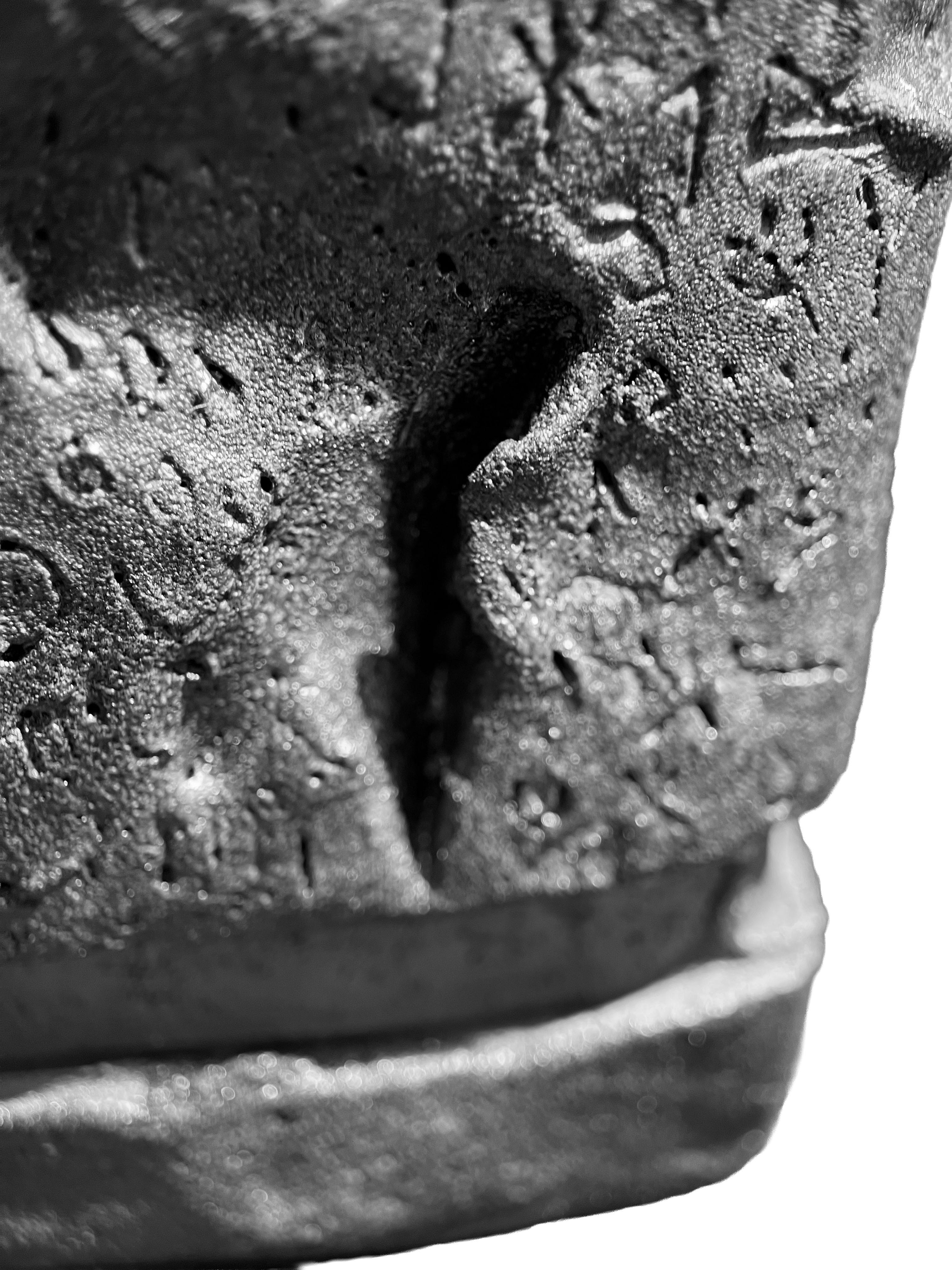
A collection of sculptures, incised with prehistoric signs, their impossible presence recorded in newspaper articles, ships logs, road works, and treasure hordes. An archaeological expedition whose only remaining evidence is a possibly corrupt, and certainly unreliable, archive. A heretofore unknown domestic religion focused on human frailties, evidenced entirely through the presence of small figurines, votives, vessels, and cracked tiles. Babylonian laws surfacing in cuneiform across contemporary city streets. All of these are examples of this approach (and work finished or underway).
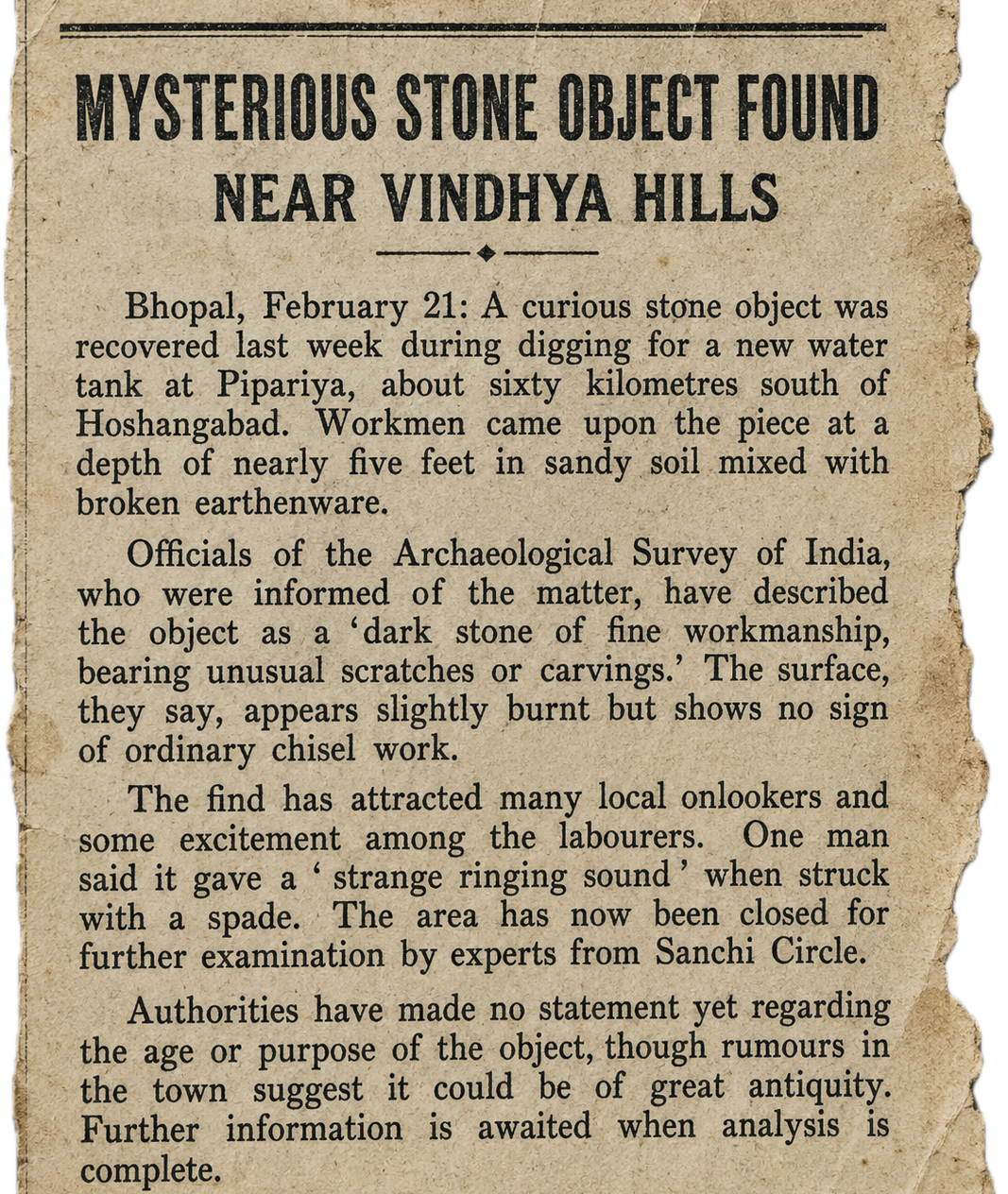
As humans we crave story, which is why there is no pure materiality in this work. There cannot be. Objects arrive already entangled in histories, associations, uses, expectations, memories, and beliefs. I simply make that entanglement more explicit—and sometimes invent another one.
What interests me is the space that opens between the world as it is and the world as it might be: the moment when an object remains completely itself while also becoming evidence of something else.
It is a strange place.
It is also, I think, somewhere we are all very much at home.
No posts
Comments
Nothing yet. Say the first thing.
Sign in to join the conversation.