
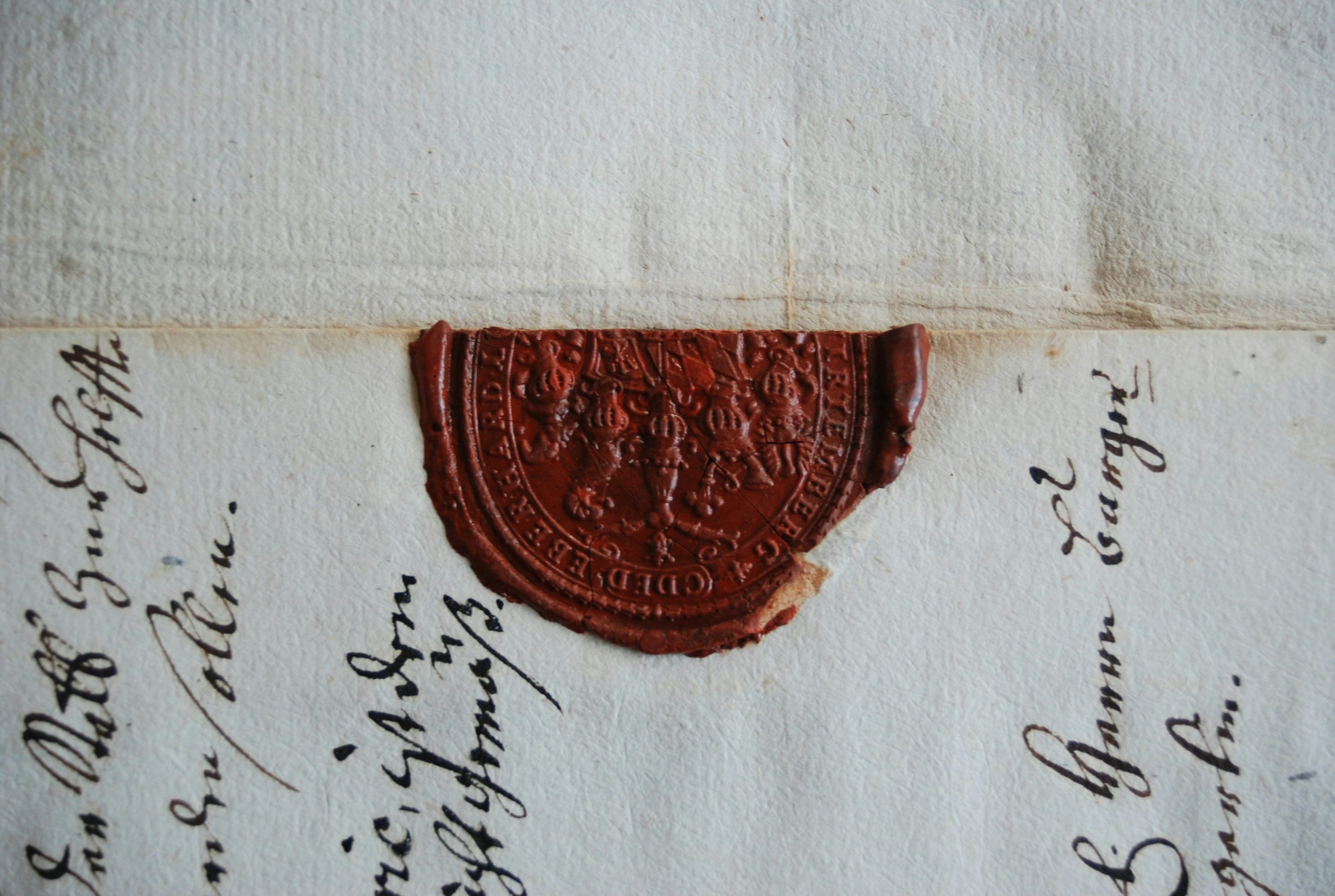
Archives do all sorts of things for us. One of those, is that they make us comfortable—perhaps not emotionally, necessarily (there are after all, all of the horrors of our kind contained therein)—but procedurally and epistemically. They promise that the past can be handled. That it can be stabilized, ordered, and above all, made useful. And, even when their contents are troubling, there is a sort of reassurance, often in a calm, and these days, sans-serif font.
Archives, in other words, behave. They absorb uncertainty on our behalf in a manner that is appreciable and frequently predictable.
When archives fail to behave, when uncertainty bubbles up, when order breaks down, when we don’t see what we expect to see, we usually describe a problem of deficiency. Records are incomplete. Materials are missing. Testimonies conflict. Shit happens: fires, floods, drunken custodians. In the aftermath, we adopt the language of failed communication. We speak of gaps, silences, and noise.
The task, as it is commonly framed, is to correct for these defects: to reconstruct what can be reconstructed, to contextualize what cannot, to restore coherence where it has frayed. In other words, to work on the archive in an effort to rectify its misbehavior. Sometimes it’s like a dog and a rolled newspaper, sometimes just a gentle nudging and shuffling.
But, as anyone who has spent any time with them will tell us, sometimes some archives do not misbehave by accident. Of course, there are politics, feuds, sieges, theft, forgery, and all other sorts of diabolical incursions, but with these too we have a sensitivity to the challenge, and we try the newspaper or the nudge. But, in many ways, those are the simple cases.
Harder to appreciate and deal with are those archives that resist coherence and sense, even when coherence and sense could be available. With these, things get much, much more complicated.
It’s worth stating what might not be obvious to many casual users of archives: archival coherence (like so much of our regime of knowledge) is rarely neutral. It is derived from requests, expectations, and a discipline of enforcement.
Archives are creatures of our desire. They are called upon to behave at particular moments: when reports must be filed, when lands must be seized, when great-grandchildren must be disinherited, when exhibitions must open, when decisions must be made, when narratives must perform clearly and convincingly. Under these conditions, contradiction becomes a problem sometimes inconvenient, and other times dangerous. Ambiguity threatens authority and silence invites suspicion. Neither is something one wishes to tolerate.
Under these sorts of pressures—some tectonic, some atmospheric—conflicting accounts are contextualized. Objects are aligned with typologies they only partially satisfy. Provisional classifications harden into facts. What cannot be reconciled is deferred; what cannot be stabilized is tamped. This does not require bad faith, only the assumption that coherence is the archive’s primary obligation. And, for most users—and the world at large—that is the assumption.
But coherence—this sort of coherence—always costs something.
It displaces uncertainty rather than resolving it. It transfers instability away from institutions and onto materials. Objects are made to say what they cannot bear. Events are rendered legible at the expense of their internal friction. Complexity is not eliminated; it is absorbed and redistributed. This is the warm, chewy chocolate center of an ethics of withholding and archival discomfort.
Discomfort—for all but its most discerning users—is what this process works hardest to remove. Because when an archive behaves smoothly, when it seems to be the creature we expect it to be, it tells us: this has been handled. We are free to move forward. We are free to proceed as if.
Misbehaving archives—and particularly those that withhold—refuse that assurance.
To withhold is to decide when, how, and whether meaning will be stabilized, when coherence becomes a real thing. It names a situation in which interpretive authority is present and deliberately paused. It is related to, but is not the same as, silence. For sure, silence may be the result, but withholding is the pressure, decision, structure, or discipline that produces it.
The decision to withhold is obviously not neutral. It shapes access, interpretation, and future possibilities. It can protect complexity, which is my argument for it as a good, but not always.
States, lovers, friends, families, churches, museums, all withhold. Withholding can be an instrument of domination and aggression as easily as a gesture of care and concern. Sometimes even more easily.
The question is not simply whether something is withheld. The question is: from whom, by whom, toward what end, and at what cost?
Withholding can protect power from scrutiny, but it can also protect fragile meanings or traces from premature capture. It can keep claims from being made, injuries from being named, or reparations from beginning. It can also refuse to turn the unresolved, unclear, or unsure into content, or the rite into worldly data, or an object into a mere illustration, or a profound trauma into a footnote.
The distinction is not always clean between the rights and the wrongs of withholding, and it probably shouldn’t be.
What matters is that withholding, when ethical, does not just simply hide. It does something much, much more important. It leaves open the possibility for something else. It pushes back the temptation to sort too quickly, name too confidently, or explain too facilely. Most importantly, is that it interrupts the modernist desire in most of us to see all objects legible and all events narratable.
None of this should suggest that to withhold ethically is to abandon interpretation. Rather, it is to discipline it, drawing a line in some piece of sand somewhere and saying: Nope. Not yet. Not like this. Not for this purpose. Not so quickly. It demands of the reader—whoever we are—that we recognize what has not, in fact, been truly stabilized and assured. That we do not do the thing we are almost desperate to do: relieve the pressure of uncertainty.
And that pressure matters. A lot.
It is not always a symptom that something has gone wrong. Instead, what we may discover is that it evidences something else entirely: that something has not yet been defaced by explanation.
The misbehaving archive may, in the end, be doing another kind of work. It may be refusing to absorb uncertainty on our behalf. It may be returning uncertainty to us as an obligation.
We are not required, despite what we’ve learned, and learned to expect, to fill in every gap or silence, to make every object and every mark useful or meaningful. The enlightenment imperative to omniscience is hubris.
Some things survive only because they have not yet been made to behave.
No posts
Comments
Nothing yet. Say the first thing.
Sign in to join the conversation.