
Every year on June 21st, the earth reaches a precise astronomical threshold that human beings have been marking with ceremony for longer than written history can account for… and every year the majority of people in the modern world let it pass like any other day of the week.
The daily routine is checked off.. or its not.
The work gets done… or it does not.
The children go to bed… or they also do not.
The phone gets checked one final time.
The longest day of the year slips through unmarked, carrying the medicine it was always offering to anyone who thought to receive it.
This article is for the people who want to receive it.
As discussed in the first two parts of this series (linked below), the summer solstice is simultaneously an astronomical event, a physiological event, a cultural event, AND a sacred event.
What follows explains what the solstice is, why it carries the weight it does, and how to mark it in a way that might outlast this year. It ends with a toolkit of simple, free/cheap practices that will not feel performative.
Fieldkeeper Codex is free to read and built to act on. Subscribe for every seasonal article, essay, and framework. Upgrade for the full toolkit and playbook library, the step-by-step action guides, and every practical resource built to make the ideas land in your real life.
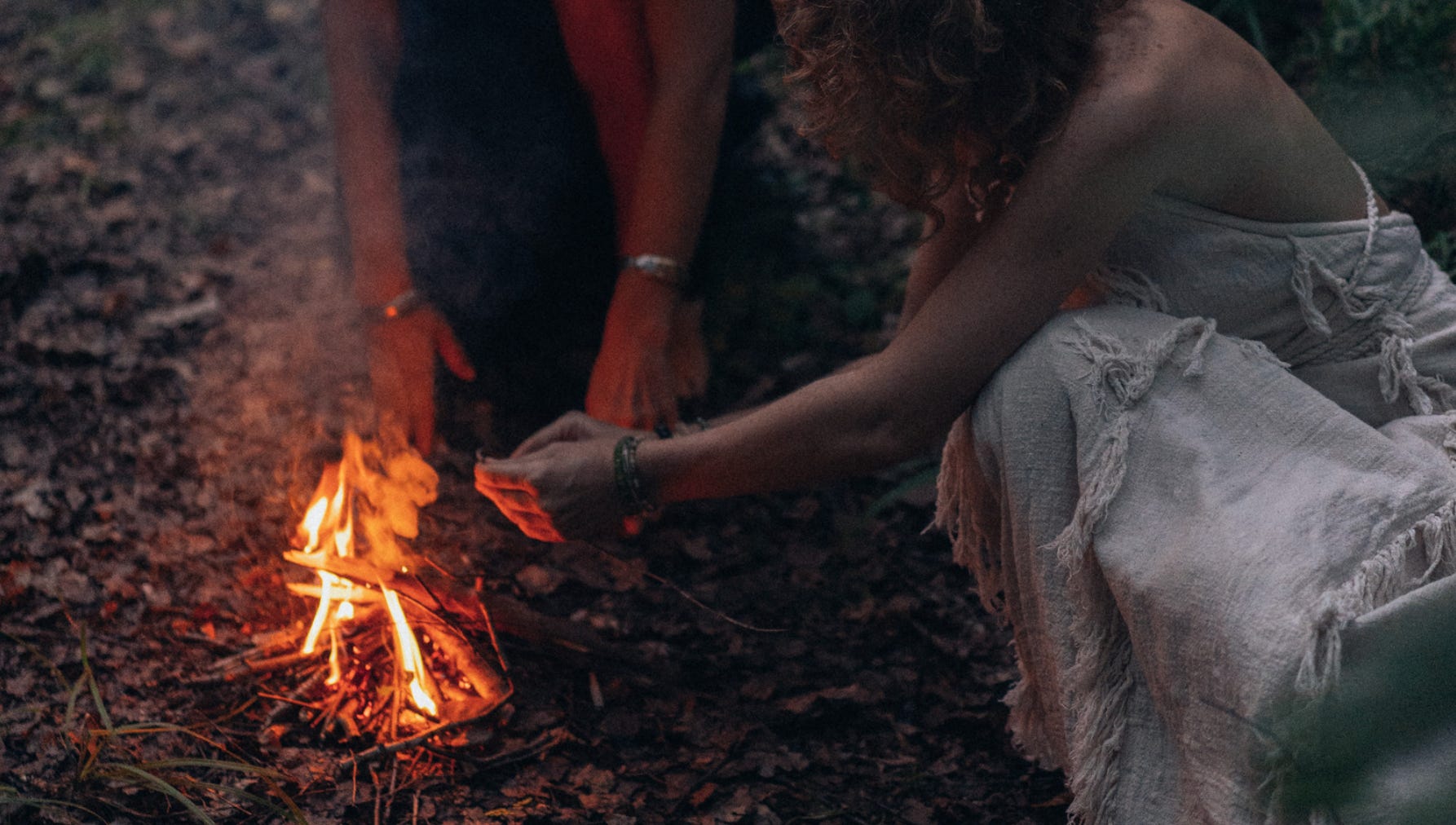
For some people this is going to be “the boring part” of the article but let’s get into it.
During the Summer Solstice, the Northern Hemisphere of our planet reaches its maximum axial tilt (~23.5°) toward the sun, producing the longest day and shortest night of the entire calendar year.
Fun fact: at northern latitudes, daylight can extend upwards to 16-17 hours on Summer Solstice
Beginning on June 22nd, the light starts contracting by seconds in the first days, then by minutes as the weeks advance toward the fall equinox. The human mind and body register this peak in measurable ways:
Research published in Brain Research and the Journal of Biological Rhythms has established that under extended summer daylight:
Melatonin secretion is compressed by as much as 2hrs compared to winter patterns, while cortisol rises earlier than at any other point in the year.
Also, Serotonin, which is usually linked to mood stability and synthesized in part through sunlight exposure on the skin, reaches its annual peak around the solstice.
Marking the solstice is an acknowledgment of a biological reality the body is already registering, ceremony or not. We are indifferent to this change or immune from these subtle earthly rhythms, we just stopped organizing around it.
For most of us, the extent of June 21st = summer begins. In the astronomical and traditional sense, it is actually summer’s peak: the moment after which the season begins its turn…. meaning it’s actually the ‘halfway through Summer and on our way to Fall’ point.
As we discussed in previous parts, most cultures adjust their diet and lifestyle and celebrate seasonal transitions knowing how much they are connected and either supported or imbalanced by it.
Without diving off into a seasonal rhythm rant right now (which will come again in the final part), the essence is this— whatever has been seeded in the body, mind, household, relationship, and village since the winter solstice is now either flourishing or revealing what was neglected.
The significance of this day has always been just beyond our human comprehension, BUT every culture that ever survived by paying attention to natural rhythms and listening to Mother Earth knew to stop here and take account.
Beyond the science though, for the overwhelming majority of human history, the relationship between a community and its food supply was direct and mortal. The summer solstice sat at the center of that relationship.
By the end of June, the growing season was far enough advanced that its direction was visible.
What had flourished was flourishing.
What had failed was already failing.
The solstice was the day of reckoning for everything planted and tended and hoped for since the cold broke. This is why the celebrations, gratitude ceremonies, and rituals of what we would consider ‘thanksgiving-like’ in America that appear at the summer solstice across every agricultural civilization in human history were far beyond material or decorative expressions of joy.
They were the community’s most serious business: the formal acknowledgment of the forces upon which all survival depended. And the point of me saying all this is so that we recognize what we have and know that to read these ceremonies as mere festivity or parties is to miss entirely what they were doing and what was actually going on.
The solstice also carried a second weight beneath the agricultural one: the weight of the sun as the origin and sustainer of all life.
The ancient understanding of the sun as a living force, as a relative, as a deity, was beyond mythology or superstition.
Seeing the sun as a energy giver is an entirely accurate perception of what the sun actually is. It was just expressed in the only frameworks available to people who don’t use astrophysics or western terminology but who had observed its effects with extraordinary precision across generations enough to recognize the patterns.
When Egyptian priests oriented the Temple of Amun at Karnak so that the solstice sun illuminated the innermost sanctuary, they were making a theological statement.
When Vedic rishis prescribed 108 sun salutations at solstice sunrise, they were codifying a practice of gratitude toward the force that made all life possible.
The specific languages differed. The perception they were encoding was the same. As it most spiritual practice (and even religious institution but we won’t go there here either).
A third weight which is less discussed but equally present was what the previous article narrowed in on—social life and community.
In many cultures, the solstice gathering was the largest assembly of the year: the moment when trade was conducted, disputes were settled, marriages were arranged, and community reasserted its existence as something more than a collection of isolated households.
The Norse thing, or assembly, was often held at midsummer.
The Greek Olympic Games began one month after the solstice.
The Kronia festival deliberately suspended the usual social hierarchies.
The solstice was the day the sun reached its peak, and the day the community reached its peak alongside it.
Understanding these three dimensions together is what will help a lot of the next section make more sense across your own lineage or bloodline.
Fieldkeeper Codex is free to read and built to act on. Subscribe for every seasonal article, essay, and framework. Upgrade for the full toolkit and playbook library, the step-by-step action guides, and every practical resource built to make the ideas land in your real life.
Summer solstice is one of the most universally observed astronomical events in human history. Across vastly different cultures, geographies, and belief systems, the traditions surrounding it share the same core themes: fire, water, communal gathering, gratitude toward the sun, and the collective acknowledgment that the turning of the year demands a response.
This convergence is what happens when independent civilizations pay sustained attention to the same astronomical reality across generations.
What they need at the solar peak —the evidence across continents consistently suggests— is to gather and to say so plainly to whatever forces they understand to be larger than themselves.
This tradition provides the oldest and most commonly known documented observance.
The architects of ancient Egyptian civilization encoded their relationship to the solstice in stone with extraordinary precision: viewed from the Sphinx at Giza on the summer solstice, the sun sets exactly between the Great Pyramids of Khufu and Khafre.
The Temple of Amun at Karnak was oriented so that the solstice’s setting sun illuminated its innermost sanctuary, a cosmological choice embedded into the permanent structures of the civilization itself.
The solstice carried its deepest significance because it immediately preceded the heliacal rising of Sirius, which heralded the annual flooding of the Nile. That flooding, called the inundation, delivered not only water but the fertile silt that made the Nile valley inhabitable.
The goddess Isis, associated with the floods through the myth of her tears shed for the slain Osiris, was honored at this time with rituals designed to ensure a generous inundation.
Ra, the sun god and creator of life, was understood to be at the absolute peak of his power on the solstice, and the summer solstice marked the Egyptian New Year, the beginning of the annual renewal upon which all Nile valley life depended.
Across the broader African continent, numerous cultures also observed the June solstice as a period of communal celebration and gratitude centered on the earth’s fertility, varying widely in form while sharing these fundamental orientations.
Science encoded by modern day India and the Himalayan area bring analytical precision to what the other traditions express as ceremony. June 21st sits at the peak of uttarayana, the six-month northward solar journey that begins at the winter solstice.
Within rtucharya, the Vedic science of seasonal living, the solstice is the deepest expression of Pitta dosha, the fire element, in its qualities of heat, transformation, and metabolic intensity. The body at the solstice is running at its highest sustained output, and the classical Vedic understanding is that this intensity, if unmanaged, depletes the very resources it is burning through.
The recommendations for this day —cooling practices and deliberate acknowledgment of what the growing season has produced— are calibrated responses to a specific physiological reality.
In many areas, Surya Namaskar is traditionally performed in multiples of 108 at sunrise on the solstice, facing east, as an embodied honoring of the solar energy sustaining all life. The number 108 carries cosmological significance, appearing in the ratio of the earth-sun distance to the sun’s diameter, in the number of Upanishads, and in the bead count of a mala.
The Vedic tradition marks this day as the natural moment to assess what has been seeded since winter and what is now coming to fullness.
These two demonstrate how thoroughly the solstice was civic as well as sacred.
In ancient Greece, several regional calendars treated the solstice as the first day of the New Year.
The festival of Kronia, honoring Cronus, the Titan god of agriculture and time, was remarkable for temporarily overturning the Athenian social hierarchy: masters and enslaved people celebrated as equals, with some accounts describing masters serving their enslaved workers at table, enacting the mythological Golden Age when all humanity was considered equal and no one labored under compulsion.
The solstice also marked the one-month countdown to the Olympic Games at Olympia, ensuring it functioned as a civic axis around which much of Greek public life turned.
Roman practice centered the season on the Vestalia, honoring Vesta, goddess of the hearth and the sacred fire at the heart of the Roman state.
Married women, normally barred from the temple’s inner sanctum, were permitted to enter and make offerings during this period, another ordinary restriction suspended at the solar peak in acknowledgment of something that transcended daily civic life.
What the Greeks and Romans understood was that the solstice was the moment when ordinary time broke open and the community had to confront itself as something more than its usual arrangements.
These traditions celebrated the solstice as Kupala Night, or Ivan Kupala, with written references dating to at least the eleventh century and origins considerably older.
The name derives from the Slavic word kupaty, meaning to bathe, and the festival’s central elements, fire and water, were honored together as complementary and purifying forces.
Bonfires were lit near riverbanks as evening fell, and both couples and individuals leapt the flames to purify themselves and invite good fortune. Young women wove flower wreaths and released them onto the current, watching where they drifted as divination.
The effigies of Kupalo, god of earthly fruits and fertility, and Morena, goddess of death and the natural cycle, were ceremonially burned and drowned together, enacting the solstice’s simultaneous fullness and beginning of release.
Circle dances were practically a ritual obligation: the Slavic worldview held these dances necessary to sustain the movement of time itself, to ensure the sun would pass into the next season.
The community remained assembled through the dark hours because winter had taught them repeatedly that no one survives the hard seasons alone.
These populations observed the solstice as Sonnenwende or Midsommer, with bonfires lit on hilltops visible across great distances.
In the Norse tradition, communities gathered at this time to conduct trade and resolve legal disputes, making the civic assembly inseparable from the astronomical event that summoned it.
The Austrian Sonnwendfeuer, solstice fires across the Tyrol alpine ranges, persists in some regions today.
The Celts, whose traditions shaped Germanic practice considerably, gathered at stone circles including Stonehenge, where the solstice sunrise aligns precisely with the monument’s central avenue.
When Christianity spread across these regions, the solstice was absorbed rather than abolished; the Church assigned the feast of Saint John the Baptist to June 24th and rebranded the existing bonfires as Johannisfeuer, or Saint John’s fires.
The theology shifted while the fire and the gathering did not, because the human need to mark the solar turning with light and community proved more durable than any institutional pressure to abandon it.
(The church co-opting “the village” is also another article in the making but I’ll digress here.)
They embedded the summer solstice within one of the most sophisticated astronomical frameworks in human history. Xiazh is the 10th of the 24 solar terms in the traditional Chinese calendar, developed by at least the Han Dynasty (206 BCE–220 CE) to coordinate farming, ritual, and daily life with natural rhythms.
In classical Chinese cosmology, Xiazhi represents the moment when yang energy reaches its absolute peak and begins its gradual return toward yin, a cosmological understanding embedded in both the I Ching and Traditional Chinese Medicine.
Ancient Chinese emperors held formal ceremonies at the solstice; officials received festival leave, a practice documented through at least the Song Dynasty (960–1279 CE).
Women exchanged colored fans and fragrant sachets, practical and symbolic objects: the fan for the heat, the sachet for protection against illness.
The classical saying, “dumplings for the Winter Solstice, noodles for the Summer Solstice” reflects how thoroughly the solstices were woven into daily life.
Dragon boat races in Zhejiang province were held on the Summer Solstice rather than the Dragon Boat Festival, a Ming Dynasty (1368–1644) tradition that continues today.
What the Chinese tradition makes explicit is what all the others imply: at the peak of yang, the wise response is balance rather than amplification.
For the most part, these traditions varied considerably by nation and geography, but shared a foundational recognition of the sun as a living relative deserving of direct communal acknowledgment.
Stone medicine wheels, among them the Bighorn Medicine Wheel in Wyoming at 9,642 feet, were aligned also with the solstice sunrise and sunset.
At Fajada Butte in Chaco Canyon, a solar marking site records solstices and equinoxes through light daggers falling precisely on carved spiral petroglyphs.
The Sun Dance, or Wiwányang Wacípi, practiced by the Cheyenne, Arapaho, Crow, Blackfeet, Sioux, and others, was identified by the Aktá Lakota Museum and Cultural Center as the most important ceremony to nearly all Plains tribes, conducted in proximity to the summer solstice.
In its traditional forms, it involved 3-4 days of dancing, drumming, prayer, and fasting within the sun dance lodge.
“Many of us continue ceremonies that ensure a connection with the sun.” —Joy Harjo (Muscogee Nation), first Native American to serve as United States Poet Laureate
Even though the effectively banned the Sun Dance from the 1880s until the American Indian Religious Freedom Act of 1978, they survived suppression because the peoples who held them understood them not as cultural ornament but as the mechanism through which the community maintained its relationship with the forces sustaining all life.
These cultures carry traditions layered across pre-Columbian practice and syncretic post-colonial synthesis, and their traditions reveal most vividly what this impulse looks like when it survives colonial rupture.
In the Andes, Inti Raymi, meaning Festival of the Sun in Quechua, was the most important ceremony of the Inca Empire. Formally established around 1412 by Pachacutec (who also constructed Machu Picchu), the ceremony honored Inti, the sun god, at the winter solstice of the Southern Hemisphere, which falls in June. The celebration lasted 15 days.
Spanish colonial authorities banned it in 1572, but it was revived in 1944 and continues today at Sacsayhuamán above Cusco, where more than 800 artists perform the reenactment each June 24th before tens of thousands of witnesses.
At Chichén Itzá, the geometry of the Kukulcán pyramid produces precise solstice shadow effects demonstrating astronomical sophistication encoded directly in the architecture.
La Noche de San Juan, observed June 23rd and 24th across Spain, Puerto Rico, Venezuela, and Colombia, blends the Catholic feast of Saint John the Baptist with older solstice practice: bonfires, midnight bathing in the sea for purification, and communal feasting through the night.
The Fiesta de San Juan in Puerto Rico is among the island’s most significant cultural celebrations, its importance reflected in the naming of the capital itself.
These peoples developed their practices independently, in different geographic and linguistic contexts with no documented contact, and arrived at strikingly similar conclusions:
That the longest day of the year requires human beings to gather, to honor fire and water, to express gratitude for the growing season, to suspend ordinary social arrangements, and to mark together the moment when the light begins its return toward dark.
They arrived there because the solar reality they were responding to is not cultural but biological.
The rituals formed were secondary.
Fieldkeeper Codex is free to read and built to act on. Subscribe for every seasonal article, essay, and framework. Upgrade for the full toolkit and playbook library, the step-by-step action guides, and every practical resource built to make the ideas land in your real life.
The summer solstice and the winter solstice are not mirror images of each other, and treating them as symmetrical will produce ceremonies that miss the specific medicine each one carries for you, your relationships, your family, and your greater community.
The winter solstice is a bottom. It’s the year’s longest darkness, maximum depletion, the cold at its most sustained, the body signaling for rest. As discussed in the Winter Solstice Series, that day is organized around restoration, warmth, story, and the faith that the light will return. The inhale beginning after the year’s longest exhale.
The summer solstice is a peak….and the peak is simultaneously a quick pivot. The very day the light is longest is the day it begins to shorten and every tradition that marks this day holds that dual quality: the fullness that contains within itself the beginning of contraction.
The Slavic effigy of Morena, goddess of death, is drowned alongside the effigy of Kupalo, god of fertility, because they belong together.
The Germanic fires burn at the peak of the sun’s power as both celebration and protection against the returning dark.
The Vedic tradition names this the turning from uttarayana, the sun’s northward journey, to dakshinayana, its southward return, and the practices prescribed are transitional, not simply celebratory.
The solstice is the year’s longest breath, taken fully, before the exhalation begins. A ceremony that honors only the fullness without the turn misses the whole of it.
The practices in the toolkit that follows hold both sides: release and welcome, gratitude for what has ripened and intention for what is being planted into the second half of the year, the fire that burns away what is complete and the seed that carries what is beginning.
The case for marking the solstice as a household practice does not have to be just a spiritual act, though it can definitely rest there as well.
Research in developmental psychology has consistently identified family rituals —defined as repeated intentional practices carrying shared meaning— as among the strongest predictors of children’s psychological resilience and sense of belonging across the lifespan.
A 2010 review published in the Journal of Family Psychology found that family ritual participation was positively associated with marital satisfaction, adolescent identity development, and family cohesiveness.
The benefit is not confined to religious ritual either which many of us have been conditioned to believe—secular family rituals produce equivalent outcomes when performed with intention and regularity.
The active ingredients are the intention and the repetition, not the specific content.
For adults, ritual interrupts what might be called temporal blur: the accumulation of days without markers, relationships that seemed like just yesterday, time passing without being registered, and years that become difficult to distinguish because nothing was made significant enough to create a psychological landmark.
People who observe seasonal rituals report substantially greater felt connection to time, place, and community. People who do not frequently describe the year as undifferentiated and unmemorable, not because nothing occurred in it but because nothing was deliberately marked.
Why this means is that children raised in households with intentional seasonal rituals carry embodied knowledge of the year as a living cycle rather than a calendar to be administered.
The child who participates annually in a solstice ceremony knows in her body that the year has shape, that light and dark move together in a rhythm, and that her household knows how to acknowledge the turning points. This knowledge takes root through presence and participation in a way that instruction alone never reaches.
For the village described in Part 2 of this series, the shared ritual performs a function that ordinary gathering cannot replicate.
A group of people who gather occasionally is a social network. A group of people who gather on the same day every year, who mark the same turning in a ceremony they have shaped together, is a culture in miniature.
The ritual is what makes the village durable across time, because it gives people something to return to that is larger than any individual or any single year.
Fieldkeeper Codex is free to read and built to act on. Subscribe for every seasonal article, essay, and framework. Upgrade for the full toolkit and playbook library, the step-by-step action guides, and every practical resource built to make the ideas land in your real life.
I’m just going to give you three direct and simple principles to apply to every choice in the toolkit that follows to make it that much easier for you to implement consistently.
The most powerful solstice tradition is the modest one that occurs every year, not the grand one that occurs once. A single candle lit at sunset with a spoken intention is a tradition when repeated. The Slavic communities that danced at Kupala Night every year for centuries were not performing elaborate rituals; they were performing reliable ones. Choose what can be honestly sustained.
Research your ancestral bloodline or family lineage and start there first. The toolkit draws from various cultural practices, but is not meant to replicate any of them. The goal is to find what genuinely resonates, research deeper if drawn to it, practice and honor it with respect, and build something that makes sense for your community, family, etc. Every tradition described in this article began as one household’s practice repeated until it became that community’s culture. Now it’s your turn.
The solstice is not an adult practice that children are permitted to observe, it’s a multigenerational family and community practice through which children receive —by direct participation rather than instruction— the embodied knowledge that the year has shape and that their household knows how to honor it. The child who leaps a candle flame, releases a wreath on the water, or harvests herbs in the early morning is receiving knowledge that explanation alone cannot deliver.
They are also who is going to continue to pass it on.
A tradition is what comes of the repeated attempts- what falls, what sticks, what is added.
Year one of any ritual feels uncertain and often awkward. The participants are improvising, the children may be unimpressed, and the evening will likely not resemble what was imagined. Don’t give up or consider this a fail, it’s precisely how every tradition that has ever existed began— with one person deciding that this year something intentional will happen on the longest day. This is expected.
Year two is more natural— the children remember and ask about it, and you kinda know what worked and didn’t the last time. By year three it is simply what the family does. By year five the children will tell their friends about it as though it has always existed. By the time they are adults, they will do a version of it in their own households.
The Egyptian priests who first oriented the temple at Karnak toward the solstice were creating a tradition, not inheriting one. The Slavic mothers who first wove flower wreaths and released them onto the water were creating a tradition. The Vedic teachers who first codified the 108 sun salutations were creating a tradition.
Every practice that now feels ancient and authoritative began with someone who decided, imperfectly and probably uncertainly, to do it once and then do it again.
The wheel turns. We turn with it.
What matters is not the perfection of execution but the willingness to begin.
Fieldkeeper Codex is free to read and built to act on. Subscribe for every seasonal article, essay, and framework. Upgrade for the full toolkit and playbook library, the step-by-step action guides, and every practical resource built to make the ideas land in your real life.
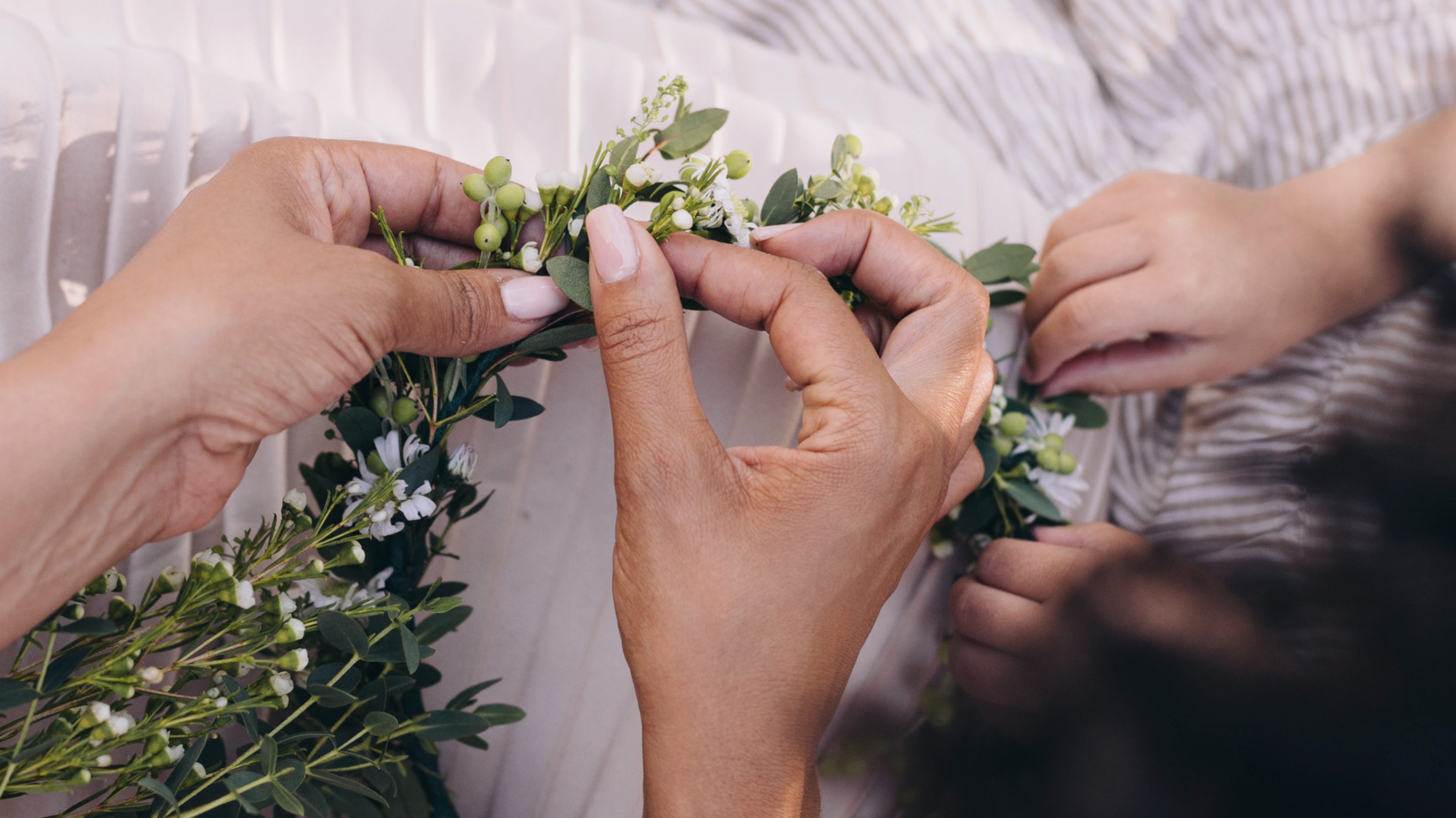
The remainder of the article is a 4-part toolkit that covers 20+ practices across three different phases of the summer solstice, as well as, an entire troubleshooting and index section. The three phases are:
Pre-solstice preparation practices (June 1 through June 20): prep, clearing, building awareness as the light reaches its peak.
Solstice day ceremony practices (June 21): The ceremony and pivot itself.
Post-solstice integration practices (June 22 through July 6): integration of solstice audit and tending what was planted.
Each practice comes with full instructions, family adaptations, and starter packs for different household types.
My only suggestion here is to read everything once before you decide anything. Choose two or three practices to start, ideally one from each phase. Most people either do nothing or attempt everything, and neither works. Small and repeated is the whole strategy.
Pssssst….. If you would prefer to access the toolkit as a downloadable PDF instead of paid Substack subscription, make sure you are a free subscriber as I am launching something new for my readers to provide a better customer service experience than the Substack platform allows me to provide. First step being PDF downloads of every article and bundles of every series.
One small intentional act each day in the weeks leading to the solstice. I know this is a bit late to Oort but it’s never too late to start. If you have children, make a visual calendar they can mark or add to daily. Let them choose some of the acts. Keep it participatory rather than mandatory.
Why it works:
Creates rhythm
Builds anticipation without commercialism
Makes the solstice feel significant
Helps adjust to the transition
Daily ideas (rotate):
Light one candle and name one gratitude for this summer so far.
Add one natural item to a central table: a stone, a flower, a piece of bark or seed pod.
Tell one story to the children at bedtime about your ancestors, your own childhood summers, or the season itself.
Release one item from the home that no longer belongs to who you are now.
Write one thing you want to release by the solstice and save it for burning on the day.
Rise within thirty minutes of sunrise and stand outside facing east for ten minutes.
Eat one meal entirely outdoors, slowly, without screens.
Harvest something from your garden or buy something from a farmers market and prepare it simply.
Write one letter to your future self dated December 21st, the winter solstice, describing what you hope the second half of this year brought.
Spend one evening outside past sunset watching the light leave.
Walk at the golden hour, the last hour before dusk, attending to nothing except the quality of the light.
Notice what is blooming or fruiting in your specific place on this specific day.
With young children: Make the countdown physical. Stones moved from one jar to another, a paper chain with one link removed daily, or a drawing added to a mural on the wall. Let them lead the selection when possible and keep the acts short enough that they can complete them without losing interest.
Drawing directly from the Vedic lightening practice and the Germanic tradition of bearing witness to the sun’s peak, this practice involves deliberately spending time in the fullest available light in the week before the solstice: rising with or before the sun, eating outdoors, staying outside into the late evening rather than retreating indoors.
Why it works:
The body’s circadian system is calibrated by direct outdoor light, particularly in the morning.
Research shows that exposure to natural light from sunrise compresses melatonin production appropriately and advances the cortisol rhythm, aligning the body’s energy with the day rather than artificial light schedules.
How:
Rise within thirty minutes of sunrise at least three times in the week before the solstice.
Eat at least one meal per day outside.
Comments
Nothing yet. Say the first thing.
Sign in to join the conversation.