
In modern America, progressives have a problem. At least white progressives have a problem, which is to say progressives as we have known them across the last 200 years. The problem with progressives is that their worldview is dying.
Dying?
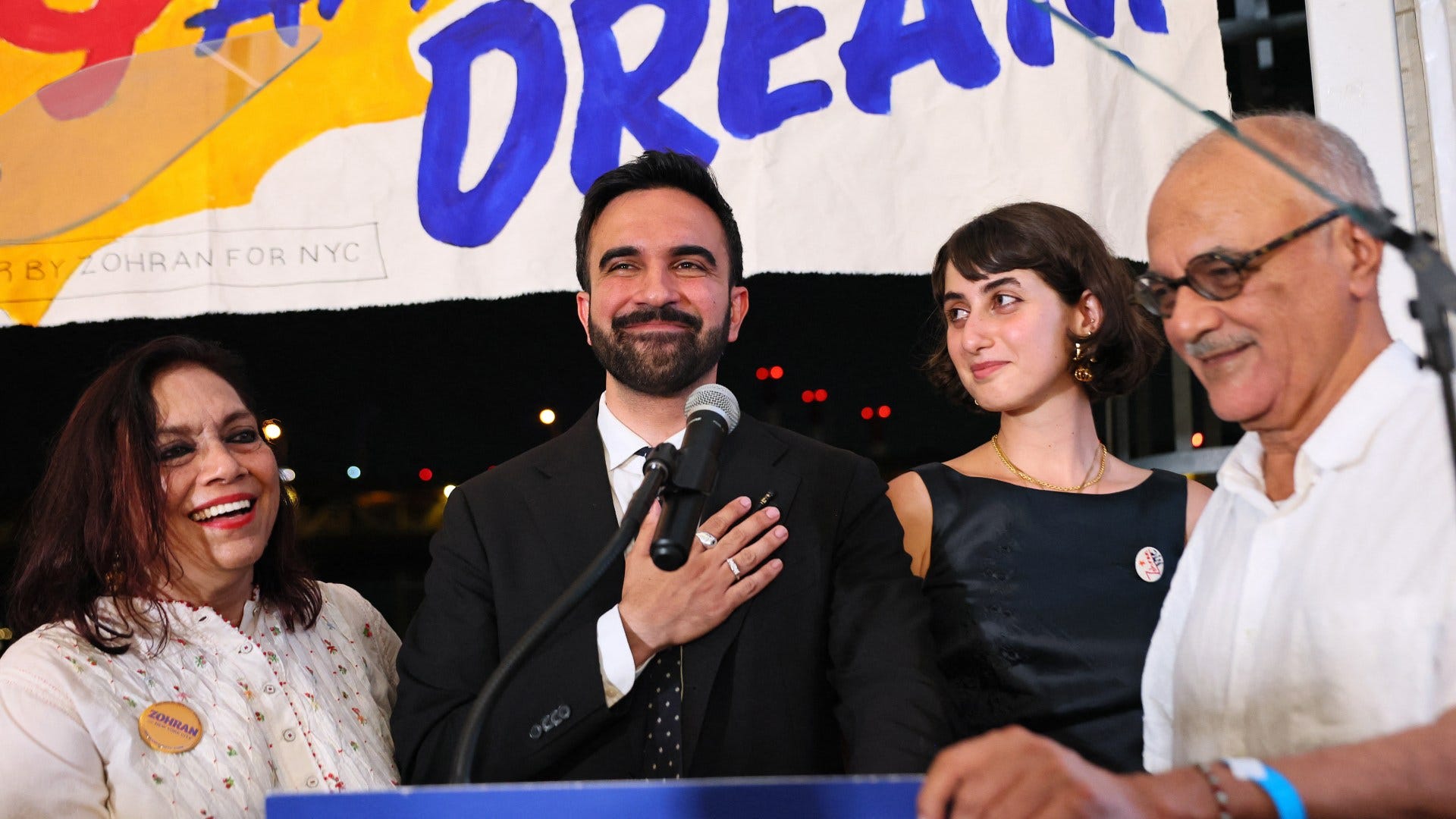
That sounds silly, writing in the middle of the summer of 2026, in the middle of a giant Blue Wave of Democratic socialists sweeping through New York City. Certainly, with the rise of Mamdani and the rest of the Democratic Socialists of America, it might seem that the white progressive star has never been higher. After all, wasn’t it just those spoiled, over-educated “white” college students that made socialism a thing again, possibly even resurrecting a new “woke” era in the shadow of Trump’s second term?
Perhaps.
From Ben Shapiro to Scott Greer, there is no shortage of people who warn me that these recent elections of brown socialists are, in fact, the leading edge of a new resurgence of white communism. But quite frankly, I am not buying the hype. White progressivism is a spent force. Moreover, despite their ability to elect immigrant socialists into leadership positions in the Big Apple, when I look at the white progressive order more closely, I see a rapidly declining force that exists now only as a kind of post-modern homage to a thing that once was real in the 20th century, but that can no longer justify its existence.
The eternal salience of “bio-Leninist” coalitions of contempt notwithstanding, the specific political movement we all knew as “progressive leftism” in the 20th century is effectively over. In 2026, the leftist ideology is contorted and disorganized; the “progressive” identity is incoherent; and, ironically, they are being replaced both culturally and biologically by their client groups. When, in all likelihood, these Third-Worldist allies dump their unnecessary ideological pretenses to pursue their nepotistic ethnic interests more directly, the white leftist gig will be up, and modern 20th-century progressives will be forced to accept their place in the dustbin of history, exiting stage left.
But these are just my own set of political predictions, as unreliable as any other prognostication about the future. No doubt, in the event that I am wrong, and America is conquered by Vaush-style white-boy communism, I will be eating a lot of humble pie on my way to the trans-loli-con-cat-boy re-education camp.
However, at this stage, I think that these feelings about the “death of the white left” are much less predictions than they are just observations about our current cultural reality. Progressives have never felt more vulnerable, more shaken, and less certain of themselves, even in their own native places. In 2026, progressives have no understanding of who they actually are, much less where they want to go, and, as a consequence, they are going nowhere.
And thinking back across my own life, I can honestly say that it wasn’t always like this.
In fact, when I first encountered politics in the early 2000s, the advent of the internet had brought a new sense of optimism to the leftist worldview. Somewhat disheartened by the failure of revolutionary ideologies in the late 20th century, progressives ultimately laid the blame for their defeats on the head of corporate media misinformation. The near-ubiquitous message, from Noam Chomsky to Naomi Klein, was that consent for the non-progressive status quo was manufactured. The necessary facts were kept out of the public’s mind. The critical arguments were shielded from the common man’s awareness. If information were made free, people would break their chains and join the progressive revolution.
As leftists in the early 2000s, we honestly believed something like this, and reflected this attitude in slogans:
“The Internet is where religion goes to die”
“The Internet is where conservatives go to be debunked”
“The progressive future will be nigh when data and software are finally free for the masses”
However, as it turned out, the Left-wing was totally unable to conquer the world via internet discourse. Eventually, as things settled, the power of prestige media institutions waned, and the left lost its protective security-blanket. When the full backlash finally hit in 2014, progressives were unprepared for pushback, and the left began losing the discussion and eventually the plot.
But where leftist arguments failed, white progressivism found a new lease on life by just being better adapted to exist as an ideology in a de-territorialized social media age. Despite whatever misconceptions it relied on, despite how many arguments it lost when its institutional guardrails stopped working, progressivism was just more native to the online world.
Leftism, in a very vague sense, is the natural ideology of technological individualism, maintained in comfort, removed from tradition or natural obligations. As such, the internet, as a collective force, naturally moved leftward.
This reality slowly became undeniable in the late social media age. After the advent of Facebook, Twitter, Tinder, and TikTok, politics became determined by voice rather than choice. Optics were everything, clout was everything. Authenticity and ownership were spooks. Winning on the internet was about controlling news cycles, playing into collective outrage, and always being perceived as the voice it was important to listen to, but never attack. To be a star on social media, a person had to act like the main character, the person who could criticize everything but own nothing, operating in the view from nowhere, seen by everyone, judged by no one, each word carrying no weight beyond the optics it could affect in the moment. The internet, as a space for discourse, was feminine, which also inevitably meant it was progressive.

Moreover, the online medium helped the left bury one of their most persistent real-world problems, the problem of authentic identity.
Immediately, I understand how ridiculous that probably sounds to some readers. If nothing else, 21st-century leftism is almost synonymous with “identity politics”. However, modern progressivism's obsession with labels, stacks, and the intersection of socially constructed roles that could never be escaped obscured a deeper problem: the ideology's inability to provide narratives that might tell a person who they really were. The 21st century was the age of leftist identity politics. Yet progressive identity politics was always running away from questions of authenticity and truth and towards a total deconstruction of categories that left very few people satisfied.
In previous generations of progressivism, identity politics was centered on organic identities. You joined working-class movements because you were part of the working class, because you actually worked. You were a progressive Christian because you followed a mainline version of Protestant Christianity that had enthroned such interpretations as part of its actual theology. You followed Black Nationalist movements because you were Black and felt loyalty to an actual extant Black community. You had a certain sympathy for the “women’s movement” because “woman” was who you were, and you were looking for a way to make your life better.
Not so with modern progressives, where the identities they obsess over are all transient and arrive on the scene pre-deconstructed. Thus, white progressive men built their careers around denigrating their own “maleness” and “whiteness”. People who identified as “working class” didn’t actually work, and, in fact, wanted to abolish the concept of work altogether. Millennial women obsessed with feminism hated being feminine and spearheaded a women’s movement that questioned the idea of even being a woman. Black activists, insecure about their own blackness, nevertheless became public intellectuals and wrote books about fixing race relations. Many modern gay rights crusaders claimed sexuality itself was a myth, and almost all gender obsessed trans-activists dreamed of abolishing gender.
Every Millennial activist of my era was obsessed with such identity categories, yet they swore up and down that none of them actually existed.
“It’s only important because we think it’s important and keep talking about it!”
But they never stopped talking about it, and never let anyone else stop talking about it. The modern progressive’s life was one long, extended bout of impostor syndrome, and you had to suffer through their grief in every moment of your interactions with them. Identity about identity in the name of abolishing identity. Needless to say, the progressives never had very convincing stories about their own activism and art that addressed these issues.
As one might ask:
“So, if you are happy with being a Lesbian gender-queer person of color and the child of striving Asian parents, why can’t you just make art from this new perspective that grapples directly with reality and the human condition? Why does everything have to be about how others perceive you and your ‘identity’ and your personal struggles as such?”
But questions like this missed the point entirely.
In the early 21st century, progressive identities were contentless funhouse mirrors. Everything was a copy of a copy of a copy; everything solid dissolving away (as Marx would have it). Identity was a vehicle for clout and voice in a largely online space, but the second those progressives had to exist in their own skin, they would immediately become uncomfortable. These were the true nowhere men. Moreover, the closer any leftist was to the dreaded anti-identity of “straight white male,” the more they had to embrace an identity as some semi-ironic shadow person that could not properly take up any space.

In a sense, modern progressivism was always going this way. Leftism was, and still is, a force of pure entropy. Still, the end result was bizarre to witness. Leftism had finally succeeded in producing a generation of deconstructed nowhere people, and the only thing that seemed to motivate them was their mutual disdain for the dreaded other.
For a while, the online detachment (especially during the COVID era) made the left’s identity crisis seem less important, or at least less imminent. But then, slowly, as the power of social media began to fade, people took a hard look at what progressivism had become and saw nothing good. The slow cultural implosion of modern leftism had begun, and almost nothing seemed capable of arresting the process.
Against this backdrop, I find it near impossible to see the contemporary “white” progressives as representing anything other than a dying order. Despite their advantages institutionally, financially, and demographically, regardless of the fact that they seem perfectly poised in this moment to sweep America with the message of “Democratic Socialism” and “Universal Basic Income”, they still seem weak, their movement like a castle with foundations built upon sand.
For the longest time, it has been an essential belief of mine that politics rests on organic belief. We can talk endlessly about whether “politics is downstream from culture” or “culture is downstream from politics” in an endless chicken-or-egg cycle. Nevertheless, there is an often-unrecognized reality about all human political action: it ultimately rests on a foundation of primal, basic religious beliefs that constitute its followers’ identities. If that foundation is strong, then the political faction in question will most certainly conquer its enemies in time. If that foundation is weak, the collective will collapse in on itself amid infighting and, eventually, despair.
So despite their short-term political wins, the base of progressive identity is as weak as it has ever been.
Political ideologies are like markets; beneath all the speculation, day trading, and derivatives, there must be an engine that actually produces value. If there isn’t, then all you have is a bubble. Moreover, while it is true that markets can remain irrational longer than you can remain solvent, eventually the other foot drops, and there is a correction back to sanity and where value actually lies. Eventually, the bubble pops.
And that’s just how I feel about modern white progressivism. Despite their recent victories and unassailable cultural dominance, it’s all just a bubble. It’s a bubble, and it’s time to call bullshit, because whatever direction the world is going in, it isn’t in the direction of modern progressivism. White progressivism has no reason to exist. As such, the ideology is dead.
It’s just not broke. Well, at least it’s not broke yet.

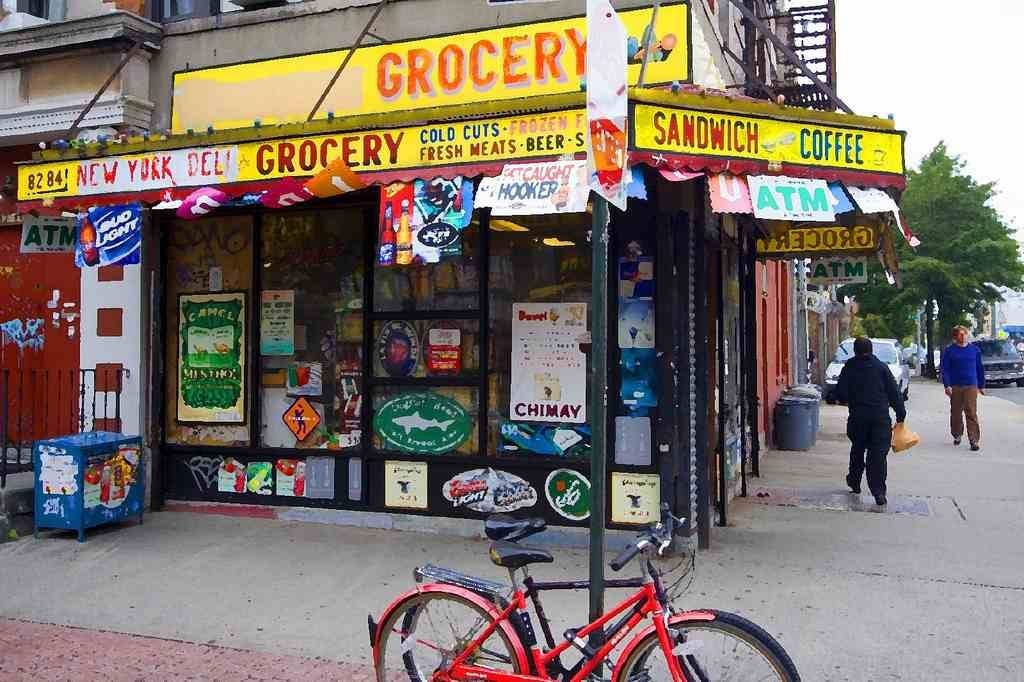
The shadow of white progressivism’s slow but inevitable demise was on my mind this last week when I happened upon the landmark article by Denzel Rust from MAMA magazine describing “Bodega Nationalism”, or what we might otherwise call the tendency of many urban Americans to develop an odd kind of blood and soil nationalism specifically and exclusively for the cultural markers of their native urban lifestyle.
As described, these “Bodega Nationalists” are the denizens of Brooklyn, Los Angeles, or Chicago who feel a sublime sense of collective connection to the cultural symbols of their city and local burrows to the point where loyalty to these markers becomes a core part of their identity. Such a man is a “New Yorker” or an “Angelino” born and raised, or, if not, he has lived long enough in the city and absorbed its essence to the point that he feels the calling of the Bodega corner store deep in his veins, and a distinct loyalty to these places only comparable to devout patriotism.
Moreover, this loyalty is not merely a symbol or a social construct; the cultural modes of urban life are spiritual. You don’t just get to be a New Yorker by showing up; it’s etched into one’s heart. A person has to earn this identity through years of hard work and dedication to demonstrate their readiness to be part of the scene and zeitgeist that natively inhabits these sacred places.
After all, “Bodega Nationalism” isn’t just some petty fascination; it is a serious, discriminating, unshakable dedication to protecting the cultural sanctity of one’s local urban borough in a way that would make Pat Buchanan and Archie Bunker blush.
However, perhaps predictably, none of these new-fangled urban nationalists ever extends their jealously guarded communal feelings upward to the broader collectives of the state, nationhood, or ethnicity. Naturally, these types of greater affiliations are purile small-mindedness, to be held in absolute contempt.
After all, what’s worse than being a bigoted patriot whose identification with a country is only salient because others are excluded from that meaningless sentimental category?
Nationalism at the national level is cruel and bigoted. It’s just about being on the right side of an imaginary line we call a “border”. The second any immigrant arrives on American soil, they are just as “American” as the WASP who traces his heritage back to the Mayflower. But you have to be born in New York to be a REAL New Yorker. Not just any scrub can be an “Angelino”. “Bodega Nationalism” isn’t socially constructed. “Bodega Nationalism” is eternal.
From the reaction of fair-weather Knicks fans to the random thoughts of urban dwellers captured in TikTok videos, the general hypocrisy of urban “Bodega nationalism” is not hard to spot in 2026.
In a way, it’s always been like this. People who hate American nationalism love their cities and express a strange nativism of their own variety. Moreover, while it does strike most outside observers as an insane double standard, I am not sure the instinct among urbanites to feel a jealous loyalty to their own localities is at all wrong-headed. This is just the essence of Conquest’s first law. Everyone is conservative (or “nationalist”) about the things that they really like.
It’s healthy to feel love, pride, and a certain kind of mysticism for the place you live, and this motive is certainly healthier than a dedication to abstracted internet identities in the process of being deconstructed, as people largely did in the woke 2010s. Moreover, isn’t all nationalism, in practice, a little hypocritical? If the sentiment that “the rules don’t apply to us because we are better” disqualified national pride, it might as well exclude all forms of collective loyalty.
However, as I see it, the emergence of Bodega nationalism threatens to reveal the hollow core of white progressivism as it exists today. In its shadow, we see a return to territorial reality where the nowhere people are forced to become somewhere people. Thus, within the return to embodied reality-based identities seen in “Bodega nationalism”, progressives encounter their ultimate feat and final nemesis: self-awareness.
Sure, Bodega Nationalism looks well enough when you are pulling rank at a Knicks game or scoffing at uneducated yokels who are your obvious social inferiors, but how can a progressive man stand tall when we examine him and his core identity against the broad relief of history?
Such considerations seem to expose a rather uncomfortable reality about the white leftists who most often hold up these bizarre second-order loyalties as the basis of their identity. These affiliations look well enough as a kind of front-page explanation of one’s life. But when encountered inside ordinary social experiences, these symbols feel hollow and grasping.
In fact, I remember encountering an earlier iteration of the new-fangled white progressive identity while finishing up my grad program in the late 2010s, when I met a fresh-faced colleague entering my grad program just as I was preparing to defend my PhD.
On the one hand, this young Millennial man was the stereotype of a progressive leftist in the social-media age. He was soft, neurotic, and emotionally effusive. He spoke in that strange, progressive dialect that would later be dubbed “millennial snot.” At once, he was both overly old and overly young, beset by a host of health problems you’d associate with a much older man, yet somehow looking as if he had never reached puberty. Naturally, my new colleague was obsessed with progressive socialist politics and the ever-present threat of the far right, but while he couldn’t stop talking about politics, I got the impression that he had never actually had a serious conversation about the topic.
Ultimately, this young “socially aware” man appeared a mystery at first, an archetype I was familiar with from the online world but that didn’t quite make sense in the flesh. However, something finally fell into place when I visited my young colleague's domicile, after being invited over by his roommates for a summertime barbecue.
As it turned out, the man who hated nationalism and conservatives and all things nationalist was a consummate flag collector. He had them all printed out and plastered around his room, the various flags of the countries, the various activist causes, and even the obscure sexuality that he associated with, each wheeled out in turn to be displayed as the backdrop for his computer station, or over his door, or even in the common area when his housemates agreed to it.
Unremarkable at the time but relevant in hindsight was also this young man’s collection of sports memorabilia and symbols pertaining to various nerd fandoms. As it seemed, there wasn’t a club he wasn’t a member of, a trending sports team he wasn’t on side with, or a national or political cause he wasn’t ready to support. He was all gung-ho to jump on a bandwagon.

Which bandwagon?
Did it matter?
Did my new friend really follow all of those teams?
Had we really consummately enjoyed all those nerdy hipster games?
At what point in this man’s life would it have made organic sense for him to purchase, say, the flags of Paraguay or Tunisia, and what was his relationship with these countries?
What was the significance of the various socialist flags that he collected and proudly displayed?
Did the rose hold some deep meaning for him, the way the symbols of Catholicism did for me?
Did his flag representing international polysexual pride indicate the actual lifestyle he was living, or just a lifestyle he wanted to be perceived as living?
Any loyalty was good enough to form the basis of an identity, as long as it wasn’t the identity he was born with or otherwise associated with as a young white man. He was the archetypal “young man waving a banner”, yet none of the many banners he possessed represented his own organic identity.
Now I certainly don’t want to knock people who change their identity early in their adult life; I certainly did. But nothing about this man’s loyalties felt remotely authentic. But that was the entire problem with this man’s existence. He wasn’t loyal to any cause or place. He wasn’t a fan of some sports-ball team. He just liked markers of country loyalty because he liked the idea of loyalty. He was a fan of fandom itself, but the particulars of that identity were scary, so he could never get anywhere.
Mind you, this man wasn’t living in a mode of pure online deconstruction like so many of his contemporaries caught up in the Reddit hive mind. My colleague knew he needed a specific grounded identity. He knew he had to be somewhere (or at least look like he was going somewhere), but he didn’t like what any particular fixed endpoint implied. Subsequently, it seemed that he had glommed onto a simulacrum of identity qua identity found in the markers of consumer experience and consumer products, always in flight from introspection, never landing anywhere solid.
And isn’t something similar now occurring inside the phenomenon of “Bodega Nationalism”?
Certainly, this example from my past isn’t a perfect fit. White progressive nerds in Grad school are obviously nowhere men. That’s a stereotype as old as dirt, or at least as old as the John Lennon song. Nevertheless, our modern white “Bodega Nationalists” seem to have fallen into the same trap that had captured my young colleague a decade ago.
Both types attempted to recapture a sense of spiritual groundedness, away from online alienation, by adopting certain cultural markers as a new source of identity. Yet neither wanted to grapple with the messiness and friction that real, historically based identities necessarily entailed. Therefore, these Millennials replaced the abstracting force of the internet, which telescoped away from difficult human problems, with a perspective that sidestepped those same issues by microscoping down on choice consumer products.
For instance, a “Bodega Nationalist” might identify as a “New Yorker,” a “Chicagoan,” or an “Angelino” in the same way that I might identify as Catholic or an American. But if that’s the case, then what do these identities actually mean in terms of lifestyle, creed, and even history? Certainly, if these municipal identities are real, wouldn’t they include intergenerational traditions designed to maintain a sense of the sacred? Shouldn’t these identities also imply a connection to history and a link to the many other denizens of New York, Chicago, or Los Angeles from a hundred years back? Shouldn’t there at least be an accompanying set of ethics that dictates one’s obligations and the modes of acceptable behavior? Or at least a creed beyond voting Democrat?
But that is not how modern “Bodega Nationalism” works. Instead, from what I have seen from the modern urbanists I know, the identity inevitably focuses on specific elements of urban lifestyle, whether it is eating bodega chopped cheese and Brooklyn pizza, being a Knicks fan who was there even when they were losing, or even just being a kid who grew up sitting on the NYC stoops rather than just seeing them on Sesame Street.
My urban friends assure me this all goes deep, but, honestly, a lot of this schtick just feels like early 2000s hipsterism with a new localist veneer. In fact, if I were being particularly uncharitable, it seems like a list of cultural markers chiefly valued because they are definitionally unattainable to those living outside of the urban area.
Now, to be fair, people’s affinity for these sorts of things isn’t fake. There is a unique experience and vibe of living in an urban area. No one makes a pizza as good as you can get in New York (God knows I have tried to find one in California). If you were trying to replicate the Bodega chopped cheese in Frisco, Texas, you would never get it right. The essence of being a sports fan is being on the ground, especially during the hard times, and there is a critical difference between living inside the mood of a city as a resident and just seeing it in movies.
Nevertheless, these markers of Bodega nationalism are ultimately hollow, isolated from any broader tradition and history. There is no real identity centered on modern white progressive urban life because, as real as the experiences it describes remain, “Bodega Nationalism” is still an element of lifestyle consumerism; it has no real core or higher aspiration than living in the right place, consuming the right product.
Like the nerd with the flag collections and historical mementos who despised everything about nations and history, our current Bodega nationalists are captured in the imitation of a form with no corresponding essence, trying to live out an understanding of urban life that is, in fact, the shadow of a past world that no longer exists. As such, these urban lifestyle consumerists will never create the same kind of organic metropolitan culture that people remember from times past.
The modern urbanite fixates on being close to the spirit that produced the mainstream culture that is celebrated worldwide, from New York Pizza to Brooklyn stoops. But really, there is very little that connects contemporary city dwellers to the old creative energy that gave rise to the things they love.
As it turns out, the Dutch colonists whose architecture prefigured the Brooklyn stoop, or the Italians who invented New York-style pizza, or even the Jews who developed America’s version of bagels, did not base their identities on these objects. Instead, those founding generations had their own nations, their own faiths, and a sense of their own people. It was those deep loyalties that motivated their initial creative efforts to build the things we now recognize as the backbone of urban culture.
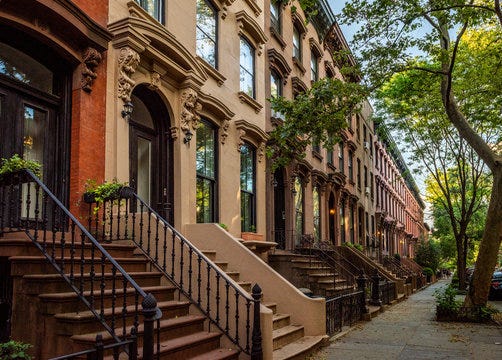
The New York stoop was important because it represented a familial and cultural continuity. The Dutch builders used this architectural style as a callback to the elevated housing designs found in their native Netherlands. And, later, these stoops became beloved by new generations of New Yorkers, mainly because they served as a communal space for families with children.
Likewise, from pizza and bagels to frankfurters, modern urban foods were not invented for the culinary indulgence of adult adventurers. Rather, these cuisines were extensions of old-world family recipes, with unique American modifications that mirrored the cultural adaptations those immigrant communities were undergoing as they settled in North America.
All of these classic urban cultural forms were embodiments of a desire for continuity in essence that might link people with their ancestors and to their future posterity. The point was never the product; the point was a dream of a shared destiny grounded in family and faith. But such dreams of generational continuity and tradition are not widely shared by many modern “Bodega Nationalists”, and that discontinuity reveals a core of inauthenticity most evident among the trend's white followers.
On this point, as Dudley Newright observed on his podcast, the lens of race reveals something critical about urban localist culture, since the jealous guarding of authenticity against the suspicion of “transplants” only really applies to white people. No one ever asked a new Somali immigrant how long he'd been a Knicks fan; the guy from Turkey doesn’t have his New York authenticity questioned because he didn’t grow up in a house with a stoop. Rich kid Asian transfers aren’t considered responsible for “gentrifying” their neighborhoods when they move to Manhattan to get the “New York experience”.
General progressive anti-Whiteness notwithstanding, “Bodega Nationalism” appears on its surface to be a race-blind label. Yet the identity crisis it symbolizes concerns almost entirely Americans of European descent. Sure, the transplant kids from Shanghai or Istanbul are embracing “Bodega Nationalism” in their own way. They are looking for a vibe and an experience just like their white neighbors. But they don’t really need a grounded identity or a reason to feel comfortable in their own skins. Their native religious and ethnic identities from the old country already provide them with those things, and no one thinks their implicit pride in their heritage makes them problematic.
In light of these observations, it’s hard not to re-examine the rise of Zohran Mamdani and the new wave of immigrant-born “Democratic Socialists”. As I see it, the most important thing to understand about Zohran Mamdani is that he is not so much a communist as he is an opportunist. He was all about nepotism when nepotism benefited his aims. Now he is all about socialism as long as that grift keeps working. The man remains mercurial, even for a politician, and if the politics of socialism no longer benefit him personally, he will just move on.
Nevertheless, Zohran Mamdani remains a transformative figure. He will remake New York and the politics of the USA, and the erstwhile Bodega nationalists will help him every step of the way, even though his vision has no real place for his fervent white supporters.
Modern progressives see a man like Mamdani and think they have found a kindred spirit, but in fact, nothing could be further from the truth. Mamdani is nothing like the deracinated progressive white freaks who can’t stop talking about him. Mamdani is warm and personable; he dresses well and acts like somebody who knows where he is going. And, ironically, like his arch-nemesis, Donald Trump, Zohran Mamdani is a conqueror.
Of course, none of this makes Zohran good. Mamdani is motivated by vanity and revenge more than any vision of the common good; he is anti-white and a civilizational con artist whose career ambition involves building nothing but transferring the wealth of the useful idiots who boost him in the name of “socialism” to his own nepotistic power network. But the political evil notwithstanding, it’s undeniable that Zohran has vitality and, more importantly, Mamdani understands what the American Dream actually is better than almost all other white Americans.
As it turns out, the American dream is not about living in America, nor is it about achieving a certain level of wealth or consumption. The American dream is not about a lifestyle. Rather, the American dream is about conquering America. It is manifest destiny. It is about taking a piece of land and making it yours, to be the sacred ground of your faith and the home of your posterity. Everything else, from sports-ball teams to white picket fences to pick-up trucks, from New York pizza to Brooklyn stoops to Bodega Chopped Cheese, is just a second-order effect of conquest. These cultural markers are simply the flags we planted in the land after we took ownership of it, but without the ownership, there would have been no flags to begin with.
White American Millennials are obsessed with cultural symbolism and the various flags they collect, which, to them, feel like they are part of something larger. But men like Zohran know the flags are nothing, the act of conquest is everything.
For Mamdani, “Bodega Nationalism” works differently. The institutions of the Big Apple aren’t just places to spend money and have an authentic New York experience; they are castles to be conquered in the name of a greater empire, for his people, for his faith, and, most importantly, for his personal pride.
Let those Western morons soy-jack over the experiences purchased in the middle of the world’s largest adult playground, let them sell their inheritance to try to re-live a long-passed 20th-century moment preserved in Amber. The true spirit of the conqueror knows that his destiny doesn’t lie in experience but in writing the outline of history’s next chapter. That’s how our pioneer and colonial forebears who made New York and the rest of America understood their role, and Zohran Mamdani, for better or worse, is following in their footsteps.
Mandani might be a conman and a plunderer, but the man has vitality. He has a will to power and, perhaps more importantly, Zohran knows who he is.
And isn’t this the ultimate failure of Bodega nationalism? It never really tells people who they are beneath all their experiences.
To be real, a nation has to promise something larger than just experiences and feelings of superiority. To be strong, an identity must extend through time, connecting an ancestry to its posterity. To be true, a belief system must point to Something Greater, a better future for new generations of humans to come, the manifest destiny of humankind’s greatness, and ultimately the divinity that stands behind it all. As Macaulay so famously observed, it is only these deeper things that are proper objects of mankind’s wars: to fight for the future of his children, the ashes of his fathers, and the temples of his gods
Most Americans, and almost all progressives, have forgotten what this kind of collective spirit even feels like. It is, perhaps, an ominous sign of our ongoing modern crisis that so few contemporary white Americans know what they are even looking for. However, amid this confusion lies the shadow of a greater opportunity.
In the wake of Mamdani’s rise, there is a new buzz on the right-side of the internet about the growing threat from the radical left, most of it remains the typical conservative Red Scare hysteria with paniced essays about “communism”, hand-wringing about the uselessness of cities and how horrible urban life generally is, and hot takes about why this latest election is proof positive of just why leftists have it out for conservative white middle America. Yet no one is talking about the critical opportunity arising at this moment in history.
I suppose I shouldn’t be too surprised, as conservatives never miss an opportunity to miss an opportunity. Failing to exploit an occasion to take power is just what 21st-century conservatives do. However, for those more clear-headed anti-progressives who might be reading this article, I encourage you to think differently about our situation.
First, as if it needs to be said, I don’t want to hear anymore Kulak-brain blather about how “the cities are useless”. Cities are where it’s happening. Cities are where the culture war is. Cities are where the battle of our age is being waged. And saying “urban areas are useless” or “you shouldn’t care about cities” is just another variety of the classic conservative bromide: “you shouldn’t want power”.

Historically, cities have always been where the power is. That’s sorta why they have been a thing for the last four thousand years. That’s why ruling elites care about them so much.
However, just as cities naturally develop power, they also naturally develop bullshit explanations for why they have power. Regime elites spin tall tales about how the specific qualities of their native polis naturally imbue the denizens with special powers that make them particularly capable of ruling and being creative. Subsequently, when a regime and the political propaganda fall away, the enemies of the old city often speak as if urban areas writ large are no longer fit for purpose.
“Believe me, cities were only useful because of the fur trade; now that everyone has cotton, cities are over!”
“Rest assured, urban areas were only economically viable because we needed a centralized workforce for factories; now that we’ve deindustrialized, they are no longer needed!”
“Look, metropolitan life was organized around offices and the exchange of ideas via paper delivery; now that we have the internet and telecommunications, no one needs to bother with city life anymore!”
“Cities are IQ shredders. There is no way to raise families inside their perverse economic incentives! As such, the new ruling class can just side-step around the issue of how to govern modern population centers.”
While sometimes correct about the specifics, all of these explanations about the uselessness of cities miss the mark. Cities are not important because they produce a specific resource or because they have a monopoly on a specific form of communication technology. Cities are important because they produce organized elite ruling classes. Cities are powerful because they produce power, which is why they have ruled since the time of Hammurabi.
The natural state of human government is oligarchic, and human forms of rulership, whether democratic or monarchical, eventually degenerate into the rule of a cadre picked from an elite class. As anyone in the Italian realist school will remind you, organized elites always dominate the disorganized majority. And regardless of technological developments over the last 300 years, from literacy and the printing press to television and social media, human bonds of loyalty are always forged by personal proximity. For this purpose, if no other, the polis is the eternal seat of power, since it is the only place outside of war, where men and other people of purpose can meet and become brothers in their common vision of the future.
Does the right wing want to rule in the 21st century?
If they do, they have to start thinking about how to rule the cities. It’s that simple
And I understand the objections coming from many of my “Red American” friends.
Cities are degenerate, unsafe, and unreliable. There are many good people in rural areas who are living out their own noble existence, isolated from the centers of culture, and nevertheless produce magnificent work. There are many more people, like myself, who are just priced out of city-living and can’t stand seeing the urban areas we once loved transformed into scenes of squalor and human alienation. Moreover, the modern I.Q. shredder is a reality, and while cities have always had low population growth, raising a family inside a modern metropolitan area seems nearly impossible. From the outside, cities just look like a bad deal.
Yet, we can’t walk away from the metropolises that built our nation. These cities belong to us. They are our heritage. And our destiny and their governance are inextricably bound together.
So sure, don’t live in the cities. In fact, very few people actually live in urban areas proper. Moreover, unless you are very young, very rich, or have a highly specialized service job, it doesn’t really make practical sense to be a city-dweller in 2026.
Nevertheless, we must never give up our claim to our inheritance. American cities are, by all rights, ours. They are our birthright, not least because they control our children’s future. More to the point, they also symbolize an important part of our heritage. Like Dante, who was a Florentian, even in exile, we all still carry the cultural mark of the cities where our parents and grandparents were born. Even if we are otherwise alienated or exiled, we can never stop wanting to take these places back. Before anything gets better, we have to want to conquer New York and Los Angeles, even if there is no avenue to effect this outcome just yet.
And ultimately, isn’t that the reason why progressive white America hates conservatives more than the third-worldists political scammers who are currently attempting to rob them?
They hate conservatives because conservatives failed to conquer them. They hate conservatives because conservatives failed to even try to conquer them. The greatest failure of counter-progressives is that they have historically lacked the will to dominate their enemies.
Moreover, if the advent of “Bodega Nationalism” among the white urban Nowhere men signals anything, it is progressive America’s deep desire to be conquered by anyone who feels in their bones that they have the right to rule. Anything else would be fundamentally un-American.
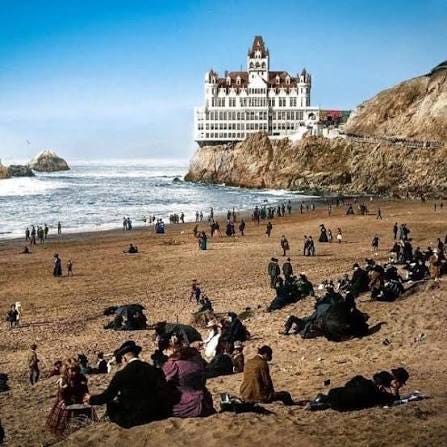
Ironically enough, I am writing this essay on Independence Day, the 250th anniversary of the country Americans call home. Today, I am hearing the usual spiel about the Founding Fathers and the list of virtues that make you a “real American”. However, there is one American virtue that I don’t hear anyone talk about on this Fourth of July, though we desperately need to remember it in 2026. This is the American virtue of conquest.
Whatever feel-good platitudes anyone says about Americans, General Patton was right about us. We are an imperious people. Americans love a winner, and they cannot stand a loser, which is to say, someone who is at peace with their own subjugation. Moreover, it is this spirit of ardor that everyone else really remembers about Americans, from the optimism of our Founding Fathers, to the valor of the Civil War, from the spirit of manifest destiny to the Spirit of St Louis. Everyone remembers what Americans are by what we do. And Americans conquer. Americans build. Americans reforge the world to suit their liking. And while not all projects Americans undertake in that spirit are noble (some are even evil), conducting such conquests is what we are known for, and to refuse to fight for a better future is fundamentally an un-American act.
America lost something vital about itself when the frontier closed. Luckily enough, in the following decades, the country discovered new frontiers abroad and at home, in technology and culture, not to mention our new imperialist adventures. Indeed, in recent decades, many of these expansionist projects have collapsed. Americans have failed to export their ideas abroad and to uplift the third world in the wake of the old European colonial system it displaced. Our culture has stagnated, our population has become more decadent, and, worst of all, we have lost the centers of cultural life in our urban areas.
But I wonder if any of that matters. To be American is to want to fight for what’s yours, for what you know belongs to you. And what better place to take up this fight again than with the cities that once defined our heritage?
So on this Independence Day, perhaps I can end with an exhortation. It’s time for Americans to take back their birthright, and it's time for the right to take back the cities.
If you are young, don’t shy away from making an urban area part of your plan for ascendency. Make the city your base of operation, for a time, and don’t let any middle-aged “Bodega Nationalist” lecture you about being a “transplant” or a “gentrifier”. Keep your pride, and don’t let modern phonies draw you into fake status games. Be the nucleus of your own based culture, built around your own values. The city is yours.
Otherwise, if you are an oldhead like myself, living outside the city for financial and lifestyle reasons, never forget that your neighboring metropolis belongs to you. Stay connected both to the past and the city as it is. Know its history better than the locals do (this is not hard!). Be aware of the degeneracy, but stay connected to the high culture. Ignore what you cannot fix. Focus on what good remains and on supporting the remnants who are working to build a new order.
And whatever you do, do not be intimidated by new urban cultural pretensions. Travel there frequently, root for the city team, eat the “chopped cheese” at the bodega, and hold your head up high when you do. Progressive urbanists have no standing to lecture you about whether you belong there, because everything that they have will eventually belong to someone else, and renters in the process of being evicted have no standing to bar the door.
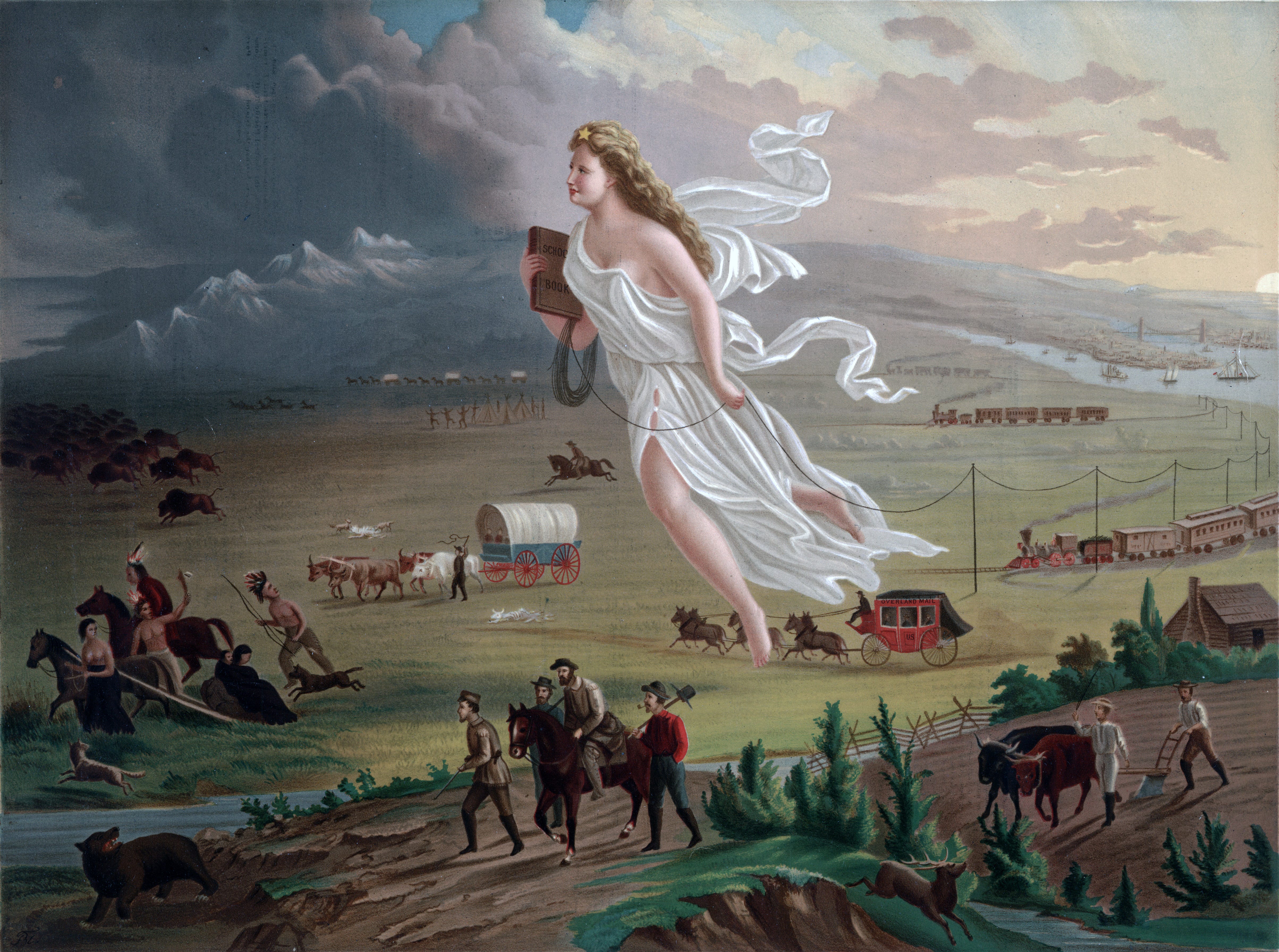
I say this with some certainty because I can see the current rulers of our cities are weak. Modern white urbanites who define themselves through consumption can’t even justify their own existence where they live, and new third-worldists don’t have the genuine aristocratic spirit to last. Our urban spaces are dominated by mercenaries, opportunists, and adventurers, who will surrender the moment the tide begins to turn against them and the easy money and opportunities are no longer available.
American cities are waiting to be conquered. And we will conquer them, because no one else will. We will fight on and take back what was lost because that’s what we do, and, God willing, we will win. We will win because we have that one great advantage over our enemies. We actually know who we are, as humans, as believers, and as Americans.
Perhaps that is not enough to rule quite yet, but it’s a start.
No posts
Comments
Nothing yet. Say the first thing.
Sign in to join the conversation.