
I’m writing this mostly for myself, to put the whole story on paper and understand how I got here.
I remember first becoming conscious of my weight in high school. I was probably only five pounds above what I considered ideal, but I noticed that my thighs were much bigger than my skinny white best friend Holly’s. I don’t remember weighing myself obsessively or thinking of it as a serious problem. It was simply one of the first times I understood that my body could be compared and found lacking.
Then, sometime after graduation, those extra pounds just came off over the summer. I entered college at what I considered my ideal weight: around 100 pounds. I’m 5’3”.
In much of East Asian popular culture, the ideal female body is not merely thin but extremely slight, sometimes to the point that it would read as underweight elsewhere.
I experienced this firsthand when I weighed around 105 pounds. I was cast as a co-star in a movie in China and flew to Beijing after clearing several weeks for the shoot. But after the director saw me in person, I was fired. He told my agent that I was too fat.
At five-foot-three and 105 pounds, I was considered thin in Los Angeles. In that production, I was apparently still not thin enough.
When I started college, I was terrified of gaining the freshman fifteen. My parents had paid for a meal plan that gave me access to unlimited food at the dining hall, including the dinner buffet. Goddamn it, your girl has always loved a buffet.
I was so worried I would lose control that I gave my meal card to a friend. If I wanted to eat, I had to ask him to give it back to me.

By my second year, I had started going to raves, taking ecstasy, and smoking cigarettes, and my weight anxiety temporarily disappeared. Amphetamines are, unfortunately, very effective appetite suppressants. Cigarettes too.
Too bad I don’t do either anymore.
Just kidding.
This was also the era when Paris Hilton’s body was considered ideal. Everyone was extremely thin, and no one seemed interested in having a big ass, despite Sir Mix-a-Lot’s best efforts. Cue: “I like big butts and I cannot lie.”
Then I started doing cocaine and stopped worrying about my weight for roughly another decade. It was fucking amazing.
Me around 99 lbs

I used it to launch an entire career as a pinup model, which led to magazine covers and years of travel with the import-car industry, a subculture largely centered on modified Japanese cars.
During that period, I genuinely loved my body and felt proud of it. I had finally achieved the kind of validation I had spent years chasing. Yet, I remained deeply insecure about my face.

For most of my adult life, I maintained my weight through what I called intermittent fasting. Basically, I just didn’t eat any actual meals until dinner and called it “wellness.”
There were no hard-and-fast rules. Sometimes I snacked during the day. But generally, I skipped breakfast and lunch, then ate whatever I wanted for dinner.
I do not remember seriously worrying about my weight again until after I got sober. I did not experience the dramatic weight gain that some people do in early sobriety. And whenever I gained a few pounds, I had a quick magic fix: I would do the Master Cleanse for five days and quickly lose them.
I relied on that trick for years, until 2022, when I was around forty-three.
This was just after the pandemic, and my friends Kiki, Jacki, and I were planning our first trip to Turkey together. I had definitely gained some pandemic weight, so the week before the trip, I decided to do my usual Master Cleanse reset.
Turkey was not a tropical bikini vacation, but I have always preferred to start a trip at my ideal weight, or even a little below it, because I do not believe in dieting while I am away. I travel to eat. I want the rice, the street food, the elaborate breakfasts, the desserts, and everything else a place has to offer.
Istanbul, Turkey

By the third day of the fast, something felt wrong. Fasting had never been difficult for me. I genuinely liked the taste of the lemon, maple syrup, and cayenne mixture, and I always skipped the disgusting saltwater portion of the cleanse. Usually, after the first day or two, the hunger would give way to a strange, almost euphoric high. I could still function, work, and sometimes even exercise.
This time was different. By day three, I was completely exhausted. I could barely do anything, much less work out. That night, lying in bed, I felt hunger pains unlike anything I had experienced before. It felt almost mechanical, as though gears were grinding and shifting inside my stomach. The sensation was sharp, violent, and extremely loud.
Still, it did not occur to me to stop. I have always had this weird, masochistic habit of watching food videos while starving, torturing myself with close-ups of fatty pork, fluffy steaming rice, and people taking giant bites of things I wouldn’t allow myself to eat.
By day four, something strange appeared on the upper-right side of my lip. At first, it was just a small tender, swollen patch. The following day, as I continued fasting, it became redder, more painful, and impossible to ignore.
By the morning of my flight, it was apparent that it was a cold sore. I had never had one before. Luckily, this was still during the COVID era, when masks were normal. But it fucking sucked to leave for such an incredible trip feeling like a disgusting monster.
After that trip, I pulled back from liquid fasts altogether.
Then I discovered keto, and especially the egg fast, an amazing and kind of disgusting diet where, for three to five days, you eat roughly six eggs and an equal amount of cheese or fat. It worked beautifully for dropping the five pounds I wanted to lose before a tropical vacation.
I started using it around 2022. For years, it was a reliable hack. Then, sometime this past year, it simply stopped working.
Around the same time, my doctor told me my cholesterol was high. I remember wondering whether repeatedly eating eggs and cheese for days at a time might have had something to do with it.
When Ozempic first became popular, I did not understand the appeal. Starving myself had always come easily to me, so I thought, rather cruelly: if you are overweight, why not just stop eating? I genuinely did not understand why that was so difficult for other people.
The irony is that in my memoir, I write about finally making peace with my body and no longer treating it like a machine. And yet I am afraid I have reverted to the same tactics I used when I was younger because, despite everything I have learned, I still want to be skinny.
It feels awful when the smaller clothes I bought no longer fit. I am no longer reliably a size two. Sometimes I am a four, and sometimes even that feels tight. I hate the sensation of my stomach pressing against my jeans. I hate struggling to zip a dress that used to fit. When I gain weight, I see it first in my stomach and my arms. I can look at an otherwise innocuous photo and see my fat-ass arm. HOW WAS IT SO FAT??
Many of my female friends who are ten or fifteen years older than I am have gently suggested that perhaps it is time to accept that my body is changing. I am highly resistant to this idea.
I have spent much of my life feeling insecure about my face, my worth, my talent, and almost everything else. My body was different. I loved my body; it was the one thing I felt proud of.
I know I have other things to offer. I value my intelligence, my work, my humor, my resilience, blah blah blah. But if I am being brutally honest, my body has often felt like the best thing I have to offer—especially to men. It was the thing people praised. It opened doors for me and, for a long time, gave me a lucrative career.
It’s been the one thing I’ve loved effortlessly about myself. This past year, my therapist told me that my crash dieting was unkind to my body, perhaps even a minor form of self-hatred.
I asked her what the alternative was. Do I just allow myself to keep gaining weight, become fat, and hate myself even more?
My ideal body weight: 112 lbs

The real problem began the last time I tried the egg fast, and it did not work. Instead of losing the three to five pounds I had come to expect, I lost maybe one. I assumed my age had something to do with it. I was forty-seven, although I was not experiencing any obvious symptoms of perimenopause. In fact, I felt better physically and emotionally than I ever had in my life.
The failure of this one ridiculous diet made me feel strangely powerless. I had always believed that if my weight crept up, I knew exactly how to bring it back down. Suddenly, the tools I had relied on for decades were failing me.
If I don’t monitor what I eat, my body naturally settles at around 120 pounds, which means I’ll inevitably need to crash-diet if I’m going on a tropical trip.
Then, I went to Sensei for a wellness retreat. When I initially scheduled my private session months earlier, there were all kinds of options to choose from: yoga, mindful eating, mindset coaching, an art tour, sleep, and more. At the time, I was not particularly concerned about my weight, so I chose sleep.
By the time I arrived at the retreat, I was deep in the throes of weight obsession. Fortunately, the guides at Sensei are trained across several areas. My guide, Brooke Damerel, allowed us to abandon the sleep session and focus instead on metabolism, nutrition, and my fat obsession.
The overall conclusion at Sensei was that I was healthy. But one number stood out: I was only in the twenty-ninth percentile for muscle mass, which meant I had considerably less muscle than many women my age.
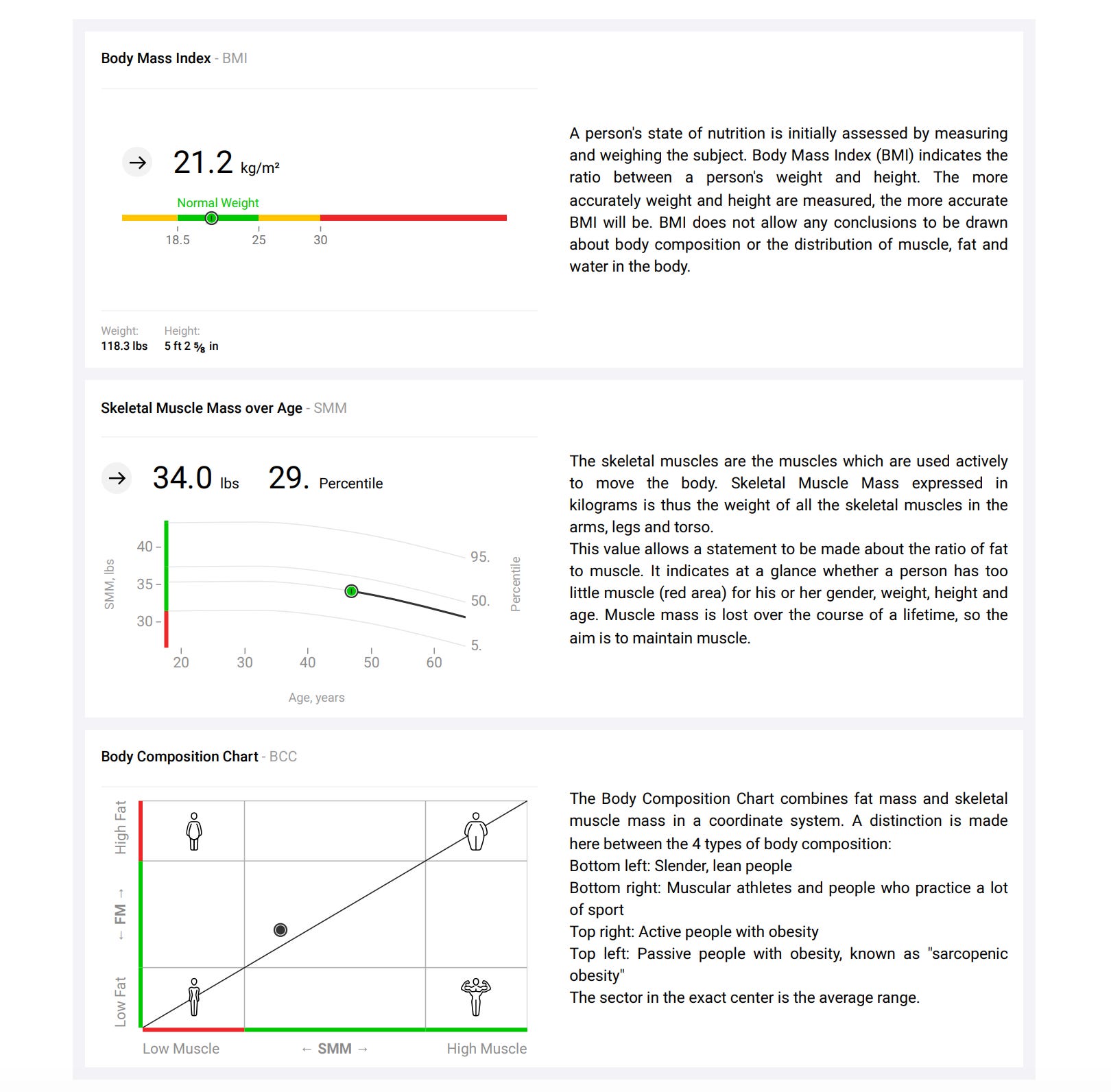
That did not entirely surprise me. I had always suspected I was what people call “skinny fat,” relatively small but without much muscle.
What truly rocked my world was Brooke’s suggestion that I start strength training. Somehow, in all my years, I had never seriously considered lifting weights.
For years, I had proudly identified as a Pilates girl, dutifully attending my weekly classes at Heimat. But after doing essentially the same kind of exercise for so long, I had plateaued. Frankly, I was no longer convinced Pilates was doing very much for me. My body was changing, my weight was creeping upward, and my usual methods were no longer working.
Strength training felt empowering because it offered a viable alternative to simply eating less. I could build muscle, support my metabolism, and protect myself against the muscle loss that becomes more common as women age. I also began learning that I needed to eat a helluva lot more protein.
I signed up for a strength-training gym within walking distance of my house, and I absolutely love it. For the first time in my life, I am doing bench presses, barbell hip thrusts, and Romanian deadlifts. I leave class feeling powerful and not overly sweaty. I hate sweating, and I hate cardio.
This is one change I genuinely believe I can maintain for the rest of my life. At the same time, I began overhauling the way I ate. The prevailing advice seemed simple: eat a protein-rich diet while maintaining a calorie deficit. I aimed for around 1,200 calories a day.
For several weeks, my weight held steady at 116 pounds, and I felt reasonably okay about that. Then, over the course of one week, it climbed to 118.4.
Logically, I knew that beginning strength training could cause temporary inflammation and water retention. Emotionally, all I could see was the number going up again, and my pants were just as tight around my waist, so I wasn’t losing inches either.
On the days when I am not eating out for work, I have been consuming somewhere between 800 and 1,200 calories, drowning myself in Greek yogurt and cottage cheese, and have grown to like my daily chia seed pudding mix with Greek yogurt and almond milk.
A sad day in the life of meal tracking.
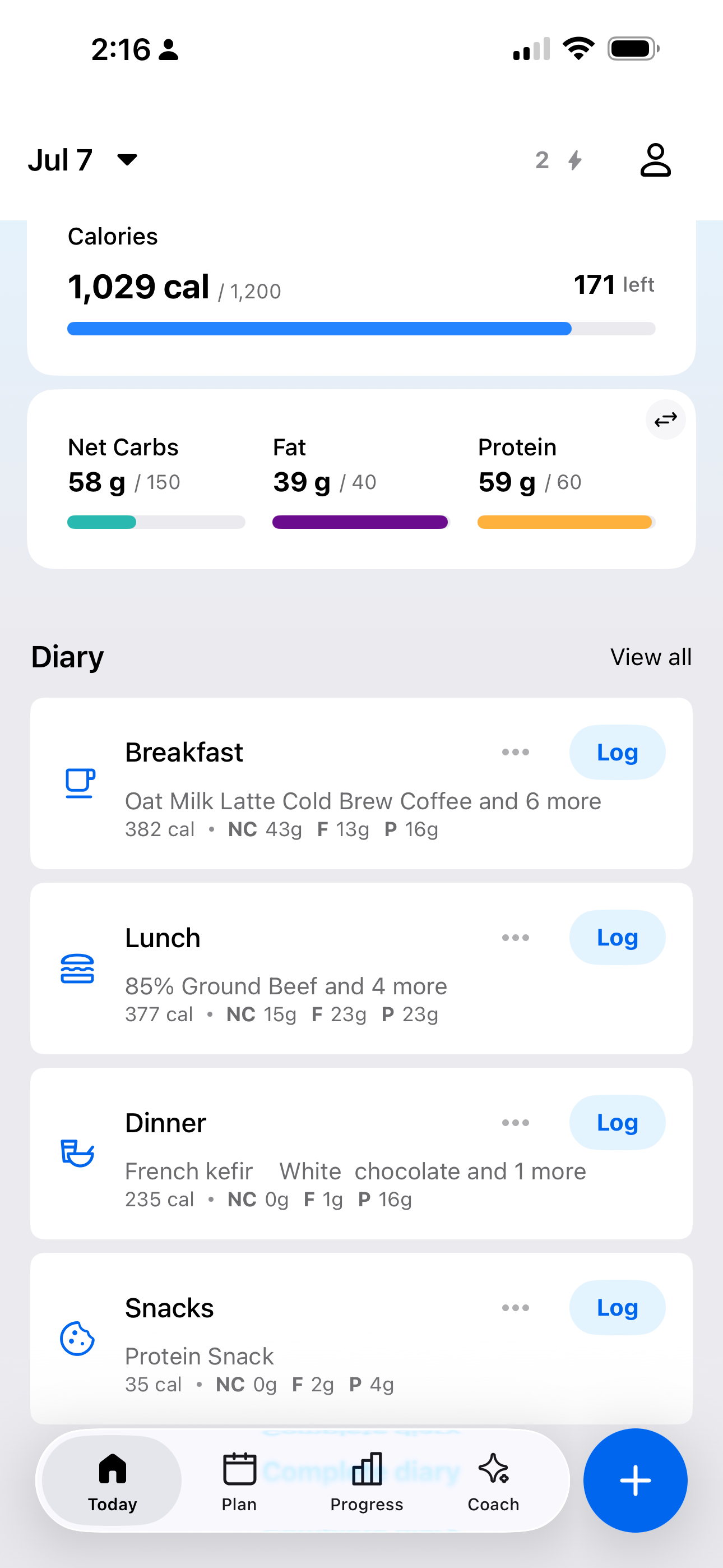
At the moment, I am incredibly frustrated. My lowest weight was 115.2 pounds a few weeks ago, but since then it has been steadily climbing again. My goal is 112, and I do not feel good about putting this much effort into my diet and exercise only to watch the scale move in the opposite direction. Keto has always worked for me, so a few days ago I switched back to it to see if it might work again.
One major complication is that I essentially eat for a living (although it hasn’t been a problem in the past when crash dieting was working). At least once a week, I go out for a decadent dinner for work.
Some weeks, I will log close to 3,000 calories in a single day because I am sitting at a comped meal at a place like Uchi, my favorite sushi restaurant, eating a 12-course custom omakase. And I am going to eat every eye-rollingly delicious bite. I am definitely going to eat the entire fried milk dessert at the end, because it is my favorite thing on the menu.
So this is where I am now: strength training several times a week, tracking my food, restricting heavily on my off days and still feeling as though my body is refusing to cooperate.
I told myself I would give strength training six to eight weeks. If the weight still does not come down, I am going on Ozempic.
More on that later.
No posts
Comments
Nothing yet. Say the first thing.
Sign in to join the conversation.