
In the spring of 2021 my best friend Lola told me I needed to come with her to the northwest corner of Nevada, where she was traveling with a team of designers and architects. Their destination: Fly Ranch, a piece of land owned by Burning Man Project, the nonprofit that runs the eponymous event. The team had won an RFP run by Burning Man in concert with the Land Art Generator Initiative, a nonprofit, to imagine regenerative design and development on Fly. Reeds still grow around the property because it’s an ancient lakebed; the playa where the Burn happens is the ancient lake itself. You have to watch out for wild horses and in the first week of July we got up at six a.m. to make rammed earth for an in-situ prototype, before temperatures inescapably rose past 100 degrees by noon.
Alfalfa farms hug Fly’s northern border and it’s geothermally active and once a drilling expedition accidentally generated a geyser and there are dozens of miniature mountain ranges and islands of rock and yet still bigger mountains rise in distant view of the property, which is a two-hour drive from Reno. The moony desert landscape comes out of nowhere. It’s impossible in the late summer or early fall when the air is still and warm not to feel like you’re on the precipice of a discovery, some series of events that will transform your worldview.
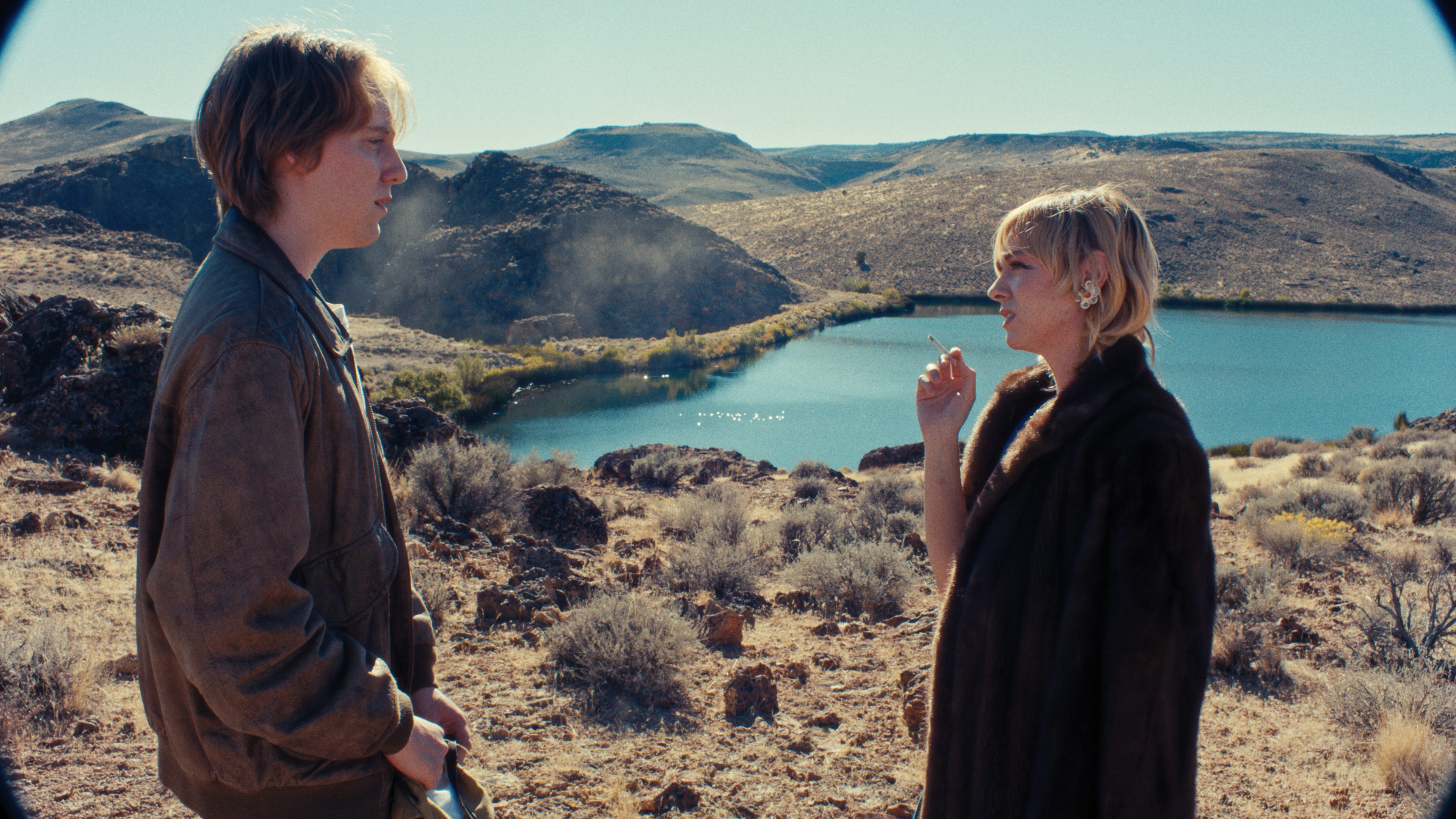
One way we sought refuge from the blistering heat on that first trip was to visit an old agricultural reservoir nearby. This is another case of an unexpected thing hiding behind big objects: a dirt road descends suddenly to sparkling turquoise water, surrounded by sloping, craggy hills. Campers park their RVs, go fishing, kayaking. One afternoon a pair of conservative-looking geriatric vibe-killers admonished our party for skinny dipping and “causing a disturbance” or something, so we drove to the reservoir’s other side and encountered a jubilant group of naked people with beers and floaties.
On Fly Lola and I felt like we’d severed the connection to our former lives (not permanently), and at least for the time being some visual documentation was necessary. I was in fact on hand to film everything the design team accomplished, and mostly Lola and I responded to environmental stimuli. We found a cabin on chicken legs transplanted from the playa where we filmed a scene for Sankyo Stream, the web series I made throughout college.
That December Lola called me and said that we needed to make a feature film together: she would produce and I would write and direct. The declaration was not explicitly related to our Fly Ranch trip, only the time we’d spent together having that precipice-sensation over and over again. Within five minutes I said yes, and though for a while the idea of realizing our plan felt abstract, Lola’s ambition was already known to me as uniquely effective and concrete. It has since become superhuman.
A few weeks later we went to Reno, which we soon decided should be a counterpoint to the reservoir, whose significance collided with a script I had written a year before, about a teenage girl who discovers that a swimming pool in Las Vegas is a time portal. The reservoir became the time portal and Reno the locus for teen ennui and afterward I collected the memories and pieces of emotion that resided within my still-recent adolescence. I had for a while been planning on constructing periods of just-past life as containers for feature-length writing. Sparks, a suburb of Reno, became a site of projection, whose locations could house an ensemble—a sprawling ensemble was also an early priority—that voiced questions about the future, senses of insecurity or sexual desire or queer belonging, questions I could divide across dialogue and set pieces.
Lola decided on a month—October 2024—when Reno was especially temperate. And we moved backwards from there. Lola started out as and has remained the only producer on Sparks. We hired the crew and cast the film (partly by talking to the friends we knew who knew great actors, people like Miles Emanuel, Christian Palomares, Max Wittert, Naomi Rubin) and scouted and secured the locations ourselves and built a network of dozens of folks on the ground in Reno, San Francisco, Paris and Gerlach, Nevada, which is the most remote town in the continental United States.
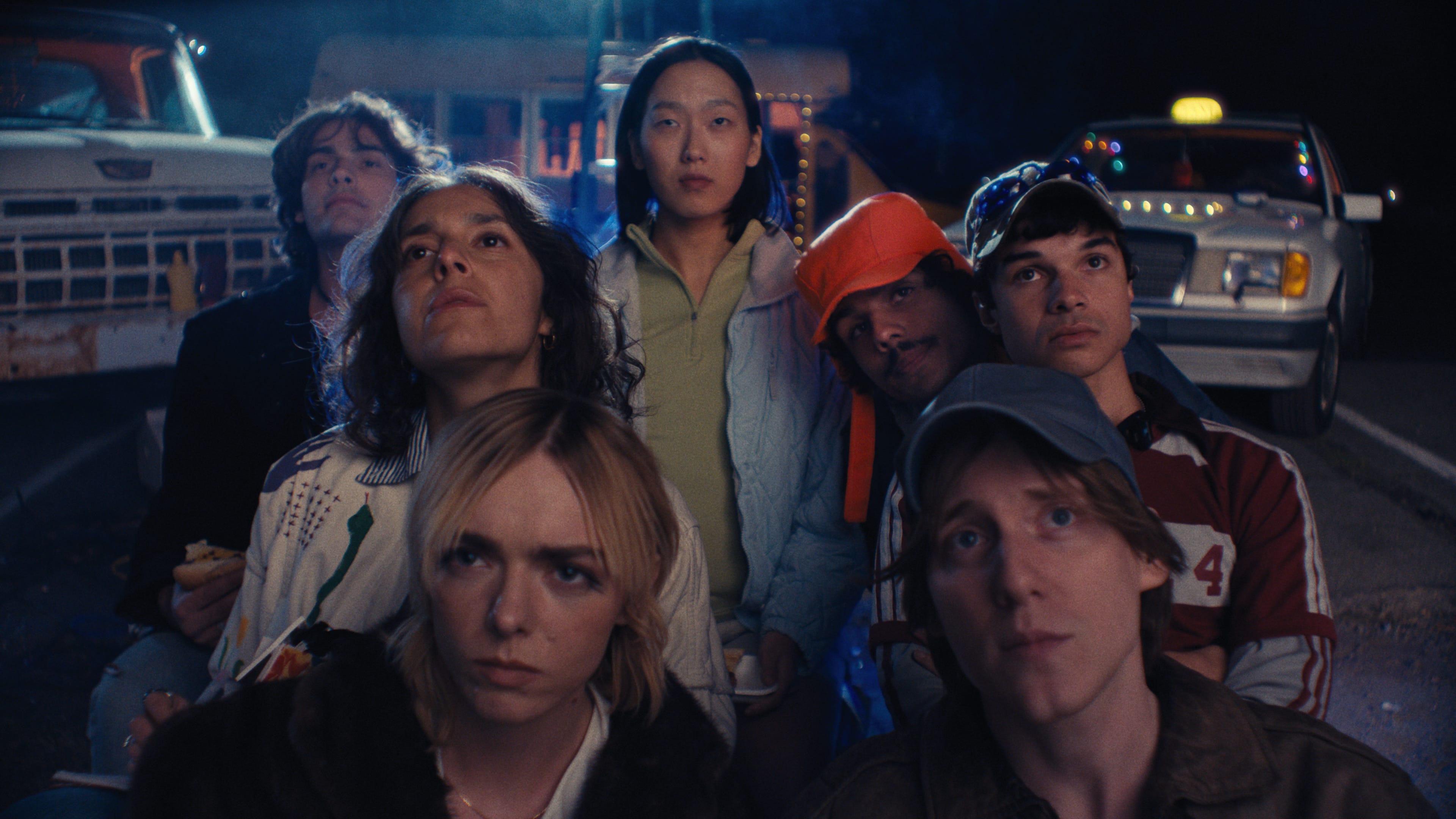
It was indeed October 2024 when we shot the film across 23 days, plus an extra one in Paris a few weeks later and another three days in Reno last September. Sparks follows teenagers in the namesake suburb who are convinced that this reservoir I have mentioned is a time portal. But the film starts with a character named Cleo, who is new to Sparks when she discovers a cigarette vending machine which inexplicably expels a book on Jean-Luc Godard. As summer kicks off Cleo meets the Crop, a rag-tag group who has commandeered an abandoned drive-in theater, and by this point she has morphed into a cinephile. When she learns of the Crop’s reservoir visits, she’s certain that she could time travel and meet Godard in 1960s Paris.
Sparks stars Elsie Fisher, who you may remember from Bo Burnham’s Eighth Grade, as Cleo; and Charlie B. Foster in his feature film debut as Antoine, the Crop’s de facto leader. The ensemble is rounded out by personalities whose quirks and chemistry I will treasure forever: characters played by Denny McAuliffe, Madison Hu, Simon Downes-Toney, Thomas Deen Baker and Julia D’Angelo. Keldon Duane-McGlashan, my high school bestie, is the director of photography and was his own camera operator. Naomi Rubin was our assistant director, Natasha Parbhu our production designer and Claire Easton our costume designer. Jane Paknia composed an original score for the film which includes two live pieces recorded by ten instrumentalists each.
What I can share today is that Sparks will have its world premiere at South by Southwest (SXSW) next month in Austin, Texas. I have long envisioned South By as the festival launchpad for Sparks, partly because it’s the first film festival that swept me off my feet, which introduced me to the pastime of exploring ideas and images as if I can know them all. The festival’s programming instincts also overlap pretty perfectly with the optimism and openness (and restlessness) that’s core to the film’s DNA.
South By will mark the beginning of the Sparks festival journey. I have a lot more to share and literally hundreds of people to thank who delved into the world as it developed and worked further to build it or support it from the outside, whether in the first few months of me and Lola saying “yeah, we’re making a movie” to the most recent stages of postproduction. This written space will be—as it has been since I started Fergstack, though in a more cryptic way—the home for reflections on the experience of making Sparks and processing it and learning from it and planning for the next project.
But don’t expect any reflecting quite yet: WE’RE MOBILIZING FOR AUSTIN!
-
Until next Thursday,
Fergus
No posts
Comments
Nothing yet. Say the first thing.
Sign in to join the conversation.