
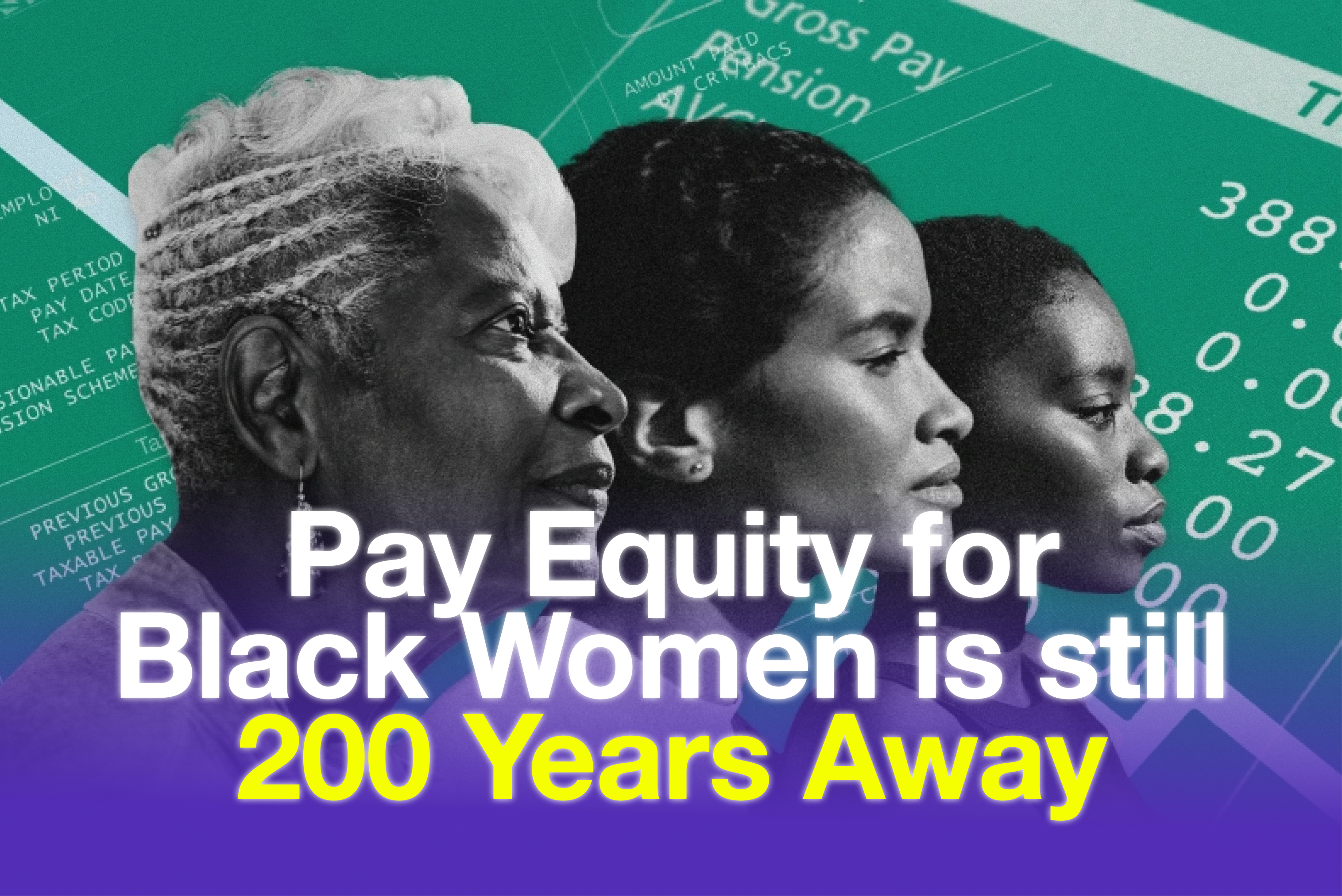
Black women's labor in the U.S. has always been exploited. For centuries, Black women’s labor has fueled the U.S., from forced labor under slavery to underpaid service jobs after emancipation. They’ve long faced exploitation, exclusion from labor protections, and wage discrimination even in professional roles. Today’s pay gap – Black women earning just 65 cents to a white man’s dollar – isn’t new. It’s the legacy of a system built to undervalue their work.
Over a 40-year career, this wage gap can accumulate to nearly $1 million
in lost earnings.That’s a $1 million gap that Black women face because our systems don’t value Black women’s labor — instead, it’s exploited. It’s a gap that forces Black women to live out of survival, limiting them to the opportunities, experiences, and resources that could drastically improve their lives. Living out of survival due to the wealth gap creates a life for Black women that can feel unstable, anxiety-ridden, and unsafe.
Cassandra Welchlin
Executive Director, Mississippi
Black Women’s Roundtable
Without paid family leave, Black women are often forced to choose between a paycheck and caring for a sick child
Discrimination and harassment drive Black women out of higher-paying fields
Political backlash against DEI efforts is shrinking opportunities and visibility
Many Black women endure harassment in silence, relying on tips to survive on a sub-minimum wage as low as $2.13/hour
Black women are overrepresented in caregiving roles, and caregiving work is seen as having less value
All of this unfolds alongside attacks on reproductive freedom – a key pillar
of economic agency
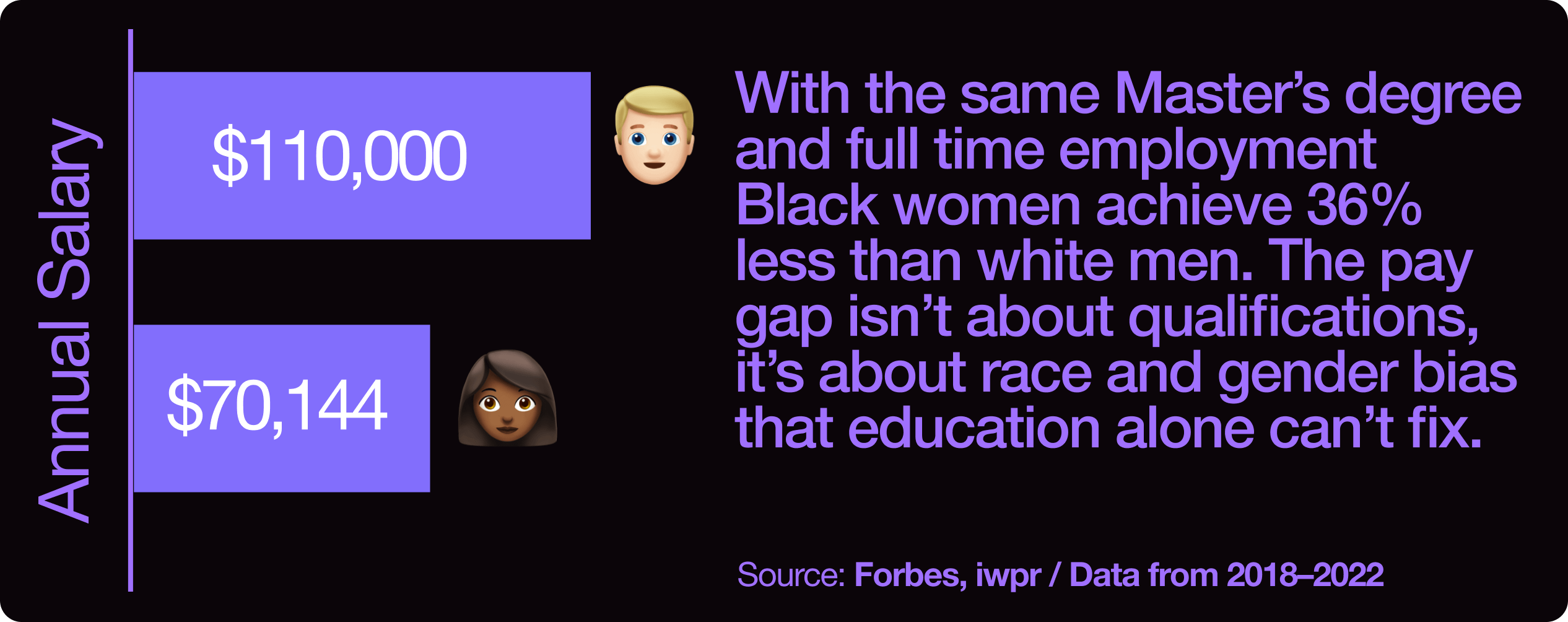
Higher education generally increases earnings for everyone, but it doesn’t eliminate disparities. For Black women who attain higher degrees such as Master’s degrees or Medical Degrees, the wage gap steepens as their education levels rise.
Black girls are also more likely to attend underfunded schools, face harsher disciplinary practices, and encounter institutional racism throughout their education. Even after overcoming those obstacles, Black women often graduate with higher levels of student debt than any other demographic, creating an additional financial burden before their careers have even begun.
Additionally, the history of targeting Black women through reconstructed welfare reform still heavily impacts Black mothers’ ability to complete a secondary degree. The welfare reforms introduced in the 1990s prioritized "work-first" policies, making it difficult for Black mothers to receive Temporary Assistance for Needy Families (TANF) while pursuing a college education.
Now, in 2026, despite enrolling in college at high rates and earning more advanced degrees than ever before, the returns on that investment remain unequal. As the Institute for Women's Policy Research notes, Black women often need a bachelor's degree just to earn what white men make with a high school diploma.
Despite the scale of the gap, Black Women's Equal Pay Day receives a fraction of the attention given to broader gender pay inequality. In 2024, Women's Equal Pay Day received 20 times more press coverage than Black Women's Equal Pay Day, leaving the specific barriers facing Black women largely overlooked.
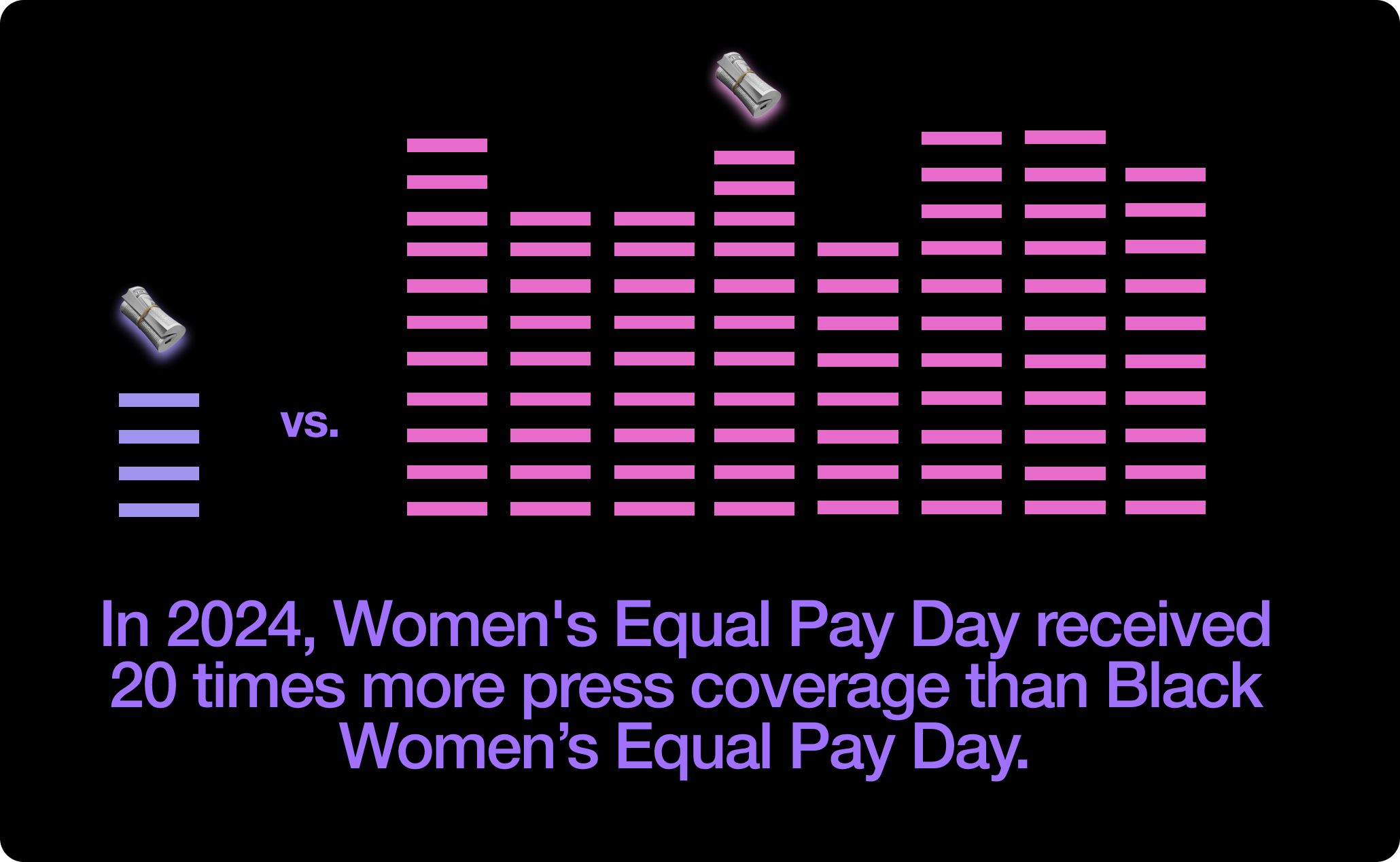
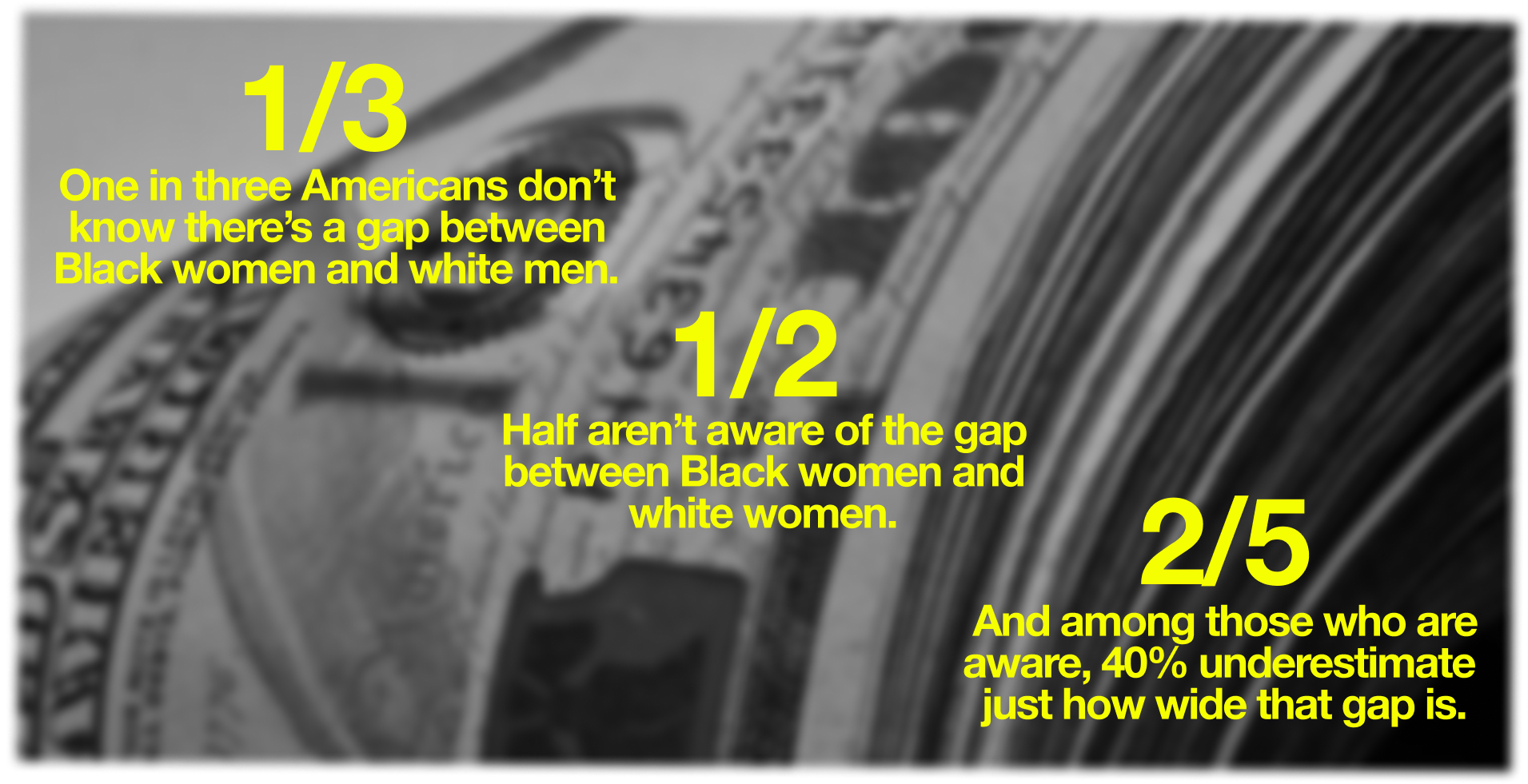
That lack of visibility has consequences: when the public doesn’t understand the problem, there is less pressure on employers, lawmakers, and institutions to address it. Equal pay cannot be achieved if the women most affected by the gap remain the least heard.
At first glance, the latest jobs data looks like good news for Black women. Their unemployment rate fell from 7.07% in March to 5.73% in July. But the headline number hides a more troubling reality.
An unemployment rate can fall for two very different reasons: because more people found jobs, or because fewer people are being counted after leaving the labour force altogether. For Black women, it was the latter.
Between March and July, the working-age population of Black women grew, yet employment fell by more than 200,000. At the same time, hundreds of thousands left the labour force, meaning they were no longer counted as unemployed because they had stopped actively looking for work. In total, the number of Black women outside the labour force increased by more than 450,000.
The result is a statistical illusion: the unemployment rate improved on paper even as Black women’s position in the labour market worsened.
Jessica Fulton
Senior fellow at the Joint Center for Political and Economic Studies
Blocked by pay gaps and discrimination, many turn to entrepreneurship—not just for income, but for freedom, stability, and community power. Black women are the fastest-growing group of entrepreneurs in the U.S., generating $422B in revenue and employing over 647,000 people nationwide. But success in spite of the system isn’t equity. Black women-owned businesses generate $98.3B and drive growth nationwide—yet funding remains out of reach. Entrepreneurship isn’t a fix for inequality. It’s another place where we must invest, support, and advocate.
Comments
Nothing yet. Say the first thing.
Sign in to join the conversation.