
📌 In collaboration with Flynance – Anais Huré & Daniel Ding
Learn more about Flynance on their website. Follow their journey on Instagram and TikTok.
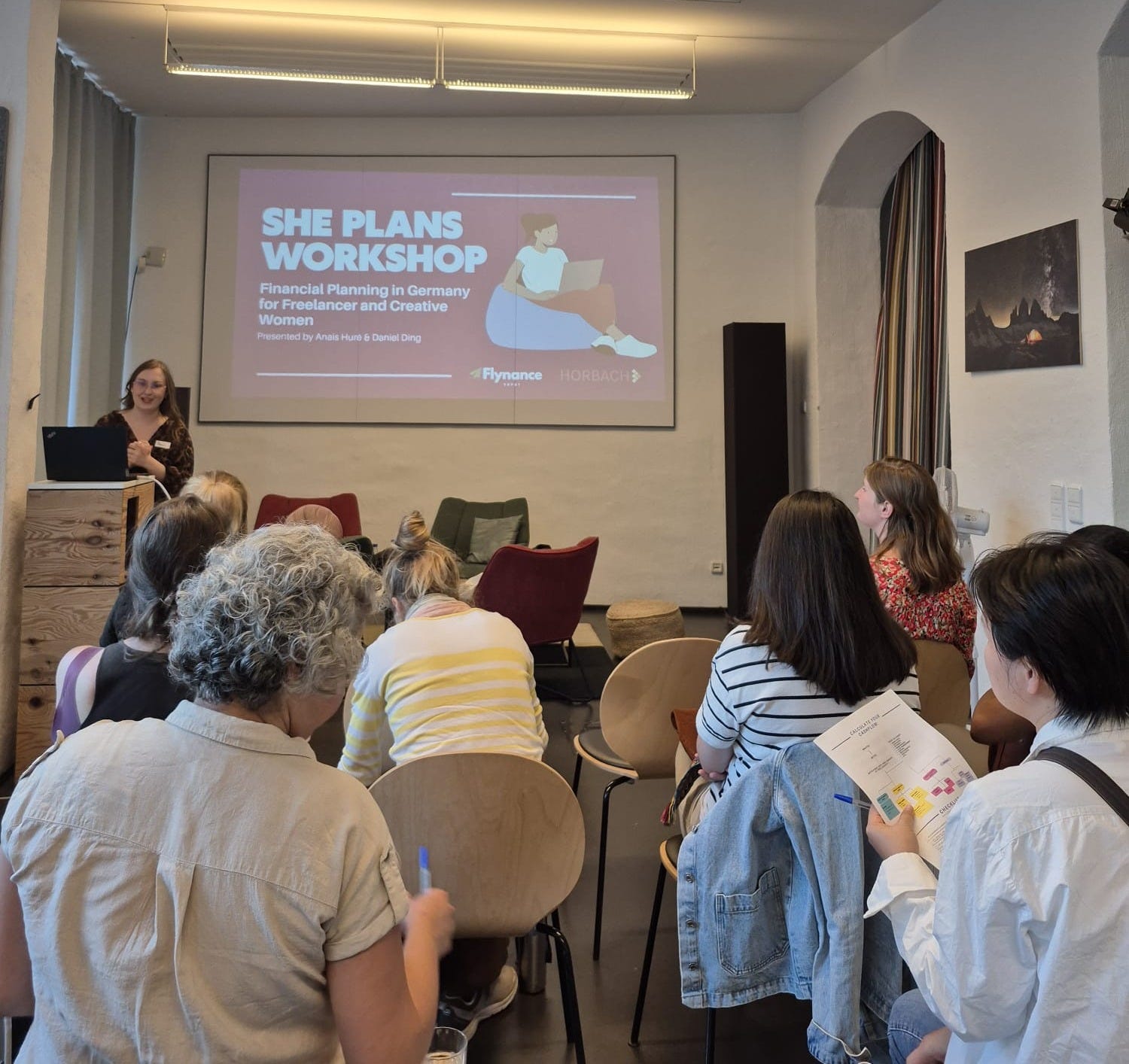
This workshop was designed especially for women living in Germany, to help us understand key financial concepts, start investing with confidence, and make our money work for us — building a strong, independent financial future.
Conservative investors: Women tend to invest more cautiously, which can slow down wealth growth.
Gender pay gap: The difference between the average hourly pay of men and women in Germany is around 16%. This is partly due to biases where women — especially mothers — are perceived as less competent or less committed, impacting promotions, salaries, and access to training.
Financial literacy gap: Many women have less exposure to financial education, making it harder to seize investment opportunities.
It’s about freedom and equality: Financial independence isn’t just about money — it’s about having choices, security, and the ability to live life on your own terms.
Cashflow awareness:
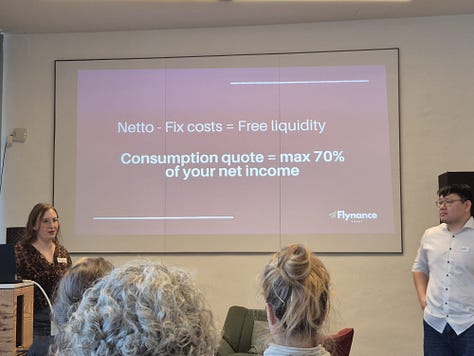
Net salary – fixed costs = free liquidity.
Your consumption rate should be a maximum of 70% of your net income.Emergency fund: 3–6 months of net income saved to cover unexpected expenses.
Insurance basics:
Health insurance (mandatory in Germany)
Liability insurance – 90% of people in Germany have it
Disability insurance – Coverage depends on age, occupation, and work-related risks
Why insurance matters: Protects against financial losses from burnout, depression, stress, cancer, spinal/movement issues, and other serious health challenges.
Short-term investments – focus on safety & liquidity:
Savings accounts
Emergency funds
Mid-term investments – aim for growth with manageable risk:
Stocks
ETFs (Exchange-Traded Funds) – a basket of diversified investments
Real estate
Private equity
Long-term investments – build retirement & legacy:
Public pension (eligible after 5 years of work in Germany, even if retiring abroad)
Private retirement plan (e.g., Rürup – fully taxable, Riester, flexible private plans)
Company pension plans
Group investment schemes
Insurance as part of financial stability:
Health
Liability
Disability
Other tailored insurance depending on your life stage
💡 The first step is the hardest — but start small! You don’t need a large sum to begin investing.

Mindset for Successful Investing
Long-term thinking — focus on sustainable growth, not quick wins
Discipline over emotion — avoid impulsive decisions
Consistency — small, regular investments add up over time
Risk awareness — understand the risks before you commit
Goal-oriented approach — align your investments with your personal and financial goals
Common Mistakes to Avoid
Chasing trends or hype without research
Panic selling during market drops
Lack of diversification (putting all your money in one type of investment)
Unrealistic expectations about returns and timelines
5 things you want to have or do during retirement.
What steps can you take now to make those goals possible?
No posts
Comments
Nothing yet. Say the first thing.
Sign in to join the conversation.