
At seven years old, I got scratched by a bookstore cat. The bookstore was Second Story Books in Bethesda, Maryland. The cat was a massive black specimen who haunted the musty shelves of first editions and vintage vinyl. Embarrassed and unnerved by the attack, I didn’t tell a soul. The wound got infected, swelling into an angry red vine that snaked across my hand. Still, I told no one, but by then it was too late. The bookstore cat’s venom had already done its worst, foreclosing any future achievements in medicine or law, turning me into a bookish dungeon dweller slavishly devoted to feline pursuits.
Years passed, and the changes became clear. Once a talkative child, I took to speaking in monosyllabic chirps. Once a social butterfly, I spent my time reading or writing alone in my room. When my family went to the beach, I decamped to the nearest bookstore to devour pages of dusty books like a suburban silverfish. When my friends offered me normal drugs like marijuana or speed, I said, No thanks, just some cat tranquilizer for me. In 1999, the only song I listened to on repeat was Lords of Acid’s “Pussy.” And when it came time to write a college entrance essay, I penned mine about the kinds of cats famous philosophers might be. A quarter century later, I’m still writing far too much about cats. Such is the power and the danger of a bookstore cat’s scratch.
Mystical and unknowable, these creatures date back to the dawn of the written word. Long before mercantilism made the bookstore cat, there was its equally enchanted ancestor, the library cat. Pawprints on cuneiform tablets, fang marks on papyrus scrolls. A whole cadre of cats stalked the shelves at the Library of Alexandria. It’s a shame the scholars forgot to feed them that time. In the Middle Ages, felines kept the scriptorium—and sacred texts of all kinds—vermin-free. By the 18th century, some governments were paying libraries to keep cats, and bookshop owners knew to have them on hand to take care of mice and rats.
But it’s naive to believe their presence was purely practical. If you’ve ever encountered a cat living in a literary place, you can’t deny something else is at play. Such a cat is more a genius loci of the library—or bookstore—than a mere form of pest control. He or she may have a magic ability to protect the books and the building, but may infect visitors with an incurable mania, too. Maybe it comes from a scratch or bite. Maybe from stroking a soft coat a bit too long. Even making eye contact with certain elders of the bookstore cat breed can be enough to cause irreparable harm.
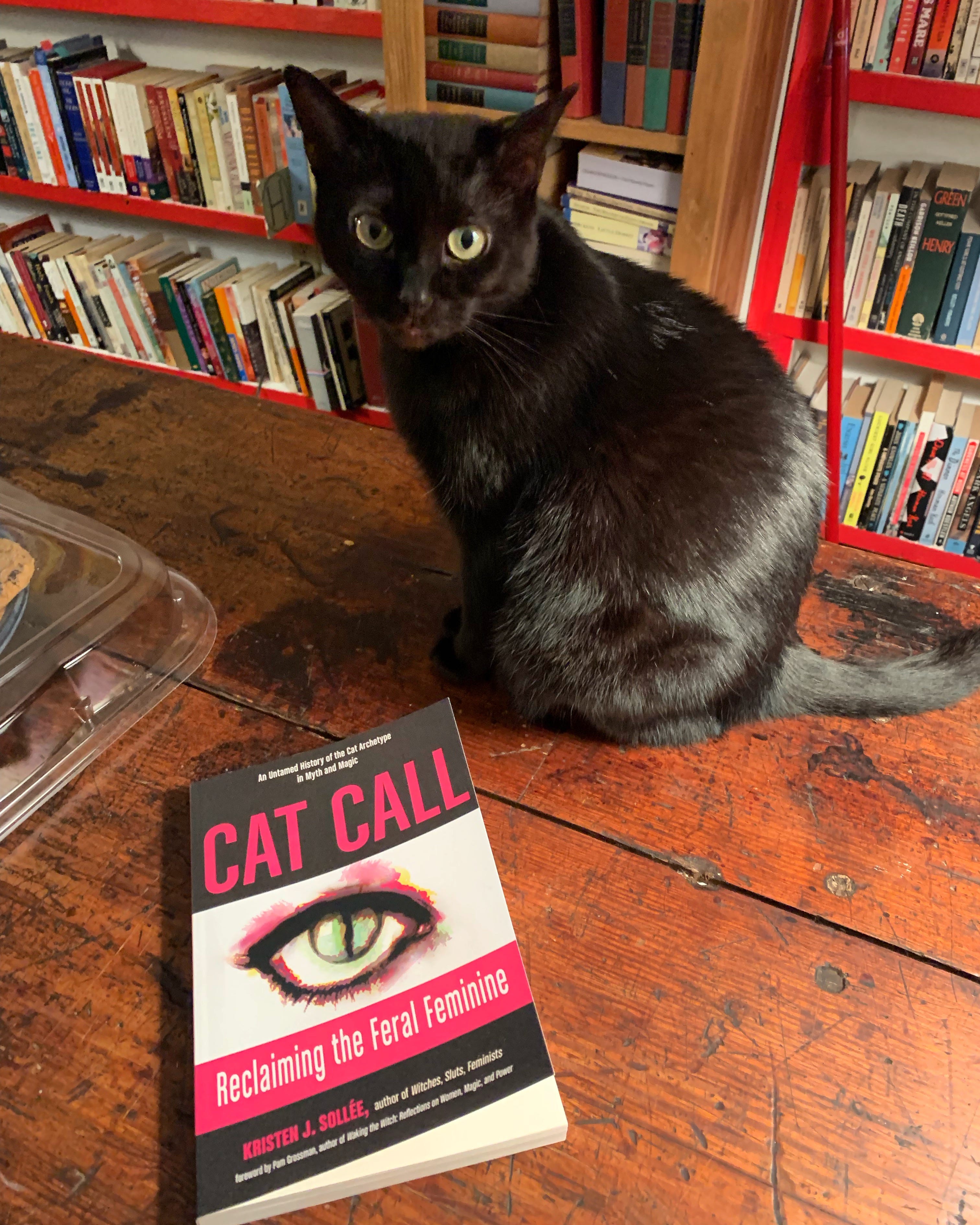
The last time I encountered a bookstore cat was in 2019 while on a book tour. It’d been years since I’d seen one, and I was wary at first. But the creature recognized me right away—she could smell the venom in me, I think. The cat’s name was Keke, a black beauty who still resides at The Booksmith in Chestertown, Maryland. After reading from my new book about—yes—cats, Keke approached and began to purr. In her vibrations, in her glowing eyes, I heard a welcome and a warning. She knew the venom had changed my life, at times for the worse. She knew it had made me into someone without wild success or wealth or skill, but who was nevertheless still obsessed with both her kind and the written word. As I gazed down at her, she unsheathed her claws just a little bit, perhaps to let me know I’d never been in control. Then she brushed against me before slinking off on her strange, winding path. And that, I suppose, was the apotheosis of the bookstore cat’s scratch.
Comments
Nothing yet. Say the first thing.
Sign in to join the conversation.