
It’s July in Kyoto. The humidity hangs on me like a wet fur coat as I pass beneath the torii gates at the Fushimi Inari shrine. One painted gate after another is staked up the mountainside, the distance between them so close at times they blur together. The vermilion passage casts a lurid glow in the late afternoon light, closing in around me like some haunted hallway. Like I’m in the gullet of a great orange snake, and the only way out is through.

My breath comes in ragged gulps and the brine of sweat is all I taste. I should stop to rest, but I’m trying to keep pace with a lone figure ahead, an old woman moving steadily with the help of a walking stick as thick and gnarled as her calves. I didn’t see her when I started off. But somehow she’s here now, and has been for the past half hour—the only other person on this stretch of trail. I’m not alone if she’s nearby, I think, and after weeks of traveling alone, a little company, however distant, is all I crave.
In the forest around me, not a bamboo stalk sways, like the heat has forbade anything to move. Birds shriek warnings from the trees. If I stop to rest, I may never move again.
The torii tunnel spits me out at a switchback and the fiery gates overhead give way to soothing blue sky. I watch the woman disappear from view as the trail jags left, though I am close enough now to hear the thud of her walking stick against the ground. According to my map, there’s a small shrine ahead, one of many that dot the path leading up to the mountaintop. I wonder if the woman and I will briefly converge there, so I rehearse some pleasantries in my mind. The sort of things you say upon passing a stranger on a long and winding trail.
When I arrive minutes later, the shrine is empty. I circle the spot, seeing only bright red bibs tied around stone kitsune statues, there to ward off evil and illness, following Shinto belief. Small torii gates are everywhere, miniature replicas of the hundreds I’ve just passed through. Looking up the mountainside path, I wonder how the old woman could have disappeared so fast, covering so much distance in so little time. Then a dawning sense stirs the hair on the back of my neck, though the air is wet and still. Slowly, I turn around. From beneath one of the tiny torii gates, I meet the gaze of a cat. A weathered, tawny cat with bright green eyes and a presence that pulses through the trees. I glance again at the yawning expanse of empty path with the woman nowhere in sight and a strange thought blooms. In case the thought proves true, I speak my pleasantries to the mute feline face trained on mine. For perhaps it is just as I thought: the old woman and I did converge at the shrine.
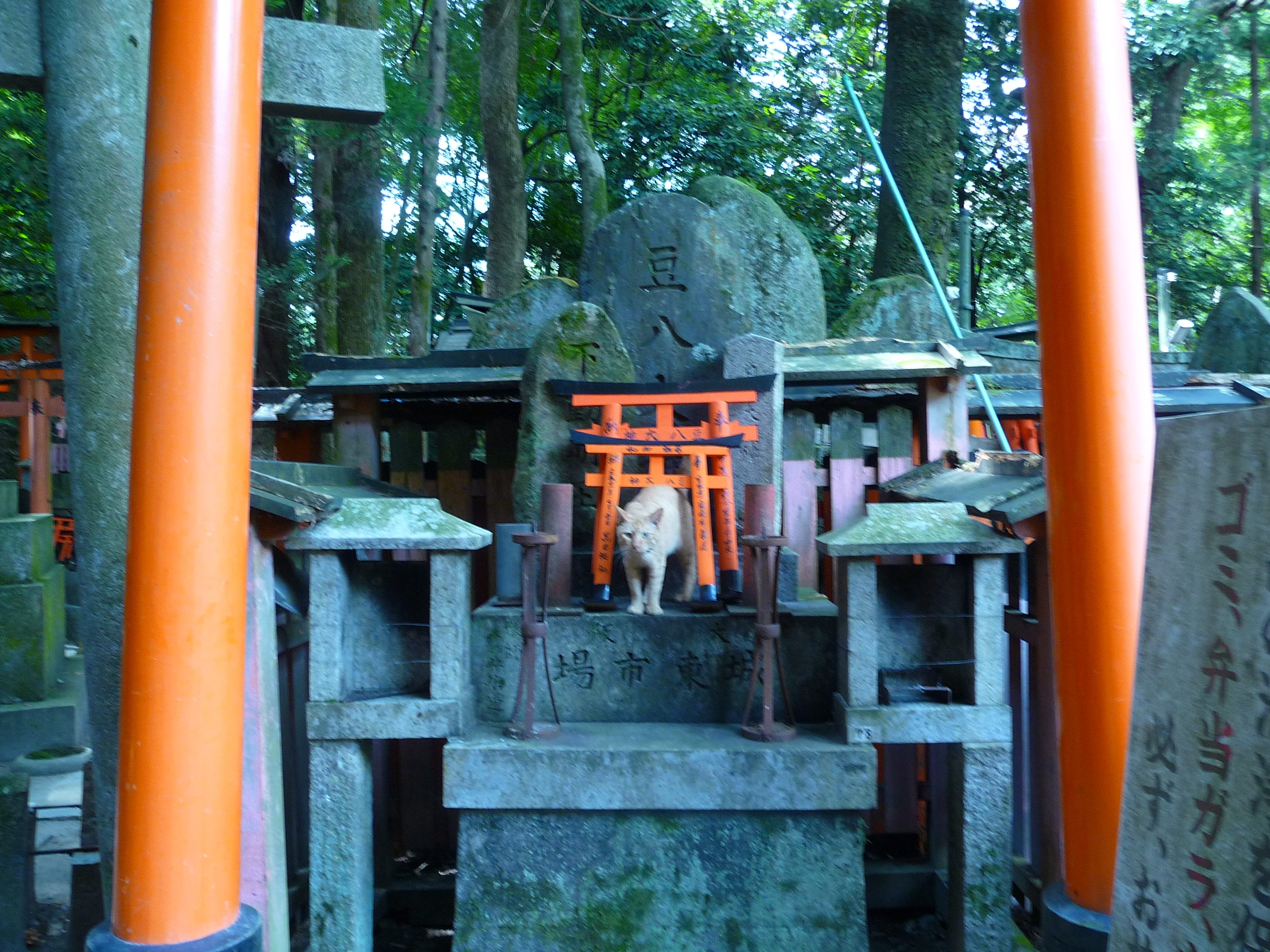
Today is National Cat Day in Japan (猫の日), so it feels fitting to recount the time I may or may not have encountered an uncanny cat at the Fushimi Inari shrine. The belief that solitary old women/witches can change into cats isn’t unique to any one culture, of course. But in Japanese folklore, one such yōkai (妖怪) or supernatural entity is known as Yamamba/Yamauba (山姥), the cannibalistic mountain crone who can transform into a monstrous feline. Like her analogs in other places, she is rejected by society and lives a solitary existence in the wild until someone (usually a man) happens to stumble into her territory and becomes a snack. Ōba Minako’s short story “The Smile of the Mountain Witch” (1976) documents one such traveling man’s reaction when he runs into an old woman in the woods. “What a spooky old hag!” he thinks to himself upon seeing the “monster cat of a woman” with “yellowed teeth” that are “uneven and ugly like those of an aged cat.” He soon realizes she can read his thoughts as he thinks them and that it probably won’t end well.
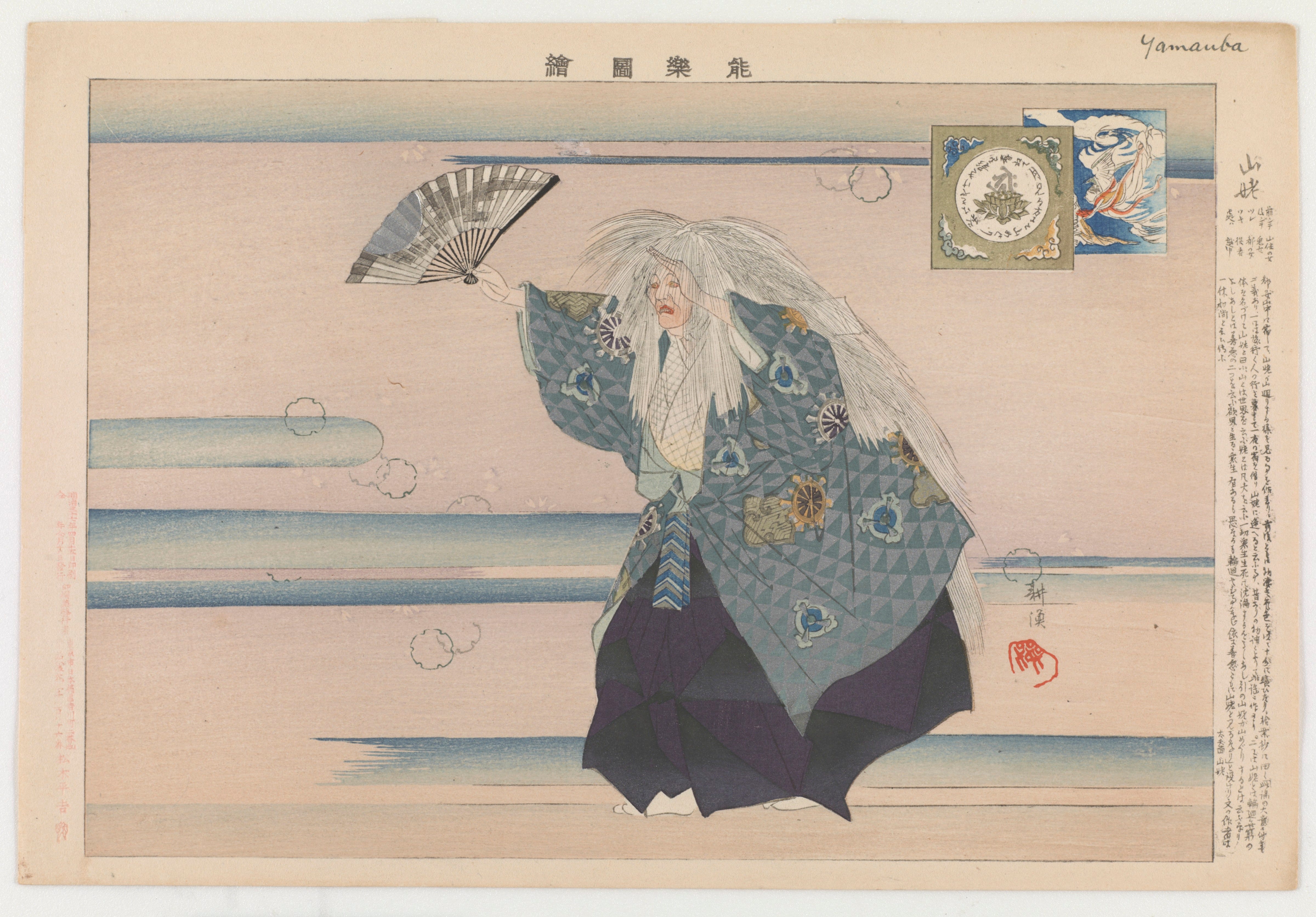
Some of the most iconic supernatural figures reflect a fear of aging women (Yamamba, Rangda, and Baba Yaga are my favorites), but what’s also present in Japanese lore is a fear of aging cats. There are multiple types of yōkai known as kaibyō (怪猫) or ‘strange cat’ that begin as everyday felines but upon reaching advanced age, gain the ability to shapeshift. As they grow long in the tooth, their tails stretch longer, too, and they acquire an appetite for mischief, destruction, and sometimes murder. Thirteen is often the magic age when this occurs, but a cat can be as young as seven when the switch flips. In The Book of Japanese Folklore, Thersa Matsuura details stories of families freeing their felines after they reach five just to be safe, wishing them well and hoping they won’t return later with a grudge.
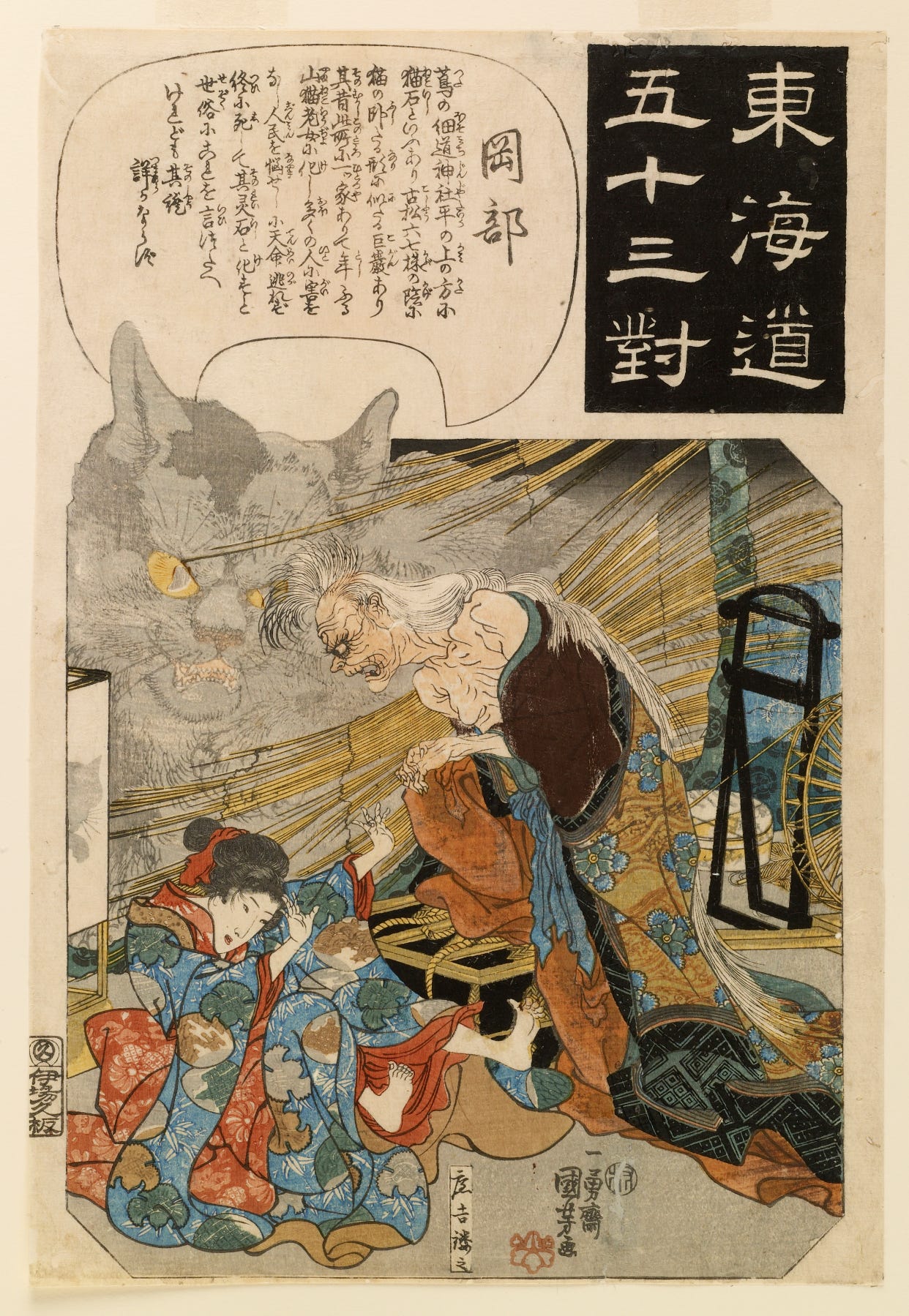
There’s plenty of overlap between types of kaibyō, but the single most recognizable is the bakeneko (化け猫) or monster/ghost/changed cat. They are known to stand on their hind legs and dance with towels wrapped around their heads and can take human form. Sometimes they’re bloodthirsty, sometimes not. Utagawa Kuniyoshi depicted the ‘Cat Witch of Okabe’ in one of his woodcut prints, a legendary bakeneko who supposedly haunted the grounds of a temple in Okabe disguised as an old woman in order to lure young women inside to eat.
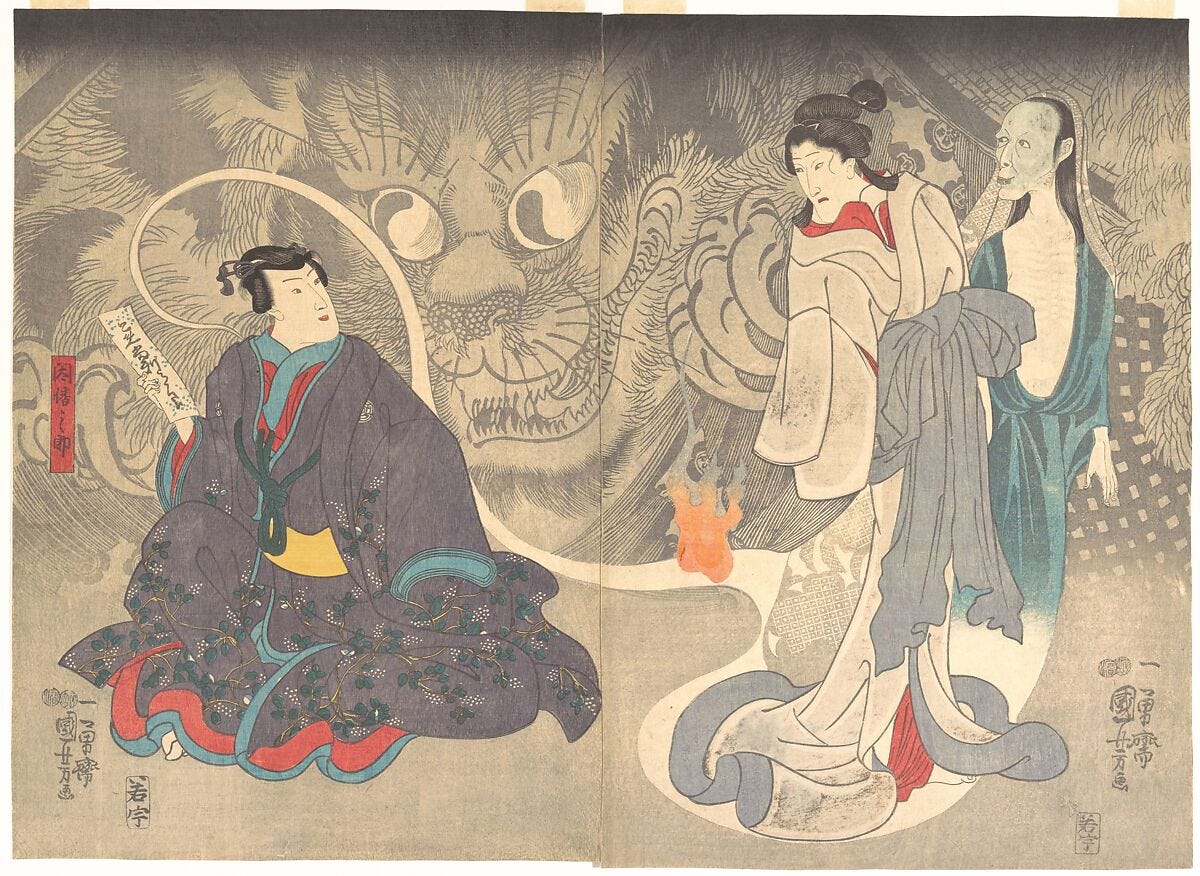
Another type of kaibyō is the nekomata (猫又), the split-tailed cat who can control fire, play the shamisen, raise the dead, speak in a human voice, and appear as one of us. They come in two types—mountain-dwelling and domestic—and are more likely to be malicious than your average bakeneko. One infamous nekomata is immortalized in Tsuruya Nanboku IV’s kabuki play “The Demon Cat of Okazaki” (1827) as well as in woodcut prints by Kuniyoshi. In the tale, a group of weary travelers stop for the night at an abandoned temple where an old woman lives. She welcomes them inside, dressed in the fine clothing of a court lady. Nothing seems amiss until she bends low over an oil lamp and the shadow she casts gives her true nature away. Also, being a cat, she can’t resist licking the fish oil inside the lamp. Knowing the jig is up, the demon cat begins to devour the travelers one by one, but is eventually defeated by the last man standing who slays her with his magical sword.
The kasha (火車) is another bakeneko who can steal corpses from graveyards, so people sometimes held false funerals to outwit them. (Celtic folklore has a similar feline, the Cat Sìth, who might steal the soul from a corpse if you aren’t careful). There are plenty of other kaibyō, particularly regional variations of the ones I mentioned, but advanced age is the common thread, as is a taste for fish oil.
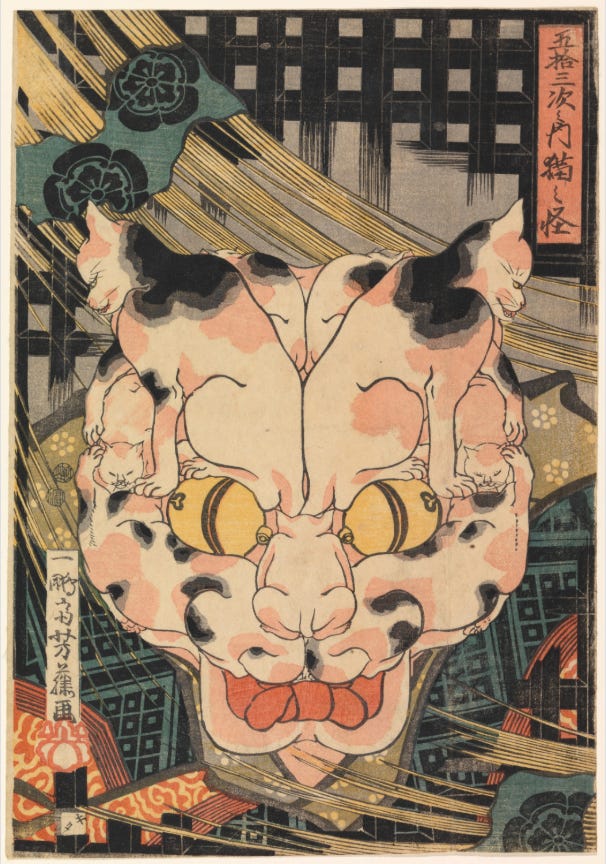
Whether yōkai or everyday feline, whatever I saw at the Fushimi Inari shrine was venerable. Something with presence and wisdom far greater than mine. Cats are usually celebrated for their cuteness, which is defined by a proximity to youth and all its attendant roundness and stubbiness—the ‘Aww’ factor as scholars of cute studies call it—but we ought to celebrate our feline crones, too. The kind of cat hags who age into their power. Who may turn one day and speak to you in full sentences. Who may know their way around an instrument. The kind who stand on hind legs and dance in the dark of the night and spend far too much time with the dead. The kind who just may appear to you as an old woman when you’re out walking alone in the woods.
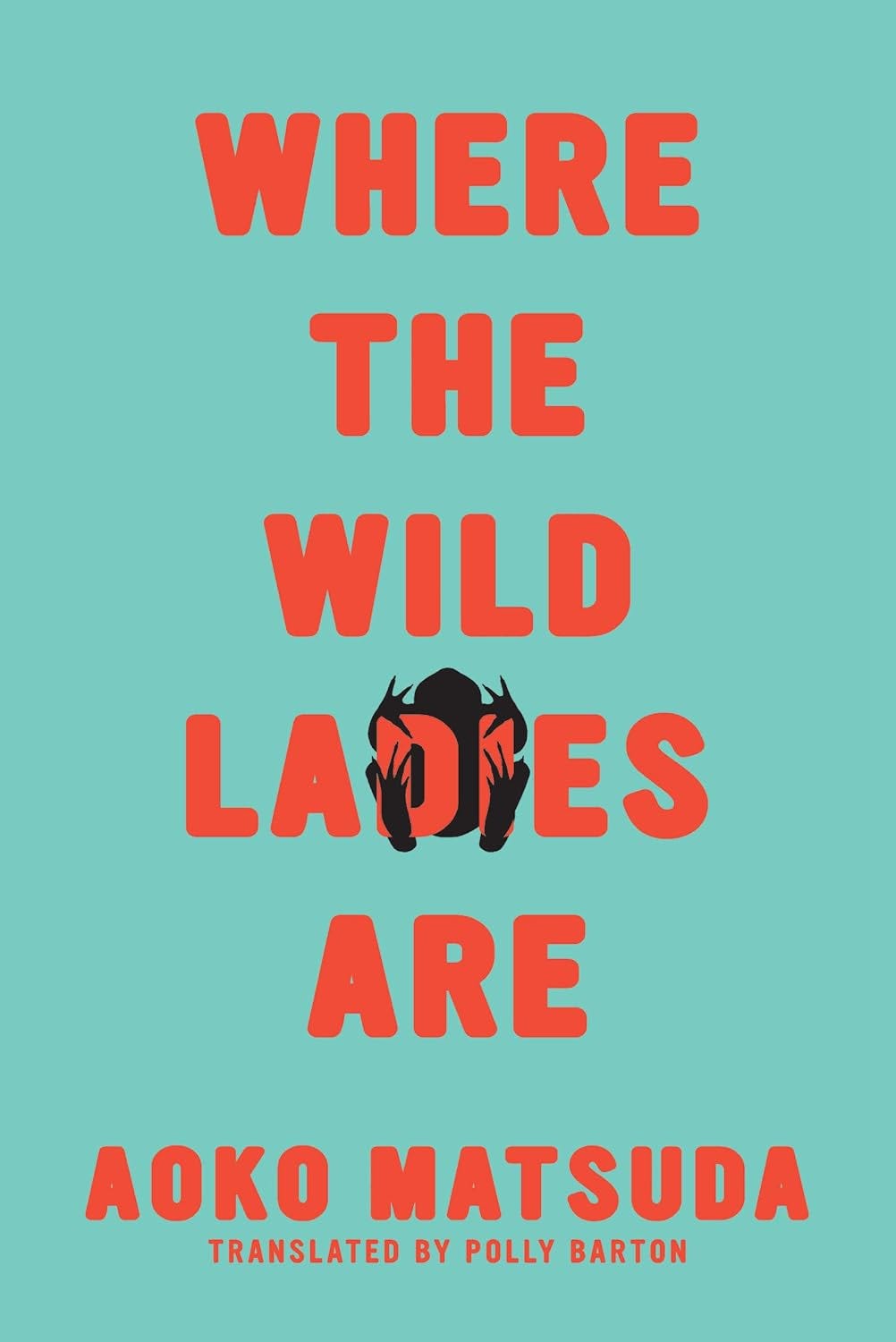
Ghost lovers, shapeshifting foxes, magical trees, and yes, a beloved pet cat haunt Aoko Matsuda’s feminist re-tellings of classic Japanese folktales. Ranging from eerie to uncannily sweet, Where The Wild Ladies Are is a collection I’ve returned to over and over since I first read it in 2020.
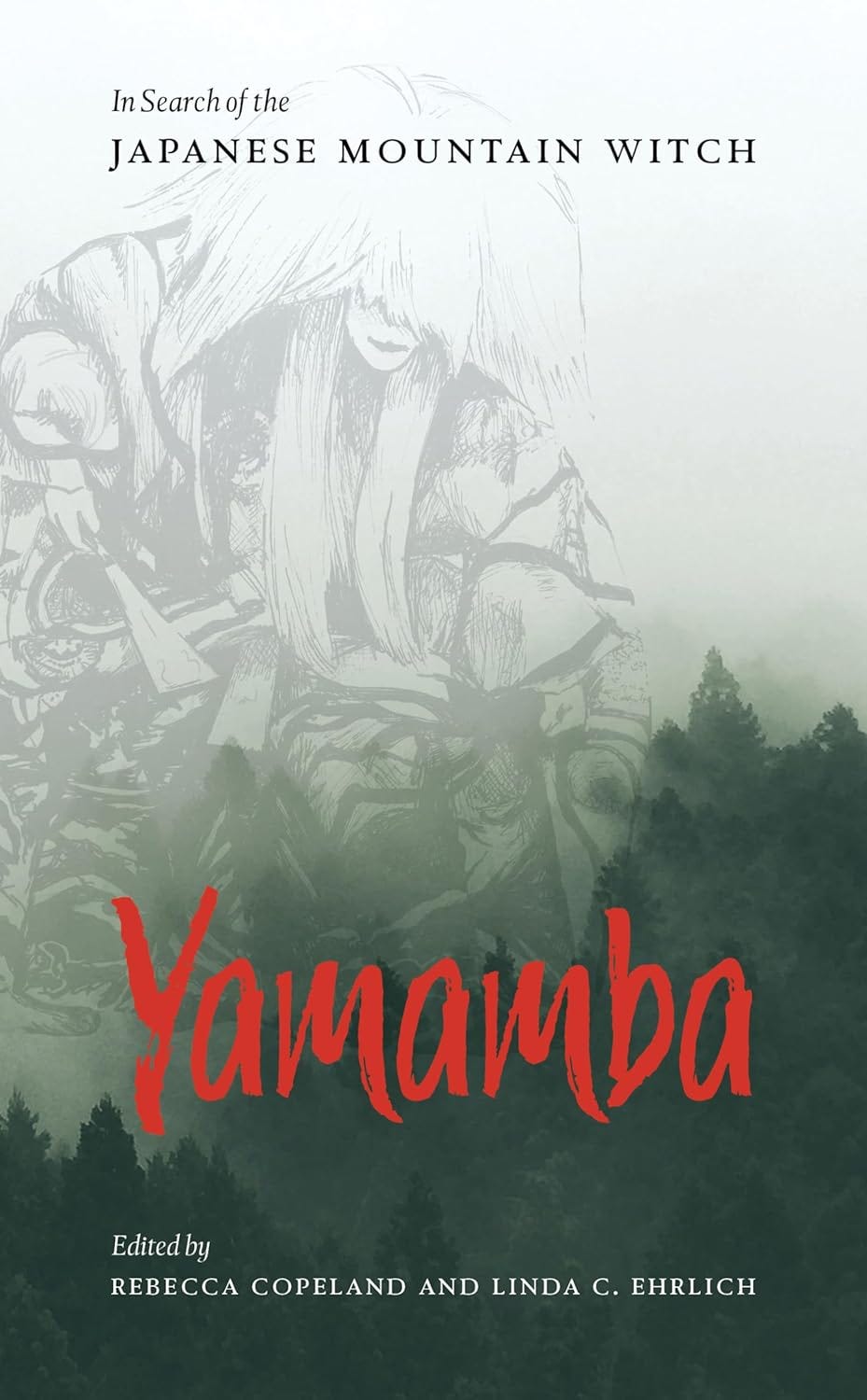
Fusing poetry, speculative fiction, artist interviews, and scholarly research from Yamamba devotees in Japan and North America, Yamamba: In Search of the Japanese Mountain Witch is a multi-disciplinary deep dive into Japanese folklore’s fearsome crone. There’s nothing else in English that captures the elusive, fecund figure quite like this book.
Comments
Nothing yet. Say the first thing.
Sign in to join the conversation.