
Last week, President Trump signed an executive order initiating changes to the federal childhood vaccine recommendations. The directive seeks to reduce routine universal vaccinations from 17–18 diseases down to 11, separate the combined MMR vaccine into individual shots, and promote single-visit administrations. Pretty straightforward stuff.
The internet meltdown that ensued was predictable — the usual suspects crashing out, barking about how these changes are a “crime against humanity” and will “surely cost innocent lives.” To be honest, I see both sides and have sympathy for these people — I cannot imagine spending hundreds of thousands of dollars on a medical degree only to realize that the entire medical system is a parrot for big pharma and insurance companies. It’s understandable that some of them will double down — after all, belief in the efficacy and safety of vaccines has become a religion in America.
The same overused script was echo-ed over and over again by these pediatricians that comes directly from their overlords: “These changes are not based on evidence. We will continue to follow the vaccine schedule that is recommended by the American Academy of Pediatrics (AAP), which is based on science and data alone.”
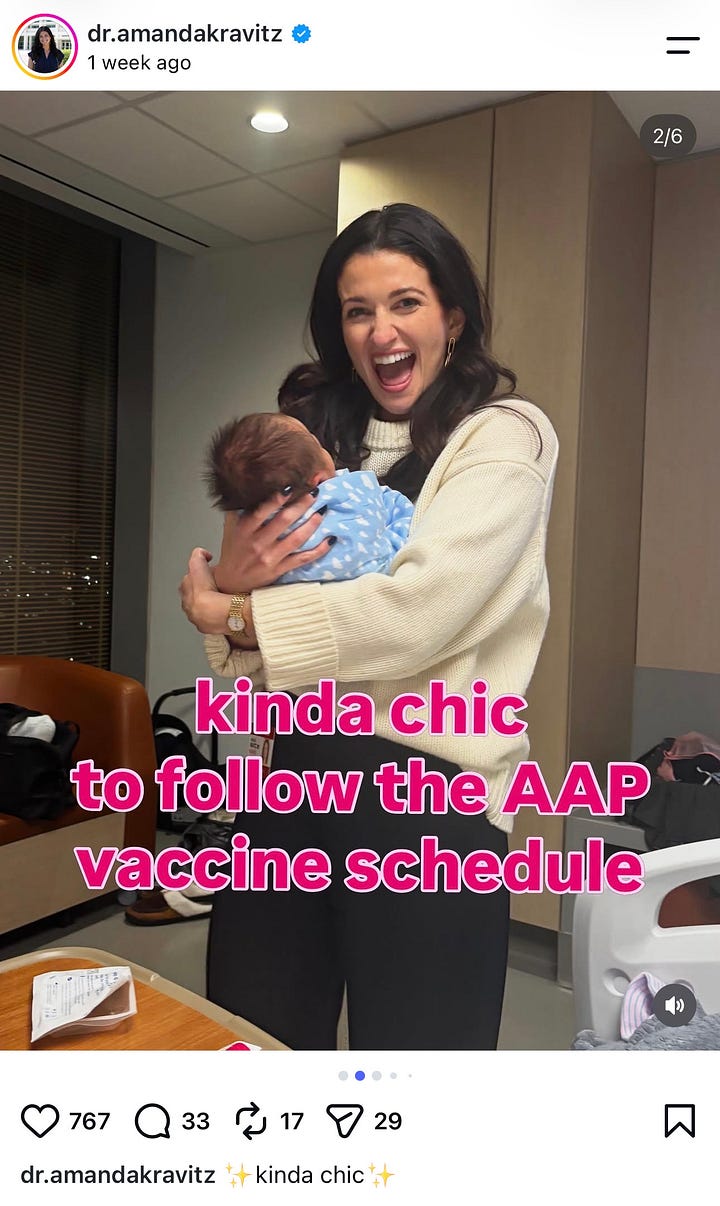
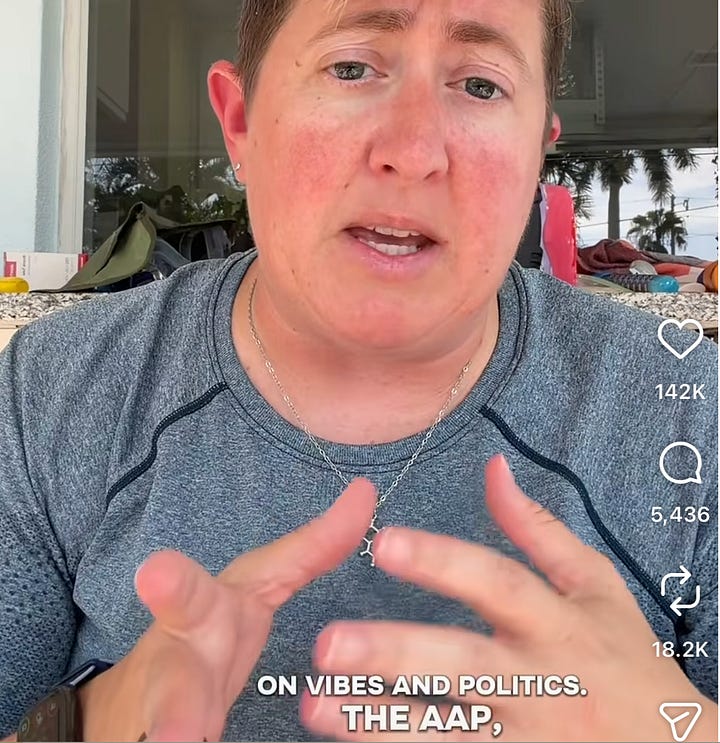
In fact, many of these doctors participated in a celebrities-during-COVID-style compilation video, endorsing the AAP and it’s commitment to unbiased science. So, I guess based on this scripted (and likely paid) social media campaign, we can all take a deep breath, right?
Not so fast — to understand the scope of the AAP, it’s important to understand the organization as a whole. Per it’s mission statement, the AAP is a professional organization of 67,000 pediatricians focused on the health and well-being of children. They create guidelines on all things related to children — breastfeeding vs. formula, cosleeping vs. cribs, SIDs, feeding newborns, circumcision, ultrasounds during pregnancy, and more.
The issues come in when you start to look at the way the organization is funded (follow the money like we always do, duh). Their most recent Form 990 from fiscal year 2025 vaguely shows where their cash comes from:
Total revenue: $138.50 million
Contributions: $48.38 million - This is money given to the AAP (aka they do not make this money by selling something). Think: individual donations, corporate donations, grants from foundations or corporations, etc.
Program-service revenue: $82.55 million - This is money the AAP earns by providing something, usually membership fees from pediatricians, conference registrations, etc.
Investment/other revenue: roughly $7.57 million - This is money from the AAP’s investments as an organization (interest, dividends, etc.) and other income that doesn’t fit into the other categories.
Now, of course, the AAP doesn’t go line by line and tell us how much money from each category is made from the pharmaceutical industry, but we know that a sizable amount of the contributions and program-service revenue comes directly from industry. The sponsorship graphic below comes directly from their website.
Comments
Nothing yet. Say the first thing.
Sign in to join the conversation.