
Cardiovascular disease has long been explained through the cholesterol hypothesis, which proposes that elevated LDL cholesterol gradually accumulates in the arteries, forming plaques that restrict blood flow. If you are over sixty and got a meeting with your cardiologist, you may have heard of those terms: statins, cholesterol, HDL, LDL, Triglycerides, and so on. I know that none of this is very cheerful—heart attacks, old age, chronic illness. We’re all in the same boat. But as with everything related to health, you can remedy the situation by taking charge of your health.
Good news, isn’t it? So, what is Pauling’s therapy for heart disease? It’s a classic alternative medicine treatment. People have been persecuted for defending it and have been compared to charlatans. I’m thinking in particular of Matthias Rath, who was Pauling’s student at the time. If you look Dr Rath’s wikipedia page, you will likely hallucinate at how he is described.
While the cholesterol model has shaped modern cardiology for decades, several researchers—including Linus Pauling and Matthias Rath—have argued that it fails to address the root cause of arterial damage. According to their theory, heart disease begins not with excess cholesterol, but with a structural weakness of the arterial wall, driven primarily by chronic vitamin C deficiency and impaired collagen formation. In this model, the body uses Lipoprotein(a), or Lp(a), as a biological “patch” to repair fragile blood vessels. The Pauling Therapy Protocolwas developed to target this deeper mechanism by reinforcing arterial integrity and reducing the need for Lp(a), rather than focusing solely on cholesterol reduction. This alternative framework does not deny the role of lipids, inflammation, or oxidative stress, but reframes them as secondary responses to underlying nutritional deficits and vascular injury.
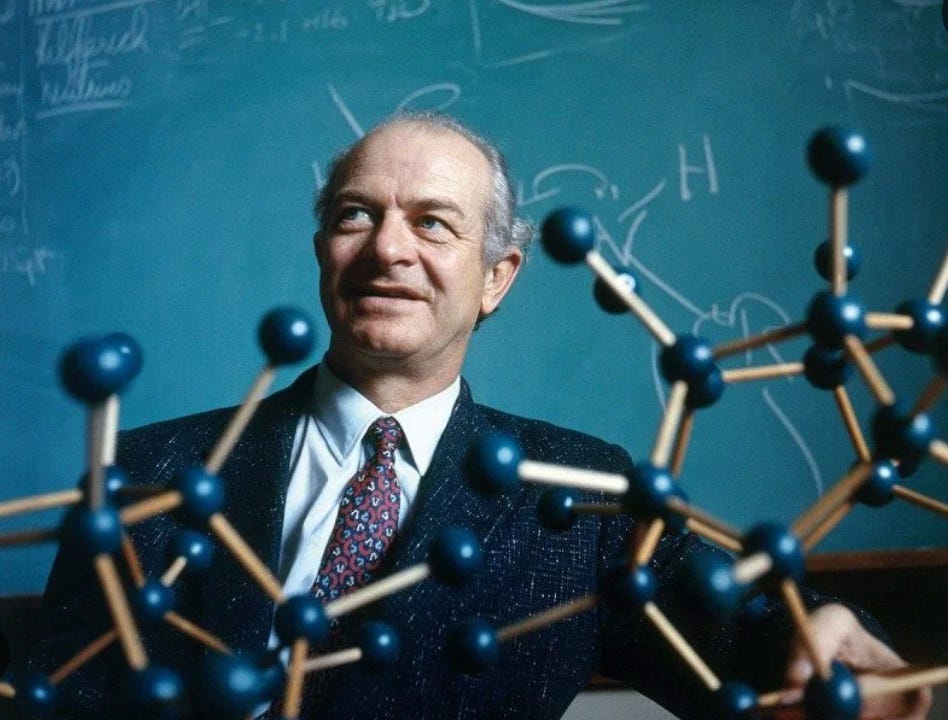
It is very important to note that Linus Pauling never questioned the cholesterol theory, contrary to what many people believe. In his major book Live Longer and Feel Better, he simply repeated Abram Hoffer’s work on niacin, vitamin B3. For those interested, I recommend William Parson MD’s book: The Cholesterol Control without Diet, The Niacin Solution. Abram Hoffer used this vitamin and theorized that it could improve cholesterol levels through its powerful action on the nucleotide NAD and its potent antioxidant properties. Pauling simply followed very simple observations of biochemistry that he made a long time ago.
Understanding cardiovascular disease requires stepping back from isolated biomarkers and looking at the entire biological context in which arterial damage occurs. Beyond cholesterol levels alone, researchers now emphasize the interplay between oxidative stress, inflammation, nutrient status, endothelial integrity, and the body’s own emergency repair mechanisms.
This broader perspective opens the door to alternative frameworks—such as the one proposed by Linus Pauling—which view heart disease as a long-term response to chronic vascular injury rather than a simple accumulation of lipids. By examining the biochemical pathways that maintain arterial structure, and the nutrients that support them, we can approach cardiovascular health with a more comprehensive, physiology-driven strategy.
It is within this wider scientific landscape that the Pauling Therapy Protocol finds its relevance, offering a model centered on repair, resilience, and nutritional optimization.
Dose: 6,000–18,000 mg/day
Vitamin C supports collagen production, helping strengthen arterial walls and reduce micro-injuries. High doses also lower oxidative stress and decrease the body’s need to produce Lipoprotein(a) as a repair mechanism. This dosage of vitamin C (ascorbic acid) can seem high. If you tell your doctor that you take 18 000mg / day, he or she will likely have a very strong eye-rolling reaction. Remember that it is very important to spread out the dosages during the day and not to take one dose.
Dose: 2,000–6,000 mg/day
Lysine acts as a natural inhibitor of Lp(a) binding, preventing it from attaching to damaged arterial tissue. It works synergistically with vitamin C to facilitate collagen repair and improve vascular integrity. Lysine also has strong antiviral properties, even if it cannot be linked to heart health. Lysine has been shown to inhibit herpes virus when given at a high enough dose. This nutrient is extremely important in the protocol.
Dose: 500–2,000 mg/day
Proline enhances lysine’s ability to block Lp(a) and is essential for forming strong, stable collagen fibers. It further supports tissue repair and helps maintain arterial elasticity.
Comments
Nothing yet. Say the first thing.
Sign in to join the conversation.