
This week I realized that much of what we call “learning” is actually coordination.
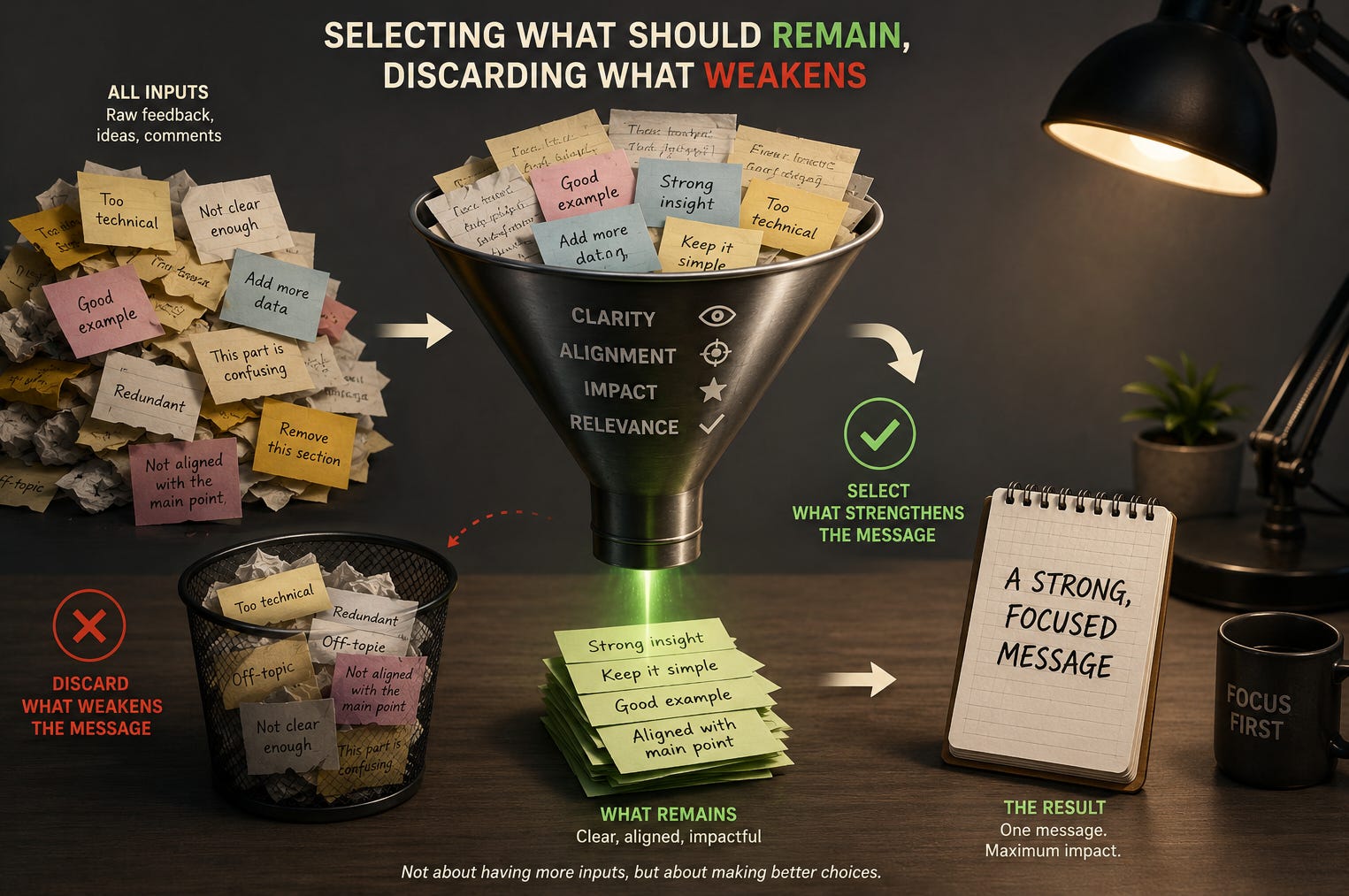
Coordination between ideas, between revisions, between signals that deserve attention and signals that should be ignored. I spent most of these days moving between reviewer feedback for the book and producing reels that could capture public attention. At first these looked like completely different activities. One was technical and analytical; the other was public and emotional. But in reality they were driven by the same process: selecting what should remain, discarding what weakens the message, and trying to preserve the original thought without diluting it.
Reviewer comments are often contradictory. Two people can react to the same paragraph in completely different ways. Similar outputs can become confusing because they all appear “correct” on the surface. The difficult part is not only technical accuracy; it is understanding which version feels closer to the real intention behind the work. Sometimes the most polished formulation is not the strongest one. Sometimes a simpler explanation carries the idea more honestly.
This made me think again about teaching, learning, and the strange experience of teaching an AI system.
Teaching “Jarvis” is sometimes surprisingly easy and sometimes unexpectedly frustrating. You expect intelligence from an AI model, but what surprises you most is how quickly it can construct a reasoning pattern from only a small amount of information. A carefully written prompt, a structured context, or a well-defined objective can suddenly produce outputs that feel coherent, connected, and even insightful.
Human learning is very different.
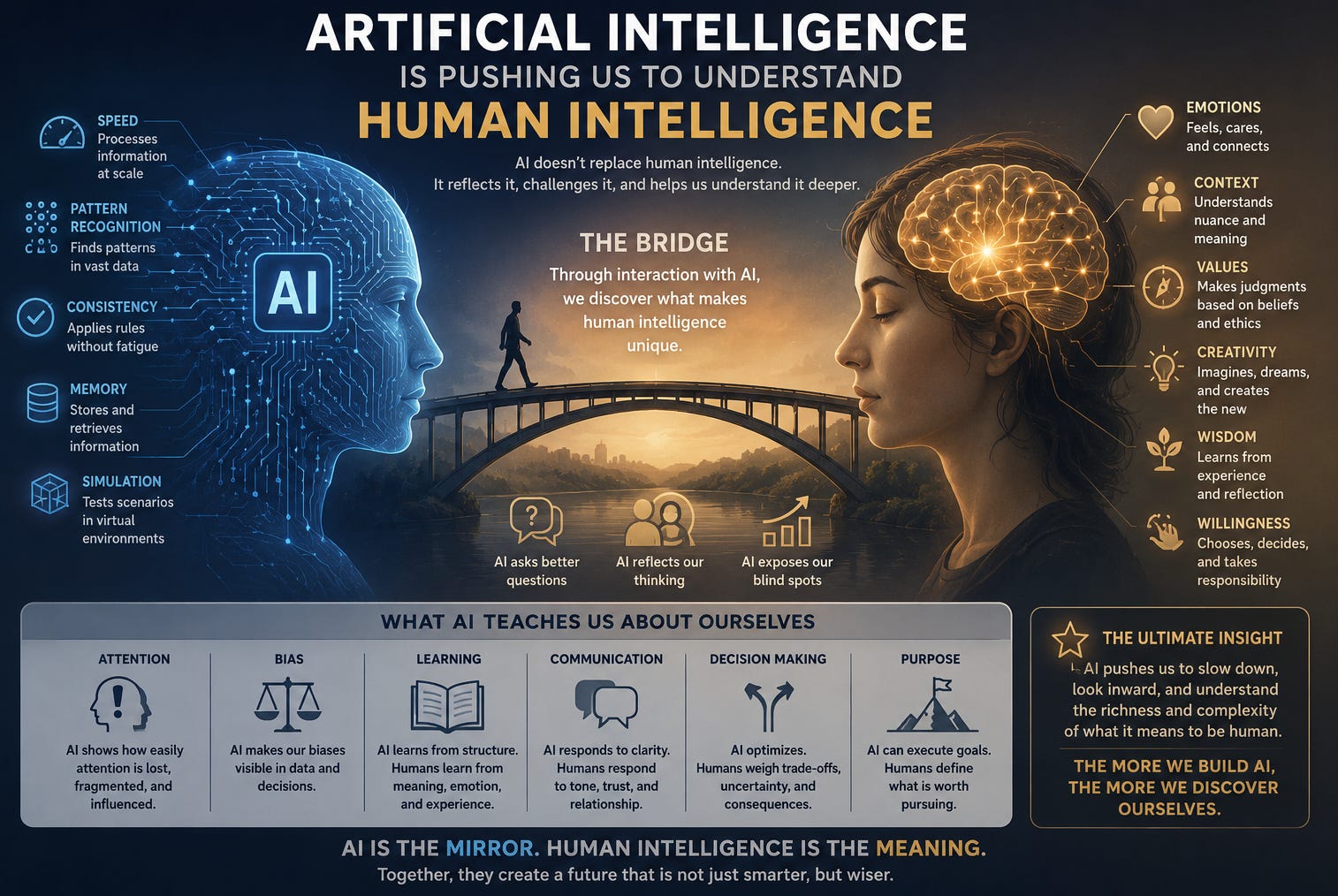
A student may listen to an entire lecture and retain only a fragment of it. Another student may understand the emotional tone but not the technical structure. Someone else may reject the material completely despite understanding it perfectly. Human learning is filtered through personal conditions, motivations, fears, attention, confidence, fatigue, memory, and willingness.
An AI system does not really “refuse” to learn in the same way. It responds according to structure. The clearer the question, the more coherent the answer. The better the context, the more aligned the output. Humans are not like that. Humans may know the answer and still decide not to respond. They may disagree silently. They may lose attention halfway through an explanation. They may reinterpret what you said according to experiences that you cannot see.
This difference stayed with me throughout the week.
The more I worked on feedback coordination and AI-assisted systems, the more I realized that artificial intelligence is pushing us to understand human intelligence more deeply, not less. We are beginning to notice how much of human reasoning is emotional, selective, contextual, and sometimes resistant by nature.
We often treat AI as a search engine, but this week I focused on “Jarvis” as a learning companion. By using specialized systems to retrieve web resources and preserve “important learning,” I am no longer simply analyzing information. I am constructing persistent memory.
In the language of the Model Context Protocol (MCP), this becomes the difference between isolated prompts and systems capable of maintaining structured context over time. Instead of repeatedly restarting from zero, the system accumulates operational memory around tasks, revisions, and decisions.
This changes the relationship between the user and the model. The interaction becomes less about asking disconnected questions and more about building continuity.
At the same time, production remains tied to visibility.
You can spend weeks producing content with almost no reaction, and then suddenly one small change alters everything. For me, that shift happened through language and tone. Speaking in Italian unexpectedly changed the level of engagement and public response.
It reminded me that technical correctness alone does not move ideas across people. Human transmission depends on familiarity, rhythm, emotion, and recognition. We often focus on the logical structure of communication, but attention spreads socially before it spreads analytically.
The public does not always react to the most technically sophisticated explanation. Often it reacts to the version that feels closest to lived experience.
The most important technical development this week was the construction of a new review coordination system for books in production.
This is not simply automation. It is an attempt to create structured coordination between reviewer feedback, repository actions, approvals, and revision tracking using the Model Context Protocol.
MCP changes the role of AI systems because it provides direct and controlled access to external resources.
Instead of manually uploading comments or repeatedly explaining project context, MCP Resources allow the system to access persistent upstream material directly. Reviewer feedback, structured notes, repository files, and revision states become accessible as connected context rather than isolated uploads.
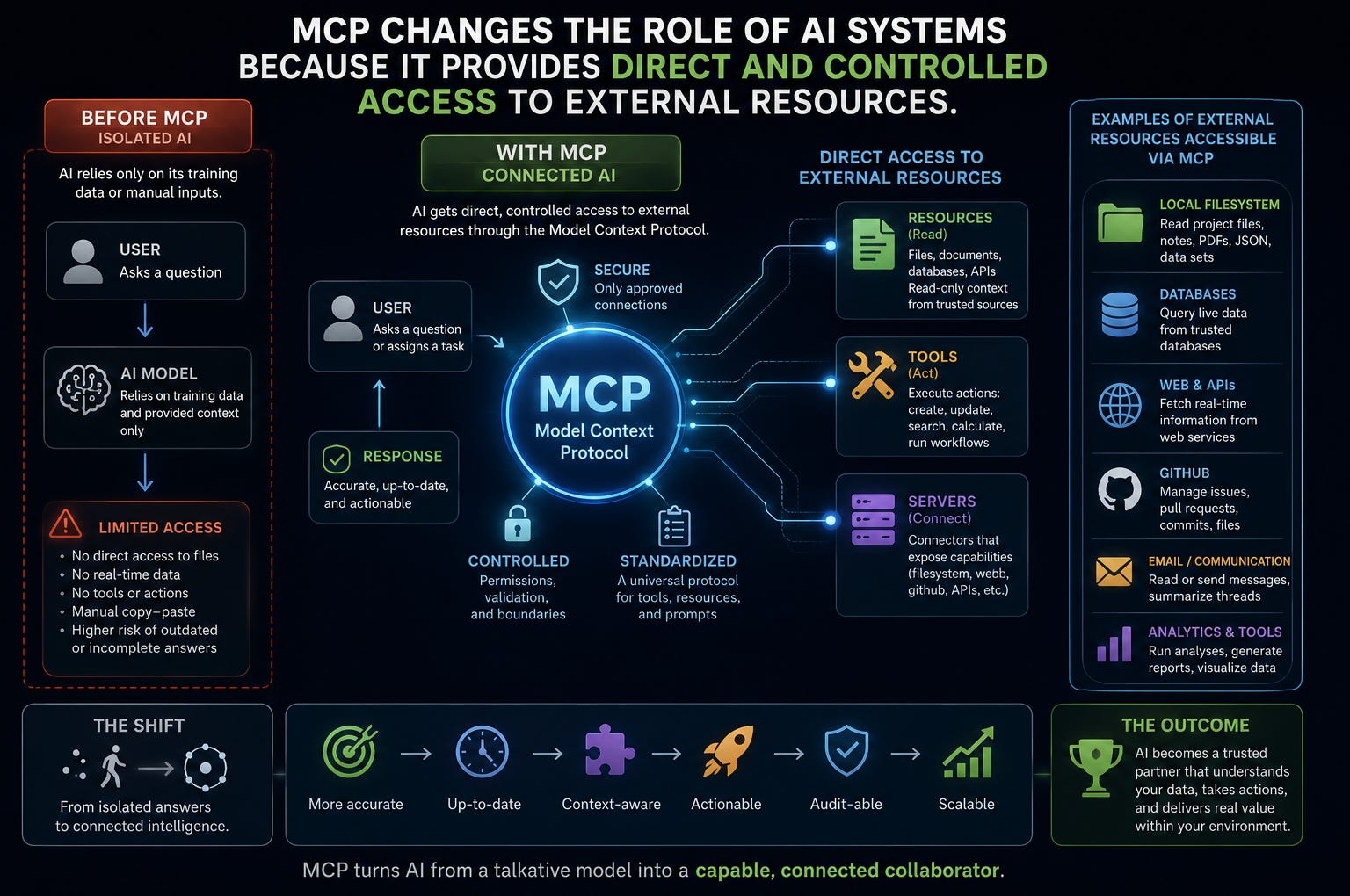
MCP Tools then allow actions to happen operationally inside the workflow itself. Feedback can be approved, tracked, resolved, or linked directly to repository activity. The AI stops behaving like a detached assistant and starts functioning more like a coordinated participant inside the production environment.
Most importantly, MCP Servers make task coordination possible across systems. The model is no longer operating blindly from static prompts. It can understand state, dependencies, revisions, and relationships between components.
This is the real shift.
We are moving away from prompting models in isolation and toward constructing environments where models can operate with structured access to context, memory, and tools.
Technical literacy has always been connected to autonomy.
What MCP represents is not simply a new protocol. It represents a change in how professionals interact with intelligence systems. Instead of asking a model to “guess” from generic training data, we can provide direct and secure access to our own structured sources.
Whether the task involves reviewing a technical manual, coordinating revisions across chapters, or analyzing infectious disease dynamics, the critical point is the same: the value no longer comes only from the model itself.
The value comes from the system capable of coordinating knowledge, memory, tools, and decisions around it.
Add this curated list at the bottom of your article for deeper reading on AI coordination, MCP, human-AI learning differences, and workflow systems.
- Anthropic. (2024). Introducing the Model Context Protocol anthropic: https://www.anthropic.com/news/model-context-protocol)
- Model Context Protocol. (2025). Specification: Tools and Servers modelcontextprotocol: https://modelcontextprotocol.io/specification/2025-06-18/server/tools
- Jarvis AI Assistant. (2025). App Store documentation on multi-model aggregation. apps.apple: https://apps.apple.com/it/app/jarvis-your-ai-assistant/id6447155627
- Google Gemini Projects. (2025). JARVIS: Virtual Assistant Implementation ai.google: https://ai.google.dev/competition/projects/jarvis-a-virtual-assistant
Comments
Nothing yet. Say the first thing.
Sign in to join the conversation.