
Thursday, July 23
Unemployment Insurance Weekly Claims Report
Friday, July 24
Survey of Construction
There are no Federal Reserve speeches, as we are entering the blackout period ahead of the upcoming FOMC meeting on July 28–29.
Inflation Cools Sharply… The Consumer Price Index, released July 14, showed headline prices falling 0.4 percent in June, the largest one-month decline since April 2020, after a 0.5 percent rise in May. The drop was driven almost entirely by energy, which tumbled 5.7 percent as gasoline fell 9.7 percent, more than offsetting increases in shelter and food. Over the past 12 months, the all-items index rose 3.5 percent, down from 4.2 percent in May. Core CPI, which excludes food and energy, was flat on the month and up 2.6 percent over the year, its slowest annual pace in this cycle.
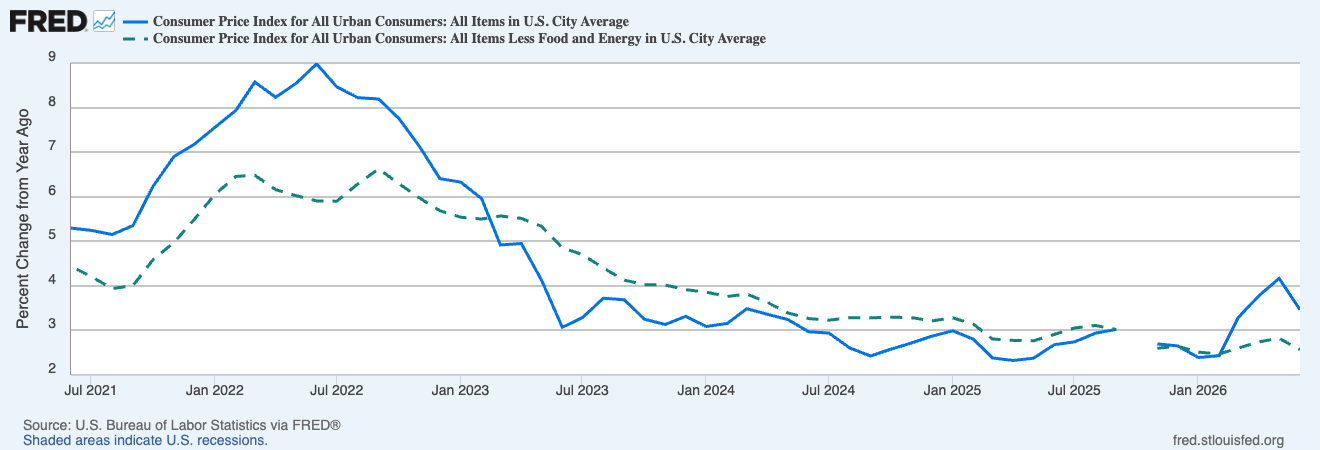
Producer Prices Fall Too… The Producer Price Index for final demand, released July 15, fell 0.3 percent in June, seasonally adjusted, after rising 0.6 percent in May. The decline was led by final demand goods, which dropped 1.4 percent as energy prices sank 6.4 percent and gasoline plunged 12.0 percent; final demand services edged up 0.2 percent. Over the past 12 months, final demand prices rose 5.5 percent, down from 6.0 percent in May. Excluding foods, energy, and trade services, the index rose 0.1 percent on the month and 5.1 percent over the year.
At the Crossroads… The June inflation data prompted notably different emphases from two Fed officials speaking within days of each other. Governor Christopher Waller, addressing the New York Association for Business Economics on July 13, warned that core PCE inflation had climbed from 3.0 percent in December to 3.4 percent in May and could no longer be pinned on tariffs:
If we get another hot reading on core inflation this week, then the FOMC will need to consider tightening monetary policy in the near term.
Vice Chair Philip Jefferson, speaking at Stanford on July 16, struck a more patient tone, framing the energy spike and AI boom as overlapping supply-and-demand shocks and stressing the value of looking through temporary disturbances:
If a shock is expected to reverse before monetary policy can take effect, looking through it may be the appropriate approach.
Both are committed to the 2 percent target and both back the current 3.5–3.75 percent range, but the contrast is one of risk management: Waller leans toward pre-emptive tightening if inflation stays hot, while Jefferson emphasizes weighing risks to both sides of the mandate before acting.
Why Is the Federal Reserve Paying Banks Billions in Interest? - Thomas L. Hogan
Trump v. Cook Carve-Out Leaves the Fed Above the Law - Alexander W. Salter
The Fed Needs Independence, Not Immunity - Nicolas Cachanosky
June Inflation Slowed as Energy Prices Fell - Bryan P. Cutsinger
Comments
Nothing yet. Say the first thing.
Sign in to join the conversation.