
Protected by design rather than accident, Spain’s quiet Balearic island has long been cherished by those in the know. Today’s newsletter is a guest post by Jessica Cantlin, the photographer, gallerist, and Fathom contributing editor. A longtime Menorca-goer, Jessica knows where to find the wild beaches, thoughtful hotels, inventive tapas, and postcard-ready hikes on the Mediterranean’s most compelling island.
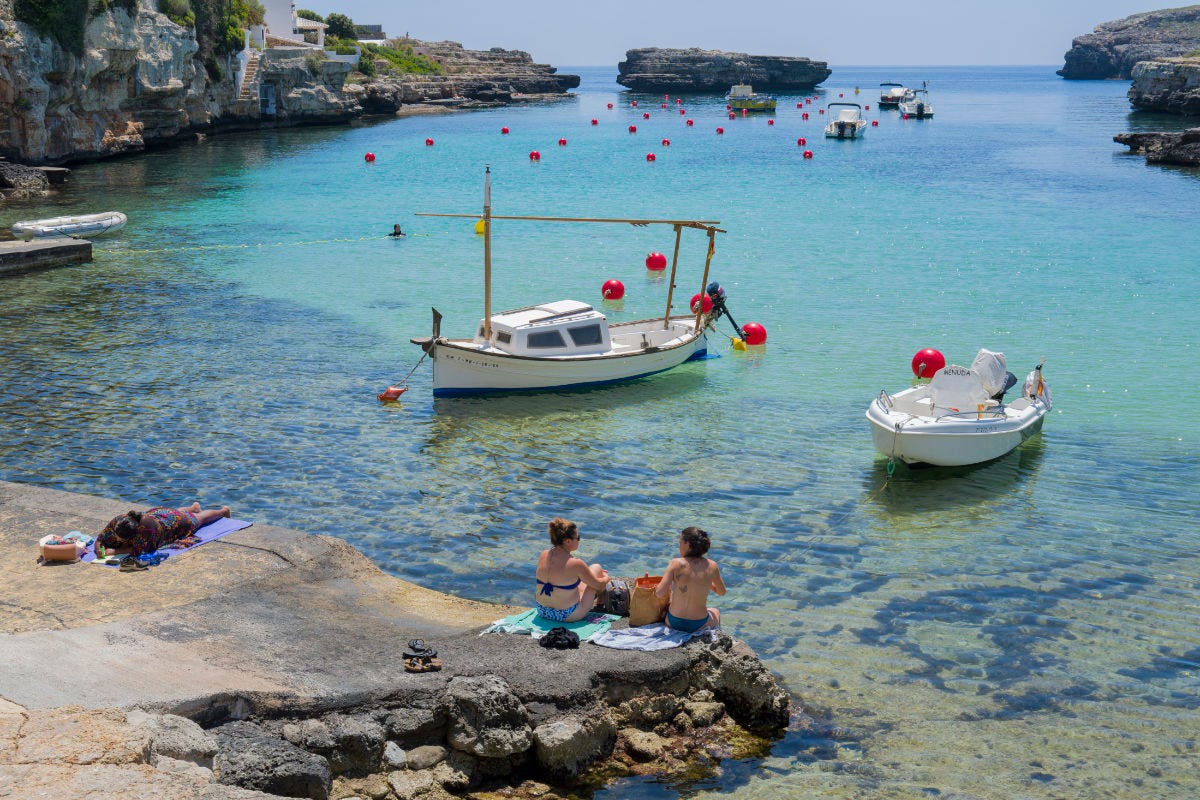
Summer is underway on Menorca. The island’s rolling hills smell of dried grass, wild fennel, and pine. Mornings are quiet, save for the sound of birds. Evenings are warm, the cricket symphony filling the air. Long days begin with slow mornings and lead to lazy sun-filled afternoons by the sea.
Menorca, known as Spain’s quiet Balearic Island, is the place where the speed of life comes to a screeching halt and nature reigns supreme.
With all the noise in the world right now, it is no wonder that sleepy Menorca is ready for its moment in the sun.
Menorca is small in comparison to its better-known neighbor, Mallorca. Bisected by a highway, the island’s main cities are Mahón, the modern capital in the southeast, and Ciutadella, the old capital in the southwest. The town of Alaior sits on a hill in the middle of the island. While the drive from one end of Menorca to another takes about 45 minutes, a car cannot circumnavigate the island because the Camí de Cavalls (“Way of the Horses”) encircles the island. This 185-kilometer horse trail dating back to the 14th century was the path knights rode between fortresses while protecting the island from invaders. By the 20th century, the trail was in ruins and fenced off in many places by individual landowners. In 2000, the government declared the trail a public heritage site and, after years of reclaiming and restoring the land, opened it to the public in 2010. The Camí de Cavalls now attracts equestrians, mountain bikers, and hikers who come to the island to explore its natural beauty.
Menorca is unique among Mediterranean islands because it holds dual UNESCO distinctions as both a Biosphere Reserve and a World Heritage Site. The Biosphere Reserve, recognized in 1993, protects the marine life surrounding the island, as well as wetlands, dunes, and caves that are home to many species of bird and plant life. As a result, it is a premier destination for scuba diving. The Talayotic Menorca cultural landscape received its UNESCO distinction in 2023 for the megalithic monuments, tombs, and watchtowers scattered all over the island. They may look like piles of rocks but are in fact excellent examples of primitive cultures from long ago. (“Talayotic” refers to the Balearic people of the Iron Age.)
What do horse trails and rock piles have in common? First, the Camí de Cavalls limits vehicular access to most of Menorca’s virgin beaches. Car parks are close to the main road, and beachgoers hike down to the water. Second, they serve to limit coastal development. (The government has also wisely halted issuance of new rental licenses.) What does this mean for Menorca? It means that while it gets busy in the height of summer (like every slice of Mediterranean coast), Menorca stays wild, peaceful, and undeveloped.
The good stuff is behind the paywall: the lay of the land, our nine favorite places to stay, and our favorites for food, wine, fashion, and fun.
Comments
Nothing yet. Say the first thing.
Sign in to join the conversation.