
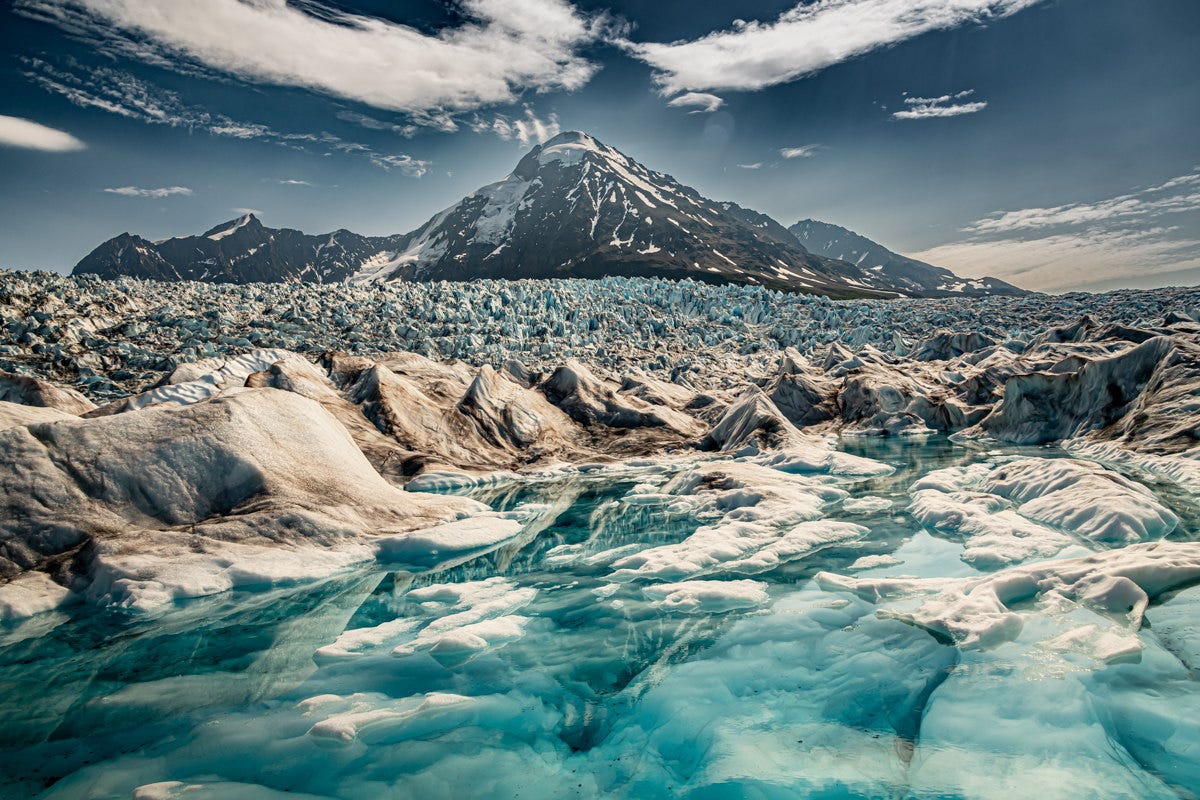
Pavia here. For as long as I can remember, I’ve been fascinated by the Pacific Northwest. British Columbia, Washington, Oregon, Vancouver Island — in my mind, everything up here seemed like a wonderland. Big mountains, big oceans, big forests. Big nature, in other words. I’ve recently (and finally) started spending time in this part of the world, and I was right. It’s magical.
You know what’s even more of a wonderland? The land at the northwestern extreme of North America: Alaska.
I spent a few weeks in Alaska with my husband two summers ago and learned that this is a land of action. Lots of it. This is the best of what we did.
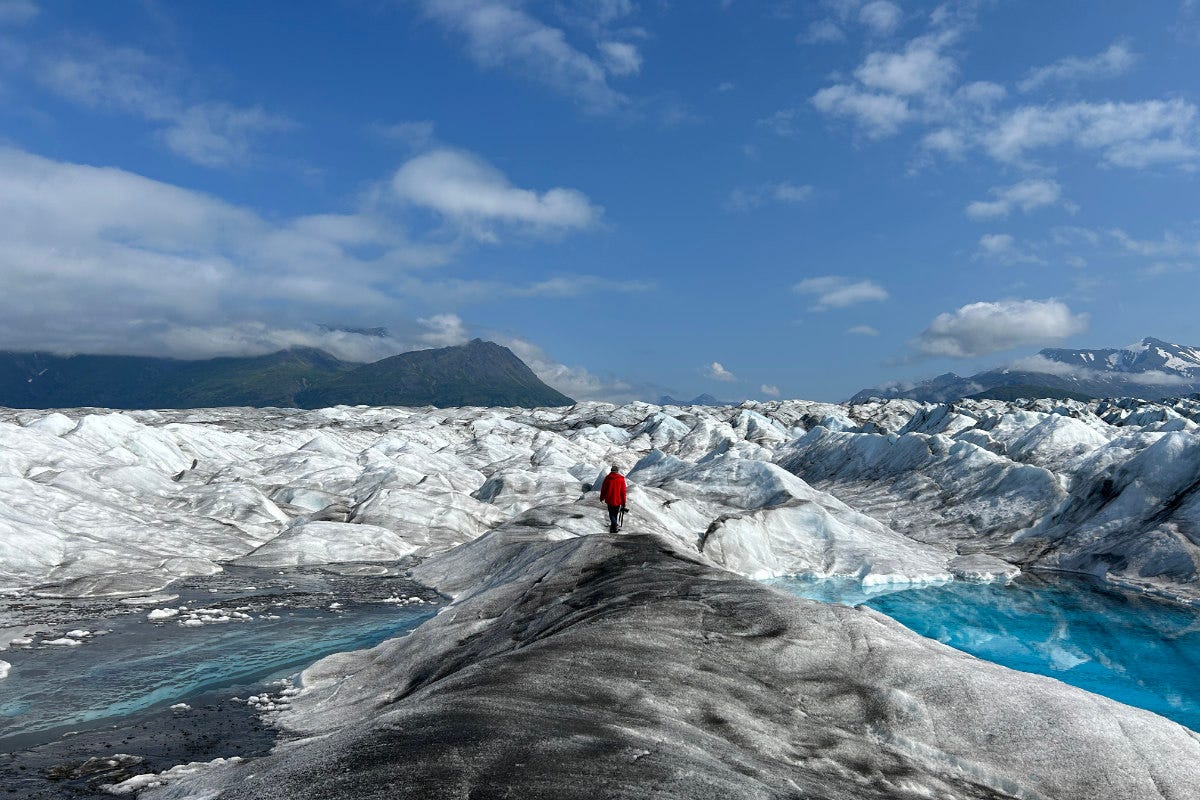
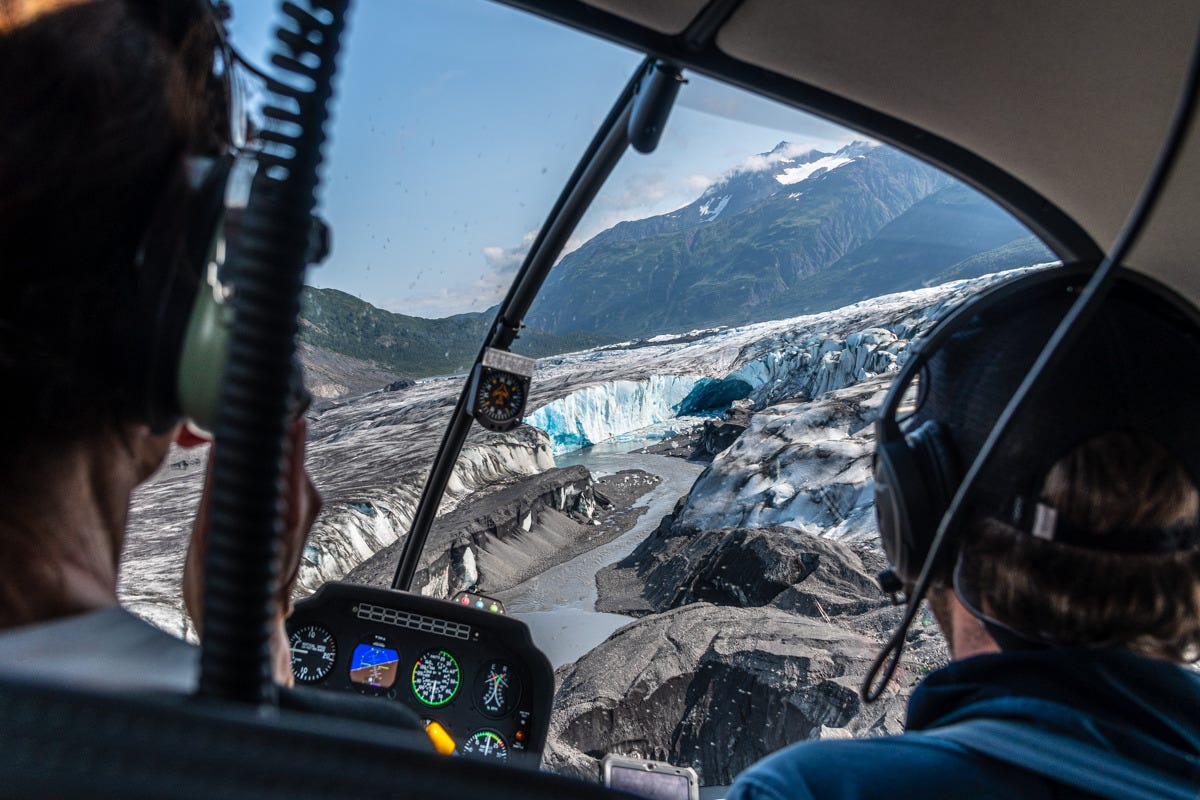
If you were to tell me that you had hopped a plane for Anchorage and rented a car to drive one hour along the Knik Arm to the middle of a field near Palmer, where you got into a four-seat helicopter to spend three hours with the doors off on a wind-rushed, heart-stopping, adrenaline-packed flight, with landings on the Knik Glacier (coordinates: N61.375545, W-148.158395) and at the Colony Ice Fall (N61.218051, W-148.396147), then drove back to Anchorage for a redeye home, I would congratulate you on organizing one of the best days you’ll ever have in your life.
We made an afternoon of it with Outbound Heli Adventures, and it was the defining moment of our whole vacation. Cresting a mountain peak before a cliff drop, wind ripping through the open doors: a real-life roller coaster moment. Filling my water bottle with frigid glacier water: delicious. (Maybe I shouldn’t have done this, but I was a hit when I poured it at a birthday dinner a week later.) Walking on a glacier: humbling.
Because I love riding in helicopters and was feeling greedy, we spent the night at Alaska Glacier Lodge nearby and went back for one of their glacier helicopter tours the following day. It was still gorgeous and heart-stopping, just not as intimate and personal as the experience with Outbound Heli. I almost wish I had a big anniversary or milestone to celebrate, so I could do this whole thing again for the first time. Maybe I’ll just give it away as a gift. Who wants to go?
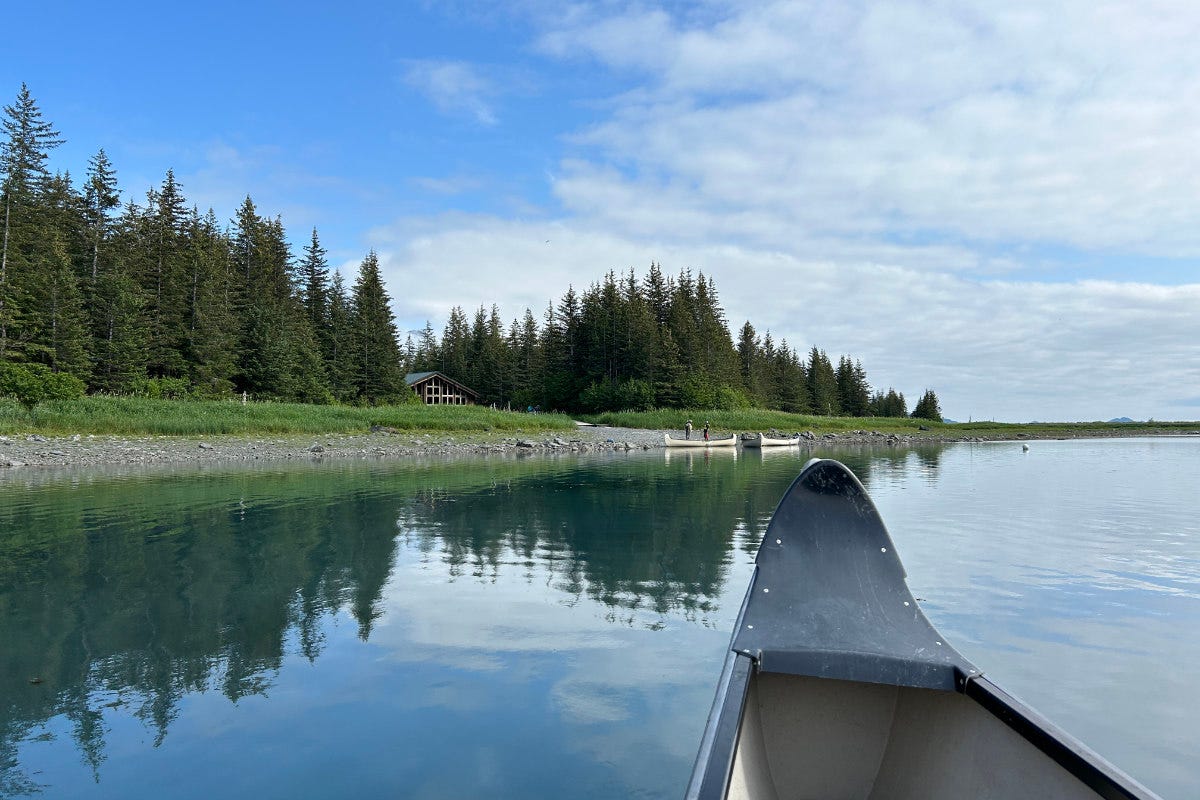
Look, there’s no point coming this far if you’re not going to feel REALLY far away and totally off grid. For this, we drove two hours south of Anchorage to Seward (a beautiful drive along the water and through forests, though every drive through Alaska could probably be described as some version of “beautiful, along the water, and through forests”) to hop a boat that took us to Kenai Fjords Glacier Lodge. The only lodge within the 700,000 acres of Kenai Fjords National Park, there was nothing around but trees, water, ice, and bears, who we liked to watch from our cozy cabin overlooking Aialik Bay.
We spent two days (not enough time!) here reading books in the rocking chairs on the dock, sweating in the log-fired sauna, hiking on guided tours, kayaking out to the Pedersen Glacier.
The meals were communal and delicious (grilled pork with mushroom herb gravy, dukkah-crusted salmon, garlic tahini cauliflower with za’atar, chocolate cherry layer cake, pinot noir and cabernet pairings). The WiFi was blessedly nonexistent (all power comes from a propane generator that runs from 6 a.m.-10 p.m.). This is the kind of place to come to not only to give your mind a break, but to rinse it free of all the clutter it’s gathered in the last decade.
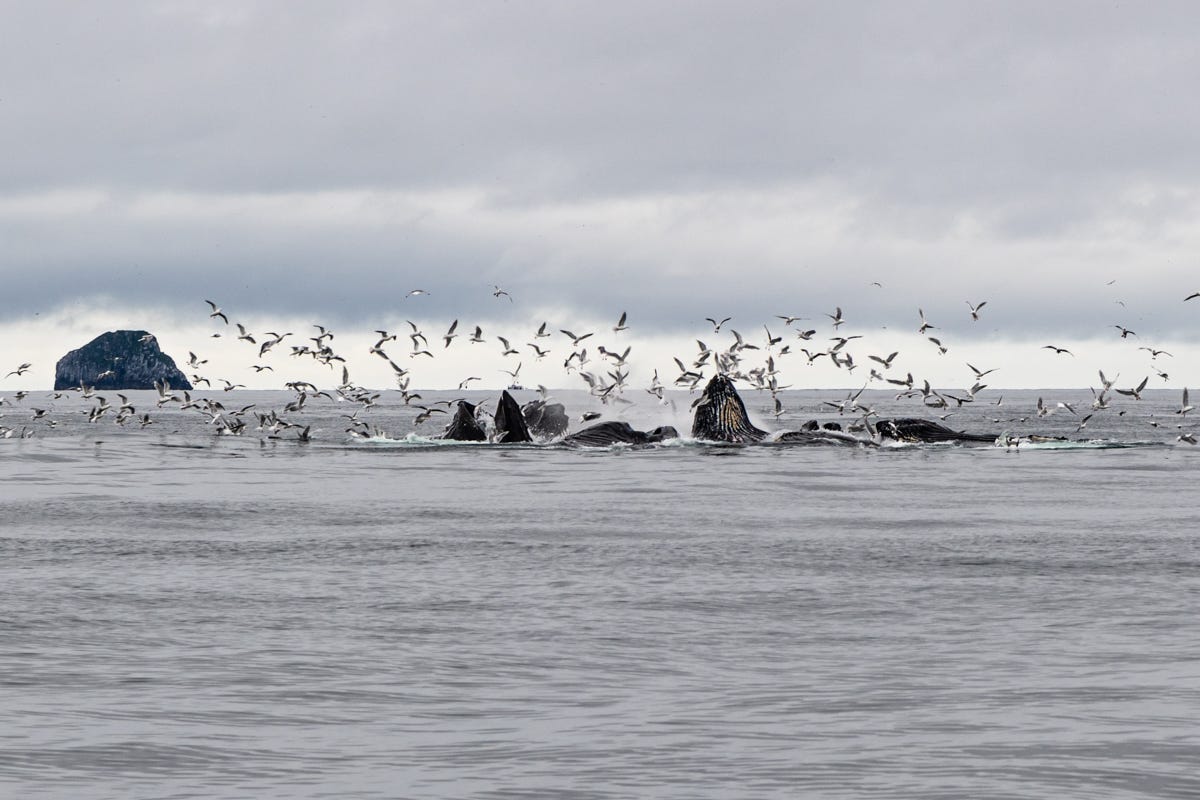
On the two-hour boat ride from the lodge back to Seward, where we boarded the old-fashioned Coastal Classic Train back to Anchorage, we witnessed a whale pod feeding, a frenzy of organized activity that was a great day for the pod and a very sad day for the school of fish they outsmarted. I’m not stupid enough to think that Mother Nature was putting on a show just for us, but it sure felt like it.
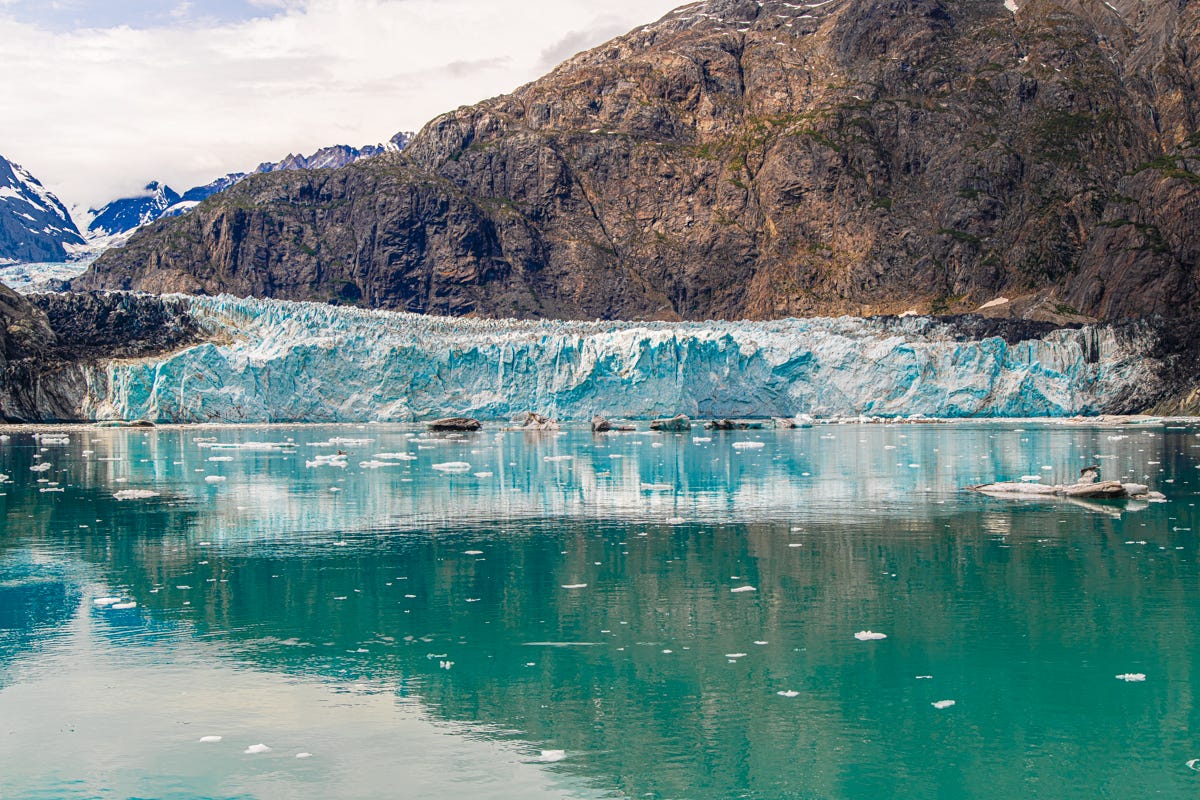
Alaska is one of those places where the best places are only accessible by sea, which explains why it’s such a popular destination for cruise companies. (Fun fact: 99% of the state is still wilderness.)
I wanted to see those best places while avoiding a big ship and supporting a local company. I found a 49-guest ship and picked a northward itinerary that went from Ketchikan to Sitka. I had been warned beforehand that “there’s luxury, and there’s Alaska luxury,” so I was expecting it to be less sumptuous than the average five-star hotel, but there’s no way around it: My small boat was a three-star living experience that took me to five-star nature places.
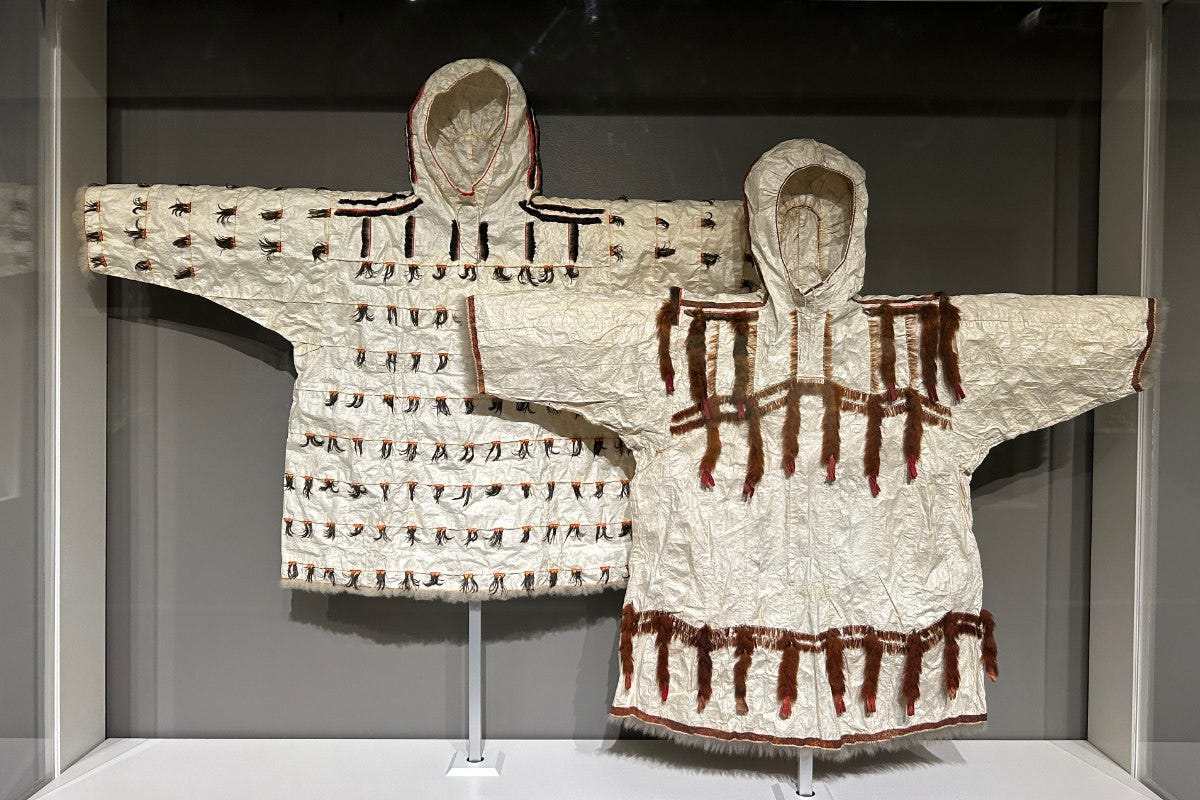
Past the 3,000-foot cliffs of the Misty Fjords National Monument. Through the towering narrow fjords of the Tracy Arm-Fords Terror Wilderness. Kayaking to shipwrecks and amid sea otters in clear bays. To Chief Son-i-Hat Whale House, the only traditional Haida longhouse in the United States. To a beach on Wrangell Island where I learned about petroglyphs in the rocks. Under the thundering water at Nugget Falls near Mendenhall Glacier in Juneau, where I saw a display of ceremonial gut parkas the Yupik people made from seal or walrus intestines (seriously stunning garments) at Alaska State Museum. An outdoor dinner on a secluded island, watching the tides roll in as the sun set. Counting starfish clinging to the dock.
The company I sailed with is no longer in business, but if I had to do it all over again, I’d opt for as small a boat as possible. I’d just read the fine print more carefully to make sure my husband and I could actually fit in the cabin we were assigned.
Many thousands of years before Alaska became a state in 1959, Indigenous peoples were living on the land, their ancestors having migrated from Asia into North America via Beringia. These peoples include the Haida, Tlingit, Aleut, and Yupik groups, among many others. Of course, they were all treated appallingly by Russians and Americans who wanted to exploit their land and resources (gold, timber, oil). A sad tale told way too often throughout history.
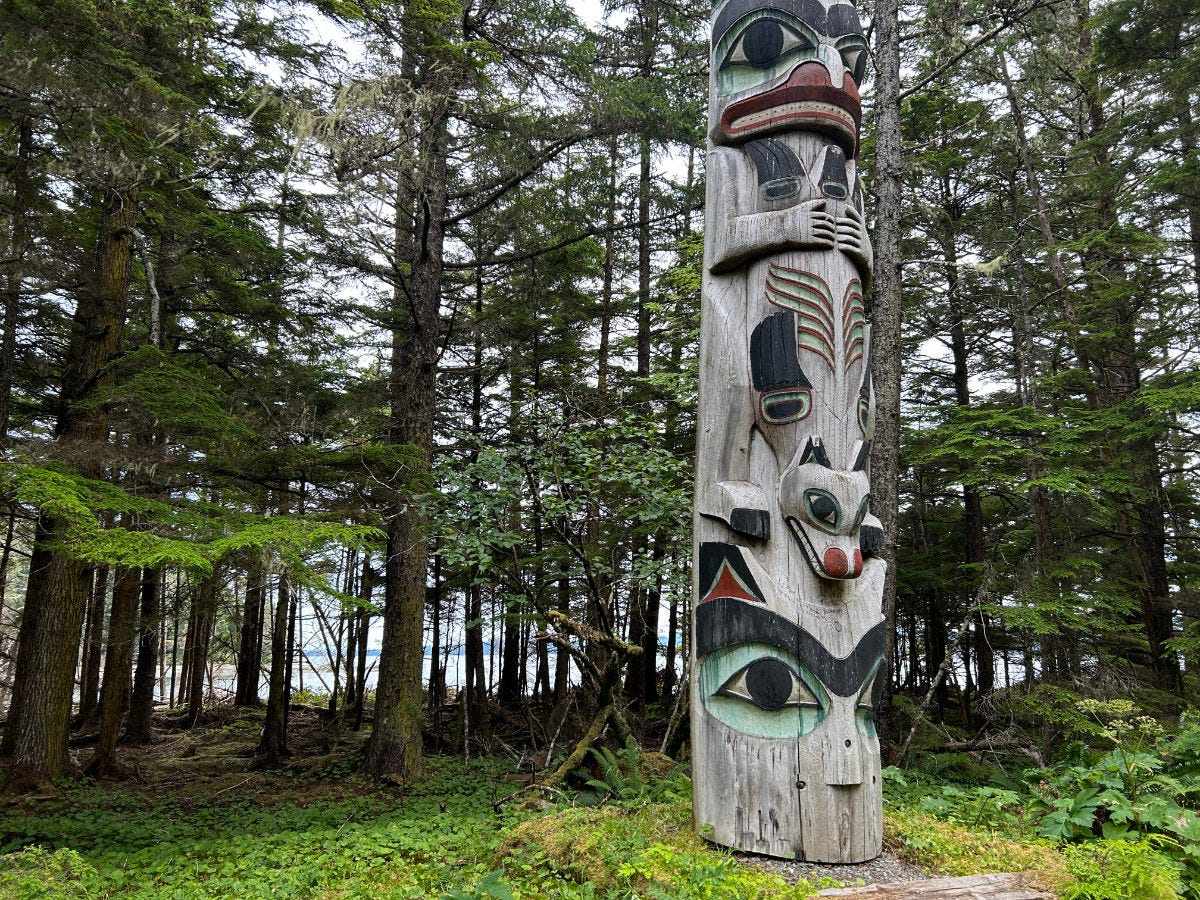
Today, Alaska Natives make up about 20 percent of the current population, but their cultures and traditions are easy to connect with on a trip. One of the better ways to begin to learn about them is through the totem poles that tell their stories.
My education began at Totem Bight State Historical Park in Ketchikan, where an engaging guide taught me how to understand the basic iconography on the Tlingit and Haida totems throughout the park. Ovoid shapes for heads, wings, and fins. U shapes for birds, ears, and feathers. Together and with different colors (red from salmon roe and blood, black from charcoal, green from oxidized copper dust and moss), these shapes became the eagles, frogs, whales, watchmen, beavers, and ravens that filled the poles I saw throughout my visit — the memorial and mortuary poles to honor the dead, the house poles inside clan houses, the heraldic poles to mark social events. In the totem workshop at Saxman Totem Park, also in Ketchikan, I watched Tlingit carver Nathan Jackson and Haida carver Norman Natkong Jr. at work on their current totems.
On my last day in Alaska, I decided to get some perspective, so I drove an hour from Anchorage to Alyeska Resort to ride the aerial tram up 2300 feet to see the view from the top of Mount Alyeska. I had spent two weeks mostly at sea level — staring up at mountains and waterfalls and into the face of glaciers and otters and bears. This is a big, fun resort loaded with activities — pools, ATVs, bikes, hikes — but I was here just for the tram, and to quietly thank these mountains and waters for the unforgettable time they had shown me.
Comments
Nothing yet. Say the first thing.
Sign in to join the conversation.