
Good day! It’s Tuesday, Aug. 18. It’s National Couples Day, which Trump will celebrate as soon as he can find Melania.

The most recent Fast Forward looked at how Missourians rejected GOP efforts to silence them and a padded bra controversy in the bicycle racing world. You can read it here. Find all past newsletters on the Fast Forward homepage.
🌞 The sun rose in Boston at 5:54 a.m. and will set at 7:40 p.m. for 13 hours (Boo!) and 46 minutes of sunlight. The Old Farmer’s Almanac says Cat Nights began yesterday. There’s an old Irish legend that witches can turn themselves into cats eight times and return to their witchy form, but when they do it the ninth time on Aug. 17, they remain a cat. (Might be the origin of that nine lives stuff.) No wonder they scream in the middle of the night. (“Who took my hat? What happened to my broom???”)
⚾️ Hey, sport: At the start of the Red Sox season, full of hope as always, I subscribed to NESN 360, the Sox paid streaming service which is the only way New Englanders can see all the games. They stunk up the joint almost immediately; by mid-May, they were 18-26, dead last in the AL East. Not interested in watching more losses, I canceled my subscription.
Then, in late June, they swept the Yankees in four games, and the winning stuck. By the All-Star break, they were in third place. By Aug. 7, they were sitting on a 9-game winning streak and were 15 games above .500. So naturally, I resubscribed.
Since then they’ve gone 3-7 and I’m convinced I must be the jinx. Subscribe, and they lose. Cancel, and they win. I think the Sox should pay me to not subscribe.
It’s difficult to keep up with all the culture wars that conservatives launch in a lame attempt to cover up the fact that they haven’t the slightest idea how to govern. Eliminating diversity in the government and military, refusing to appoint or promote women and people of color, banning books in libraries, sanitizing history at public monuments, threatening private companies that have progressive social policies, viewing all immigrants as an existential threat, pushing Christianity into all segments of public life, proclaiming that the US is a white Christian nation. And on and on. It’s so tiring.
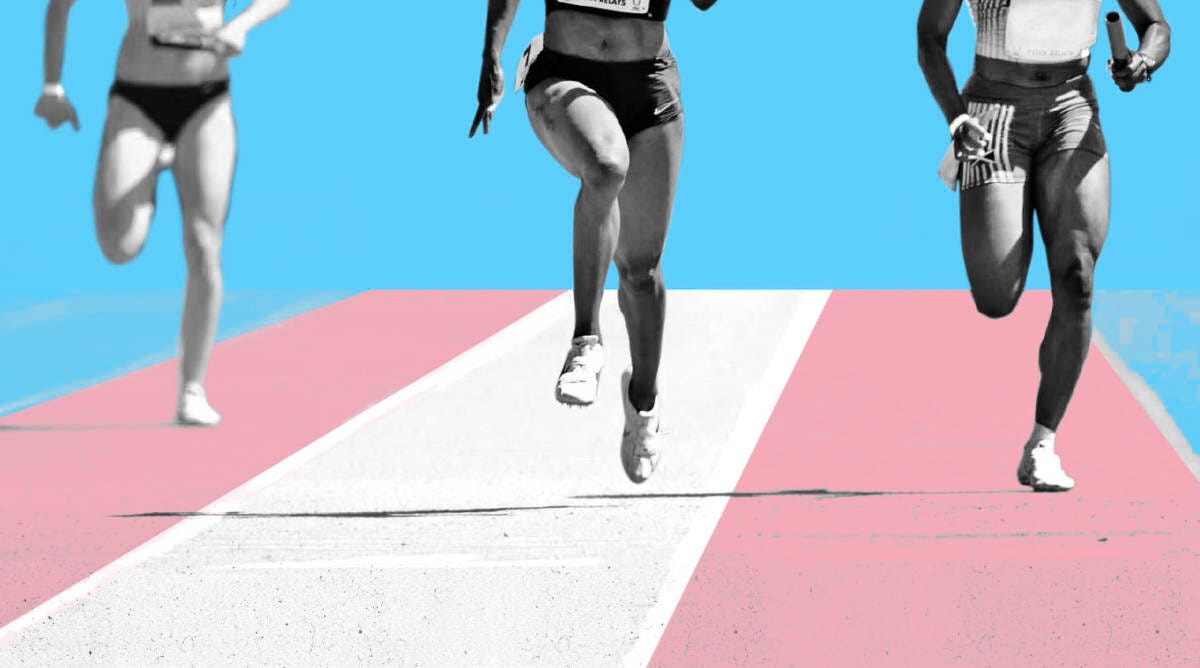
And now they’re back attacking transgender athletes, especially women, because of course it’s always women.
It was revived by a recent controversy in the WNBA. An Indiana Fever player, Sophie Cunningham, mentioned in an interview that she didn’t think transgender women and girls should be able to compete in female athletics as a matter of fairness. That led some other players and coaches to voice their support for transgender women to play in women’s sports.
Fans at some WNBA venues have booed Cunningham, while some have held signs in support.
There are no trans women in the WNBA, and major college athletic associations in the US, such as the NCAA, don’t let trans women compete in women’s categories. The governing bodies of major international sports federations are increasingly restricting or banning trans women from elite female categories, including the International Olympic Committee. Trump has threatened to withhold federal funding from schools and states that allow trans women to play women’s sports, and the Supreme Court has backed him.
Cunningham’s opinion is not an unreasonable view on the face of it, primarily because the science is simply incomplete. (About two-thirds of Americans agree with her.)
But it’s also a view that allows conservatives to ignore the real danger to women — straight white men (remember the Epstein files?) — and an opinion that is fraught with all sorts of devastating consequences and repercussions for transgender individuals.
In the US, about 0.8% of adults and 3.3% of youths aged 13 to 17 identify as transgender. Their physical bodies don’t match how they feel inside. Among the adults, about 1/3 identify as trans women, 1/3 as trans men, and 1/3 as non-binary.
BTW, the binary view of human gender is quite ignorant. There aren’t just two genders, men with XY sex chromosomes, testes, a prostate, and a penis; and women with XX sex chromosomes, ovaries, fallopian tubes, a uterus, and a vagina.
In fact, like so much in our diverse and messy natural world, there are more than 30 different human intersex variations and many atypical sex chromosome combinations. That’s because chromosomes, hormones, and physical anatomy can line up in all sorts of ways.
A person can have a missing sex chromosome or an extra sex chromosome (variations include X, XXY, XYY, XXX, and more).
A person can be born with both ovarian and testicular tissue — and sometimes one of each. A person can have XX chromosomes and ovaries, but the external genitalia of a male. A person can have XY chromosomes and testes, but the external genitalia of a female. And on and on.
Nature ain’t perfect, folks.
Now, these intersex variations are separate from transgenderism. One is physical, while the other is one’s internal sense of gender identity. However, people with these intersex variations are more likely to experience varied internal gender identities such as transgender or binary, probably because of hormone differences in the womb that can change brain development that’s connected to gender identity.
Gender-affirming health care is very simple: Medical professionals help kids, teens, and adults deal with the disparity between the sex they outwardly present as and the internal gender they identify with.
There’s social support: Helping someone with things like changing their first name, their pronouns, their clothes, their hairstyle.
There’s mental health counseling for both the individual and their families.
In early adolescence, puberty blockers may be used to pause the natural hormones of the gender they don’t identify with, stopping physical changes they don’t want. However, virtually no adolescents receive this care: it’s less than .1%.
Older teens may start hormone replacement therapy, taking estrogen or testosterone to increase the characteristics associated with the gender they identify with. Again, this is not common. Treatment generally doesn’t start until adulthood.
Finally, adults can opt to have surgery, but only about 25% do. The most common is breast reduction (for trans men) and breast augmentation (for trans women). Genital surgery is far less common: Anywhere from 25% to 54% for trans men and from 5% to 28% among trans women, for whom such surgery is far more complicated.
There’s a general consensus that before puberty, there’s not a significant difference between boys and girls when it comes to sports. Boys don’t have a competitive advantage until they hit puberty.
Since that varies from boy to boy, many youth sports teams typically separate boys and girls into different divisions around age 9 to 11. Dr. Bradley Anawalt, an endocrinologist and professor at the University of Washington, told PBS that there may be some subtle differences between boys and girls, but it’s not clear if that’s because of biology, or the fact that boys are encouraged to play sports more than girls are, and therefore are able to increase their strength, speed, and power more.
Post-puberty is a different story. On average, males grow taller than females, develop broad shoulders and greater muscle mass. Their hearts and lungs grow bigger than females, they carry more oxygen in their bloodstream, and they have more fast-twitch muscles. In general, they are stronger and can run faster and jump higher than women.
But women aren’t slouches after puberty. Yes, they develop breasts and add body fat. Their hips get wider, their center of gravity drops, and their knee-to-hip angle changes (that’s partly why they get more ACL tears than men; see my newsletter about that here).
But they also have more oxidative muscle fibers than men, so they have better endurance. Their extra fat also helps them with endurance, particularly in ultra-distance running and open-water swimming (check this out). Estrogen helps them recover faster from intense training. Their lower center of gravity means they have better balance and side-to-side agility. They have better joint and ligament flexibility.
Since the sports controversy is about men transitioning to become women, and asking to play on women’s teams, let’s stick to that.
The essential questions: How much are men’s physical advantages diminished by hormone therapy as they transition? How much of an advantage do they retain?
Here’s what I meant when I said earlier that the science is not settled: Obviously, hormone therapy doesn’t reduce trans women’s height, heart size, or lung capacity, but it does reduce their muscle mass. Some studies show that after two years of hormone therapy, trans women’s advantages virtually disappear, except in their ability to run faster. Yet other studies say hormone therapy eliminates very few of trans women’s advantages, and even though their muscle mass is reduced, they still remain stronger than ciswomen. But their overall physical fitness is about the same.
It’s also very sport-dependent. Height is a huge factor in a sport like basketball, for example. Arm length can make a difference in swimming. One’s stride is critical in running. Yet some want to ban trans women from all competitions. In fact, the international chess federation won’t let trans women compete in female categories!
That’s right; I said chess. Still believe that men set up these rules to protect women?
But let’s look at something else: Some cis women have enormous advantages over other cis women. In fact, testosterone levels among adult cis women — those identified as female at birth — can vary enormously; some females can have 4 to 5 times more of the hormone than a competitor. Should they be tested and barred from playing?
In fact, men who have transitioned to female via hormone therapy can end up with less testosterone than some cisgender women.
There are enormous physical differences among cisgender athletes. In the WNBA, for example, Han Xu, who comes off the bench for the New York Liberty, is 6'11" and weighs 203 pounds.
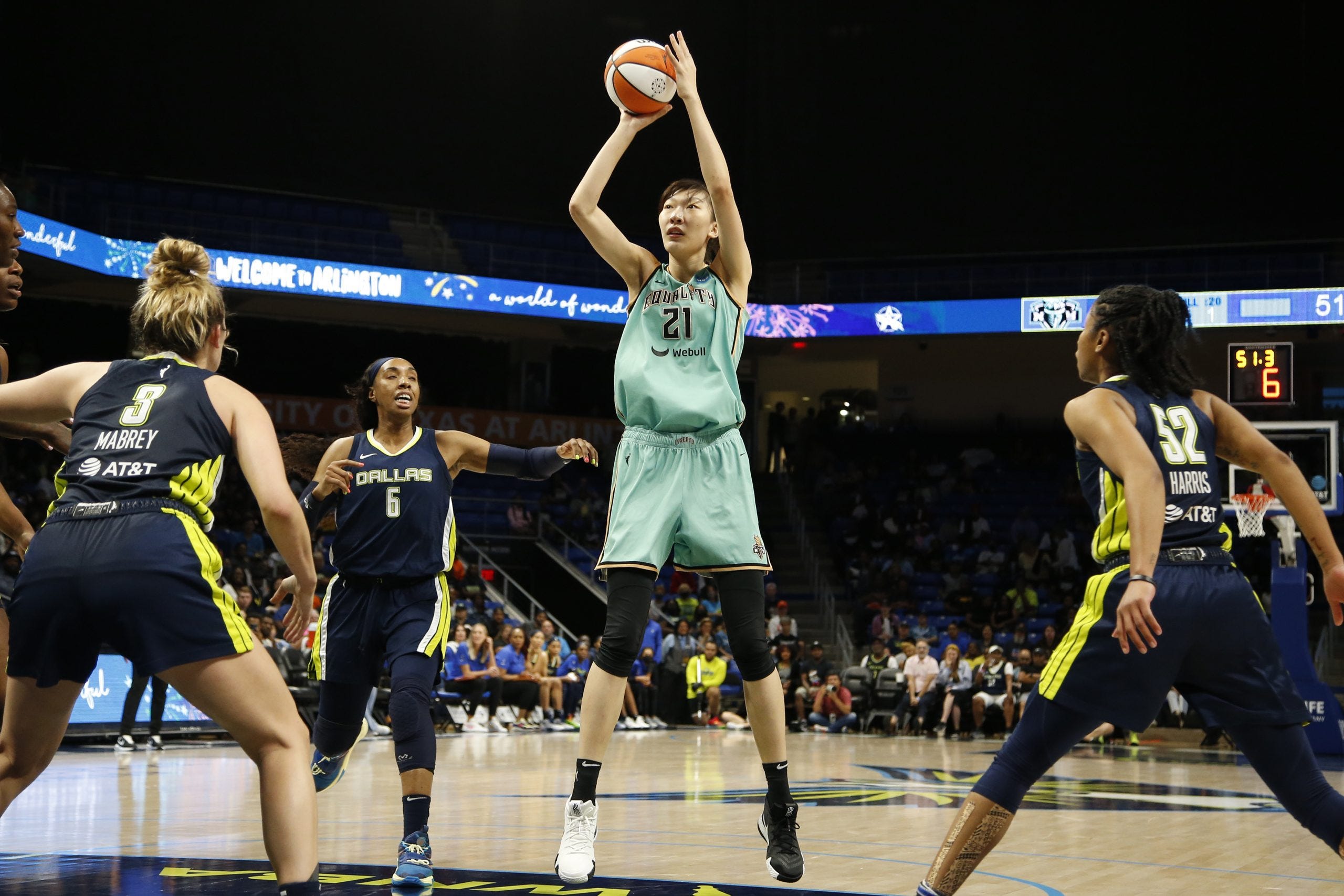
Guess which one is Han Zu.
Erica Wheeler, who starts for the LA Sparks, is 5’7” and weighs 143 pounds — 16 inches shorter and 60 pounds lighter than Han Zu.
Wheeler is far more likely to be injured during a game via an encounter with another cisgender woman than she would be if a transgender woman was in the league.
The average WNBA player is 6 feet tall and weighs 170 pounds. Han has a tremendous height advantage over every other player on the court. So does Connecticut Sun center Brittney Griner, who is well-muscled and has very long arms. At 6’9”, she has a standing one-arm reach of 9’2”. (The league average is 7’10”.)
Is using the gender one was assigned at birth really the only — or the best — criteria?
Practically speaking, there are extraordinarily few trans girls or women who want to play organized sports — at any level. For many, the harassment and bullying just isn’t worth it. For those who do persevere, the attacks only escalate.
And let’s be clear: There aren’t any men who are transitioning to be a woman just so they can win a medal or a trophy in a woman’s competition. You can’t just declare that you are a woman and start playing. Major sports organizations and governing bodies have strict eligibility rules (although the WNBA apparently does not). Some have athletes undergo genetic and hormone testing. Some require athletes to provide medical records as proof of their transition process.
It’s so easy to pick on those who are different from the majority. To ridicule, embarrass, and humiliate. To shun, isolate, and banish. And to do so at a time when someone is struggling mightily to figure out who they are and how they fit in.
Think of how traumatic and disorienting their internal conflict is. Mix in cruelty, shame, family rejection, and physical attacks by peers and adults. Oh yes — throw in verbal attacks by the president of the United States.
It’s no wonder that most transgender individuals, especially youths, engage in self-harm. Their reasons for cutting or otherwise hurting themselves are heartbreaking: To cope with depression and anxiety, to self-punish for being different, to change emotional pain into something physical.
And then there’s suicide.
About 42% of transgender adults in the US have tried to kill themselves. That’s four times more than cisgender adults. 81% have thought about it. That’s seven times the rate of cisgender adults.
It’s easy to see why ending it all seems like a realistic alternative: Their lives are hell.
According to the Williams Institute at the UCLA School of Law, nearly half of transgender people are physically attacked or sexually assaulted in their lifetime. Transgender women of color experience violence far more than white transgender women.
Dozens are killed every year in the US, but those murders are underreported because often the victim is not publicly identified as trans.
It can be extremely difficult for trans individuals to get housing, jobs, or health care because of systemic discrimination. They are subjected to verbal abuse, public humiliation, and threats — online, at work, and while they are simply walking down the street or doing some grocery shopping.
It feels as though the world is aligned against them. And actually, it is — at least in the US. According to the JAMA Network:
In 2025, 1,014 state bills, 104 federal bills, and 12 executive orders have been introduced that aim to exclude transgender people from public life by limiting their access to education, health care, identity documents, sports, employment, and public bathrooms. These policies make transgender people more vulnerable to interpersonal violence.
What does this have to do with the debate about transgender women playing sports?
To me, it boils down to the greater harm. Which is more important:
Letting someone who may or may not be taller or stronger or faster participate in organized women’s sports as a critical signal of acceptance?
Or banning them, thereby contributing to their “otherness” in society and perpetuating the culture of hate and violence directed toward them?
I believe the default should be inclusion, but with reasonable criteria to balance competitive fairness and physical safety — and set those criteria according to the sport. Perhaps things like testosterone thresholds, physiological standards, functional physical capacity.
Be especially inclusive in youth sports, where the benefits of trans youths being accepted far outweigh winning. That societal acceptance on the playing field or court could save someone’s life.
In our veneration of sports and the culture of winning, let’s not lose our humanity.
NOTE: Fast Forward reader MaryBeth Matthews visited the Kennedy Center in DC earlier this month and documented the sad state of affairs inside with lots of photos. I’ll have more on her discoveries in my next FF.
See you soon.
If you want to contact me directly, email thfastforward@substack.com.
Comments
Nothing yet. Say the first thing.
Sign in to join the conversation.