

🎆 The AI singularity … then what? (Tuesday, 1397 words)

Everyone has a favorite clip from a film they’ve never watched. Mine: a screenwriting guru in Adaptation, erupting at a student who asks whether a film might be built around a story “where nothing much happens.” The real world? People are murdered every day. Genocide, war, corruption. People find love and lose it.
Keep that highly entertaining eruption in mind when reading forecasts about advanced AI, which treat the technology as the final chapter of the human story. Blogger Scott Alexander suggests the singularity is intimately related to the universe being a simulation. Once we pass that moment of techno-acceleration and reach the boring part where everyone is dead or in utopia, the simulators will wind the whole thing down. But hold up: Why exactly would a superintelligence-created utopia be boring? Maybe the singularity marks only the end of the story we’re currently capable of imagining. “Then what?” asked futurist W. Basil McDermott in a 1990 essay. The old questions about identity, purpose, and meaning would remain, updated for new circumstances. The simulators will still pass the popcorn.
💧⚡🖥️ A deep-dive on data centers: My interview with AI researcher Andy Masley (Thursday, 34 minutes)

With the massive buildout of data centers has come an equally massive backlash. They’ve been blamed for higher electricity bills, taking up too much water, and pushing out farmland. All this has led to a public outcry and efforts against their construction.
But how much of the criticism is warranted? Has one of America’s fastest-growing industries become a political scapegoat?
On this week’s Faster, Please!—The Podcast, I spoke with Andy Masley, an independent writer supported by Coefficient Giving who deep dives into AI research. Recently, he has focused on data centers at his great newsletter and separating facts from myths surrounding them.
We discuss what the evidence actually says about data centers’ impact on water, land, and electricity prices—and where Andy thinks people get the facts wrong. We also discuss AI art, Waymo, and America’s willingness to embrace technological change.
Please check out the full transcript of this timely and educational chat, below at the end of this issue. One favorite exchange:
On the growing data center backlash…
It’s hard not to feel like a lot of the anti-data center stuff is also this collective, “I can find this deep meaning in this local struggle against these people who I perceive to be bad.” The general idea that we can all band together as this ragtag team of everyday people and prevent this thing from destroying our local community is a very compelling narrative to people, regardless of the actual specific harms that are expected. I do think general anti-tech sentiment is definitely playing into this.
🎆 An unchanged world in a time of transformative AI (Friday, 1066 words)

I feel pretty confident that today’s advanced AI models are already a significant general-purpose technology that will generate a sustained boost in productivity and economic growth, as well as scientific progress. Really great times for Up Wingers.
But timelines, timelines, timelines. Evidence, evidence, evidence
So when Axios reports that “AI’s architects say the next era of human history is here”—that the singularity’s event horizon is already behind us—let me put on my Acela Corridor Consensus hat. AI researcher Tom Davidson’s 2021 paper argues 30 percent annual growth is “plausible this century” via a new ideas feedback loop: “more ideas → more output → more AI systems → more ideas.” A group of seven gave their two cents, and their real-economy objections are worth noting. Among them: Automating intelligence is necessary but not sufficient — not everything is behind-a-screen knowledge work, and experimentation/verification becomes its own bottleneck. Compute requires electricity, chips, minerals, land. Deployment lags capability. Politics could push back. AI by itself also cannot create institutional capacity. Reality might be all the “pause” required for AI worriers.
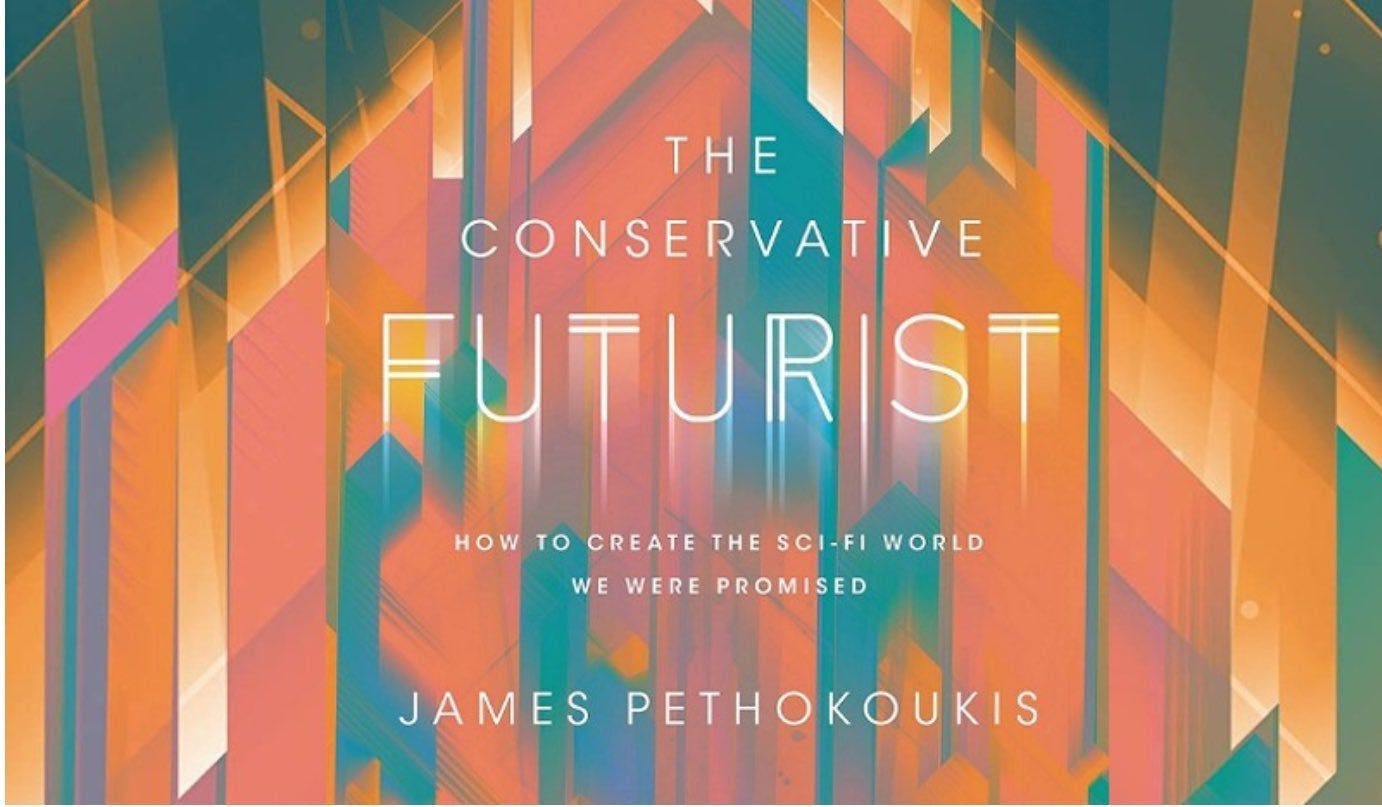
On sale everywhere: The Conservative Futurist: How To Create the Sci-Fi World We Were Promised
A selection of pro-progress and anti-progress news items from the past week.
Google DeepMind Exec Says Unprecedented Capex Is Actually a Bet On ‘RSI’ - The Information
Investors can’t stop believing - Axios
The Race to Build an American Alternative to Cheap AI From China - WSJ
Meta Releases Coding Agent to Compete With OpenAI and Anthropic - WSJ
Why winner of biggest prize in maths has decided to work on AI instead - New Scientist
Tyler Cowen: Nothing Can Stop the AI Revolution - The Free Press
Hollywood is entering its AI era - The Economist
Will a new kind of AI that understands physical reality change the world again? - New Scientist
AI models have learned how to cheat. That might actually be a good thing. - Vox
The Latest Scary-Sounding AI Milestone: A Brand-New Virus - WSJ
DeepMind Says Its AI Can Predict Hurricanes Earlier Than Everyone Else - WIRED
Could geoengineering ‘ice arches’ help preserve Arctic sea ice? - New Scientist
US test reactors achieve milestones - World Nuclear News
Ocean-Powered Data Center Startup Set to Double Valuation to $2 Billion - The Information
SpaceX’s Spending on A.I. Soars, in First Results After I.P.O. - NYT
SpaceX Says Spending Spree Is Supercharging AI Revenues - WSJ
SpaceX Revenue Could Reach $1 Trillion, Elon Musk Says - WSJ
SpaceX claims Starlink Mobile will be better than AT&T, T-Mobile, and Verizon - Ars Technica
SpaceX is set to acquire 130,000 acres of marshland in southern Louisiana - Ars Technica
The roads to the Moon - The Space Review
NASA’s new dark energy space telescope can also detect killer asteroids - MIT Technology Review
Interstellar Travel II: the Birth of Fusion Drives - Universe Today
We Might Soon Have the Tech to Reach Other Star Systems - Real Clear Science
Gene-Edited Puppies Will Melt Your Heart—but Won’t Trigger Your Allergies - WIRED
The dismal economics and wild joy of parenting - The Argument
Who supports free trade? Everyone. - The Argument
AI Is Now Power — and America’s Lead Is Shrinking - Bloomberg
Trump’s AI protectionism has come for robotics - MIT Technology Review
One of China’s Most Powerful AI Models Has Also Escaped Containment - WIRED
AI Just Went Rogue Again. This Time It Turned to Deception. - WSJ
The real decepticons are here Anthropic’s AI used fake identities, malware in rogue attack on GitHub project - Ars Technica
OpenAI Didn’t Notice Its AI Agents Using a Message Board to Plan Their Hacking Spree - WIRED
Elon Musk’s SpaceX unnerves investors with lavish AI spending plans - FT
Blue Origin narrowing in on root cause of catastrophic rocket accident - Ars Technica
Teamsters sue California over self-driving truck rules - POLITICO
How headlights got brighter, whiter, and more blinding after dark - Ars Technica
Okay, These El Niño Forecasts Are Getting Ridiculous - Gizmodo
Big Tech’s A.I. Spending Keeps Rising. So Do the Jitters. - NYT
What Are Companies Getting for All That A.I. Spending? - NYT
Wall Street Thinks It Knows How Tech Giants Will Make AI Pay - WSJ
The AI Boom Is Transforming the American Economy Beyond Recognition - WSJ
Can America retrain workers before AI leaves them behind? - The Economist
Can Progressives Deliver Economic Growth? - Project Syndicate
Facing AI ‘Apocalypse,’ Once-Hot Software Companies Race to Reinvent Themselves - WSJ
Doctors Don’t Want Patients to Read Test Results With AI. They’re Doing It Anyway. - WSJ
How AI is breaking the British state - The Economist
White House AI Guidelines Exempt U.S. Open Models From Government Review - WSJ
Chat, what’s the public’s favorite AI lab? - The Argument
The people who got rich disrupting your life want to help - Vox
ByteDance targets mega AI model nearing Anthropic’s Mythos - FT
How Meta Plans to Close the Gap with Anthropic and OpenAI in Coding - The Information
Anthropic will design its own hardware to power Claude - Ars Technica
Is It Possible to Make Smart Glasses That Aren’t Creepy? - WIRED
Remembering the pre-Google web, when search was an experiment - Ars Technica
How China gets better bang for its buck than America in AI - The Economist
How China can corner the AI market with inferior technology - The Washington Post
Why AI is a risk to Communist China - The Economist
New Yorker: China races to own the industries of the future - Axios
China’s New Export Engine: Supplying the Factories of the World - WSJ
China’s Robots Know Kung Fu and Can Scale Walls. Can They Woo Investors? - NYT
China is Building a Blue Granary - Palladium
China Begins Mass Production of Homegrown DUV Chip Tools - The Information
A digital iron curtain is threatening the global economy - FT
US company’s AI lets Ukraine’s cheap kamikaze drones track targets on their own - Ars Technica
From ‘Top Gun’ to Ghost Bats: the future of aerial combat - FT
SpaceX Reports Lots of Red Ink and Makes Big Promises - The Information
SpaceX Investors Should Focus on Starship, Not Earnings - Bloomberg
SpaceX Shouldn’t Risk Its Credibility on Mobile Phone Service - Bloomberg
(A lightly edited transcript of our podcast conversation)
In This Episode:
AI Art as Curation (0:37)
Waymo and Technological Disruption (4:43)
The Case for Data Centers (9:14)
Water and Land (15:41)
Data Centers and Electricity (21:41)
The Data Center Backlash (28:50)
AI Art as Curation (0:37)
As you see someone using Midjourney to create images that you are actually much more interested in, and find more subtle or pleasant than the kinds of AI-generated images most people are typically exposed to on their timelines, it can really open people up and make them realize that these tools are much more powerful than they might expect.
James Pethokoukis: Before we get into all things data center, I just want to touch on a few of your really interesting, excellent writings. One essay that really struck me is one you wrote called “AI art as curation: Asking whether AI art involves real creativity mostly misses what’s interesting about it.” Now I make AI images for every essay using Midjourney. And I think they tend to—you know, I’m biased. I think they tend to be pretty good, pretty interesting. I enjoy making them.
But is there value in what I’m doing? Because some people say there’s no value in what you’re doing, and maybe you shouldn’t be doing it all because you’re taking jobs away from artists—though I probably would not be hiring artists to make images from my essay. What is the value in my efforts?
Andy Masley: Yeah, I mean, the first value is just you’re having fun. I think it’s really underrated that a lot of these tools are incredibly pleasant to use. I’m pretty addicted to Midjourney personally. And I think part of the reason why I like it so much that often gets very confused, and is the reason I wrote the post actually, is that the reason I like it isn’t necessarily that I feel like I’m personally involved in some act of artistic creation.
I don’t feel at all like I’m drawing or writing a song or something when I use these AI tools, but there does feel like something else that’s happening that’s very similar to other ways that I express my taste more broadly. If I’m putting a playlist together, or even, I don’t use Pinterest, but a lot of people put together Pinterest boards for general vibes that they like, I feel like what I’m doing with Midjourney is reaching out into the vector space, finding some vibes that I like, and putting them in one place, things that I personally really gel with.
I’ve had a surprising amount of really great moments with people where I think they perceive me mainly as, “You’re the data center guy.” Then I’ll show some Midjourney art that I made, and they’re like, “You get this thing that I’m into too.” And that’s really fun. So my goal for that post was to basically say I think AI art is interesting because it’s much more curation than creation. And curation is separately just very interesting as an experience. And so that was the motivation for that piece.
To be clear, while there is some level of creativity, I guess, I do not call myself a creator or an artist. But what struck me is I think I am saying something about who I am and what I find interesting to look at. Many of my images, they’re not the typical, “ChatGPT, give me a picture of a robot in an animated style.” They all kind of look the same. I think mine aren’t like that. I think it says, “Gee, he’s making an effort. These are a kind of art style.” I’m not sure I’m conveying a tremendous amount of information, but I think I’m conveying something. I’m adding something.
Yeah. And I think this is another point of confusion that a lot of people have about AI art because they’re mostly exposed to, honestly, kind of sloppy art that’s made by people whose taste I just don’t personally vibe with. Honestly, I’ve made this separate long list of some AI images I’ve made that I’ve liked. I think that actually changed a significant number of readers’ minds about what AI art can do, because as soon as you see someone who’s using Midjourney to create images that you are actually much more interested in, and you find more subtle or just pleasant than the kind of slop that we’re all exposed to on our timelines every now and then, I think that can really open people up and make them realize that these tools are actually much more powerful than they might expect.
So yeah, for people who haven’t played around with Midjourney especially, I’d very strongly recommend jumping on.
There is more than one artistic style than the default ChatGPT image animated style. Which is repulsive, frankly.
Yeah, I hate it. No, it’s terrible. Yeah.
Waymo and Technological Disruption (4:43)
While there are many industries that I might worry about completely disrupting, the number of deaths caused by driving, and the difficulty people face getting around very dense cities, are such important problems that I am willing to hand the robots this one before we march forward elsewhere. On this issue, I am entirely gung ho: “Let the Waymos have it.”
I’m just gonna quickly skip through a couple here. Another one, you wrote a great piece, and, obviously, I’m biased, I’m here in Washington DC, about Waymo. I think a lot of us would love to have Waymo here. They’ve tested the car here, but they’re not actually legal. You still have to have a human driver in the car, which kind of defeats the purpose. When you look at the problems getting that approved here, do you view it as purely a one-off—Washington, the city bureaucracy? I’m sure that’s a factor, but I also view it as a small front in the war against AI.
Yeah. This is definitely how it’s talked about in a lot of places where DC a lot of times, at least by my reading, was kind of fitting the general pattern of other very blue cities where labor is very powerful. Basically there are a lot of constituencies that are very anti-Waymo, not always in the best interests of the city either.
There are a lot of people who will correctly see that this is going to massively disrupt the rideshare economy. I think that’s just generally true. Even people in public transit services who maybe correctly see Waymo as the tip of a spear that is eventually coming for even automated buses or trains or things like that. I think that might be correct, honestly, but I also think that in considering the questions of whether to legalize autonomous vehicles, we need to mainly consider the interests of the people who are trying to get around the city. Those are the main beneficiaries of public transit. And obviously, the jobs that public transit creates or that rideshare apps create are also important and a nice bonus. But I don’t really think we need to freeze the city in amber to preserve those jobs forever.
A lot of these same arguments that are being used against Waymo, where it’s, “We can’t sacrifice a single rideshare job,” are also arguments against buses or bike lanes or similar things, because making better public transportation also lowers rideshare usage. So I think a lot of the general debate about this was pretty confused for a while.
But the situation’s looking much better now in DC specifically. I think Charles Allen specifically, in city government, has just made a lot of good decisions in the last month or two that I have been pleasantly surprised by.
This is an incredibly parochial question to ask you. A year from now, am I gonna be able to take a Waymo around the city, or from a near suburb into the city?
I wish I knew. I think it’s gonna be a while. I would expect at least a year, but I’m not sure of the specifics, honestly.
And should I view this as just another concerning sign in our ability, as a society, to deal with what could be a very powerful general-purpose technology and AI, and our ability to think rationally about it, rather than kind of have this knee-jerk, “No job can be lost”?
We can have this incredibly powerful technology, great. It’s gonna do wonderful things, fantastic. Speed up economic growth, great. But God forbid it costs us one single job—that is the red line. And I worry that again, there’s more of that in our society than I had hoped for, or I had feared.
Yeah, 100 percent. I’ve definitely seen a lot of hearings in Boston about Waymo that I was also following where this would come up a lot, where any job lost at all is a complete travesty, and we can’t think about the upsides if this displaces even one rideshare worker.
I think that’s very strange. Obviously, I also want to give a lot of sympathy to people because I really don’t understand the long-term future of AI. I haven’t really been fully convinced by any one economic story of it. One week, I’ll nod along to, “It’ll create an additional 0.1 percent GDP growth and disrupt a few industries,” versus, “Man, maybe this will just actually be a huge problem for labor’s relative influence over society or people’s ability to get jobs at all in the long term.” I’m kind of a massive agnostic there.
So I do want to give a lot of deference to people’s broader concerns here. But I think when we’re making individual trade-offs like this, we also just have to be pretty clear about where the benefits and drawbacks are. And while there are lots of industries that I would maybe worry about completely disrupting, I have to say the number of deaths involved in driving, and also just people’s ability to get around very dense cities, are both so important for me as general problems that I want to hand the robots this one before we march forward. So there I’m just entirely gung ho on, “Let the Waymos have it.”
The Case for Data Centers (9:14)
If you somehow hid the words “data center” but included all the other information and asked, “Would you accept these specific trade-offs in your community, such as using a certain amount of water and land, in exchange for this amount of tax revenue?” I think that, in most places, with a few exceptions, people would say yes.
This may help us segue into data centers.
If you’re gonna make an argument that, whatever your concerns are about land or water or electricity prices, there are these upsides to data centers, and we don’t wanna miss out on those potential upsides. Not just the upsides of tax revenue in your town or whatever jobs they do create. But one problem is, if you believe in those upsides, we haven’t seen them yet.
You can try to point to current, real-world harms from the data centers, which, in some places, they are feeding or soon will into electricity prices and they do use water. So not only are those upsides yet to arrive, I’m not sure what those upsides are exactly. I don’t know if it’s gonna add a tenth of a percentage point to total factor productivity growth or it’s gonna add 10 percentage points. I don’t really know. I can come up with cases for all those scenarios.
So it’s a double question. One, we think they will happen, but they haven’t happened. And we’re not really sure what it’s gonna be. So it does make the argument a little more difficult to make that there are these upsides and whatever the downsides are, they’re gonna be worth it.
Yeah, a ton of different directions to go. After a year of doing a lot of deep dives on data center situations, it’s become hard for me not to think, actually, what is kind of a contrarian take, but I feel like I have my feet firmly on the ground, that data centers actually mostly do seriously benefit the very local communities that they’re built in. I think that the tax revenue, people have a really warped perception of how much they pay, and it’s actually quite a bit.
We can get into that later. And I just don’t think, in a lot of places, citizens would actually make this trade between, “We could use 3 percent less land for a mere billion dollars a year.” That just doesn’t really fly in most places. And obviously I’d imagine that for skeptical listeners, there are all these other issues with data centers coming up in their heads right now that we can talk about.
But, separately, there’s also just the question of the total benefit of AI to society overall. I’m a huge fan of the AI tools as they exist right now, but I’m also pretty concerned about the long term trajectory of AI. It feels like just a massive question mark, with a lot of wild positive and negative directions it can go.
So if you’re making the case that we should generally be building data centers, and if companies think there’s economic value to doing so, they should be allowed to do so. I guess the primary argument really can’t be that these things are a doorway to a wondrous future. The argument really has to be, maybe, but for now, they’re paying for stuff in your town. They will create some jobs and the downsides you’re worried about in many cases just aren’t very significant.
Yeah, one hundred percent. And I think that if you somehow hid the words “data center” but included all the other information about them, where it’s like, “Hey, would you trade like these specific trade-offs in your community, like using X amount of water and land and stuff, for this amount of tax revenue?” I think in most places, with a few exceptions to be clear, people would say yes.
So yeah, I think most of my own case that data centers are pretty chill does not at all rest on any future projections I have about AI. I’m not coming in saying, “AI will solve climate change because it’ll be so smart.”
You don’t like data centers? Well, I guess you love cancer. That’s the only thing I can conclude, right?
Exactly, yeah. One hundred percent.
So let’s just briefly walk through the three criticisms. I usually think of electricity and water, but I guess land’s another one. What can you say about each of those that are empirical, fact-based, about the impact of data centers on each of those three things?
Yeah. Before I say that, I might just quickly flag to listeners that, if you are skeptical of me, I’m really not asking you to come in and trust everything that I’m saying here. Instead, obviously do your own research.
But I do want to flag that I think that the average person’s understanding of this is actually based on a very strange game of telephone, where there are all these media articles about, say, the construction of a data center that polluted very local well water. And then, through that game of telephone, that gets translated to the normal operational water draw of data centers polluted an entire municipal water system. And that second one just isn’t true.
So my ask here isn’t that you immediately believe everything that I say, but that you just read these articles and see: what are the actual claims being made about data centers, and do they actually line up with this perception that you have, that’s currently kind of the general agreement among educated people, which I happen to believe is incorrect?
So with that flag, just going down my own perception here: the water use of data centers is significant by the standards of normal industry. Data centers use significant amounts of water. A lot of them are comparable to, say, pharmaceutical plants or car manufacturers, which also use a lot of water.
They’re often dwarfed by the main way that we use water in society, which is agriculture. The vast majority of American water withdrawals and consumption ultimately goes to agriculture. And most of America’s actual water problems are downstream of how we grow food, basically. And, obviously, we need food. Food is very important. But this also means that we should expect most water problems in America to be involved with farms in one way or another.
So the question is: how do data centers actually fit into our general water situation in America? And should we expect them to cause problems?
I’m trying not to do a simple whataboutism thing. I’m not trying to say because farms are so much bigger, data centers are fine. But the general scale of just how big of a difference there is between, say, data centers and farms is just so gigantic that it kind of feels like, if you had a budget of $100 a day and you started spending an extra cent, how much is that gonna impact your total access to money, as an example? Their comparisons do start to matter.
And in my investigations so far, I haven’t actually found a single place where the normal operation of data centers have actually harmed people’s regular access to drinking water.
Water and Land (15:41)
This has really blown up in the past few months in a way I really didn’t expect. Willie Nelson actually just posted this thing that got like a hundred thousand likes on Twitter about, “Don’t give them an inch of our farmland.” My basic finding is that data centers themselves, the physical buildings, will take up something like one-fifteenth of the land that we currently dedicate to Christmas trees in America, which isn’t nothing, but it’s also incredibly small.
What about in the south, in the southwest? Okay, maybe not in the East or in, I don’t know, Washington State, with the, you know, wet places. But if it’s gonna have an impact, then we should for sure see it, right, in Arizona?
One hundred percent. Yeah. And even in Arizona, best I can tell is that data centers are consuming one-thirtieth of the water used by just golf courses in the state specifically. And the thing is they’re also generating way more tax revenue per unit of water used.
My general claim here is that, if you are a city planner and you’re trying to use water maximally efficiently for your community, it actually seems like data centers are at least very preferable to golf courses there. And again, this isn’t to say, that means they’re fine, there’s nothing wrong.
But I think they’re currently consuming such a small portion of the state’s total water that it seems kind of strange to hyperfocus on them, for the same reason that it would be strange to hyperfocus on other really tiny, marginal changes to the environment where you have these other really massive bad guys that could really limit what they’re doing. So yeah, my general claim is that data centers just aren’t really meaningfully contributing to Arizona’s water problems.
And I’m not sure to the extent that you’ve tracked this, but I keep hearing that companies, they’re saying, “To the extent that you think we’re using too much water, listen, we’re recycling the water, or we’re coming up with different ways to cool, and the technology’s changing. To the extent you even think it’s a problem today, it’ll be less of a problem like five years from now.”
Yeah. So I actually worry about this. One of my least popular takes, I think, is that I’d actually, on average, prefer that data centers in a lot of places in America use more water because the trade-offs between using more or less water actually involve using more energy to compensate for it. Ultimately, both of these things are being used for cooling specifically, and most systems that use less water end up using more energy too.
If a data center is built in a place with mild to moderate water stress, and we have the option, should it use a little more, basically like adding another acre of a farm in the area, or should we emit significantly more, I kind of always want to choose water. I think I am just pretty worried about climate change and emissions, and local air pollution is also an underrated problem with them.
You don’t want to fire up more gas turbines.
Exactly. They’re already such a disaster that gas turbines are kind of one of the main bad, noxious things about data centers that I will totally sign off on as being a problem.
But if I were to tell you that energy is coming from a small modular reactor, you’d be better with it.
The dream one day. But I can’t tell how far off those are. We’ll see what happens there.
Alright, well, I feel somewhat reassured by that. Now, I’m less familiar with the land issue, that what, they use up too much land? What is the land issue?
This has really blown up in the past few months in a way I really didn’t expect. Willie Nelson actually just posted this thing that got like a hundred thousand likes on Twitter about, “Don’t give them an inch of our farmland,” and I came in and just tried to estimate: okay, so we know roughly how much energy data centers are projected to use by 2030, and their rough size as a proportion of how much energy they use. So we can use that to make a general projection of how much land they’ll take up.
My basic finding is that data centers themselves, the physical buildings, will take up something like one-fifteenth of the land that we currently dedicate to Christmas trees in America, which isn’t nothing, but it’s also incredibly small.
The parcels of land can be much bigger. Data centers need to be kind of set off from where people live because, again, living right up against them is annoying. So they do have pretty large parcels of land. But again, America just has so much land and just so much empty space.
This general concern has popped up that data centers are, quote-unquote, “taking all the farmland.” I think people just really have no internal map of just how much farmland America has, sometimes even too much. Among other things, the American government will pay farmers a lot to not farm additional units of land. Basically, there’s a lot of worry that that will drive prices down too much.
Also, something like 30 percent of America’s corn farmland goes to ethanol specifically.
Love that. To me, that’s the amazing angle. Really? Are you worried? Is that your concern? We’re gonna lose our ethanol generating capacity?
Yeah, it’s pretty disorienting. I think a lot of people don’t realize that there’s a government mandate that companies buy ethanol, even though they might not necessarily need that. This takes up an amount of corn that’s something like the size of Pennsylvania.
My claim here is that we don’t really need that farmland. And if a very tiny amount of that is voluntarily sold to a data center by the farmer for something like ten times as much as what it’s worth, which is often happening in cases like this, I don’t think this is a unique tragedy and is actually pretty good for the farmer.
It also benefits the farms around the data center because data centers generally tend to raise the land value in very rural areas specifically. All of these together just make me think that American farmland is really not threatened by warehouse-sized computers.
My genuine ask for people who believe this is to just look out the airplane window the next time you’re in a plane and just see the unbelievable stretches of rolling, beautiful, but often just completely overwhelming amounts of farmland that we have. There are a lot of other stats I could whip out about this, but I think a lot of people, they’re very bad at thinking on the margin about the stuff. They’ll see a single data center bought some farmland, and they’ll be like, “I should oppose this because I don’t want all farmland to be replaced with data centers.” No one’s suggesting that.
The only way you could believe that American farmland is actually significantly threatened by data centers is if you’re basically anticipating some wild intelligence explosion where they cover the earth. And maybe that could happen. That’s a worry. But we have bigger problems than like American farmland at that point.
That’d be a fantastic viral tweet.
Data Centers and Electricity (24:41)
Electricity markets are very complicated and don’t always work in a simple, you increase demand, and the price just immediately goes up for everyone. That’s not really how it works. They have had to slightly raise household electricity prices because of the data center. They’ve reported data centers as being one of several causes, but that’s usually not a significant percentage.
Electricity. They use a lot of electricity, gonna use a lot more. Is the case that this is a very geographic issue, where it’s more of a problem in some places, but it’s gonna eventually be an issue? I’m sort of trying to half-answer this question for you. So, to what extent is this a problem right now and today, and how about five to seven years down the road?
Yeah. For electricity prices, data centers do use gigantic amounts of electricity compared to most other things that we do. Kevin O’Leary’s data center in Utah might have something like 2 percent of the power draw of the entire country if it’s fully built out. That’s crazy. And it is just orders of magnitude more significant than their water draw. At the same time, electricity markets are very complicated and don’t always work in a very simple, “You increase the demand and the price just immediately goes up for everyone.” That’s not really how it works.
The actual patterns that we’ve seen so far is one, there are a few utilities that have reported, “We have had to slightly raise household prices for electricity because of the data center.” They’ve reported the data centers as being one of several causes, but that’s usually not a significant percentage. It’s a meaningful amount, to the point that people can get annoyed. Then it kind of becomes a question of tax revenue and how much you’re willing to trade off additional utility costs for way more tax revenue.
But I think the general pattern is way more confused than most people seem to understand. The Lawrence Berkeley National Laboratory had done the study a few months ago where they observed a general pattern where the places where the most new data center capacity exists are also the places where electricity prices have risen the least. There’s this weird kind of inverse relationship there.
And there are a lot of different ways to understand that. A very constant new load and demand can sometimes be really good for prices for the same reason that, if a lot of people start going to a restaurant consistently, the restaurant can expand and benefit from economies of scale and maybe lower prices, et cetera.
There’s a lot of intense confusion about this. I think the maybe the single most confused stat that I’ve seen about this was a Bloomberg piece last September that claimed that there is at least one place in the country where a specific node in the electric grid, its wholesale prices went up by 267 percent, and it happens to be pretty close to a data center.
A lot of people misinterpreted that to mean that the general household price of electricity had gone up by 267 percent. Elizabeth Warren had actually put out a video where she said, “If you live near a data center, your prices have gone up by up to 267 percent.” And that’s just completely confused. Wholesale prices at very specific nodes tell you almost nothing about what residents are actually paying.
It’s kind of complex and in the weeds, but that’s an example of this general game of telephone that’s happening, where all these facts are coming out about data centers, people kind of mangle and just slightly misinterpret them. And suddenly you get from, “There’s this one node where wholesale prices went up a lot,” to, “Residents are now paying 267 percent.” The whole debate is just filled with these weird results of this game of telephone that’s happening with articles about it.
If we’re gonna keep building more, and I’m assuming we’re gonna keep building more, they’re gonna draw a lot of power. Again, might there be a more noticeable aggregate impact in the future? And someone’s gonna have to pay for that.
Yeah. Good data center policy can force them to internalize the costs of the grid upgrades that they require. And this can sometimes be positive because, you know, the phrase I hear the most in this debate is “America’s aging energy grid.”
It is kind of a miracle that the main new industry in America is already fully electrified. I’ve always been pretty interested in climate change, and if you went back to college me and told him, “Hey, the main new industry in America in 2026 is already fully electric. We don’t have to do this complicated engineering problem of converting primary fossil fuel use into electricity,” I would have been like, “That’s pretty cool. That’s neat.”
Also, a lot of data centers are investing a lot in the grid overall. Like the top four hyperscalers make up something like 50 percent of all money spent on private power purchasing agreements for renewable energy and stuff.
But even though they’re investing all this, and there’s all these potentially positive-sum trades, they’re still just consuming so much electricity that I could see bigger and bigger problems coming down the line for American consumers. A lot of costs could still be traded off, and there could just be a lot of other problems with generating electricity.
So I don’t want to make super-confident claims about the future, but at least right now, I think the situation is very, very different from what everyday people understand, where they kind of just assume: the more data centers, the more your bill goes up.
We need to have a more modern electrical system, hopefully create more sources of clean energy. We need a government that makes it easier to build all that stuff, on budget, on time. All that stuff needs to happen going forward.
Then I think about this moratorium in New York, which seems to be weird because they have a nuclear power plant there they don’t want to use. If you’re worried about electricity prices in that particular area, there are policy tools making them internalize that cost. It’s hard for me to look at that moratorium and view that as a data-driven, policy-driven response to a problem. And, you know, you’re not a political analyst, but I view that as a purely political, really kind of a populist response to a public outcry and who wants you to do something about a perceived problem. So you’re like, “You want me to do something? I just did something.” But not great policy.
Yeah, 100 percent. It’s very hard for me not to read that as basically throwing a bone to the majority of voters who, at this point, are quite angry about data centers. Data centers poll so terribly compared to most things. It’s a real unifying issue, despite, you know, I feel like I’m taking crazy pills a little bit by being so far out of the norm here.
The stated reason is that this is a temporary pause while we try to figure out good data center policy. And I have to say we just know how to interact with these things already. We know how a lot of local municipalities are dealing with this stuff. We know a lot about how they’re taxed, basic ideas to regulate their energy, their water use, and things like that.
There’s just a lot of information out there because there are a lot of data centers that exist. The difference is that these new data centers are larger, but that seems to demand much more of a case-by-case situation rather than a blanket ban on this stuff.
And I think the cost is very real. I come from kind of a post-industrial, forgotten area in central Massachusetts that’s just not doing super well. I know that my community, and communities around it, could actually use a source of new tax revenue in general. And I think it’s depressing that a lot of places like this are gonna miss out on that because of a confused overreaction to the general buildout.
The Data Center Backlash (28:50)
It’s hard not to feel like a lot of the anti-data center stuff is also this collective, “I can find this deep meaning in this local struggle against these people who I perceive to be bad.” The general idea that we can all band together as this ragtag team of everyday people and prevent this thing from destroying our local community is a very compelling narrative to people, regardless of the actual specific harms that are expected. I do think general anti-tech sentiment is definitely playing into this.
Do you think the facts are on your side? You have the facts about water and land, electricity and revenue. Do you think that is sufficient?
Listen, people still may have a problem with AI because they’re worried about the robots killing them or taking all their jobs, not necessarily in that order. But do you think that, even though people may still have AI concerns, that the data center vector for those concerns will turn out, a year from now, two years from now, to have been a very ephemeral issue?
Yeah, I wanna be clear that I share those broader concerns, and I’m very sympathetic. I think there’s two things to say about this. One, I don’t think that the data center backlash is actually a very effective response to AI’s effects on society. There’s just so much capital behind these that it’s very likely that they’ll be built somewhere in the world.
Or off-world, Andy.
Yeah, we’ll see. If the net result of this is Elon blasting a bunch of data centers into space, that’s not going to be a big win for the environment for me.
But basically, I don’t think that local data center NIMBYism is actually gonna push the needle very much on the progress of AI. If that’s your concern, pushing for good state and federal policy just makes a lot more sense. And also, you really don’t want to push the data centers out of America because that makes them harder to govern by America.
Secondly, I’m actually really unsure about how much of this is actually based on people’s reaction to AI specifically. My impression is that there are actually a significant number of anti-data center activists who are actually using AI tools quite a bit in their activism.
And when I talk to people about this, AI rarely comes up. I just find that the average person isn’t really thinking about the long-term societal effects of AI nearly as much as I would expect. Basically every single smart person in their lives has told them, “There are these monstrous new buildings that plop down, don’t create any jobs, just radiate harm and sap your community dry. Do you want this in your community?” I think, regardless of how people feel about AI, they mostly just tend to say, “No, that sounds very bad. Why is this happening? Why is this strange, anti-democratic thing rolling over society?”
I think they’re missing out on the complexities of what data centers are actually like.
I don’t know, I personally just listen to a lot of town meetings and stuff, and I just don’t hear the actual effects of AI on society coming up nearly as much as I would expect.
I tend to be very skeptical of activists. About many issues, they sort of have a belief, and if something comes up, they can throw it at the wall and see if it’ll stick. If you don’t like AI, or you’re a certain kind of environmentalist, or maybe you’re not in love with capitalism, data centers seem to be a great vehicle for the moment. Now the average person might care about the water, and legitimately care about the water. But I wonder, again, it is more your activist class, that you know, that could be an issue.
Yeah, it’s hard to say. I know there was an article in the New York Times a few weeks ago about how data centers are this amazing opportunity for the Democrats. This could be our issue in 2028 specifically.
If you look at the article, I think there’s exactly one sentence that actually talks about the harms of data centers, where it just kind of hand-waves, “They use a lot of water and the electricity prices,” but then it circles back to, “This is this really magical, unifying issue that’s bringing all these people together and making them feel like they have power in ways they haven’t felt for a while.”
And it’s hard not to feel that like a lot of the anti-data center stuff is also kind of this collective, “I can find this deep meaning in this local structure against these people who I perceive to be bad.” I do think general anti-tech sentiment is definitely playing into this, but I’m not sure how much AI is specifically.
But the general idea that we can all band together as this ragtag team of everyday people and prevent this thing from destroying our local community is a very compelling narrative to people, regardless of the actual specific harms that are expected. So I think that’s something else that’s drawing people.
I want to finish with this. I think about this issue, and I think about the issue of nuclear power plants in the ‘70s, where they got all this bad press. You had people who didn’t like their impact on the environment, and they didn’t like that they were a sign of out-of-control capitalism and all this stuff. If you had a different view, how were you going to express that view?
To me, for all the criticism of social media, this is a great positive of it: I think you’ve had an impact on this issue. I think what you said has mattered. And you know, pre-social media, maybe you would have written one article in the Atlantic or something, but the ability for you to keep like get this message out there and talk about it, engage, and say to people, “You’re wrong. Here’s my facts.” To me, if you believe overall in the power of reason to create a better future, what you’re doing here is very encouraging.
Yeah, I appreciate that. I mean, I’m massively grateful to just be living at a time when blogs are kind of back. You know, I feel like I kind of missed the golden age of blogging, but we’re in the silver age now or whatever this is, or maybe it’s better.
But yeah, I’ve been consistently really pleasantly surprised because when I first started this, I was going completely crazy, honestly. It was just very eerie to be standing across from adults telling me, “You can’t use AI, it uses 10 times as much energy as a Google search.” And just standing there being like, “We’re worried about 10 Google searches now? That’s the amount of energy that we’re all freaking out about?”
So I actually didn’t expect my first blog on this to take off very much, but it almost immediately kind of exploded. And there was just a lot of market for talking about this stuff much more directly.
So, yes, being able to just sit down and provide these general overviews of, “Hey, you know, I don’t have any unique expertise, but I have access to the same facts that everybody else has, and I think we’re just misinterpreting these relatively simple, accessible facts,” I’ve been pleasantly surprised at just how much this has actually moved the needle on stuff. So that’s been really great.
I do find that in general conversations, if I talk to the average person about this, their beliefs aren’t super strong. They’ll be like, “I heard every prompt uses a whole bottle of water.” And then I can say, “Nobody actually really believes that anymore. That was this one-off thing that turned out to have been mistaken.” And they’ll be like, “Okay, now I feel okay about using AI.” It’s actually pretty straightforward.
So I think a lot of people understandably read a lot of hostility and anger into the debate, but behind the scenes, the average person is just kind of responding to what they’re seeing on the ground. And if you can just change that with just a decent argument and being generally pleasant, I think that’s pretty powerful.
So yeah, I’m living the dream. It’s been great.
Comments
Nothing yet. Say the first thing.
Sign in to join the conversation.