
Greenwashing exists for one simple reason: sustainability sells. Regardless of regulations like the Directive on Empowering Consumers for the Green Transition or the Green Claims Directive, consumers are driving the demand for sustainable products, and they’re getting better at spotting when a brand’s claims don’t hold up.
At BCome, we’re all about transparency, honesty, and making sure customers never feel misled. That’s why this week, we’re sharing a guide to help your fashion brand avoid greenwashing in your messaging:
Without specific, measurable data, sustainability claims lack credibility. Always back your statements with quantifiable evidence.
Don’t: This collection has been made with technologies that reduce CO2 emissions.
Do: Thanks to shifting to renewable energy sources, this collection saves 285 tons of CO2 eq compared to the industry standard.
If your claim refers to only a small part of the product, ask yourself: what aren’t you telling your customers? Partial truths can undermine trust. Be transparent about the full scope of your impact, good or bad.
Don’t: Our zippers are made from recycled materials, making this a sustainable collection.
Do: This collection incorporates recycled materials across 80% of its components, including zippers, buttons, and fabrics.
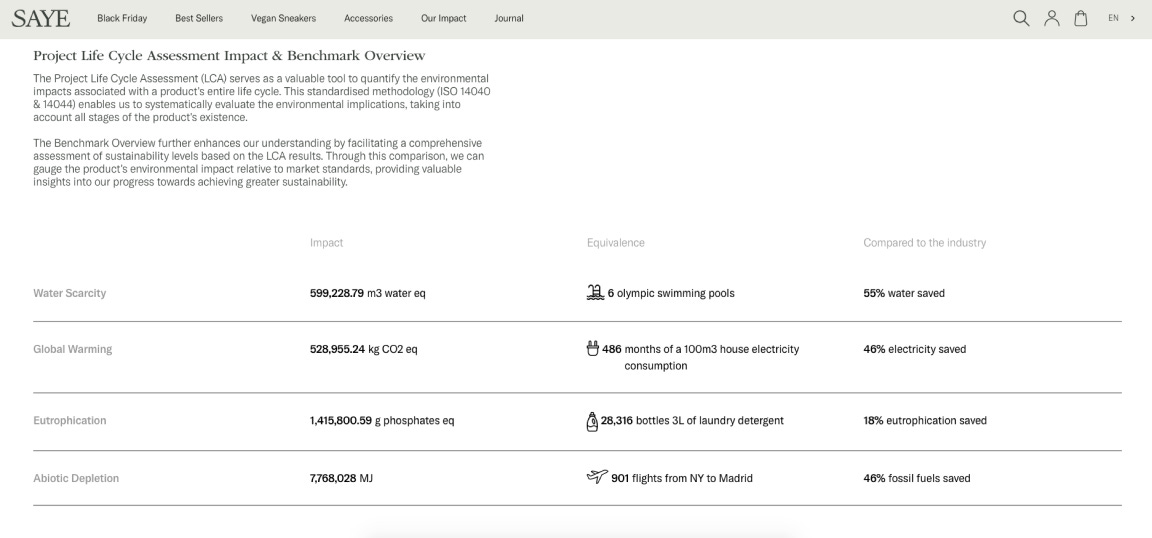
Claims should encompass the entire life cycle of a product, from raw materials to disposal, not just isolated stages.
Don’t: We consume less water than our competitors due to organic materials.
Do: From the extraction of raw materials to warehouse, we’ve used 30% less water than the industry standard.
Green is just a color. Avoid vague or generic terms like "eco-friendly" or "clean". Focus on specifics that address critical environmental issues, like water use, emissions, or circularity.
Don’t: Our new collection is eco-friendly and designed to help protect the environment.
Do: This collection addresses critical issues like water usage and carbon emissions, reducing water consumption by 25% compared to industry norms.
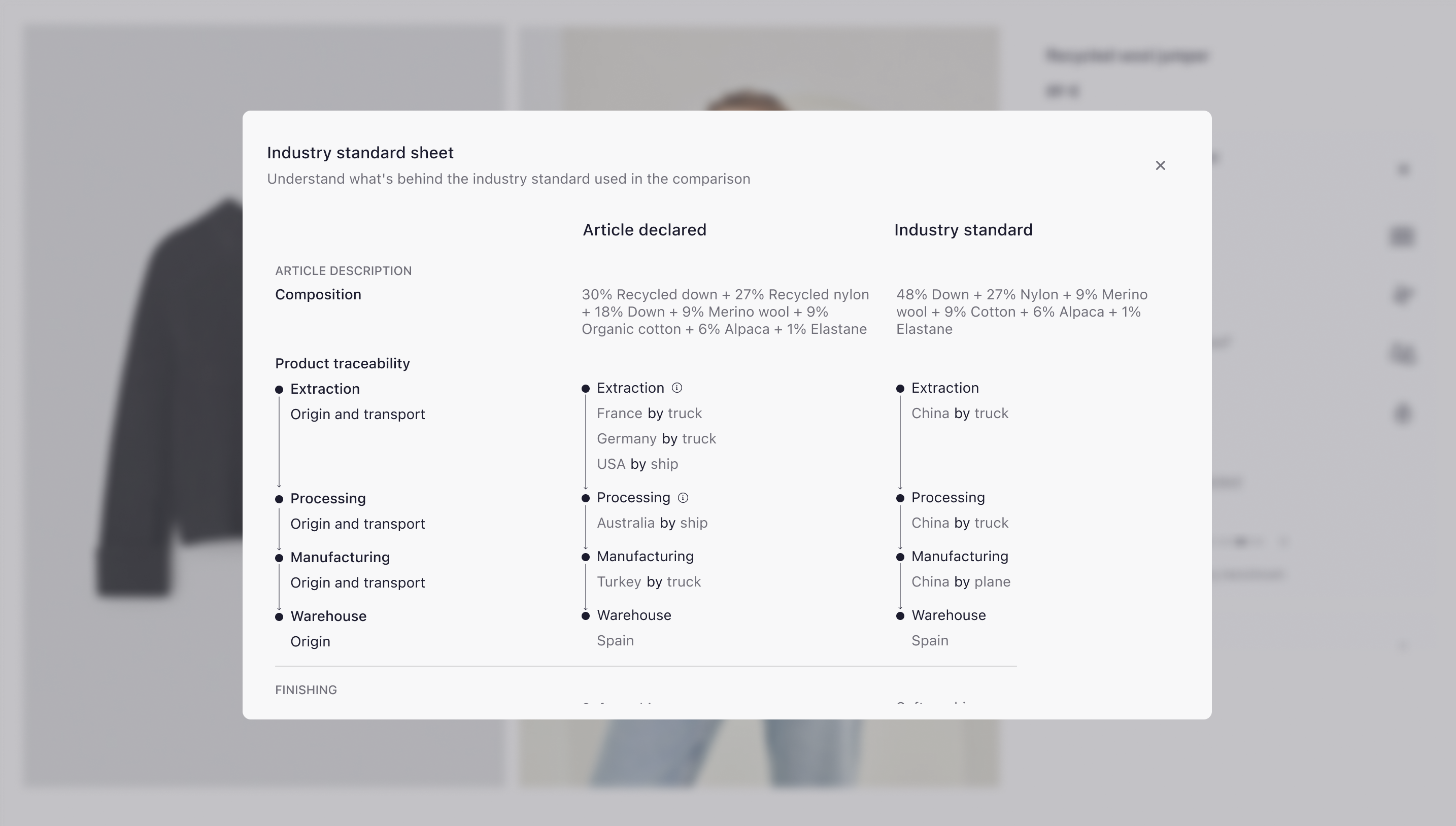
Compare like with like. Your audience deserves fair and meaningful benchmarks. When making comparisons, it’s important to compare elements that have the same properties and functionality.
Don’t: This cotton dress saves 30% CO2 emissions compared to the production of a polyester dress.
Do: This recycled polyester dress saves 20% CO2 emissions compared to the production of virgin polyester with equivalent properties.
Consumers value claims that make a tangible difference. Avoid relying on vague or empty promises that sound good but lack substance.
Don’t: Our latest collection is designed with a strong commitment to sustainability.
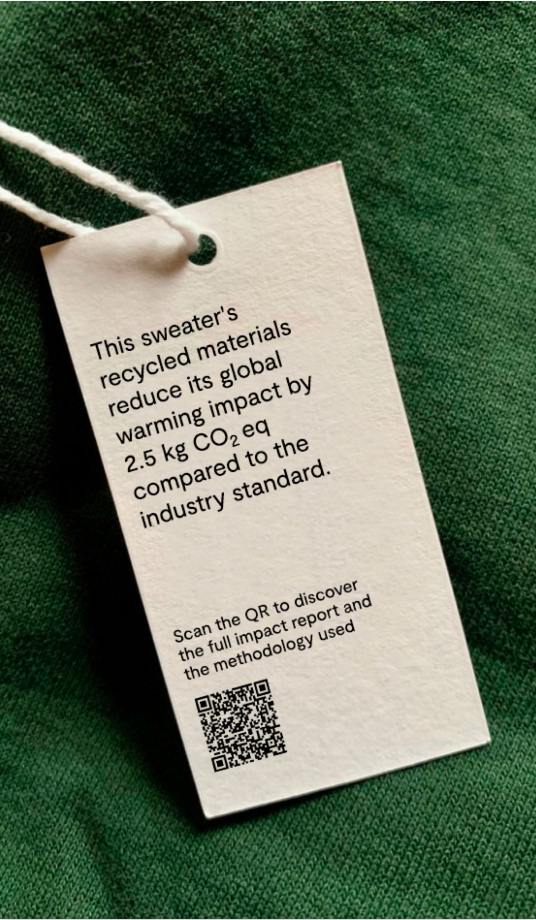
Do: This sweater’s recycled materials reduce its global warming impact by 2.5 kg CO2 eq compared to the industry standard.
Even if your claim is true, ask yourself: does it matter to the customer? Highlight the impacts that resonate most with their sustainability concerns.
Don’t: Our packaging is made from recycled paper, so our collection is sustainable.
Do: We’ve reduced the carbon footprint of this collection by 15%, from material sourcing to production.
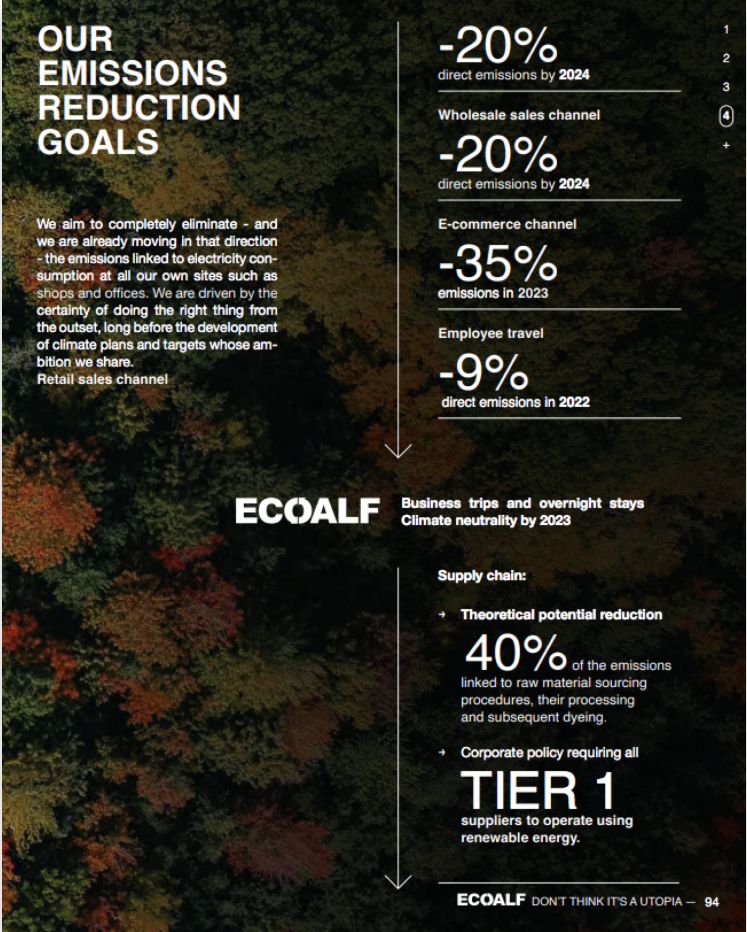
Set clear, measurable goals and track your progress. Empty promises won’t inspire confidence. Show concrete numbers and deadlines to demonstrate accountability and progress.
Don’t: We’re really committed to reduce our water footprint during the coming year.
Do: Our goal is to reduce our contribution to water scarcity, from an average impact of 400K m3 of water eq in 2024 to 350K m3 in 2025.
Always disclose the methodology behind your claims to explain how the figures were calculated. By providing clear details on how the data was gathered and analyzed, you demonstrate your commitment to integrity.
Don’t: This product lowers CO2 emissions by 20% compared to its equivalent on the market (No methodology provided).
Do: This product lowers CO2 emissions by 20% compared to the standard. This claim is backed by following relevant methodologies, including ISO 14040 for assessing its impact throughout its entire life cycle.
Backing your claims with reliable third-party verification builds trust and credibility with your audience. Independent audits provide an objective assessment, ensuring your claims are not manipulated.
Don’t: Our sustainability claims are based on internal evaluations.
Do: Our sustainability claims are verified by BCome, a third-party organization, following globally recognized standards.
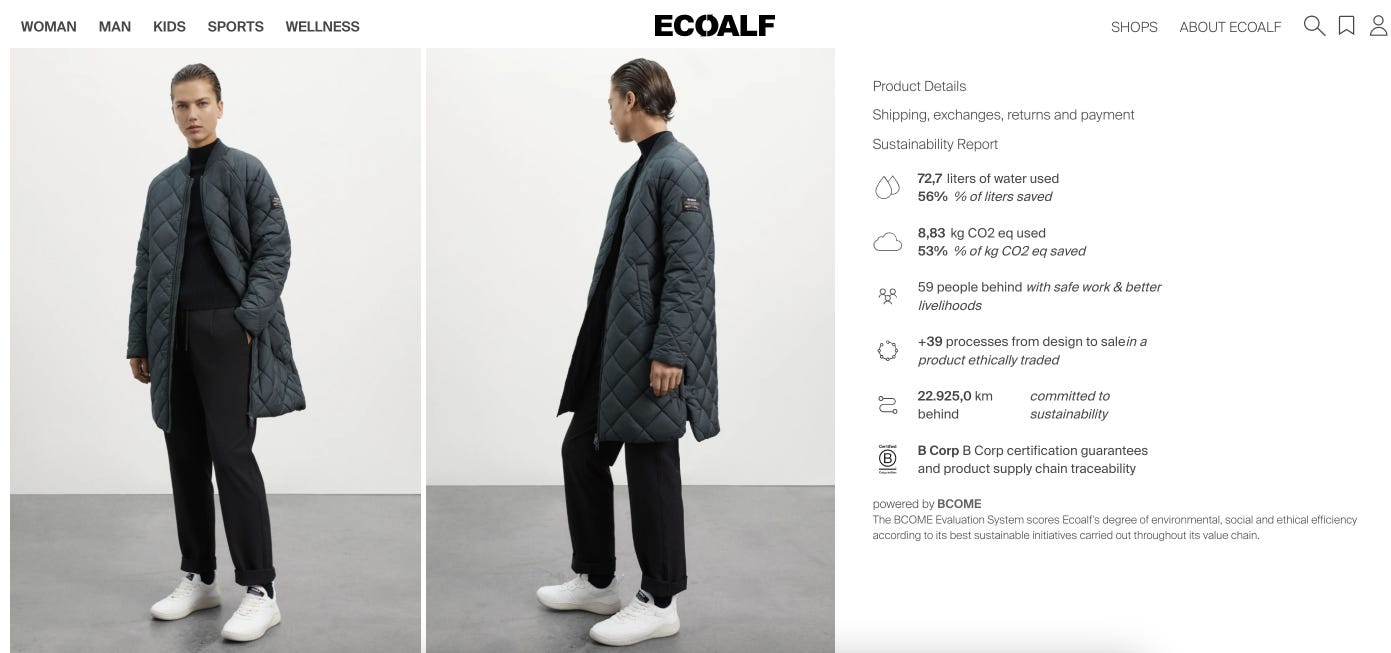
In fashion and sustainability, it’s not enough to do things right, you also need to know how to communicate it. At BCome, we’re here to help you craft sustainability claims that avoid greenwashing. Trust our communication experts to review your messages and ensure you're communicating transparently and honestly.
See you in future Substacks!
Best,
Gema from BCome
Comments
Nothing yet. Say the first thing.
Sign in to join the conversation.