
Councilor Pilar Faulkner, backed by several colleagues, is reportedly preparing a motion to dissolve the Historic Districts Review Board (HDRB) and transfer its authority to the Planning Commission. Pushback is inevitable, but we can no longer support a system that so spectacularly fails the community it purports to protect.
City Council spends an inordinate amount of time hearing appeals and overturning HDRB decisions widely seen as inconsistent and arbitrary. This dysfunction begins with the board’s composition. In direct conflict with Chapter 14, the board has operated without an architect for the past year and without a construction professional for many years prior. There is little turnover and no term limits; one member has occupied a seat for nearly 35 years. And while the code designates a single seat for the Old Santa Fe Association (OSFA), its members hold five of seven board seats and dominate public comment.
No project is too trivial for a public hearing—fences, window replacements, even changes in stucco color. Instead of performing administrative reviews, Historic Preservation Division (HPD) staff prepare lengthy reports for twice-monthly hearings that often run late into the night. Current staff lack professional degrees in design, planning, or preservation. In this vacuum of expertise, professional judgment has been replaced by legalistic interpretation of our “Frankenstein” historical code—a 1957 architectural style mandate layered with decades of contradictory patches and revisions.
None of this is news. The City’s own 2021 preplanning report meticulously documented the stark consequences of the last 40 years of preservation policy in Santa Fe: the historic districts lost 25% of their population and displaced 60% of Hispanic residents. The districts now contain fewer housing units, far less economic diversity, and vacancy rates approaching 30%. The City ignored these findings in 2021 and again during the recent Phase I zoning rewrite.
This is not preservation. It is exclusionary zoning that favors compliance over design, neighbors over homeowners, and stasis over stewardship.
Abolishing the HDRB is not an attack on preservation; it is an opportunity to rescue it from a process that no longer serves it. The current General Plan and Zoning updates provide an opportunity to imagine a much better way:
Rewrite the Code: Start over. Align design and preservation rules with current priorities—affordability, walkability, sustainability, and cultural retention—rather than the stylistic anxieties of the 1950s and the development fears of the 1980s.
Restore Expertise: Hire staff with relevant credentials and empower them to approve most projects administratively. The current “public hearing gauntlet” serves only those with time, money, and legal counsel.
Fix Status Reviews: Replace weaponized, property-by-property determinations with city-funded, district-wide surveys updated regularly to provide clarity and predictability for applicants and homebuyers.
Refocus Oversight: Replace the seven-member board with a small expert advisory group under the authority of the Planning Commission, focused on policy and exceptions—not minor project details.
Most importantly, we must re-establish a clear and compelling purpose for design and preservation in Santa Fe. If no longer merely to protect tourism and property values, continuity of the Santa Fe Style must be focused on something far more consequential: sustaining the vibrancy and continuity of communities throughout this city. Culture is not simply the appearance of buildings and districts, but the people who inhabit them—and whether they can continue to do so.
Santa Fe does not need less preservation. It needs a system capable of actually delivering it.
A version of this essay appeared in the Santa Fe New Mexican.
Anthony Guida is an architect and FASF board member. He served as the vice chair and architect member of the Santa Fe’s Historic Districts Review Board from 2019 to 2025.
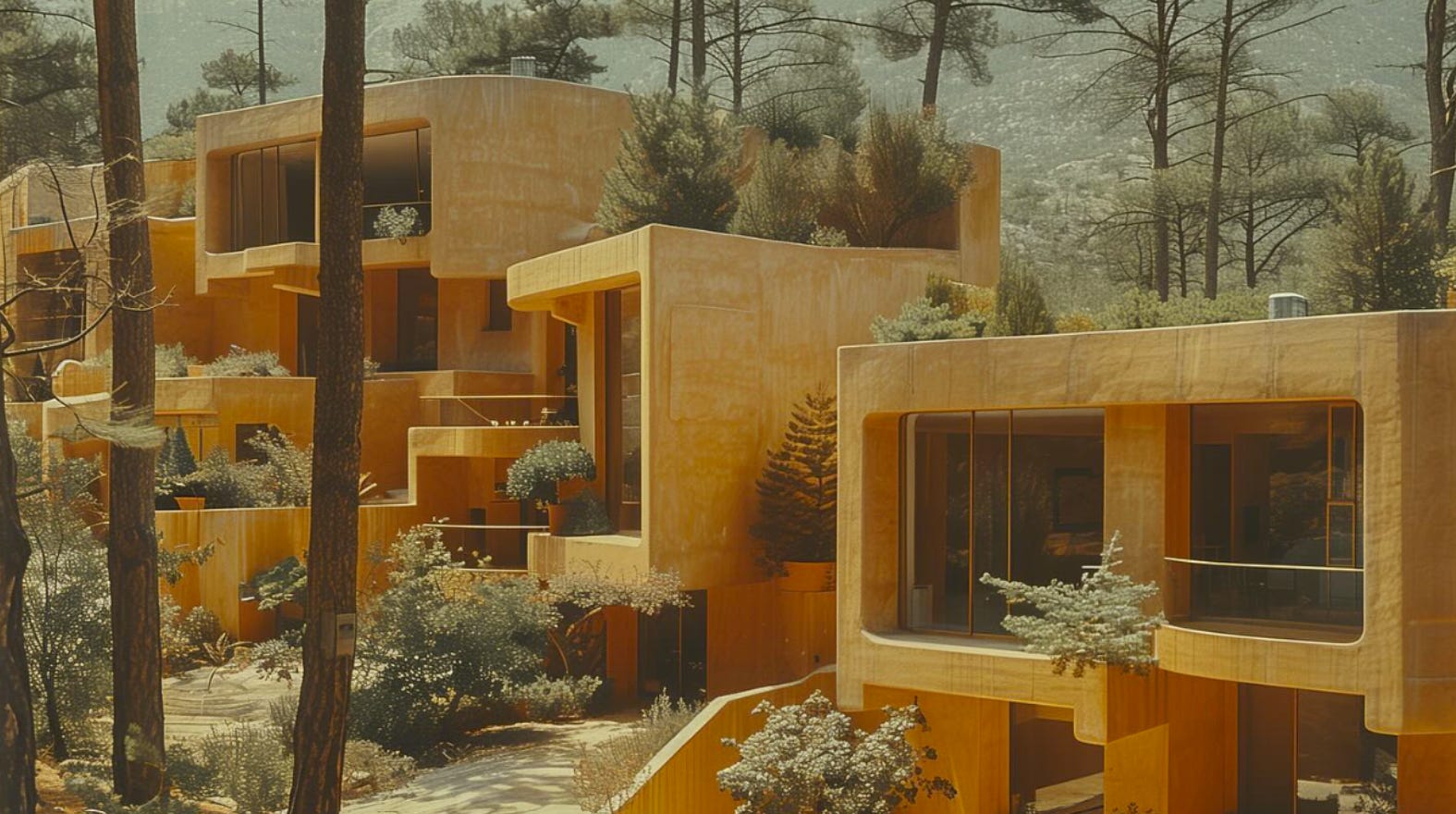
Concept image is from santa.f.ai by StudioBOSE.
Friends of Architecture Santa Fe’s programs and events are made possible by the financial support of our sponsors and donors, as well as our dedicated working board and event volunteers. We are a nonprofit organization and tax-exempt public charity under Section 501(c)(3) of the Internal Revenue Code. All donations are tax-deductible.
No posts
Comments
Nothing yet. Say the first thing.
Sign in to join the conversation.