
Disclaimer: The views expressed are those of the author and do not necessarily reflect the official policy or position of the U.S. Military Departments, the Department of Defense, or the U.S. Government.
Foreign area officers and their families routinely serve in environments where crises can unfold with little warning. Recent attacks and evacuations at U.S. embassies and consulates in the Middle East underscore how quickly routine operations can shift into emergency response.
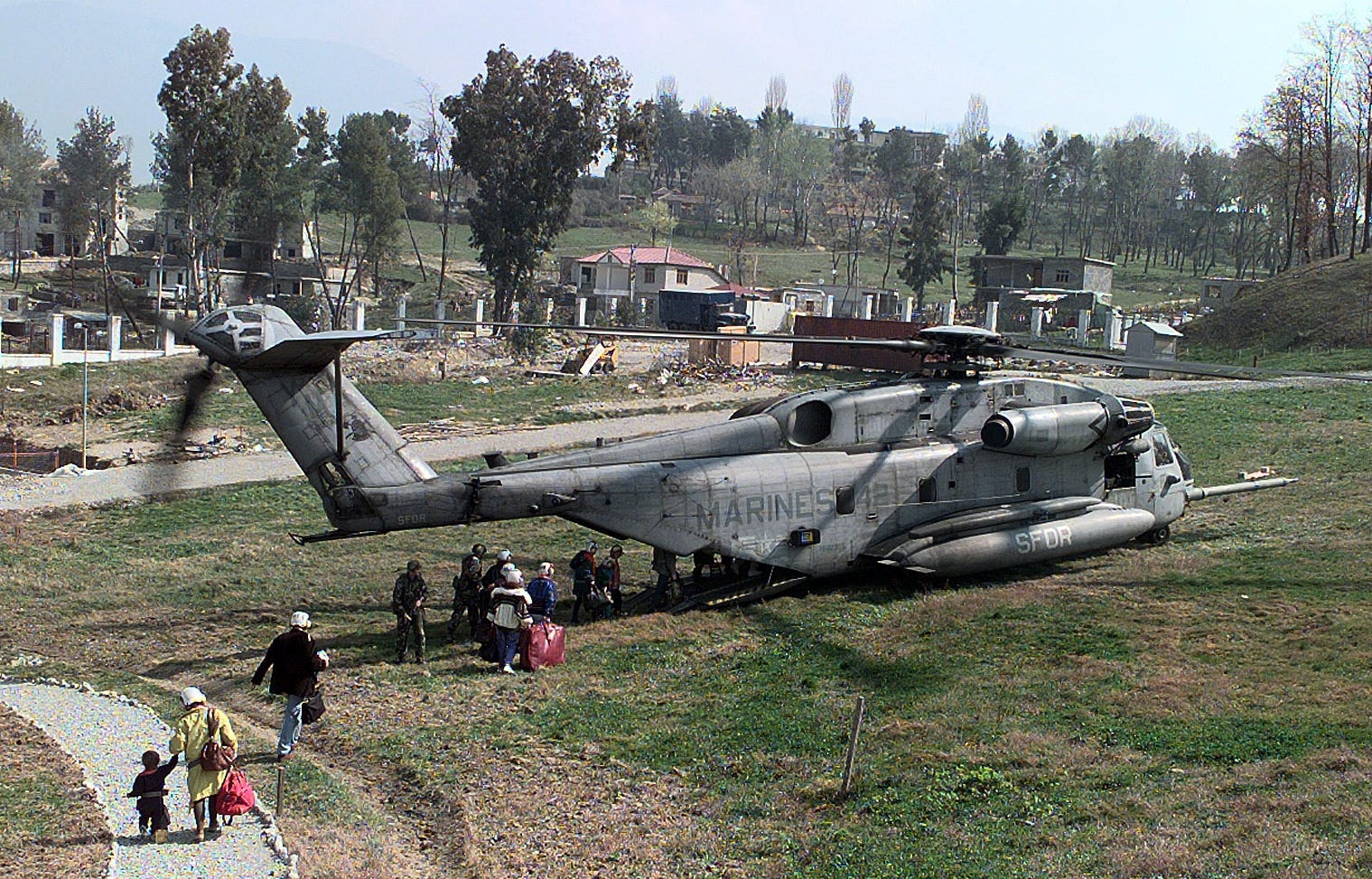
In early 2022, in the weeks preceding Russia’s renewed invasion of Ukraine, I was conducting evacuation and crisis response training for U.S. government personnel assigned to Europe. The mood in the room was focused but uncertain. Intelligence reporting was escalating, families were asking difficult questions, and leaders were quietly reviewing authorities, communication trees, and transportation options. Conversations that had previously been theoretical began to take on immediate relevance. Questions about evacuation timelines, accountability procedures, and decision thresholds were no longer abstract—they were personal, operational, and urgent.
What stood out most was not a lack of planning. Plans existed. They had been written, reviewed, and exercised. Rather, the underlying concern—spoken and unspoken—was whether those plans would function under the strain of rapid escalation, infrastructure disruption, and human fear. Would leaders recall key decision points under pressure? Would teams move with clarity or hesitation? Would families understand what to do when official guidance arrived, or failed to arrive, in time?
These questions are not unique to any one post or crisis. They reflect a broader and recurring reality: the effectiveness of emergency planning is ultimately tested not in the quality of the document, but in its performance under stress.
Plans Are Not the Problem
For more than two decades assigned to seven embassies and consulates and later supporting crisis management training for the Department of State, I have observed a consistent pattern. Embassy emergency plans are rarely deficient in structure. They define roles, outline decision authorities, identify communication channels and processes, and reflect established planning frameworks and guidance. Most posts meet required standards, and many invest significant time and effort in updating these plans to reflect evolving threats and operational realities.
In many cases, these plans are thoughtfully constructed. They incorporate input from across the mission, align with interagency expectations, and account for a range of contingencies—from natural disasters to security incidents and evacuation scenarios. Emergency Action Committees meet, responsibilities are assigned, and documentation is maintained in accordance with established requirements. From a structural perspective, the foundation is generally sound.
Yet structure alone does not equate to readiness. The challenge emerges not in drafting and updating the document, but in translating that document into behavior when events compress time, elevate risk, and test institutional cohesion. In practice, leaders may attempt to reference plans under pressure but lack the familiarity needed to apply them effectively, or they may default to rapid, ad hoc decision-making only loosely informed—or entirely uninformed—by established planning constructs. Neither outcome reflects a failure of planning as a concept; rather, it highlights the difficulty of operationalizing planning in environments defined by uncertainty and competing demands.
This distinction is important. It is easy to assume that improving plans will improve outcomes. Most embassies already possess plans that meet baseline expectations. The more difficult—and less visible—challenge is ensuring that those plans are sufficiently internalized to guide action when normal decision-making processes are disrupted. Under crisis conditions, time is limited, information is incomplete, and the margin for error narrows. In those moments, individuals do not rise to the level of the written plan; they default to the level of their preparation, familiarity, and shared understanding.
Recognizing this gap does not diminish the importance of planning. On the contrary, it reinforces it. Plans remain essential. They provide structure, clarify responsibilities, and establish a common framework for action. However, without sustained engagement, rehearsal, and leadership emphasis, even well-crafted plans risk becoming reference documents rather than operational tools.
Leadership Continuity and the Loss of Institutional Memory
Leadership continuity is one of the most underappreciated variables in embassy crisis readiness. Chiefs of mission, deputy chiefs of mission, defense attachés, and senior interagency leaders rotate on predictable cycles, often every two to three years. These transitions are routine and necessary, but they come with a cost. With each turnover, institutional memory subtly resets. New leaders inherit not only authorities and responsibilities, but also unfinished relationships, unwritten assumptions, and an emergency planning culture they did not personally build.
In stable periods, this erosion is rarely obvious. Day-to-day embassy operations continue. Meetings occur. Reporting flows. Plans remain in the file. Emergency Action Committees may convene regularly enough to preserve the appearance of readiness. Yet there is a difference between knowing that a process exists and being fully confident in how that process functions under strain. Crisis readiness depends not simply on formal position, but on the leadership’s familiarity with the mission community, their understanding of decision thresholds, and their comfort operating inside established coordination mechanisms when time is limited and information is incomplete.
This matters because emergencies rarely unfold at a convenient pace. They compress time. They force prioritization. They require leaders to make consequential decisions while the facts are still developing. In those conditions, even strong leaders can revert to what is most familiar rather than what is most appropriate. If they have not internalized the logic of the plan, rehearsed their authorities, and built trust with the people around them, the mission may still respond—but with greater friction, more hesitation, and less cohesion than the written framework intended.
Foreign area officers know this dynamic well. Much of embassy life depends on relationships, local knowledge, and repeated exposure to the environment. Crisis management is no different. A mission’s preparedness posture is shaped not only by the quality of its documentation, but also by whether incoming leaders are brought quickly into a functioning culture of readiness. When they are not, the plan may remain technically sound while operational confidence quietly degrades.
A further complication is that leadership continuity is not simply a matter of personality change. Entire teams rotate. Families arrive and depart. Locally employed staff adapt to new management styles. Defense, political, consular, management, and security elements may each retain partial awareness of emergency procedures, but not always the same shared picture of how the mission intends to act in a fast-moving crisis. The result is not collapse. More often, it is unevenness—some individuals moving decisively, others waiting for clarification, and the whole institution taking longer than expected to achieve coherence.
For that reason, leadership continuity must be understood as more than a personnel issue. It is a readiness issue. Unless preparedness is reinforced deliberately during transitions, each rotation cycle risks reducing emergency planning from a living institutional practice to a document set inherited by the next team.
Exercises, Rehearsal, and the Difference Between Compliance and Capability
Exercises are intended to mitigate this risk, and they remain one of the most important tools available to embassies seeking to improve readiness. Most posts conduct annual or semi-annual tabletop exercises and scenario-driven reviews. These events are valuable. They surface assumptions, clarify communication pathways, and help participants think through responsibilities before a real emergency occurs. In many cases, they are the only dedicated opportunities for mission personnel to focus collectively on crisis decision-making outside the pressure of actual events.
Yet exercises can become episodic rather than iterative. They may validate that a plan exists, that participants attended, and that discussion occurred. They do not always ensure that the mission has built the habits, confidence, and repetition needed for performance under stress. International continuity standards emphasize continual improvement and repeated testing, not one-time validation. That distinction is not academic. It goes to the heart of whether preparedness is being practiced as a capability or maintained as a requirement.
A plan that has been exercised once may satisfy expectations. A plan that is rehearsed, evaluated, and adjusted over time becomes embedded in institutional behavior. The latter builds confidence. The former too often builds documentation. This is the difference between compliance and capability.
The problem is not that embassies fail to exercise. The problem is that many mission environments make sustained rehearsal difficult. Competing priorities are constant. Country team attention is finite. Security issues, VIP visits, reporting demands, management burdens, and real-world disruptions all compete for time. In such environments, emergency exercises can become a calendar event to complete rather than a discipline to sustain. Once the exercise is over, the mission often returns immediately to more visible and immediate demands.
There is also a psychological dimension to this challenge. Repetition can feel unnecessary when a post has not experienced a major crisis recently. Participants may conclude—consciously or not—that because the last exercise went reasonably well, the mission is adequately prepared. But the very nature of crisis response argues against that assumption. Emergencies rarely occur in the same form twice. Personnel change. Infrastructure changes. Threats evolve. Families and community members bring different levels of understanding and preparedness. What worked well last year may be insufficient this year if the people, context, or assumptions have shifted.
This is why rehearsal matters. Rehearsal is not simply repeating the script of a prior exercise. It is a way of building familiarity with roles, sharpening judgment, and reducing hesitation before the next real-world event arrives. A mission that rehearses regularly is more likely to respond with calm and clarity because its people have already worked through difficult questions together: Who decides? Based on what information? How are families informed? What happens if communication fails? What happens if transportation is unavailable? What if consular, security, and management priorities begin to compete?
When such questions are explored repeatedly, the mission becomes more than compliant. It becomes resilient. Personnel begin to understand not only what the plan says, but why it says it. Leaders recognize where ambiguity remains. Teams discover friction points before a crisis reveal them under pressure. This is where exercises move from administrative requirement to operational value.
For embassies, then, the issue is not whether to exercise. It is whether exercises are being used to build institutional muscle memory or to confirm that planning boxes have been checked. The answer to that question often determines whether a mission enters crisis with shared confidence or with a document that everyone assumes someone else has mastered.
When Plans Meet Dynamic Reality
Recent events illustrate the difference between structural planning and operational strain. The evacuation of Kabul in 2021, the rapid security deterioration in Sudan in 2023, and the cascading global disruptions during the COVID-19 pandemic were marked by compressed timelines, degraded communications, and simultaneous operational and humanitarian pressures. In each case, embassy personnel confronted not only logistical complexity but also the deeper realities of crisis decision-making: incomplete information, changing threat assessments, host-nation uncertainty, transportation constraints, and the challenge of balancing mission continuity with human safety.
These examples should not be understood as evidence that plans were absent. In most cases, plans existed, authorities were known, and mechanisms for coordination were in place. The issue was that events moved faster, more unevenly, and more personally than planning documents could fully capture. Threat conditions shifted by the hour. Assumptions that had seemed reasonable in peacetime or during routine exercises became fragile when confronted by collapsing infrastructure, public panic, conflicting reporting, or rapidly changing security conditions. The pressure was not merely administrative. It was operational, emotional, and moral.
In such moments, missions do not fail because they lack a binder or a process chart. They struggle because real crises create overlapping demands that no single document can fully resolve. Leaders must weigh the safety of official personnel, family members, locally employed staff, and private U.S. citizens. Various interagency and mission priorities may begin to compete for attention. Transportation that seemed available in planning may become constrained in practice. Communications that were expected to function may degrade or disappear. Decision points that appeared clear in theory may become ambiguous in execution when the context changes faster than reporting can keep pace.
The point is not that planning is insufficient. The point is that planning must account for how quickly friction accumulates when formalized plans meet dynamic reality. Every embassy operates in a system shaped by host-nation conditions, interagency coordination, family readiness, and local infrastructure. Those variables do not remain static during crises. They change precisely when clarity matters most. A mission that has only documented its procedures may find itself improvising under stress. A mission that has absorbed preparedness into its culture is more likely to adapt without losing coherence.
This distinction becomes especially important in crises that unfold in phases. A mission may initially manage a situation, gathering information, convening leadership, initiating communication, and clarifying authorities—only to encounter additional layers of stress as the situation continues. Evacuation planning can become accountability management. Accountability management can become medical support. Transportation issues can become family support issues. Security concerns can become communications problems. The longer a crisis persists, the more likely it is that preparedness will be tested not as a single action, but as a sustained institutional discipline.
That is why “meeting the standard” is not the same as being prepared for the lived complexity of modern embassy crises. Many missions do meet the standard. Fewer have fully internalized the culture, repetition, and shared confidence needed when the situation expands beyond what the original planning assumptions anticipated.
The Human Dimension of Embassy Crisis Management
Crisis response within an embassy is never purely procedural. It is profoundly human. Communication systems may degrade, transportation networks may falter, and host-nation dynamics may shift unexpectedly—but the most immediate strain often resides in people. Leaders must absorb information, assess risk, communicate calmly, and coordinate action while simultaneously considering the safety of their own families and the broader mission community. Staff members weigh official guidance against personal uncertainty. Accountability processes must reconcile operational requirements with the reality that diplomatic communities are tightly interconnected.
This human dimension is easy to underestimate in stable periods because embassy life already requires a degree of adaptability. Foreign area officers, diplomats, security professionals, and their families accept a measure of uncertainty as part of service overseas. Yet crisis conditions transform ordinary uncertainty into acute cognitive and emotional strain. A leader who would normally process information carefully may now be deciding amid degraded communications, disrupted sleep, incomplete reporting, worried family members, and rapidly changing instructions. Staff members who understand their formal responsibilities may still hesitate if they are unsure where their loved ones are, whether schools have been secured, or whether transportation routes remain viable.
Under these conditions, preparedness becomes more than an administrative obligation. It becomes a stabilizing force. Individuals and families who understand basic procedures, know where to go, have discussed contingencies, and possess a workable sense of what happens next reduce the cognitive burden on everyone around them. They ask better questions. They require less last-minute improvisation. They are more likely to respond with clarity instead of confusion. This does not eliminate fear or uncertainty, but it makes both more manageable.
The inverse is also true. When personal and household preparedness are weak, the burden shifts back onto leaders and institutions at the worst possible time. Questions that should have been addressed before the crisis now emerge during it. What should family members do if communications fail? How long can they remain self-sufficient? What happens if official transportation is unavailable? Where will people go if shelter-in-place becomes evacuation, or evacuation becomes prolonged displacement? These are not secondary issues. They directly affect mission focus and decision quality.
It is also important to recognize that embassy communities are not composed solely of one category of personnel. They include American direct hires, locally employed staff, contractors, spouses, partners, and children—people with different levels of training, language ability, local knowledge, and confidence in institutional processes. A mission may possess a well-written emergency plan and still experience confusion if its broader community has not internalized the practical meaning of that plan. Preparedness, in other words, cannot remain confined to the leadership table if the mission expects the wider community to respond coherently under stress.
This is one reason crises can feel so much more difficult than exercises. Exercises often privilege procedures. Real emergencies expose dependency. They reveal which assumptions were shared, which were not, and how much of the mission’s confidence rested on stability that no longer exists. In those moments, the quality of interpersonal trust, shared understanding, and prior preparation often matters as much as formal task organization.
For that reason, any serious discussion of embassy readiness must account for the human dimension directly. Crisis management is not only about authorities, plans, and coordination mechanisms. It is also about preserving decision-making clarity in an environment where stress is contagious and uncertainty spreads quickly. Missions that take this reality seriously are better positioned not because they can predict every contingency, but because they have reduced the amount of preventable confusion their people must carry into the event.
Preparedness as Culture, Not Merely Documentation
Planning remains sound. Established preparedness guidance and international continuity standards provide a disciplined framework for organizing response structures, defining authorities, and promoting iterative improvement. The problem is rarely the document itself. The more persistent question is whether preparedness has become a living expectation within the mission or remains an episodic requirement revisited mainly when the calendar demands it.
Preparedness as culture looks different from preparedness as documentation. In a documentation-centered environment, the plan exists, the exercise occurs, the attendance sheet is completed, and the mission moves on. In a culture-centered environment, preparedness is reinforced through repetition, leader emphasis, community awareness, and shared discussion of contingencies before they become urgent. Personnel know where to find guidance, but more importantly, they understand the intent behind it. Leaders do not merely own responsibilities on paper; they rehearse them in practice. Teams do not assume that someone else has mastered the plan; they build enough collective familiarity to operate with confidence when conditions deteriorate.
Culture is harder to build because it does not produce quick metrics. It requires leadership attention over time. It demands that emergency planning compete with daily mission demands that often appear more immediate, visible, and rewarded. It asks busy institutions to revisit difficult scenarios when there is no immediate crisis forcing the issue. Yet this is exactly why culture matters. When the emergency arrives, it is too late to improvise trust, familiarity, and shared expectations from scratch.
Embassy communities are especially vulnerable to the distinction between documentation and culture because of their inherent churn. Rotating personnel, changing family compositions, shifting host-nation conditions, and evolving threat environments all work against institutional continuity unless readiness is deliberately reinforced. In that sense, preparedness culture is not a luxury or an aspirational add-on. It is the mechanism through which plans survive turnover.
This is also why the issue should not be framed as a critique of leadership or of mission effort. Most embassies are working under real constraints, and most leaders are doing their best to balance crisis readiness with the broader diplomatic mission. The point is simply that good intentions and sound documentation do not automatically produce shared preparedness. That bridge must be built, maintained, and crossed repeatedly.
When plans meet reality, performance reflects culture as much as structure. Missions that have normalized preparedness as part of everyday institutional life—rather than treating it as a periodic compliance event—are more likely to respond with coherence when time compresses and uncertainties rise. The issue is rarely whether a plan exists. It is whether preparedness has become a practiced way of thinking and acting across the mission community.
About the Author:
Colonel Robert J. Fagan, USA (Ret.), served more than two decades as a foreign area officer in seven U.S. embassies and consulates, in both defense attaché and security cooperation roles. Following military retirement, he served as a senior crisis management consultant and emergency planning advisor to the U.S. Department of State. He later served as Deputy Director for Disaster Recovery at the U.S. Small Business Administration. Colonel Fagan currently teaches graduate-level emergency management and security studies at Tulane University and is the author of 31 Days to Emergency Preparedness and Personal Resilience.

No posts
Comments
Nothing yet. Say the first thing.
Sign in to join the conversation.