
The long apple harvest grinds to its requisite end in Michigan this week. It started in the southern counties along the big lake in late August, and now we have only to work the last blocks of apples up north in Benzie, Leelanau and Antrim counties, until the bitter dawn of November. In the southern Michigan orchards men have long finished moving their apples to market or storage and are now working the less glamorous tasks like equipment repair and cleaning, and barn organization; while in the north they’re still wandering the orchard and testing apples for sugar, one block at a time. They’ll decide today what block to pick tomorrow.
North and South, all that’s left is to pray the world continues to look to the apple for lunch, snacks and good health, for pies, juice, sauce and cider.
The Michigan orchardist removes his soiled old cap, brushes the wisps of hair he still has to the back of his head, and takes a long wry look at the grey wood boxes of apples, eighteen bushels to the box, and shakes his head. He keeps blocks of the old varieties, Northern Spy, Courtland, Empire, waiting with a dull sense of hope for the buying public to come back to the apples his father and grandfather farmed. He’s not a stubborn man, but he’s seen the hem of a dress ride up and down from the bottom to top floors for four generations. When women decided to work full time after school, the long successful run of baking apples like Northern Spy came to an end. He still has a few blocks, and one year he hopes they’ll be profitable again; they were once prized by home bakers for their tartness and ability to hold their shape in the oven’s fire. Likewise, old stalwarts Courtland, Empire and Ida Red have seen their prospects diminished, pushed out of the market by sexy young upstarts like Tango, Ambrosia and the ever present and popular Honeycrisp, apples that lend themselves to the quick snack, are half eaten by grade schoolers everywhere, and fetch a nice price at the grocer.
Over the last 65 years the evolution of the apple market has been amazing to see. In my youth, during the fall, you could find a nice variety including Mcintosh, Empire and the formidable Golden Delicious with its dull yellow skin, mottled with brown russets. It was crisp, sweet and tart all at once, a great eating apple that was also excellent for baking.
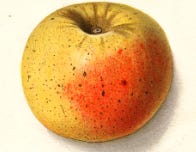
My excitable father caught a whiff of the apple harvest every fall and rounded up the family early on a Sunday morning for a trip to a U-pick farm. The varieties I remember from these outings are long gone, maybe never to be seen again. There were the old fashioned Golden Delicious, Haralsons, Winesap and Wolf River. Most of these varieties have been torn out in favor of the latest fashionable apple.
To visit a farm as a city boy was always such a strange experience. Dad got on famously with the farmer of course. My brother Jimmy and I would stare at the farmer’s kids, all dressed in patched clothing and work boots, even the girls, ready for a day’s toil. The yard in front of the barn smelled sweetly of the apple harvest, but inside there was the earthy reminder of hay and kept animals. The kids’ diversions here were no different from the city though, pegging my brother and I with little crab apples and giggling from behind the wooden boxes.
Out in the orchard the grass was thick and wet. The farmer walked us out and showed us the trees he hadn’t completely picked yet, his wife and children following close behind, animated by the visit of another family. In a short time the novelty of the experience wore off, the farmer and his family retreated to their day’s work, and we spread out to pick and fill all the buckets and bushels Dad brought to the task. My brother Jimmy found a nice ripe apple and hid, leaning against the trunk of a tree to eat in relative peace and solitude. When I complained about his lack of effort, he hushed me quickly with a “you want a smack?” After we picked for an hour, everything was filled up, but Dad couldn’t stand to leave with so many beauties still on the trees, large ripe apples now glinting and rosy in the warm sun, so he continued to work until we were over filled. We trudged the bounty back to the car, stopping from time to time to pickup the apples that rolled out into the grass, which to my young mind seemed like their desperate attempt to stay in the orchard, the only home they’d ever known, and I couldn’t blame them.
Later, away from home in the late 70’s and 80’s, the only apples available year around at a supermarket were the glossy Red or Yellow Delicious and Granny Smith. They looked like apples, or maybe like pictures of apples, but I avoided all three: the Delicious were bred for large fruits with shiny skins, but were mealy and generally tasteless; and the Grannies were rock hard and unsweetened, an apple not eaten but gnawed on the side of your mouth with your canines, like a bone. Someone must still buy them because I see the apple tree nurseries still sell the trees. I’m astounded.
In the later 80’s and 90’s the US market found some new entrants from down under. The gala came out of New Zealand, and the Pink Lady from Australia. Good on them.
Speaking of nurseries, there aren’t many left, and one of the best ones, Van Well of Washington State, is closing down. Orchards near any city continue to be a target of developers. A hundred acre nursery can quickly become ten or twenty homes for the affluent who, regardless of their boasts on the splendors of city life, continue to flood rural America, leapfrogging the suburbs and the exurbs both.
My own little orchard of 800 trees features both the new and the old of hard cider apple trees. One, the Roxbury Russet, is the oldest American apple tree, dating from the mid 17th Century. It was found in a backyard in Roxbury, Massachusetts and propagated again. We also have the Redfield, a recent addition to the apples of the US; it’s a cross between Wolf River and the red fleshed Niedzwetzkyana of Central Asia, the home of the original apple trees. The Redfield’s skin and flesh are also deep red. It was originally created for addition to apple sauce to color it pink, but has lately taken up a greater role for cider makers, even as apple sauce has fallen in popularity.
Cider season of course begins with picking. It’s a real chore to pick an eighteen bushel box of apples, and I had eleven of them this year, boxes that is. As the orchard matures I’ll need to find help to pick, that’s for sure. Forty boxes won’t be possible for one man. But the weather this year was balmy to say the least, and I picked most days in my t-shirt, happy to be out of doors in full sunshine.
Apple picking is a mindless activity, giving you over to old memories and new day dreams. For some reason my older brother Jimmy was on my mind this year. He and I were nearly inseparable as kids, though I was the more enthusiastic partner, tagging along. We fished and sailed together, Jimmy was always happiest on the water, and we slept in the same room even into college where we shared an apartment for two years. But as brothers must, apparently, our lives diverged and we grew in separate directions.
We both lived in New York City in the mid Eighties, as did our sister Lisa. Of course he had an apartment on 81st in Manhattan, being by far the more social brother, made for Manhattan if you will, while I commuted on the train from a working class neighborhood in Queens. Lisa resided in lefty Brooklyn, a short commute to Wall Street. I worked as a cook at Le Cirque, a French Restaurant on the Upper east side at that time, on 65th between Park and Madison, while Jimmy did his medical residency at various New York hospitals. From time to time we’d get together for one thing or another, though we worked very different schedules.
Recently the Youtube algorithm offered me “The Untouchables,” a movie from 1987. I remembered seeing it when it first came out, together with Jimmy, his girlfriend and future wife Maureen, and our sister Lisa, at an upper East side movie emporium. If you haven’t had the pleasure of attending a new movie release in Manhattan, well you just haven’t lived a dog eat dog life evidently. It may be different today with the online universe, but back in the 80’s you showed up hours before the movie to fight for tickets, then you had to come back at least an hour before showtime to get in line to enter. Like everything in NYC, the ordeal is enervating and it makes you wonder why you bother.
Jimmy, bless him, came up with a better strategy; he would somehow get tickets the day before, without going out of his way, and then would mosey over and wait across the street a few minutes before showtime, and just before they opened the doors he would walk over and enter ahead of everyone else as smooth as silk, and take center center seats. The three of us then wandered in normally, with the rest of the pushy crowd, and joined him.
The Untouchables, written by David Mamet, leading roles played by Costner, DeNiro, Garcia and Connery, was good, great even, on the first viewing. But the one scene I remember best is when the credits ran before the picture and announced Wardrobe By, wait for it, Giorgio Armani!!
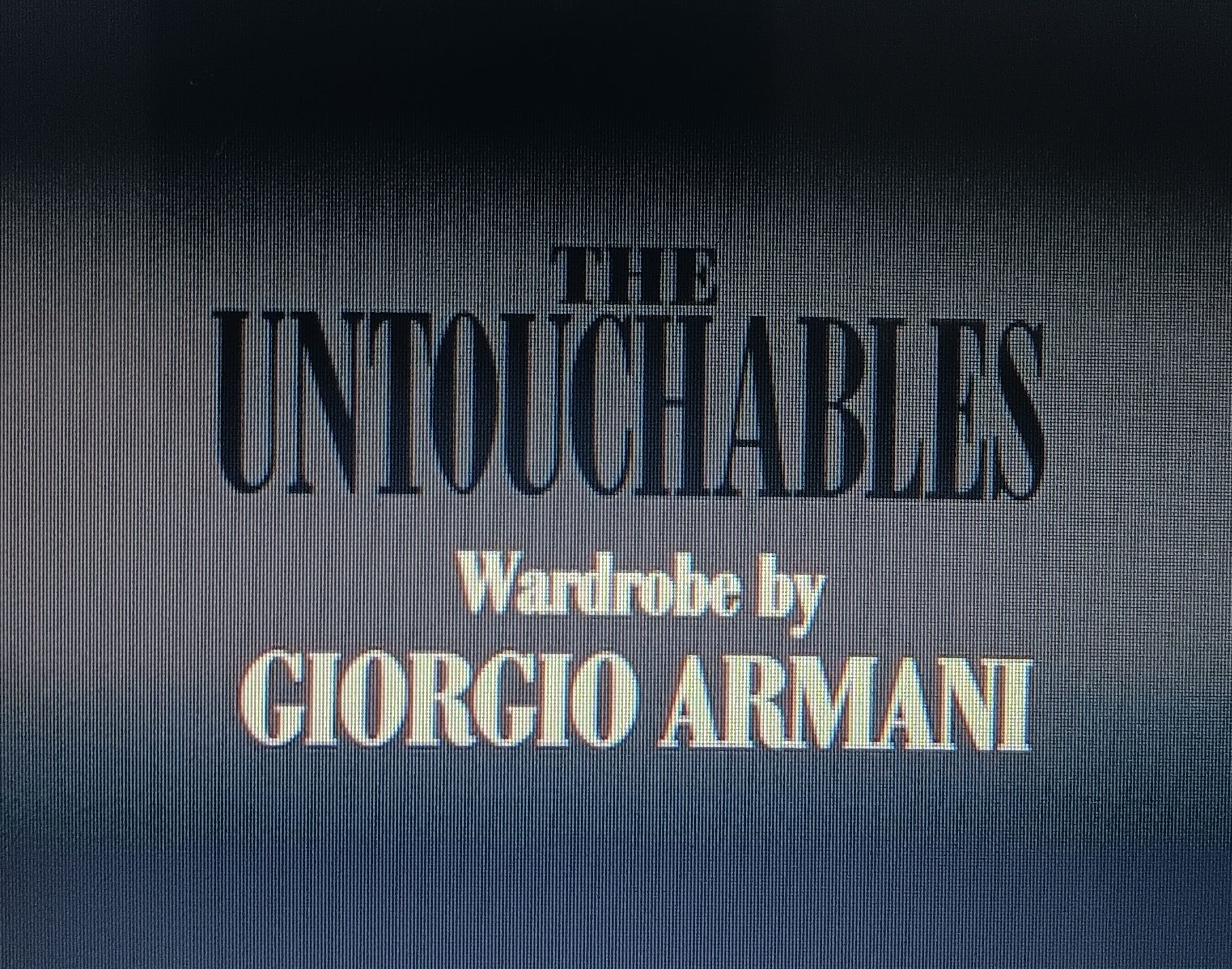
The upper east side audience erupted in applause; I thought they were going to give the man a standing ovation. And just as the din of applause waned, a sullen, disgusted voice behind us said “oh, my God.” Even Jimmy, a man with a definite fashion sense in the Armani vein, laughed out loud.
On a second viewing on Youtube, the movie holds up fairly well, even with the obnoxious ads thrown in.
The sweet smell of fall harvest wafted in the yard by my apple barn a few weeks ago, a smell fixed in time and memory for me. I leaned against the door of my barn, cutting off pieces of a russet, admiring the changing colors of our sugar maple forest. The northwest wind freshened as the sky cleared to deep blue. My brother Jimmy, gone these eleven years, never knew me as an orchard owner, a small time farmer, but I doubt he’d be surprised. He’d shake his head and wonder, as he often did, “what has gotten into you,” retiring to the work of a small farm? And he would laugh, a lot. For his part, he’d be on his sailboat, across Lake Michigan in Chicago, slipping out into the blue waters and hoisting his sail, free of the doctor’s office and its ultimate responsibilities, a man in his finest hour, on the fresh waves of the big lake.
Comments
Nothing yet. Say the first thing.
Sign in to join the conversation.