
Welcome back to Like a Chef; lifting the lid on restaurant cooking for you at home.
This week, we’re getting back into our RAW series, where each week we’re sharing our favourite dishes to eat during the summer months. Stay tuned to uncover the ultimate no-cook recipes that we use across the restaurants.
Today, we’re revealing the secret to enjoying courgettes raw. Sounds suspicious? Bear with us: we’ll teach you a trick to make them tender and flavoursome, plus a green Caesar dressing that’ll make your heart sing.
Subscribe to receive the RAW series posts straight in your inbox, and to get exclusive insider scoops on the Fallow group.
Thanks for joining us,
Jack & Will
When I was a kid, being given a courgette to eat felt equivalent to being handed a plate of gruel. Steamed beyond all reason, they had few defining features beyond slimy mushy and green. A hard sell.
I learned to like them when I discovered Spaghetti alla Nerano. I’d roast and caramelise the courgettes until super dark — basically cooking them as if I were personally avenging those childhood dinners. You extract all the moisture so they get gnarly and rich in flavour as the natural sweetness of the courgette is amped up.
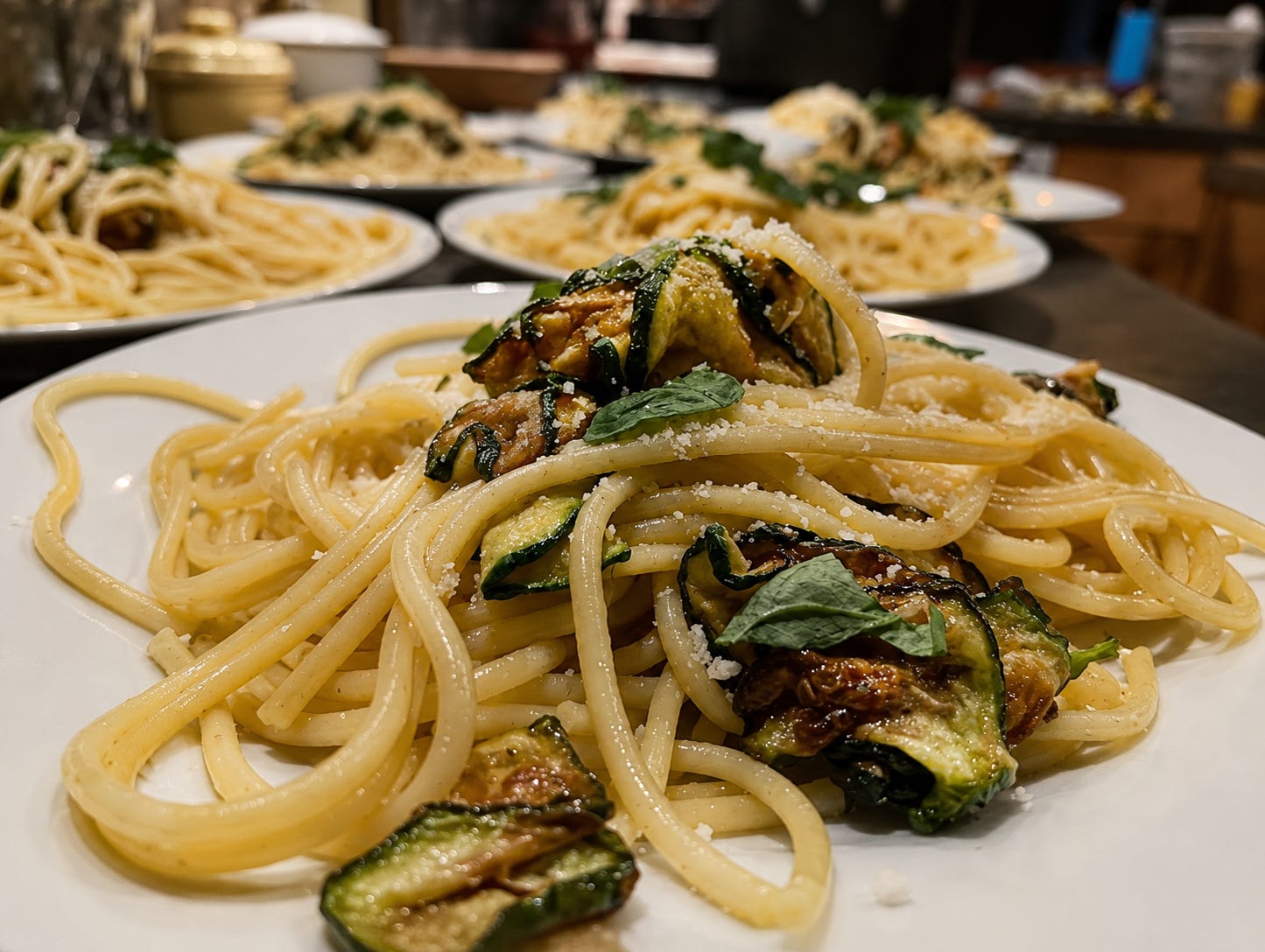
For years, the only times courgettes made my shopping list were on weeks that I was planning this dish. It wasn’t until 2018 that I discovered you could actually eat them raw.
At the time, I was working at Dinner by Heston Blumenthal— where I met Jack. In the June of that year, a serious fire in the Mandarin Oriental Hotel had meant that Dinner was closed for 6 months, and during that time we were sent to work in other kitchens. I worked in 11 restaurants in total, and one of them was the legendary Clove Club, the two-star restaurant in Shoreditch by Chef Isaac McHale.
I’ve worked in many restaurants throughout my life, each of them with quirks and cultures of their own. At Dinner, the kitchen was governed by systems of organisation. Everything had a recipe, everything was thought out and planned out to the nth degree. A detailed framework that minimised risk. Clove Club? Not so much. This was a kitchen full of chefs who were addicted to the kind of chaos that you only really find in this particular industry. The restaurant was run without a single system in place to ensure consistency. Not a single recipe written down. It was a fucking baptism of fire and the only chefs that were still standing were those who could withstand the flames: ridiculously capable with the sharpest knives and even sharper intuition. This was fine dining as I’d never seen it. It was the only restaurant I would have wanted to work at had I not started Fallow.
Although the quality of the food going out was undeniable, there were certain things about their approach that I didn’t really understand. For instance, there was a grouse on the menu: we’d prep it in the morning and leave the feet on, cooking the bird whole. You would have thought that this would have been a good time to skin the feet too. Instead, we skinned the feet to order during service. Why? I never found out. Another example was the turbot dish. Most kitchens will fillet their fish in the morning. Get it out of the way, prepped and ready for service. At Clove Club they steamed the turbot on the bone en tranche, then removed the skin afterwards and tenderly removed the meat from the skirt. There’s no denying that it tasted incredible but it meant that the fish had to be filleted during service, when you were going down (chef speak for ‘absolutely fucked’) and had 20 other turbots on order at the same time.
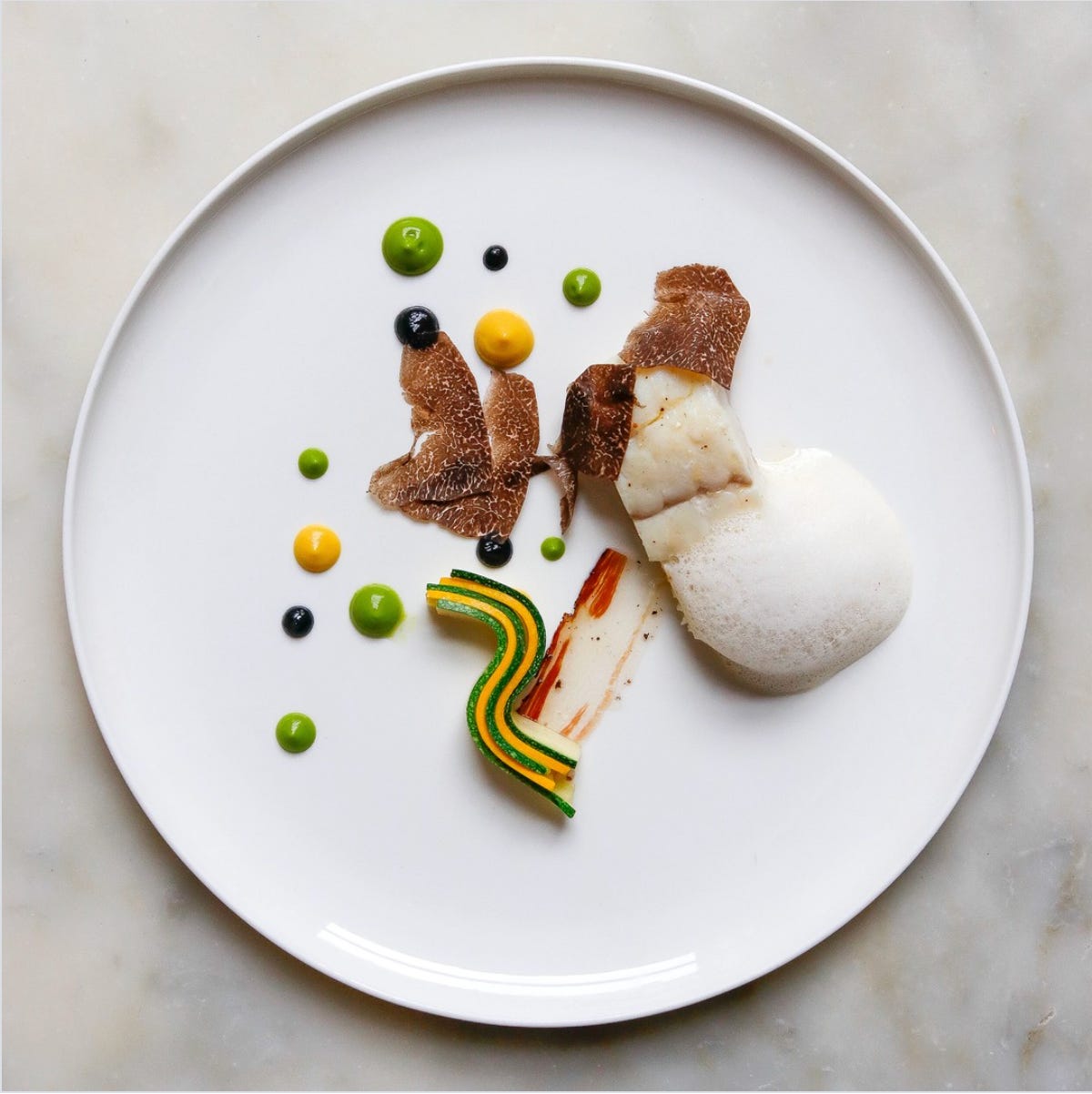
The chaos of the turbot dish extended itself to the garnish, which I was responsible for. Vibrant brined ribbons of courgette, sliced very thinly and layered up to create a rainbow effect. When you bit into the courgette it was perfectly seasoned and tender — like an entirely different vegetable to the one I disliked so much as a child. Served with this gorgeous courgette and basil puree and ventrèche bacon: it was fresh, light, and incredibly beautiful. It was a courgette revelation. It was also a pain in my arse.
Take one courgette, slice it to the perfect thickness, cut a perfectly straight line out of the middle to remove the seeds, brine it, line it up with 4 ribbons of the exact same size and shape and plate it with finesse. That may sound like no big deal but do enough for 65 portions and you might grasp why it would take an experienced chef 3 hours to prepare each morning. The process was comparable to peeling a grape or a walnut - it might taste better, but at the cost of what feels like a lifetime of faff. Sometimes, head chefs will go ahead with putting dishes on the menu that require that kind of high-effort preparation. When the outcome doesn’t justify it, it just leaves you wondering if it’s some sort of sadistic act of torture. However, I must admit — it did look bloody cool.
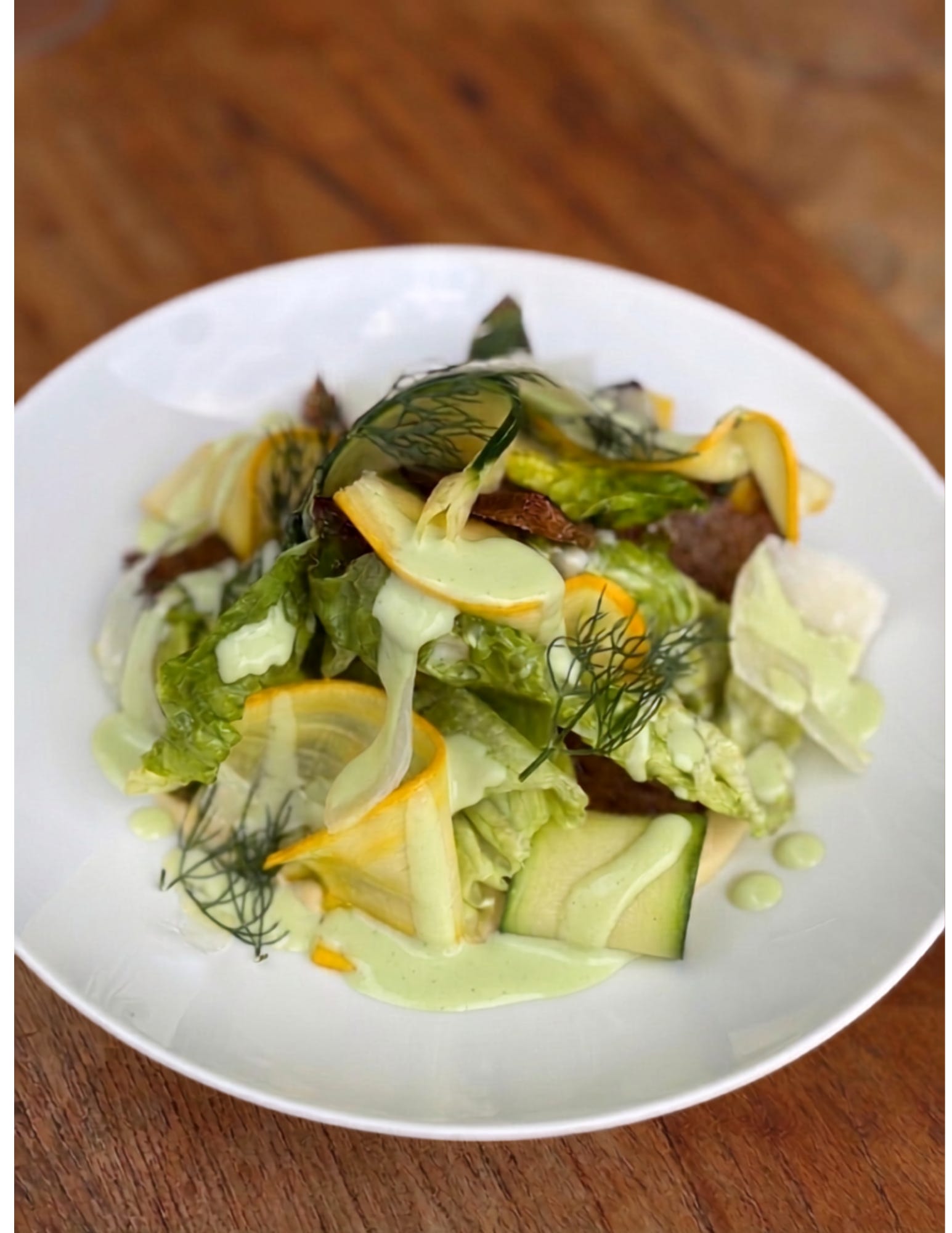
Particulars of the process aside, that courgette garnish did rewire something in my brain. Raw courgettes are King (and far more frequent on my shopping list now). The thing is, the technique of brining the ribbons is what actually makes it so damn good— not the meticulous slicing. A fact that makes them about as easy and versatile as they are delicious. We’ve worked them into our take on the ultimate caesar salad: light, colourful, and coated in a punchy and vibrant dressing. I defy you to hate courgettes after tasting this one.

THE BRINE
Courgettes are known for being prone to mushiness, thanks to their very high water content. Since they have very little solid structure, a courgette loses its firmness when exposed to heat. Water and heat will break down the cell walls, releasing all the stored water and resulting in that well-known slimy texture.
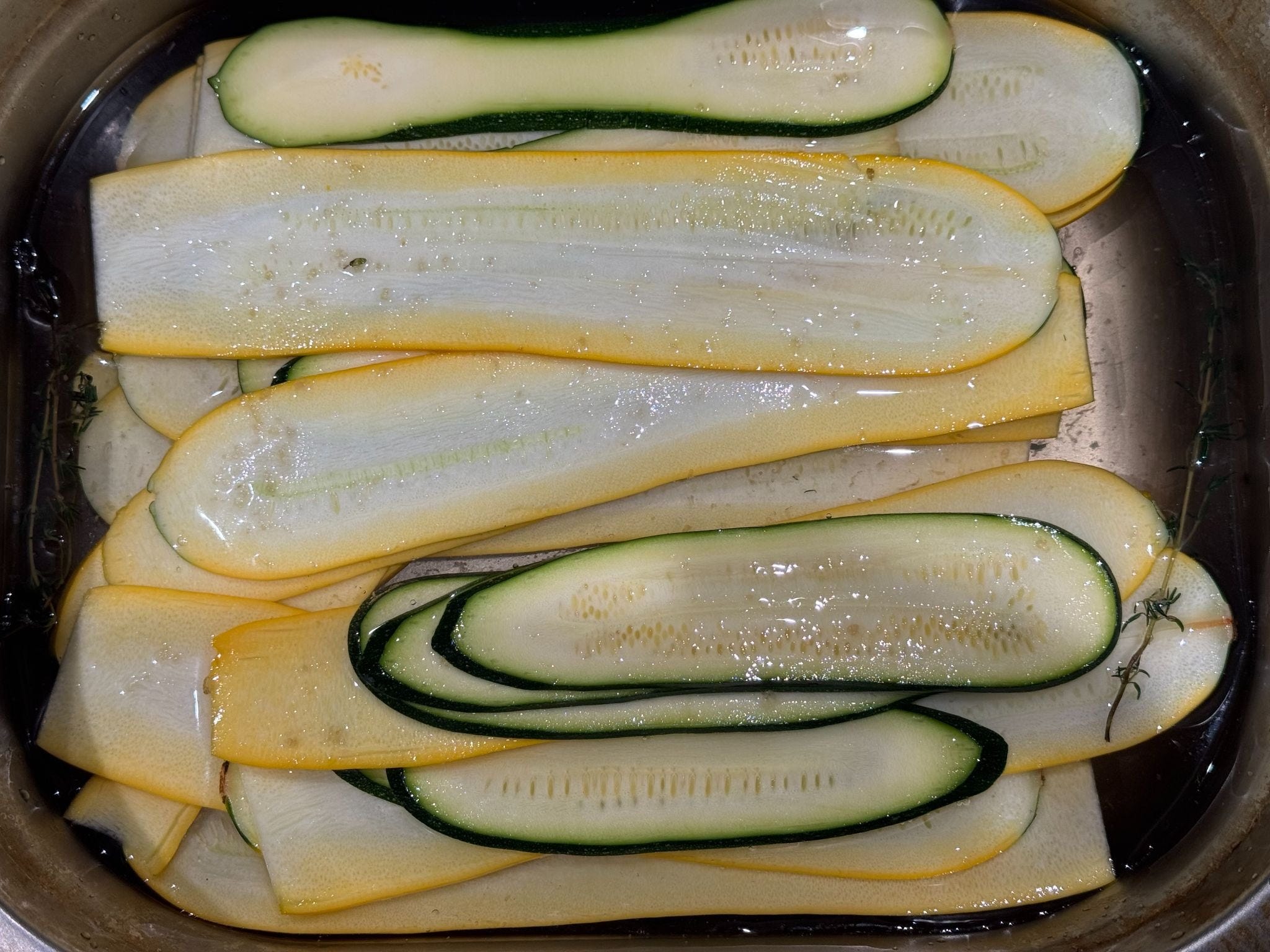
Here’s where the brine changes the game. When you submerge the courgette in salty water, the water particles within it migrate from areas of lower salt concentration to areas of higher concentration. Through this process (known as osmosis), salt replaces the pectin which is what strengthens the cell walls — this is what causes the flesh to soften. Essentially, you’re ‘cooking’ (curing) the courgette with salt rather than heat, so you can tenderise it without compromising the crisp texture.
Just make sure you chill your brine before use, or the hot water will undo your good work and land you in the same soggy mess.
THE SEASONING
Brining is also really great at enhancing flavour. At the same time that water is being driven out of the courgette’s cell membranes, salt is diffusing across those membranes, bringing seasoning deep into the flesh.
Adding aromatics to the brining liquid imparts even more flavour into the courgette through water-soluble extraction. Heating your brining liquid before chilling allows the salt to dissolve, whilst at the same time, flavour compounds in hard herbs (like thyme) are extracted into the water. The water then acts as a solvent, carrying all those flavours out from the aromats and into the flesh. A no-cook miracle.
THE TRIM
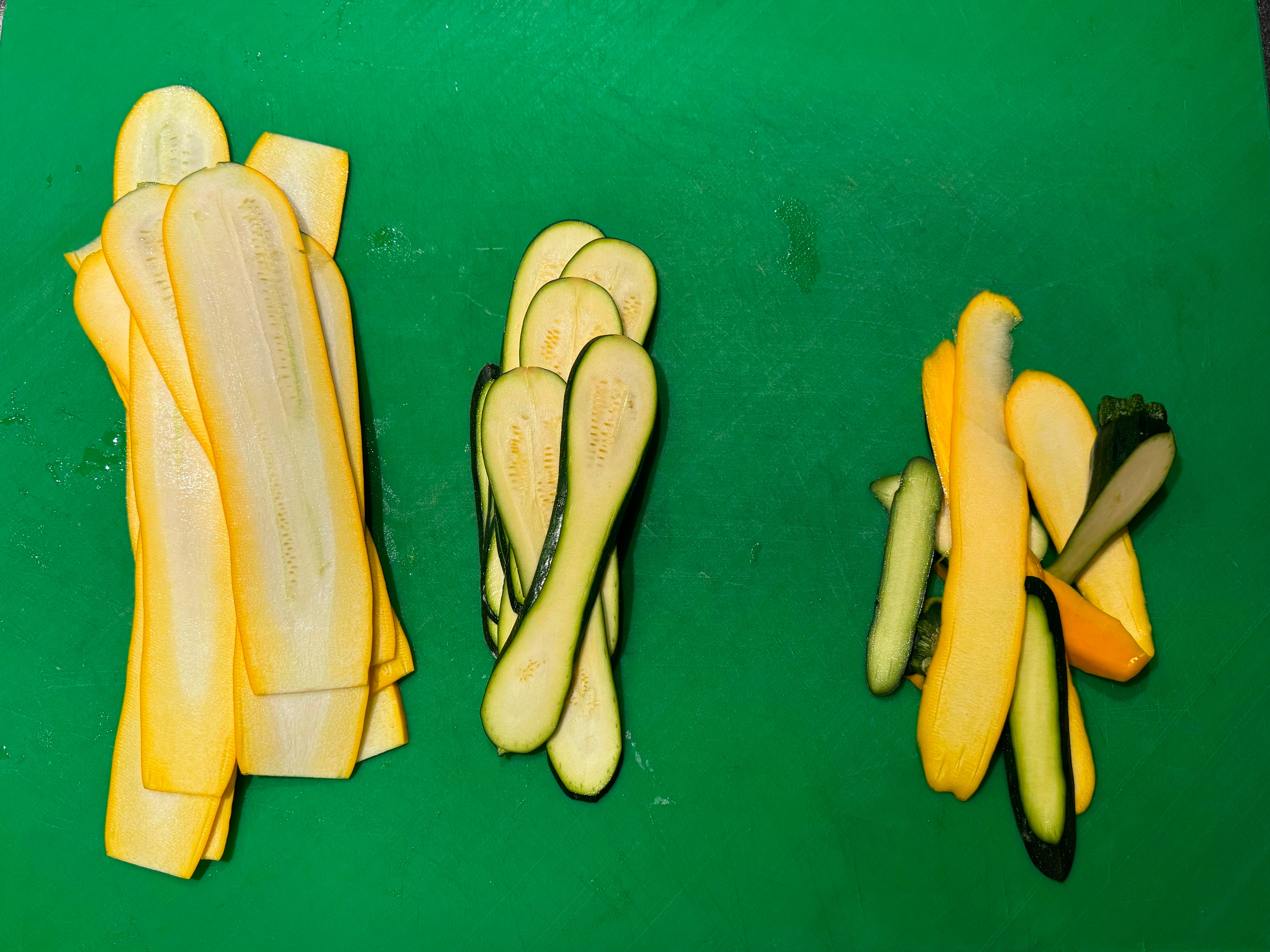
Caesars often get a bad rap: heavy handed with mayo, they can be too rich and too cloying. This version uses the waste trim of courgette as the salad-dressing-saviour; all the water content in the courgette, which we normally fight against, lightens the dressing by diluting the concentrated fats from the oil and egg yolk. Not only that, but the natural sweetness of the courgette is infused into the dressing and plays off the salty anchovies and punchy garlic.
The fact that it reduces waste? Just a happy bonus.
THE OIL
Oil often plays a purely textural or visual role in food, but this time it’s multitasking. In this recipe, the oil becomes a key carrier of flavour through two different processes:
Garlic oil. The by-product of steeping raw garlic in hot oil to create a confit-like effect (without having to confit your garlic in the oven for 30+ minutes). While the garlic itself is delicious, the garlic-infused oil is the secret weapon in amping up that sweet allium flavour.
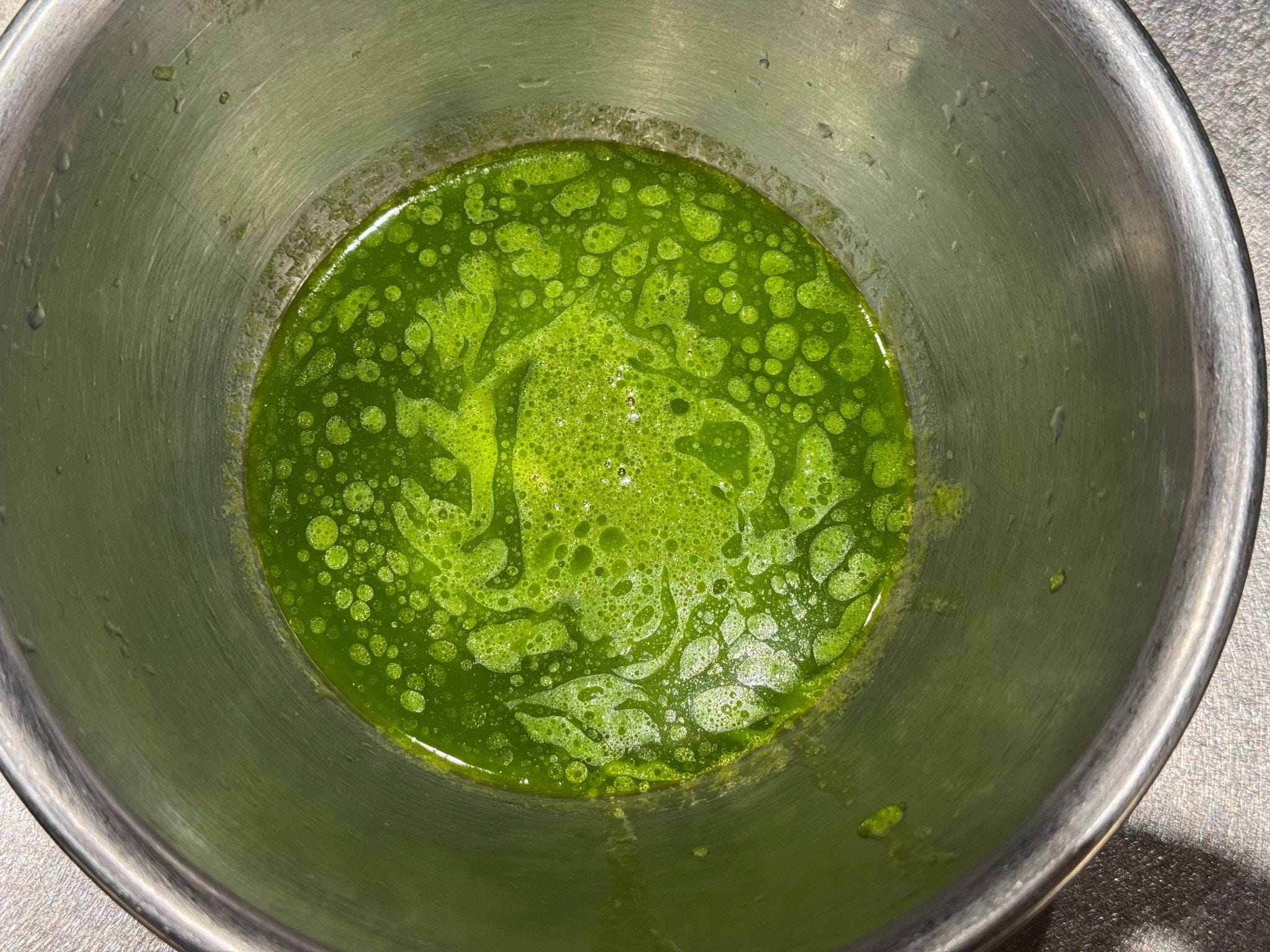
Herb oil. Playing on the natural freshness of the courgette, we take that sweet, garlicky oil and blitz in fresh herbs to make the base of our dressing: an aromatic flavour bomb which also happens to have a beautiful vibrant green colour.
This is caesar dressing as you’ve never seen it.
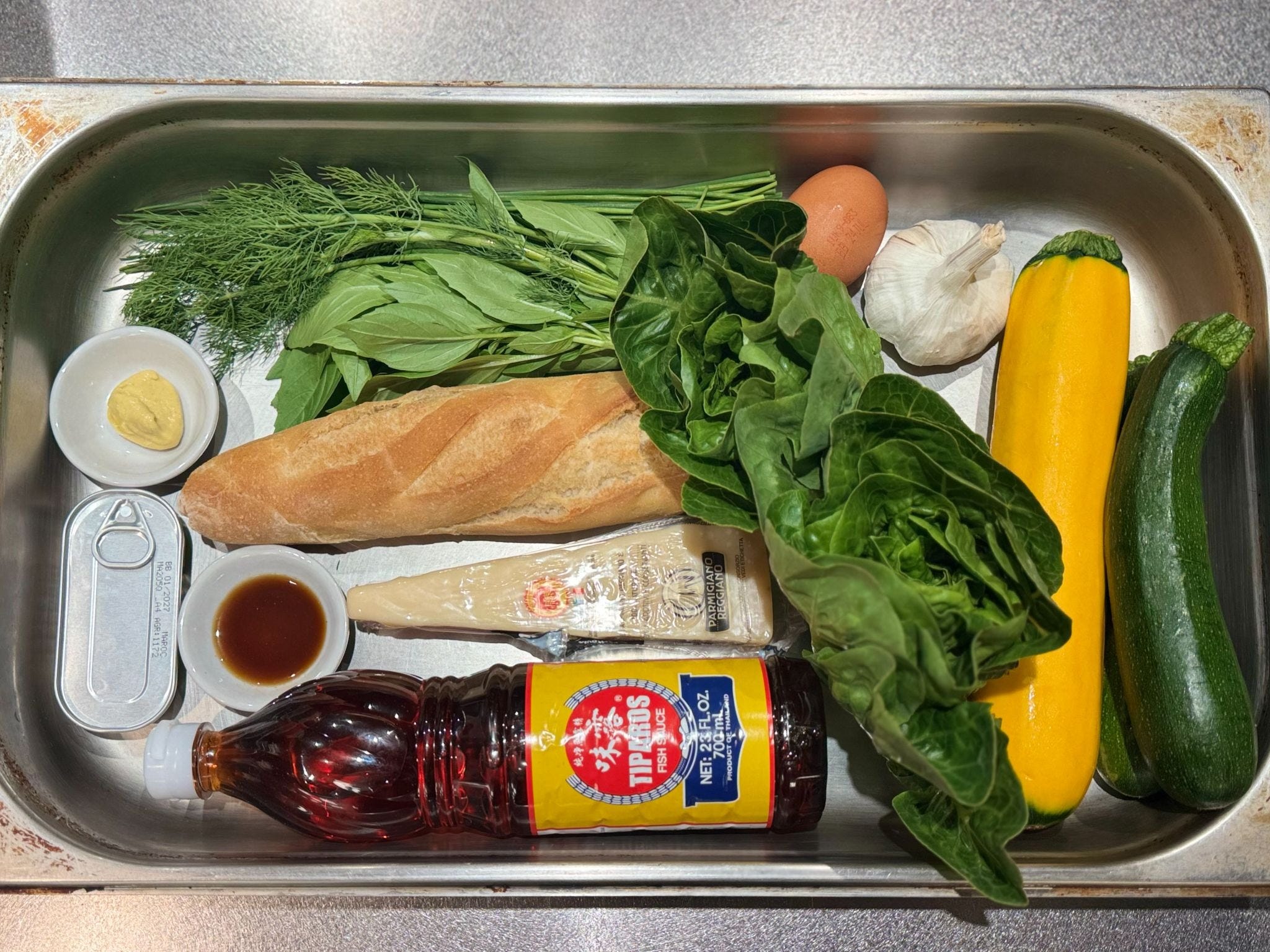
The Ultimate Courgette Caesar
Yield: Serves 4 as a side
Equipment:
Blender
Ingredients:
2 courgettes
3 heads gem lettuce
For the anchovy base:
Courgette trims (from above)
1 Egg yolk
25g anchovies
50g garlic
1 tsp dijon mustard
1 tsp sherry vinegar
1 tsp fish sauce
50g neutral oil
For the herb oil:
15g Basil
15g Chives
15g Dill
50g frozen spinach (taken out the freezer for 5-10mins to make for easier blending)
100g neutral oil
For the crostini:
1/4 white baguette (see notes)
1 litre neutral oil (depending on the size of your pan)
(Optional) Salt and Pepper seasoning
1/2 tbsp fine sea salt
1/2 tbsp coarse black pepper
1/4 tsp cumin seeds, toasted
1/4 tsp coriander seeds, toasted
For the brine:
2ltrs water
100g salt
1 lemon, zested
5 peppercorns
2-3 sprigs thyme
For garnishing:
Parmesan
Fresh dill
Method:
Place your baguette in the freezer.
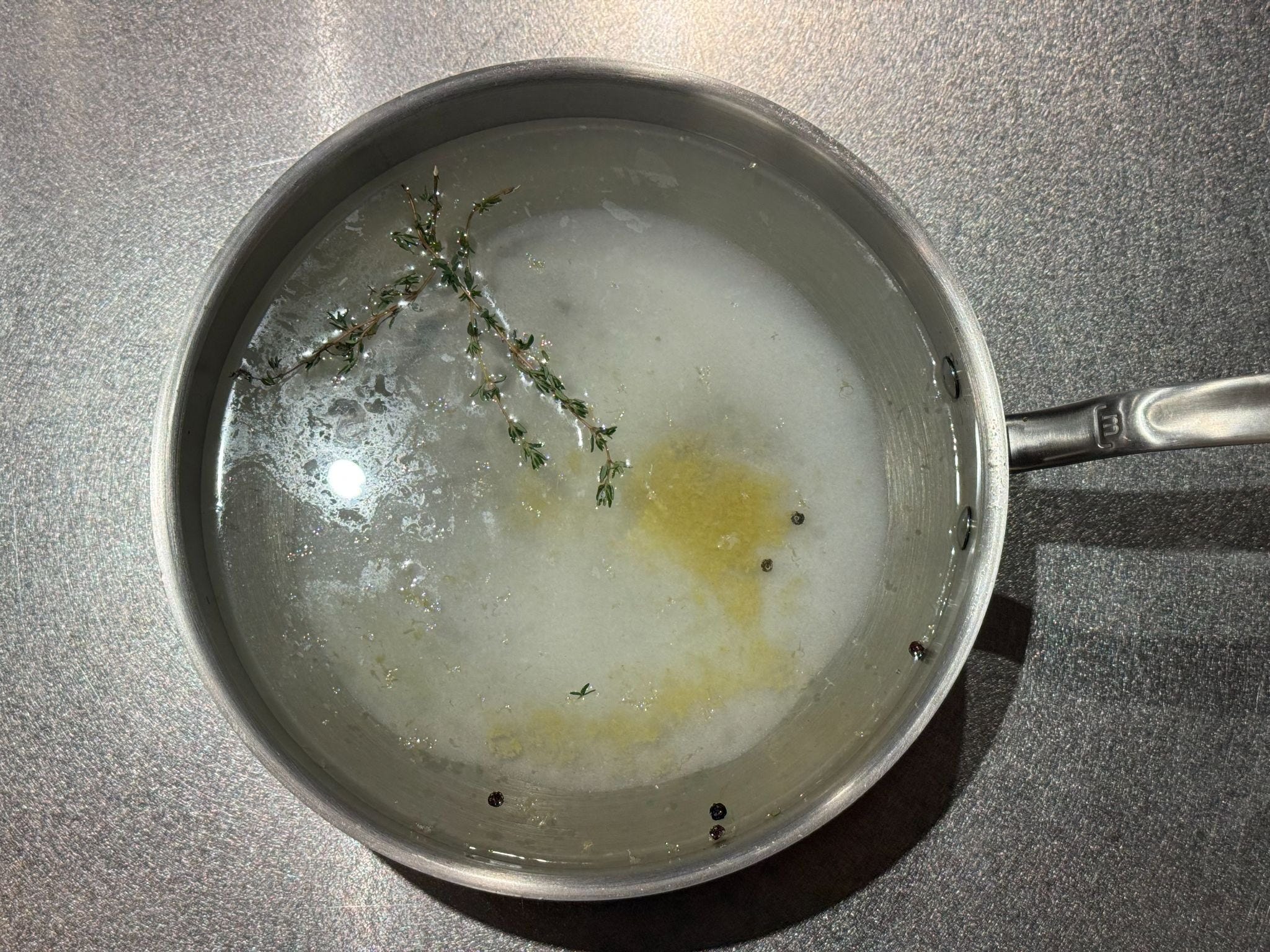
Make the courgette brine: Add all of the ingredients to a pot, bring to boil then reduce to simmer until all the salt is dissolved. Decant into a tray and place in the fridge to cool.
Prep and brine the courgettes: Slice them vertically, using a mandolin, about 1.5 mm thick.
Once the brine is cool, submerge the courgettes in it for 10 minutes. Remove and pat dry.
‘Confit’ the garlic: Heat 150g oil for 2 mins over medium heat. You can use a probe (US link) to check that it is between 120°C and 130°C. Remove from the heat and add in 50g of microplaned garlic, swirling constantly. It should foam up and fizz and then settle as it cools. The garlic will smell sweet, with no bitterness — if it smells bitter it will have burned and you’ll need to restart. Strain the garlic and set the oil aside.
Make the herb oil: Take 100g of the garlic infused oil and add to a thermo with 50g of semi-frozen spinach. Blitz on high speed for about 6 minutes, scraping down the sides every 2 minutes. It might take more or less time depending on your blender, but the result should be smooth and vibrant. Then add in the basil, dill, and chives and blend for a further 2 minutes. Strain using a sieve.
If there is excess moisture from the spinach it may foam at the top- this shouldn’t be a problem, but if you wish to remove it you can pour the oil into a piping bag and the water and oil will separate. Cut the piping bag, let the water run out, and then quickly close the piping bag to save the oil.
Make the anchovy base: roughly slice the courgette trim. Heat 1 tbsp oil in a pan and sautée on low heat for about 5 minutes. The courgette should be soft and melty, and lightly caramelised. Add the courgette trim to a blender and blitz with the other ingredients. To finish, slowly pour in the green oil whilst whisking until fully incorporated.
Slice and fry the crostini: remove the bread from the freezer and defrost slightly until it is still firm but just soft enough that you can slice it. Cut into slices the same thickness as the courgettes. Pour your oil into a pot or deep saucepan— you should have enough oil to be able to submerge the baguette slices and deep fry them. Heat the oil to 170°C and monitor using a probe. Fry for a few minutes either side, until golden and crunchy.
Prep the gem lettuce leaves by cutting them at the core and vertically slicing the outer bigger leaves if necessary.
Before serving: In a mixing bowl, toss the leaves in the dressing, adding a squeeze of lemon and a pinch of flaky salt to taste.
To serve: Arrange on the plate with the crostini and courgette ribbons. Top with fresh dill and parmesan, shaved using a vegetable peeler.

You can make a veggie version with rehydrated nori and vegan fish sauce. Just soak half a sheet of nori in warm water for 3 minutes and then squeeze out the liquid. For a vegan version, replace the egg yolk with 1 tablespoon of soy milk.
We used baguette for the crostini since it is much easier to slice precisely, but you can use any bread — just slice it semi-frozen.
Thanks for reading!

“There’s an olive oil brand called Good Phats which have done a really solid job on marketing. It’s the first time I bought something just because of how good their branding looked, and the olive oil did not disappoint” - Jack
Next week, we’ll pay a visit to the world of crudo with FOWL’s epic bluefin tuna crudo.
See you there,
Jack & Will
youtube: @fallowchefs
instagram: @fallowchefs
tiktok: @fallowchefs
No posts
Comments
Nothing yet. Say the first thing.
Sign in to join the conversation.