
January started off with a strong reading burst, as I finished the first of my 25 in 2025 books within the first five days of the month. Perhaps it’s relevant that school started back on January 6th. I pretty quickly started books #2 and #3 on the list, but with much reduced reading time, I only just finished one of them today (February 1).
Speaking of school, it was a supremely odd and anxiety-filled start to the year. Students returned on Tuesday the 7th, only to have Wednesday the 8th canceled due to the uncertainty surrounding the Palisades, Eaton, and Hurst fires - none of them directly threatened our school, but we had many families affected, either themselves or helping extended families evacuate. The week of finals got interrupted halfway through with news of the Hughes fire, this time just barely north of us and causing mandatory evacuation of our school and a large number of our families. We couldn’t return until Friday, when teachers thankfully got to go in and grade (I had 39 posterboard projects and more notebooks to grade that I did NOT want to take home!), but we had to complete the last two finals on Monday. Thank the Lord that no structures were destroyed in the Hughes fire and all of our families remained safe and their homes projected! The same was not the case for Palisades and Eaton, and we continue praying for the huge number of families displaced by those fires.
That first book I finished quickly was C.S. Lewis’s Surprised by Joy, which I’m heard quoted so many times and heard parts of the story so many times (including in the recent film The Most Reluctant Convert) that it felt like I had read this book before, but I knew I hadn’t. And there were in fact whole chunks that were unfamiliar to me, though a lot of it I recognized. This is Lewis’s autobiography of his own conversion, basically, and it’s utterly fascinating on a lot of levels. First off, just the insight into his education, which touches on self-education in his father’s vast home library, terrible experiences of multiple kinds in Irish and English boarding schools, and the wonderful experience of working directly with the brilliant tutor Professor Kirkpatrick. All along the way he tells how these experiences pulled him toward or away from Christianity, with specific depth and insight.
The more you read of Lewis, the more you can see him developing similar ideas in different contexts. He describes his version of joy thus: “It was sensation of desire…and before I knew what I desired, the desire itself was gone, the whole glimpse withdrawn…only stirred by a longing for the longing that had just ceased…I call it joy.” He felt this joy as a young boy in specific situations - a particularly transcendent experience of nature reified in art, reading Norse mythology - but was always frustrated in trying to hold on to the feeling or recreate it. But the longing in view here ties neatly into his observation in Mere Christianity that if we experience a longing we can’t satisfy in this world, it shows that we were made for another world. These early childhood experiences of “joy” set him up for becoming a Christian, even though he had many years of hardened intellectual resistance to Christianity before becoming, as he puts it, the most reluctant convert in all England. I would have liked even more about this last phase of his conversion - I have definitely heard stories about his relationship with Tolkien, Barfield, Williams, and their conversations about myth that helped pave the way for his conversion that I assumed were in this book, but were not. He does mention them all briefly, but I wanted more detail.
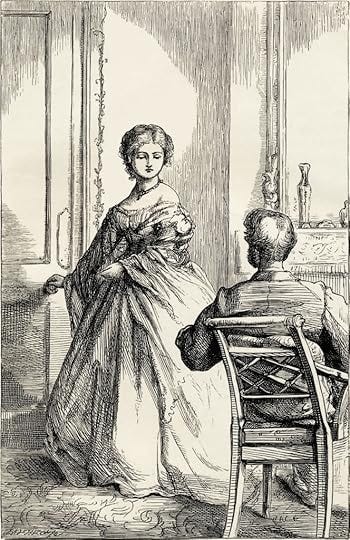
My next book begun was Anthony Trollope’s Can You Forgive Her?, which has been incredibly delightful so far! It’s like Jane Austen crossed with Dickens with a little Thackeray thrown in, and I’m loving it. We’ve got generally well-off people with noble relations, shockingly modern women (I honestly would believe it if you told me this was written in the 1920s rather than the 1860s), dubious men-about-town, respectable country gentlemen, rich widows chased by all kinds of men, and we’re just getting into the politics of it. In fact, the title character of the series (this is the first book in the Palliser series) just appeared on page 188. I kind of can’t believe that Trollope has been so low on my radar until now, and I’m excited I have so many more of his to read! Lifetime reading project indeed. I did let myself slack off on this one a little the past week or so because I knew I wouldn’t finish it by the end of January and I thought I might have a chance at finishing the other book I had started.
That book is The Notebook: A History of Thinking on Paper by Roland Allen, not to be confused with Nicholas Sparks’ The Notebook. Seriously, everyone sees the title of the book I’m reading and is very confused because they can’t imagine me reading Nicholas Sparks. Which is a fair assessment - I never have and while I have nothing against him, his books, or his readers, they’re not something I would likely prioritize. Anyway. THIS The Notebook is about the history of notebooks and how people have used them throughout the centuries. It’s utterly fascinating and wide-ranging. The content of the book is great, and I made so many notes about different kinds of notebooks, note-taking techniques, and processes - I’m kind of a note-taking aspirant right now. That’s probably not fair. I annotate books extensively and I take good notes when we have speakers or meetings. But I’m at best an inconsistent journaler, I’ve given up planners though attempting them several times. I’m a pretty consistent commonplacer, but even that not as much as I’d like. So I’ve been really interested lately in improving my practice mostly around revisiting and processing notes (I’m decent at taking them) and how to use notebooks in ways that work well for me and now I have SO many ideas and have already started putting some into practice fruitfully.
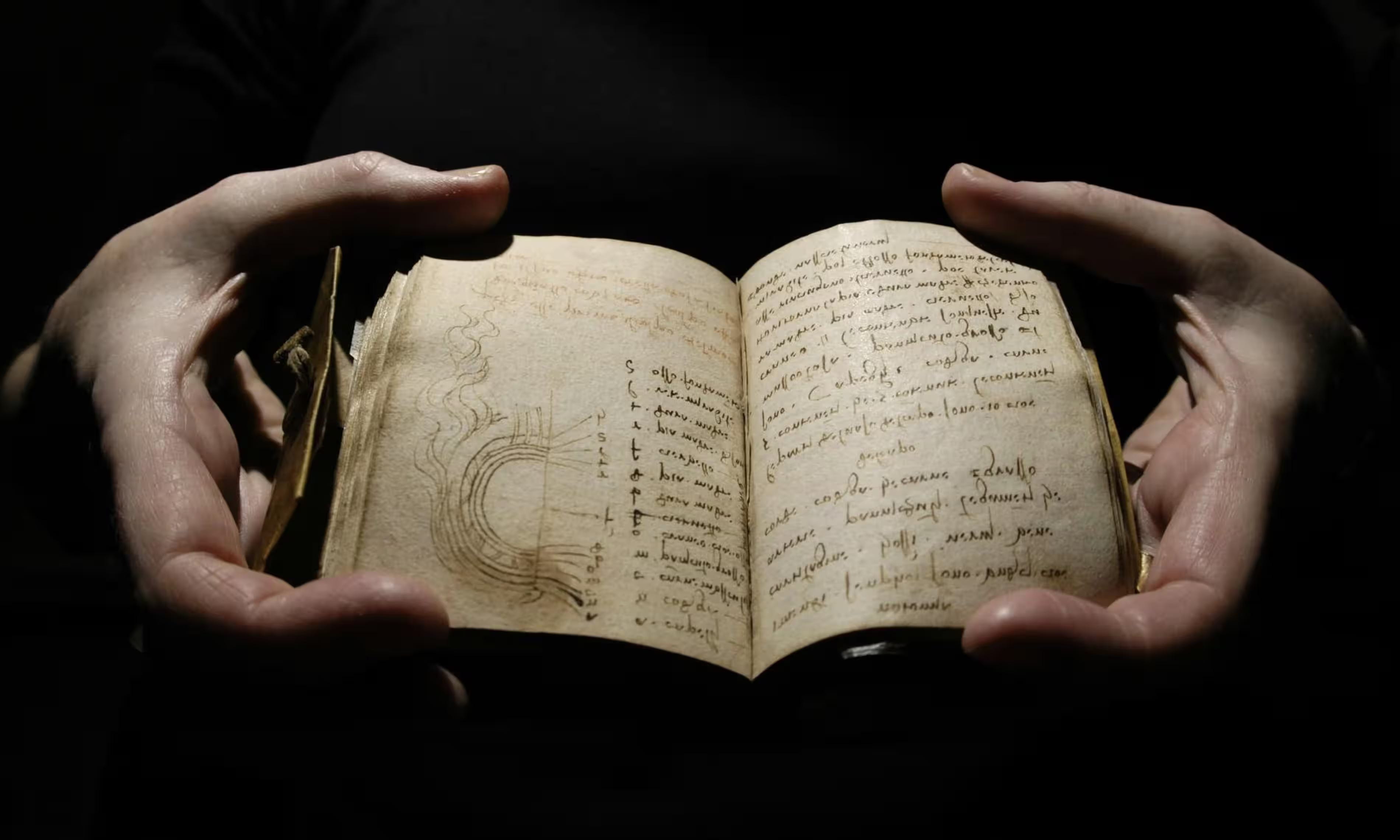
But beyond that, the way this is written is so engaging. Each chapter focuses on a different type of notebook, often associated with a specific time and place. The chapters are arranged largely chronologically, though some do overlap, especially since some notebooking practices started early and have continued (like bookkeeping, or keeping a diary), while others had a brief moment of use in a specific place and didn’t really continue beyond that (like the friendship books of 17th C Netherlands, which are SORT of but not really like modern autograph books). The chapters are quite short, usually start with specific stories about specific people and then pull out to larger considerations, which make it easy to read and endlessly engaging. Allen found so many interesting stories and tells just enough tantalizing details about them to make me want to seek out more about them.
And in telling the story of the notebook, he really tells the whole story of European culture from the 13th century to now - I learned about business, bookkeeping, trade, fishing, writing, reading, drawing, art, sailing, navigation, psychology, engineering, travel, nature, science, policing, and medicine, all through how people in these various professions and hobbies have used notebooks. I’m now planning to look into other history books that focus on specific objects, because I found this such an engaging lens to consider history and culture as a whole. I finished this book today, February 1, but that’s pretty close to finishing it in January. Next up will be George MacDonald’s Phantastes, for February’s book club meeting, and I might toss in a couple of short non-fictions, as well as plugging along on Trollope.
At school, my junior classes are two-thirds the way through Pride and Prejudice and starting to get some really nice discussions going, and my seniors are gamely working their way through The Brothers Karamazov. I have one senior class that’s very philosophical and we are delving deep into all the ideas behind the text, and the other class that’s not as much, and we are enjoying all the drama and psychological distress. It’s interesting to have pretty different experiences with the same book given the proclivities of each class.
In movies this year, I haven’t watched a lot but we have mostly kept to our weekend movie nights with the kids. So far this year we’ve watched Oliver! (1968), after our older daughter and I read the book together last year; The Lady Vanishes (1938), continuing our more-accessible Hitchcock viewing; and Ball of Fire (1941), one of my favorite Barbara Stanwyck comedies. We had also seen Christmas in Connecticut (1945) over Christmas break, and I’m really enjoying sharing Stanwyck with the kids. We’ve since watched Oliver! about a dozen times (feels like - they also listen to the soundtrack a lot on their Alexa), and younger daughter has gotten very into VeggieTales and loves when I wake her up every morning to Silly Songs with Larry.
How is your 2025 going so far?
No posts
Comments
Nothing yet. Say the first thing.
Sign in to join the conversation.