
The past few months my inbox has been filled with post after post, article after article, and video after video talking about the decline of literacy among K-12 and college students both. They can’t read whole books, they can’t think, they can’t write. I don’t doubt this is the experience of many educators around the country, but I have just finished grading 70+ finals for the high school juniors and seniors I teach, and I am greatly encouraged.
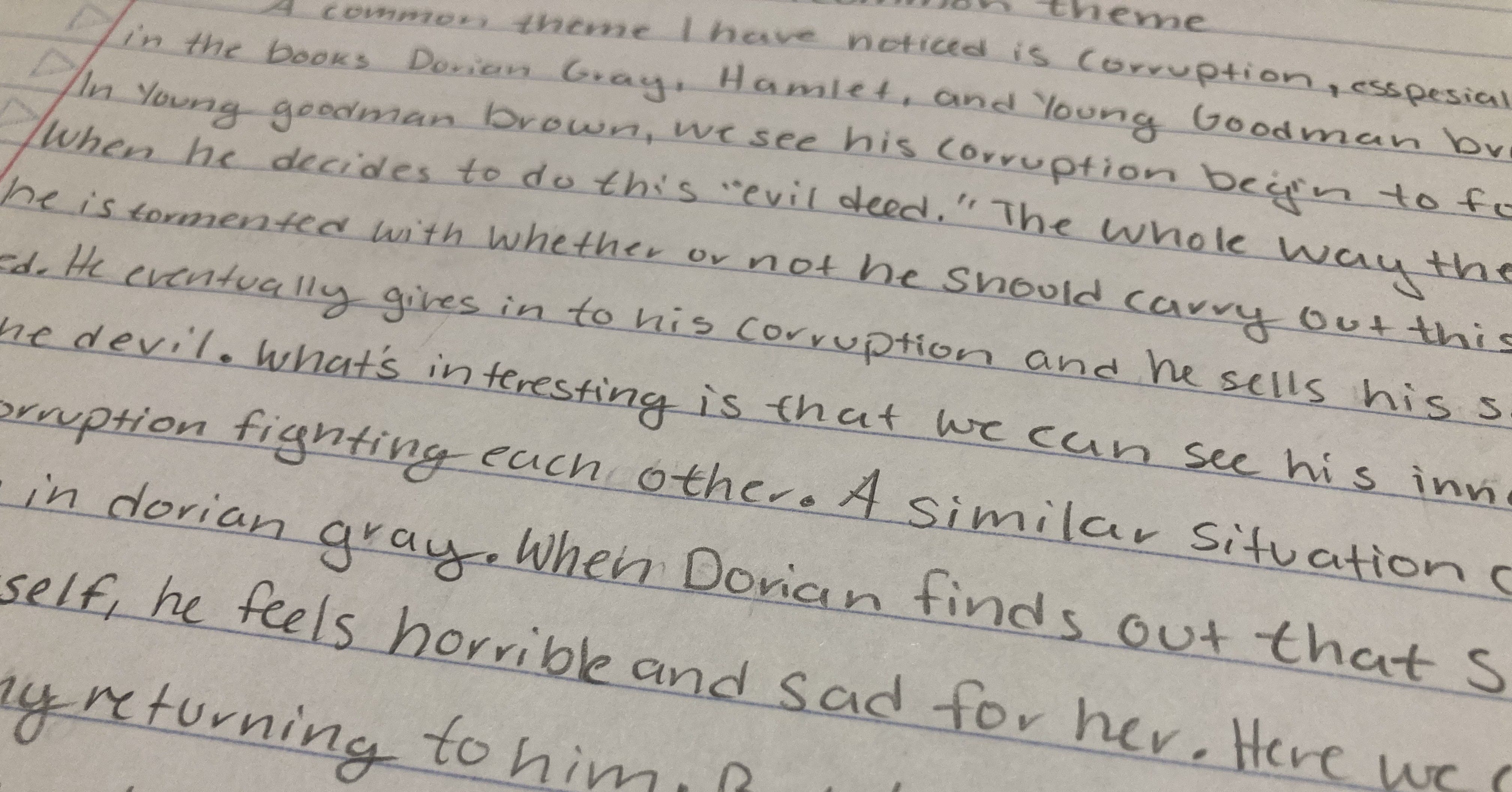
In literature this year, juniors have so far read Peter and Wendy (over the summer), the first book of The Faerie Queene, Much Ado About Nothing, and about half of Pride and Prejudice. Seniors have read The Picture of Dorian Gray (over the summer), 1-3 short stories each from Washington Irving, Nathaniel Hawthorne, and Edgar Allen Poe, Hamlet, and Heart of Darkness. With little in-class review, I gave them prompts like “how can we protect truth; refer to more than one text in your response” [Faerie Queene has a character who explicitly represents Truth and we talked a lot about it, but this prompt asks them to apply that to another text as well, which we did NOT directly discuss in these terms] or “help Benedick by writing a sonnet in Shakespearean or Petrarchean form for Beatrice that fits both their characters and the situation” [we spent two weeks in October writing sonnets but have not done it since] or “identify a common theme among the works we’ve read and discuss how it is seen in at least three different works” [a senior question, as I move them toward finding their own questions in texts rather than just answering mine].
Folks, they can do it. They can remember salient details about the books we’ve read, the major events of them and the discussions we had about them. They can connect ideas that show up in different books, and discuss the nuances of how those ideas are treated by different authors. They can come up with their own thoughts about the books and defend them from the text. They can write their ideas in clear, convincing prose. This writing was all completed in class, and in most cases they discussed similar ideas with me verbally. (I included a verbal section of the exam for all juniors, and a subset of seniors, depending on time and their preference - but I had all these seniors do this last year.) They can carry on an extended conversation on deep topics thoughtfully, and they are well-spoken.
I believe in classical education for a lot of reasons—this might not even be the most important one, but it is a real one. Our kids will stand out from the crowd purely by continuing to do what we have always done: read good and great books, discuss and write about them, and ask good questions and expect real answers.
No posts
Comments
Nothing yet. Say the first thing.
Sign in to join the conversation.