
It’s been a pretty solid and varied reading year for me! If there’s a theme, it’s probably King Arthur - it wasn’t intentional, but as I was putting this together I noticed that he appears or is somehow related to quite a few of the books I read this year! That kind of makes sense because I do love me some King Arthur.
Here are some reading highlights from the year. I’m long-winded, so just skip through the bolded titles and read the ones you’re interested in.
Toward the end of last year, I realized I was discontent with my reading life because I had been only reading books for school and classics (which I love!) and no contemporary novels, especially genre novels. I had to acknowledge that reading some recent books needs to be part of my overall literary diet, even if not a large one. I MIGHT have gone a bit too far the other way this year.
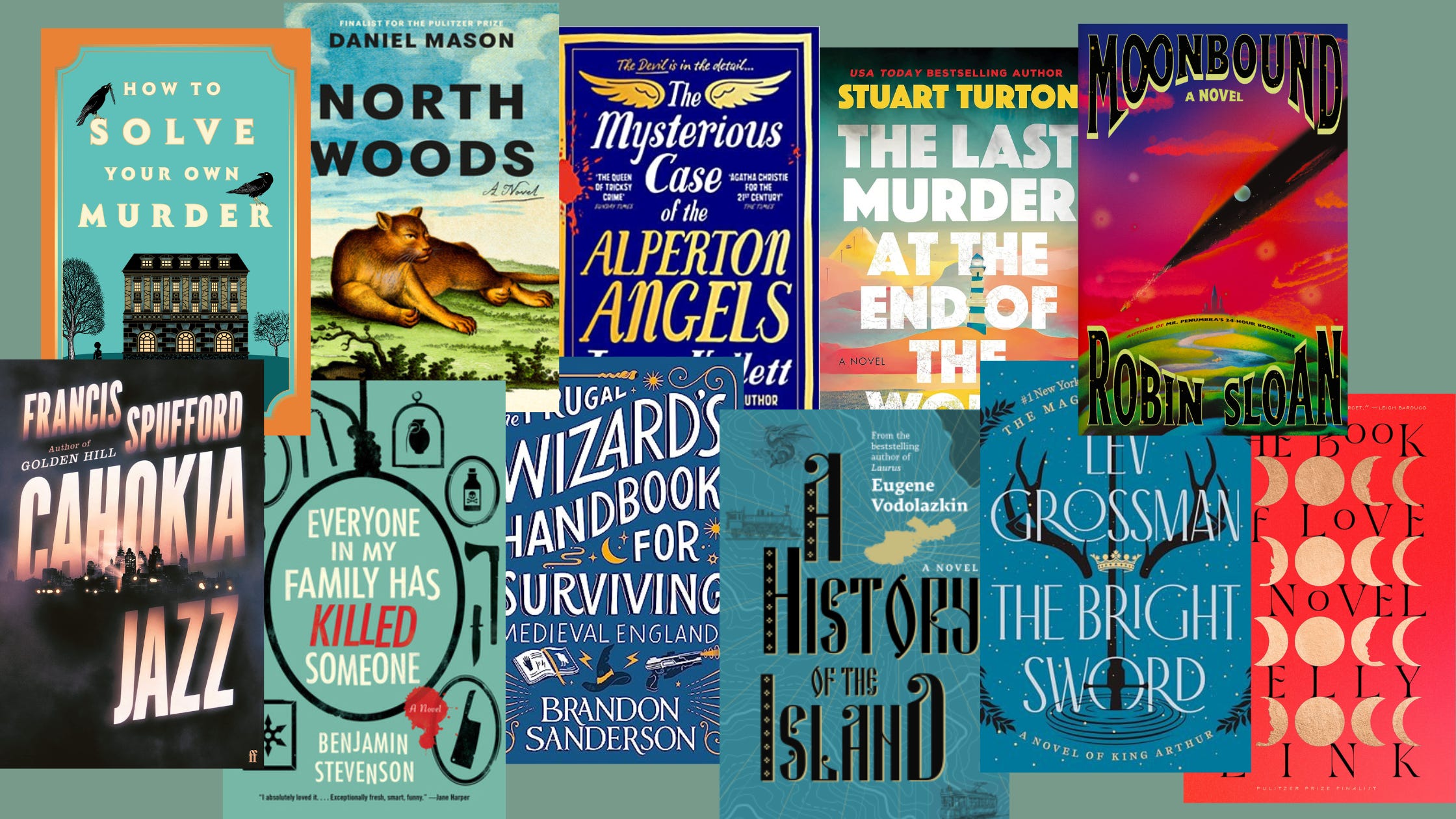
How to Solve Your Own Murder by Kristen Perrin (2024)
An Agatha Christie-esque village murder story with the addition of spooky fortune-teller predictions and omens, as a young woman travels to an England village after the suspicious death of her aunt, who had spent her life trying to outfox a prophecy of her own death. I suppose this counts as a cozy mystery, but it feels more like its Golden Age progenitors than most modern cozies, and I really enjoyed the multi-generational mystery aspect of it.
North Woods by Daniel Mason (2023)
This is in a sense the story of a house in the New England backwoods, going through its serial inhabitants over the course of three centuries. Yet it is also very much the story of the inhabitants, and the house doesn’t feel like a character in the way I thought it might from the book’s description. This is one of the best-written books I read this year, which a haunting yet detached quality that was quite appealing.
The Mysterious Case of the Alperton Angels by Janice Hallett (2023)
The cover design and the concept of an unsolved cult murder drew me in, but I did NOT expect the whole thing to be a modern epistolary novel, including journal entries but also emails, text message threads, and interview transcripts. If I had known that ahead of time (especially the text messages) I might have skipped it, but I’m glad I gave it a chance because I ended up enjoying it a lot more than I expected. It’s twisty and has a lot of surprises, which are enhanced by the non-traditional format.
The Last Murder at the End of the World by Stuart Turton (2024)
It’s a post-apocalyptic, science fiction mystery from the author of The 7 1/2 Deaths of Evelyn Hardcastle - what’s not to like? A strange storm event has killed everyone in the world and made it uninhabitable except for one small island that’s been preserved through expiring tech and aging scientists. But those aging scientists have some secrets they haven’t told the conclave of survivors’ descendants. I could barely put this one down.
Moonbound by Robin Sloan (2023)
This book was simultaneously exhilarating and confusing - it starts off with clear parallels to the King Arthur story, but quickly veers off, and it turns out that the King Arthur parallels were created by this evil wizard using mythological tropes to trick the dragons who have taken over the moon and threaten the earth. Yeah, I know. I don’t know that it achieved everything it was trying to do, but it has so many simply amazing ideas - the way the beavers solve debates (I know) and store their records in fish schools (I KNOW) is just the tip of the iceberg.
Cahokia Jazz by Francis Spufford (2023)
A sort of alt universe historical noir, where it’s 1922 in Cakohia, Illinois, a city split between three race-based factions - white, black, and Native American. The overlap here between reality and fantasy is both fascinating and illuminating, and the book’s meditations on how and why we tell stories fits my particular interests. I don’t think it quite stuck the ending, but I had a great time getting there.
Everyone in My Family Has Killed Someone by Benjamin Stevenson (2022)
I’ve had this on my interest list since it came out, but a sequel came out this year and that made me decide to go back and start at the beginning. This is a VERY tongue-in-cheek mystery, frequently breaking in with how various plot points relate to classic mystery tropes (like the Detection Club’s Ten Rules). This admittedly gets a LITTLE tiresome, but by and large it’s entertaining and the mystery itself is fun.
The Frugal Wizard’s Handbook for Surviving Medieval England by Brandon Sanderson (2023)
I’ve become intrigued by Sanderson’s little empire (he’s currently the crowdfunding king of the world with massively successful Kickstarter and Backerkit campaigns), but his large series are too intimidating to start with, so I picked up this little standalone about a modern man suddenly waking up in medieval England. Yes, stealing plenty from Mark Twain and others, but in a fun, light-hearted way.
A History of the Island by Eugene Vodolozhkin (2020)
I intended to start on Vodolozhkin with Laurus, as it’s the one I hear about the most, but this is the one that I managed to get hold of first, and I did quite enjoy it. On the titular island, the ruling brother-sister pair mysteriously live forever, allowing them a unique perspective on history passing, and that’s really the purpose here: a meditative look at history from the perspective of having experienced it all. It’s rather detached and philosophical, not very involving as a story, and yet, that distancing is what makes it interesting and unique.
The Bright Sword by Lev Grossman (2024)
This was one of my most-anticipated of the summer, even though I was wary because I frankly hated Grossman’s The Magicians. But I can’t resist an Arthurian epic and this one sounded like an intriguing take on the story. And it was! I didn’t hate it, and I liked/loved about 75% of it. What was frustrating was Grossman’s treatment of Christianity - he makes Arthur’s faith a big part of the story, and yet Grossman doesn’t understand it AT ALL, which ultimately kind of ruins the book. I happened to read this right before Taliesin (see below under Books for Fun), which gets the Arthurian transition from Celtic paganism to Christianity very right, which just showed how disappointing Grossman’s treatment of it is.
The Book of Love by Kelly Link (2024)
My major disappointment, as the real world/magical world aspect of this sounded so promising and up my alley, but Link is way more interested in the sex lives of these terrible people than in the ins and outs of her fantasy world, and I found the world-building unsatisfying in general, with the rules of the magic poorly defined and inconsistent, but let’s be real, I probably wouldn’t have cared about that if I had cared more about the characters and plot, but by the time we got to the big world-shifting stuff I didn’t. A reminder that I can’t personally trust what major secular book blogs are interested in these days.
Books I’ve been meaning to read for a long time and finally got to this year, including my one doorstopper read each year, which was Don Quixote this year.
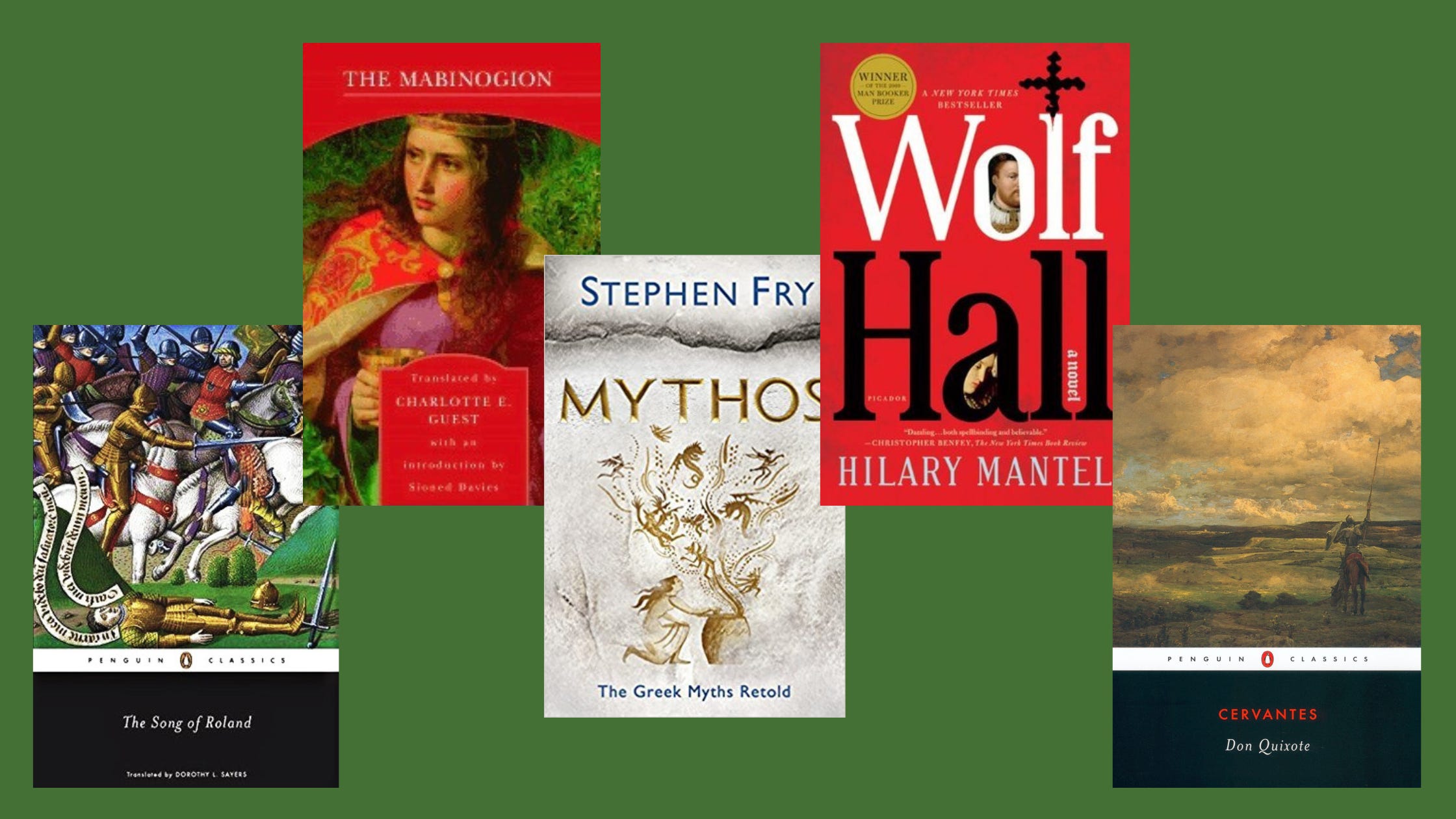
Mythos: The Greek Myths Retold by Stephen Fry (2017)
Fry brings his trademark dry humor (from A Bit of Fry and Laurie and Jeeves and Wooster and beyond) to his love of Greek mythology, and it’s a perfect fit. These are not the myths you tell your kids, but the frequently R-rated original versions, which are sometimes shocking but always entertaining. I don’t usually listen to audiobooks, but Fry reads this one himself, and I highly recommend the experience.
The Mabinogion by anonymous, translated by Charlotte E. Guest (13th-15th century)
I first became aware of this collection of Welsh legends when I was super obsessed with King Arthur just after college. I took an Arthurian Literature class at a local university for fun, in which we read a bunch of the French and German romances - Chretièn de Troyes, Wolfram van Eschenbach, etc. But we didn’t read this, which contains Welsh versions of Arthurian stories. Some of these are, no kidding, pretty weird! But some are very close to the French versions of the Arthur stories: like Geraint is very similar to Chretièn’s Geraint et Enide, and the meandering Peradur bears tantalizing similarities to the Percival/Holy Grail story, without ever being clearly the same story. Then this collection ended with Taliesin, the origin story for maybe my favorite read of the year (see below)! A great final book for the year.
The Song of Roland by anonymous, translated by Dorothy L. Sayers (12th century)
It was great to read this so soon after Don Quixote, because I knew who the Twelve Peers were and that Roland was one of them - the top French knights under Charlemagne. This is one of the most famous medieval romances, and for good reason. You got the bitter betrayal, the doomed last stand, the heroic exploits (one hero killing a hundred enemies a la The Iliad), the noble death, the epic revenge, and even single combat for judgment. It’s all here, and I loved it.
Don Quixote by Miguel de Cervantes (1605)
I’ve been intimidated by the idea of reading Don Quixote for years! And you know what, it’s really fun. It’s hilarious right the way through, though I do think Book Two (which was written later, after a bunch of imitators came out in response to Book One) is weaker, succumbing too often to cruelty rather than satire. That said, I enjoyed both Quixote’s antics (and the valor they represent, regardless of how they are received in his modern age) and the stories of people he encounters.
Wolf Hall by Hilary Mantel (2009)
I started Wolf Hall in 2015 or so, but that was not nearly the right time in my life for it - even this year I struggled more than I’d like! I do think it’s an excellent book, but it requires a lot from its reader. I found it went a lot better when I could binge it; in short sections it was harder to remember what was happening. Mantel’s brilliance is thrusting us into this world so deeply that we feel a little lost - and there’s no “outsider character” who gets everything explained to them. We’re very tied to Cromwell’s point of view, and he’s very much the insider here, so it frequently felt to me like being thrown into the deep end and told to swim or sink. This isn’t BAD, but I had to wrap my mind around it being that kind of book before I really enjoyed it.
I did a modified version of the 12 in 12 Months challenge asking friends for book recommendations - four of these were holdovers from the previous year when I didn’t quite complete the challenge, and I asked a few people for new recommendations, and called it a day. So these are the full seven recommendations I had for this year, and I read them all! Granted, three of them I finished within the past two weeks. BUT I FINISHED THEM. And I liked all of them! Good recs everyone.
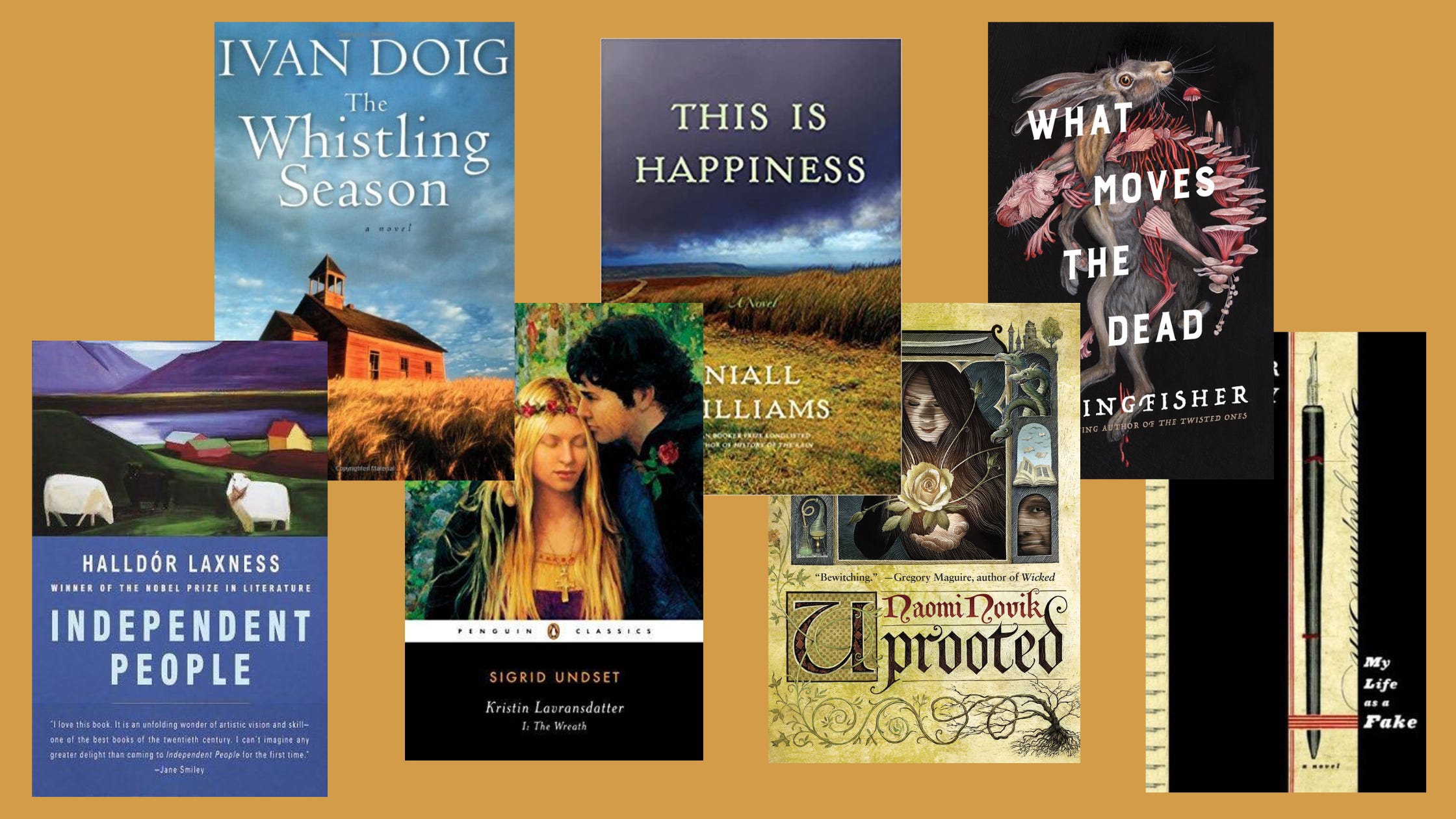
The Whistling Season by Ivan Doig (2006)
I finished this one yesterday as I write this, and wow, I severely underestimated it in my expectations, which were pretty low. I NEVER would have picked this up without the blind recommendation, and I kind of loved it. It’s a love letter to rural Montana, to a western childhood, and especially to one-room schoolhouses, which I have a romantic love for. I’m not sure it even needed the jolt of the plot twist at the end, but I won’t begrudge it either.
Independent People by Halldor Laxness (1936)
My daughter asked me what this was about, and I said “early 20th century Icelandic sheep farmers”. Which is 100% true but really does undersell the book; but I’m not sure what would capture it. The title comes though mostly in the main character, who is so fiercely independent that he refuses anything that could be considered help from others. I think there’s much to admire in being independent, but he takes it far beyond a fault and kind of ruined everyone’s lives because of it. As much as I wanted to smack him, I also loved so much of the book - it’s very poetic and thoughtful, and evocative of the Icelandic climate and spirit. My commonplace book will be full of this.
Kristen Lavransdatter: The Wreath by Sigrid Undset (1920)
I only got through the first book in this trilogy so far. I felt a bit better about that when the recommender told me it took him three years to read them all because they are pretty heavy, and so far I don’t disagree. I was expecting it to be a book where a whole bunch of bad things happen to Kristen, and that may be the case to some degree, but I actually think in this first one Kristen made a whole lot of terrible decisions and is reaping the natural consequences. I am curious to see how this turns out for her in the next two books, which I hope to finish next year…and the year after? We shall see.
My Life as a Fake by Peter Carey (2003)
I wasn’t actually sure until I got this from the library whether it was fiction or some kind of memoir. It is fiction, but does have a bit of the feel of a true story, if the true story were incredibly crazy. The narrator character is an editor of a poetry journal and comes across the kind of genius poem you only find once in a lifetime - but it comes with a WHOLE LOT OF BAGGAGE, namely a poet who once created a fake poet and poems to trick a different journal editor decades earlier, resulting in the editor’s death - but then the fake poet materializes to threaten the poet who created him. Or maybe he was real all the time? Meanwhile, the narrator is just trying to land this genius poet, while following the leads around Malaysia, very far out of her element. Several layers of story, unreliable narrators, and all about poetry? I devoured this in two days.
Uprooted by Naomi Novik (2015)
A fantasy author/book I’ve had low on my radar for quite a while but hadn’t ever taken the plunge until this recommendation. I quite enjoyed this! A wizard known as “the dragon” takes a girl from a village every ten years, but instead of killing them he’s training them in the ways of magic, hoping to hold off the evil in the nearby woods. This girl is different, though; she’s hopeless at his magic, but has her own much more intuitive magic sense that might be what’s needed to defeat the evil rather than just hold it at bay. I liked that the book has a strong sense of good and evil, unlike a lot of modern fantasy, and the way the two types of magic function and intertwine is unique and fascinating.
This is Happiness by Niall Williams (2019)
A very quiet story set in a remote Irish village where it always rains…except it just stopped for the first time in anyone’s memory. It presages change to the 17-year-old boy living there with his grandparents. An outsider arrives and befriends the boy - he has his own reasons for coming to the village, but they take a while to emerge. An even greater change is coming - the village is being wired for electricity. This story feels very lived in, very momentous in the midst of calm, and very poetic - all without almost anything actually happening. I took a lot of commonplaces from this one, too.
What Moves the Dead by T. Kingfisher (2022)
Reimagining Poe’s “The Fall of the House of Usher” is an intriguing proposition. I happened to have reread the story earlier this year, and I like it but I also thought I wanted a bit more explanation. Kingfisher gives us that, giving a plausible (and grotesque) explanation for the illness of the Ushers while still maintaining a lot of the gothic feel. (I could’ve done without a lot of the background on the narrator, as that’s not why I was interested in the story.) That said, I realized after reading it that I actually didn’t want more info on why the House of Usher was diseased - too much explanation did take away from the mysterious creep factor. I enjoyed the Kingfisher book on its own terms, but it also reminded me that sometimes not explaining the unexplainable is the right move.
Not-new-release books that I picked up and read just for fun. They are all parts of series, it turns out, so at least part of next year’s reading plan will likely be continuing, well, all of these.
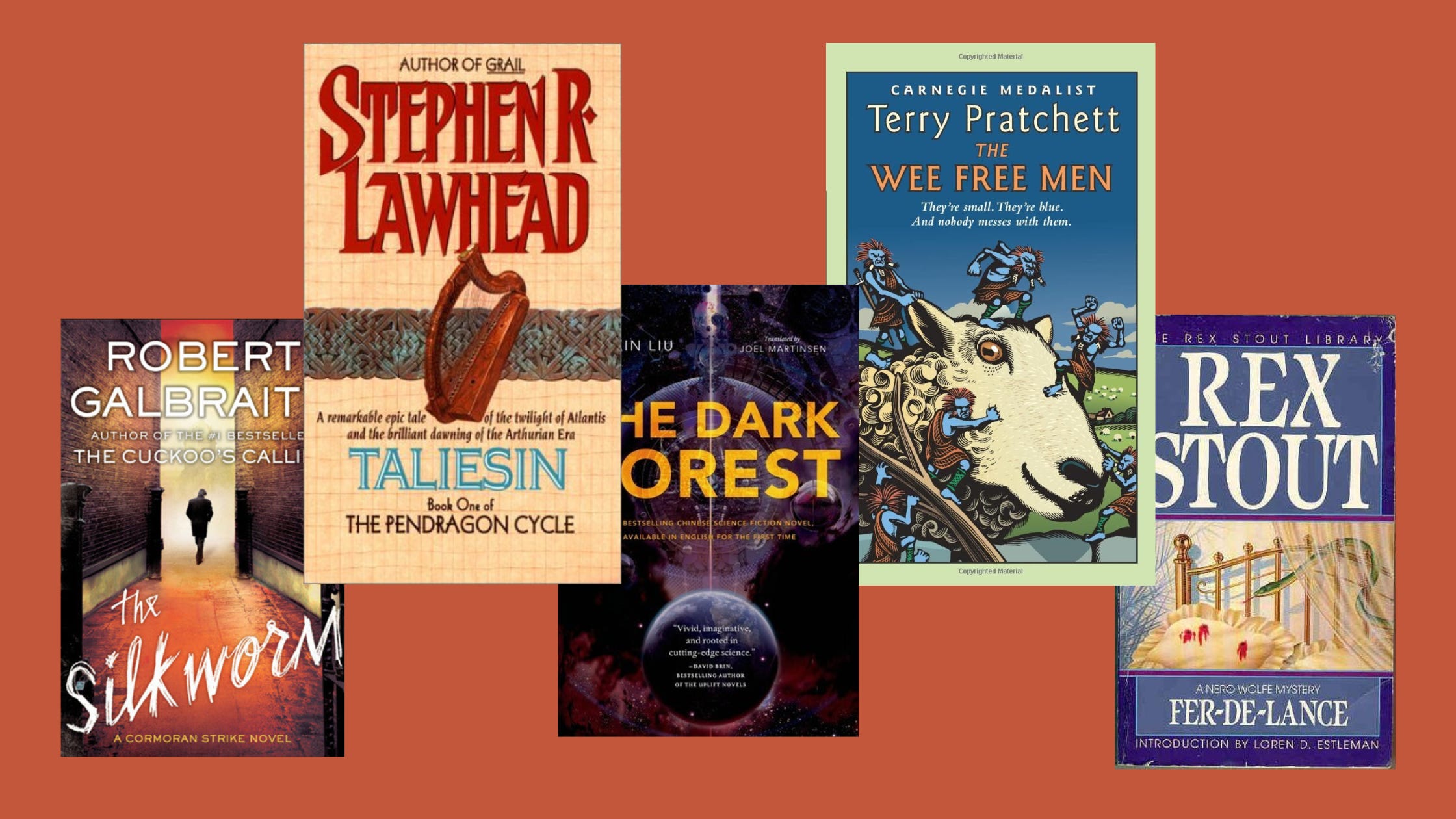
The Wee Free Men by Terry Pratchett (2003)
(Discworld series #30/Tiffany Aching series #1)
I have read one or two Pratchett books in the past, but this one keeps coming up on the Literary Life podcast and forums, so I finally got with it and wow if this isn’t a super fun book that also plays interestingly with fantasy and magic tropes. I listened to the audiobook, which I recommend because the wee free men (a race of 6-inch-high faerie creatures invented by Pratchett) have thick Scottish accents and it’s more fun to hear it than to read it. The main character, a witch-to-be named Tiffany Aching, is all that stands between faerie monsters and her highland home - well, she and the wee free men who join her cause, sometimes against their own will.
Taliesin by Stephen Lawhead (1987)
(Pendragon Cycle series #1)
I love a good Arthur story. But this one starts far before Arthur himself. The Romans have just left Britain, leaving British lords like Taliesin’s father behind. Taliesin grows up a prince bard in a druidic world - but he is also profoundly influenced by the coming of Christian missionaries. Meanwhile, elsewhere, the princess Charis loses her home as the island of Atlantis falls to a catastrophic disaster, and her fate and Taliesin’s are about to become intertwined. This book captured my imagination probably more than any other book I read this year, and I almost threw over all my other reading plans to binge the rest of the series.
The Silkworm by Robert Galbraith (2014)
(Cormoron Strike series #2)
This is the mystery series by Harry Potter author J.K. Rowling. I read the first one a while ago and enjoyed it but just hadn’t gotten around to continuing. I loved this second one and can’t wait to read more. It’s somewhere between a Golden Age type mystery and a hardboiled detective novel, which is a major sweet spot for me. Again, I could easily have just binged the rest of these.
The Dark Forest by Cixin Liu (2008)
(Remembrance of Earth Past #2)
I read the first in this series, The Three Body Problem, several years ago and loved it - it’s a compelling mix of hard sci-fi, philosophy and politics. I had listened to it on audiobook, which was helpful because of the Chinese names, but turned into a deficit when I immediately launched the second in the series, because the reader changed in between AND he also pronounced all the Chinese names differently. Not knowing Chinese I have no idea who is right, but I couldn’t handle it. Putting a few years in between helped a lot, even though it is quite a bit different than the first one - more political infighting and less speculation, but it’s still pretty great at what it’s doing.
Fer-de-Lance by Rex Stout (1934)
(Nero Wolfe #1)
I picked up a handful of these Golden Age mysteries when we were at my favorite used bookstore in Santa Barbara. I’d heard of them for a while but they’re harder to come by than, say, Agatha Christie. The detective here is the mostly house-bound corpulent genius Nero Wolfe, who sends his sidekick out to get interviews and gather evidence, and then THINKS about it until he solves the mystery. It makes for an unusual dynamic compared with most detective stories, but an effective one.
These are not assigned reading for school or anything, but books that I picked up because I think they will helpfully inform my teaching or my thinking about education and culture in general.
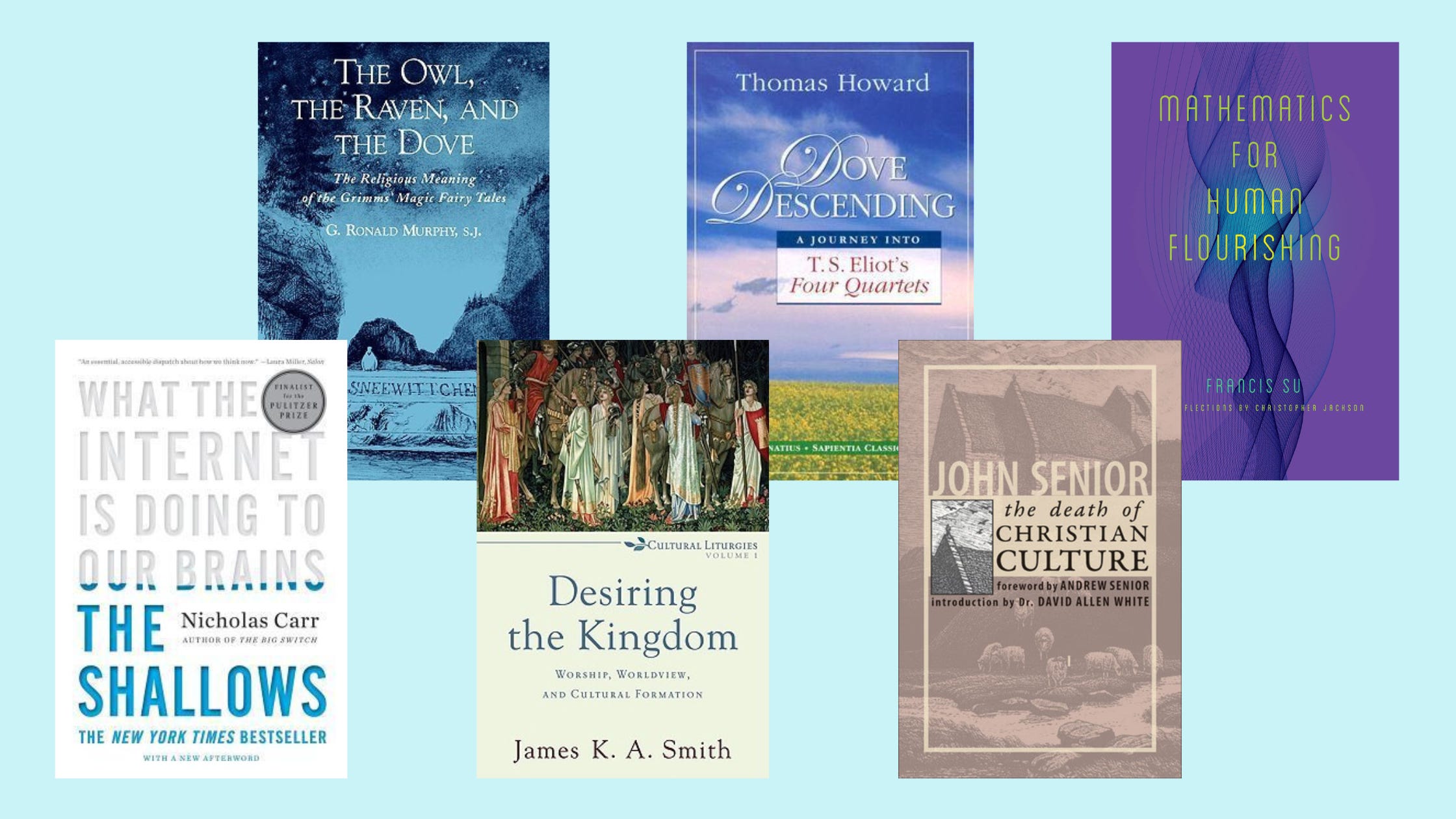
The Owl, the Raven, and the Dove: The Religious Meaning of Grimms’ Fairy Tales by Ronald Murphy (2000)
It’s been difficult to find this for a reasonable price so I finally spent some of my teacher supply stipend on it this summer and I’m so glad I did. Murphy’s major contention is that Wilhelm Grimm conveyed the deeper meaning of the folktales he and his brother collected by coalescing the stories’ use of symbols drawn from Greek, Norse, and Christian mythology (using “myth” the way Lewis does here), showing how all these stories, however imperfectly and incompletely, are really pointing to transcendent truth.
The Death of Christian Culture by John Senior (1977)
Senior pulls no punches in talking about what has gone wrong in our culture, what we have lost as we’ve pulled further away from Christian truth, and how this has especially affected education. His chapters here specifically about education are incredible; some of the chapters that hinge more closely on Catholicism I could take or leave (as a non-Catholic). He also really hates James Joyce’s Ulysses which was pretty funny to read about for pages on end.
Desiring the Kingdom: Worship, Worldview, and Cultural Formation by James K.A. Smith (2009)
Our ladies’ book club read Smith’s book You Are What You Love several years ago, and I found it extremely illuminating - it’s about liturgy, and how everything has a liturgy even if we don’t think of it as such, and participating in various cultural liturgies (going to the mall is one of his major examples) subconsciously forms us in particular ways. Finally picking up Desiring the Kingdom this year, I find that it’s basically the more academic version of the same idea - it’s much more in-depth and rich both theologically and philosophically, but a bit less accessible and sound-byte-able. Both books are well worth reading to understand how our culture forms us, and how we can strive to be formed by worship instead.
The Shallows: What the Internet is Doing to Our Brain by Nicholas Carr (2010)
Another one in the broad category of “cultural formation” but this time focused specifically on how using the internet forms us, not primarily through content, but through form (he owes a lot to McLuhan and Postman). I think this has only become more obvious in the years since 2010, and Carr does have an updated edition that includes the rise of the smartphone (and his new book The Anxious Generation is all about how the phone-based childhood has affected current kids/teens). I like that he approaches this from lots of different angles, too, including deep dives on how memory works, etc.
Dove Descending: A Journey Into T.S. Eliot’s Four Quartets by Thomas Howard (2006)
Eliot is one of my favorite poets to teach, especially The Four Quartets; this year I added this book to my resource list and read it just before teaching Eliot in the spring, and I was just astounded over and over again at the depth of this poem sequence. Howard reads through them and elucidates, explains references, and makes connections - in addition to being helpful to understanding the poems, it’s also a tremendous example of excellent careful reading.
Mathematics for Human Flourishing by Francis Su (2020)
Every summer I read a book that’s outside my academic area (literature/humanities) and it’s often in math, because that’s a real weak point for me. Now, these are not really mathy math books usually, but books about the history of math or in this case, how math makes us more human and brings us closer to God. This book is quite good if you’re in the “why even math” camp, and I had fun with the little math puzzles he intersperses, though I was admittedly pretty bad at them.
I led Cymbeline and The Tempest, and benefited from my friends’ preparations on all the others!
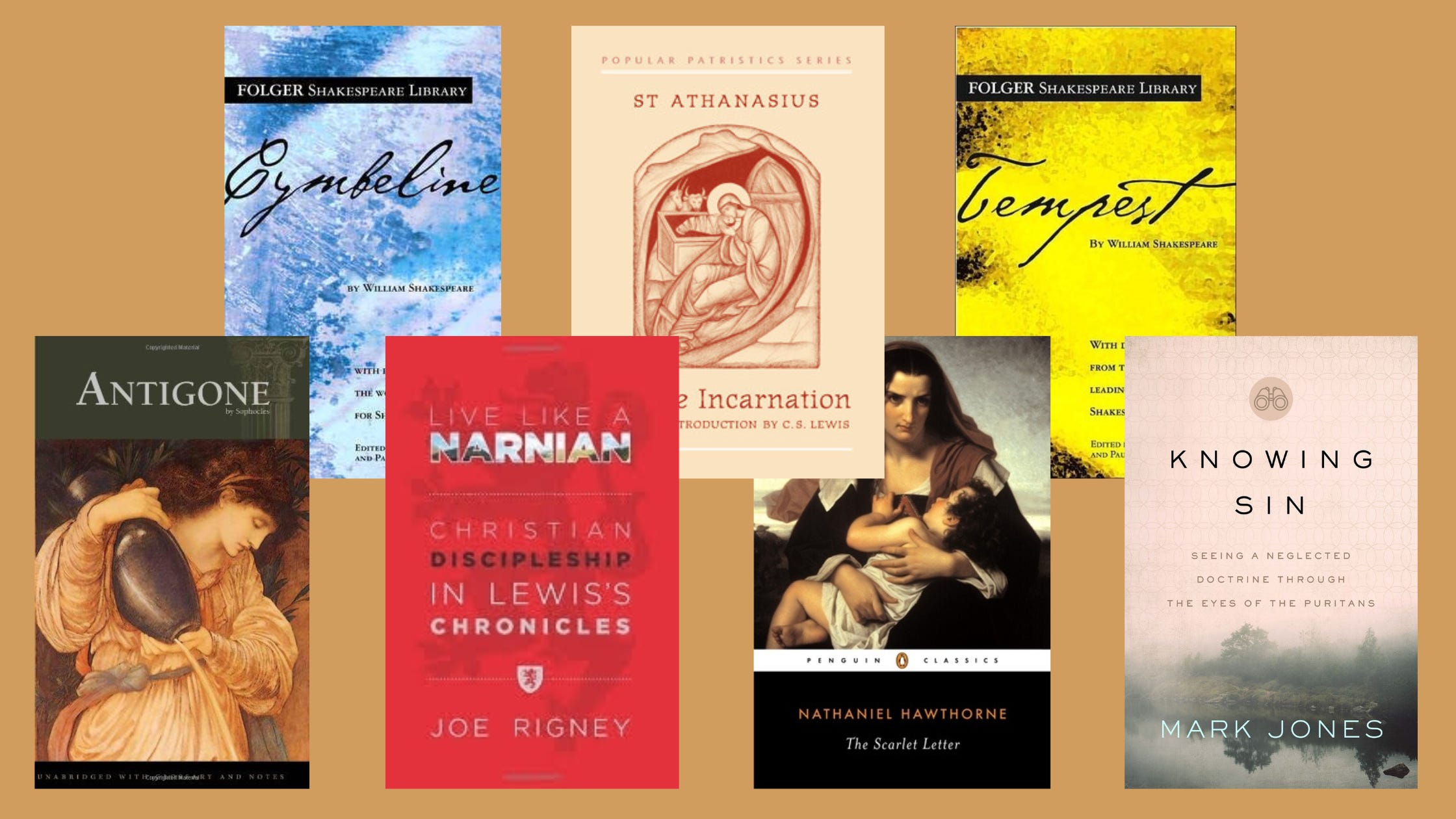
Cymbeline by William Shakespeare (1611)
I have been wanting to read Cymbeline since I read the retelling of it in E. Nesbit’s Beautiful Stories from Shakespeare and it struck me as the most perfectly fairy-tale Shakespeare story I had ever read. So when my book club decided to do plays for our summer series, I pushed Cymbeline and I’m so glad I did! It’s utterly delightful and has pretty much everything in it - forbidden lovers, disguises, mistaken identities, long-lost sons, death and resurrection, wars, and lots more. So great.
On the Incarnation by Athanasius (318)
We’ve been meaning to do this for a few years, and finally fit it in. Athanasius is the church father who earned the title “Athanasius contra mundum” (Athanasius against the world) for his defense of the divinity of Christ against Arius and his followers. He wrote this BEFORE that controversy heated up, which is interesting, but it’s an incredible defense of why Jesus has to be both God and man in order to accomplish the redemption of humanity. In addition to being excellent theology, it’s also beautifully written, with some simply breathtaking lines and images.
The Tempest by William Shakespeare (1611)
I’d been wanting to reread The Tempest for a while, and this was a good excuse. It does feel like Shakespeare’s send-off in a lot of ways, as Prospero brings together his enemies, improves them through trials, and then redeems them. It’s a relatively brief one, but a rich one, with a lot to consider.
Antigone by Sophocles (441 B.C.)
Several times through this for me, and yet my friend (who teaches it to 8th graders) brought out ideas that I’d never considered before about Antigone’s attitude and role in comparison to Creon and others in the play. Again, a quick read, but many wonderful lines and great things to thing about.
Live Like a Narnian: Christian Discipleship in Lewis’ Chronicles by Joe Rigney (2013)
Rigney goes through the Narnian series as a whole and book by book, showing how it forms its readers in noble and honorable ways. When we talk about literature forming children and students, this is the kind of thing we mean - not that it’s inevitable in a kind of mathematical input and output, but that this kind of formation is one part of how we might become who we should be. In a sense, a book like this isn’t strictly necessary. And yet it was an enjoyable way to revisit the best parts of Narnia in a quick and thoughtful way.
The Scarlet Letter by Nathaniel Hawthorne (1850)
I disliked this book when I read it decades ago - it was a prime example in the “hit me over the head with an anvil” type of literature I hated at the time. Like, Puritans bad, I get it. I had a feeling I would see it differently this time around, and I did certainly get a lot more good things out of it. Hawthorne is really good at exploring the depths of sin in humanity, and while I don’t think he has the answers (and he’s not entirely right about the Puritans, either), there’s value in what he’s doing. I still think it’s a bit overdetermined, though.
Knowing Sin: Seeing a Neglected Doctrine Through the Eyes of the Puritans by Mark Jones (2022)
Speaking of the Puritans and sin! We read this for Lent, long before we did The Scarlet Letter and I think it informed how we were all thinking about Hawthorne’s book and its depiction of sin. This book is a tough yet gracious look at sin in all its permutations, with plenty of quotes from Puritan thinkers, who thought a LOT about sin - but here’s the thing Hawthorne misses: Puritans also think a LOT about how incredible it is that God’s love covers over all the depth and breadth of our sin, and that grace permeates their discussion, however harsh, about sin.
We’re working through The Chronicles of Narnia with my 6yo and tackling some more advanced books with my 11yo.
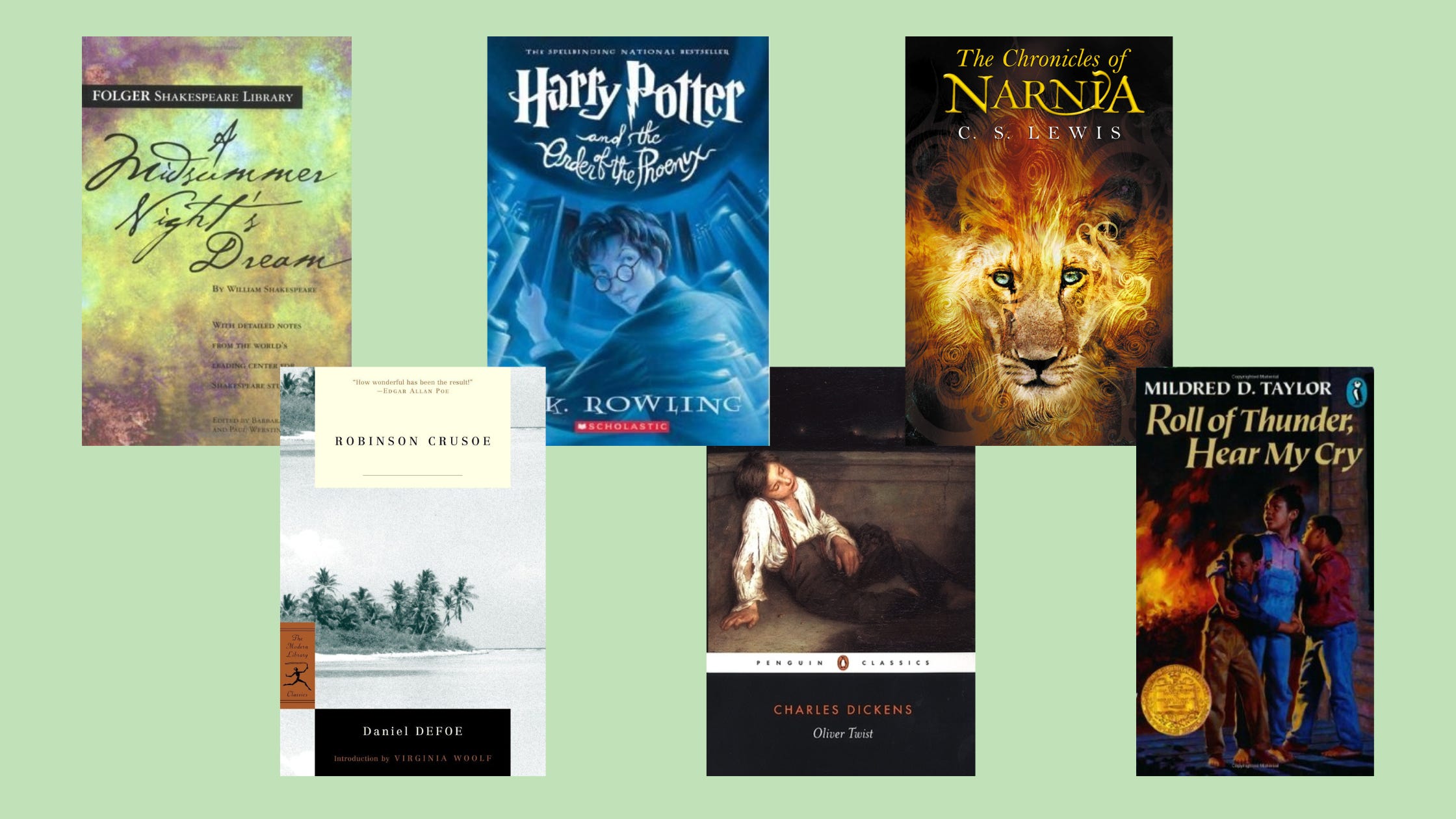
The Lion, the Witch, and the Wardrobe, Prince Caspian, The Voyage of the Dawn Treader, and The Silver Chair by C.S. Lewis (1950-1953)
Oliver Twist by Charles Dickens (1838)
Karina’s first Dickens, and one I hadn’t read myself!
A Midsummer Night’s Dream by William Shakespeare (1595)
Karina has been bugging me to read some real Shakespeare for a while now. We each had a copy and alternated reading lines out loud. She loved it!
Harry Potter and the Order of the Phoenix by J.K. Rowling (2003)
We read one per year around her birthday. Only two left!
Robinson Crusoe by Daniel Defoe (1719)
Roll of Thunder, Hear My Cry by Mildred Taylor (1976)
No posts
Comments
Nothing yet. Say the first thing.
Sign in to join the conversation.