
You’re in a darkened parlour in Victorian England. The curtains are drawn. You clasp hands with the sitters next to you. The medium breathes deeply. A candle flickers. A voice whispers. But instead of a spirit...
Was that … a fairy?
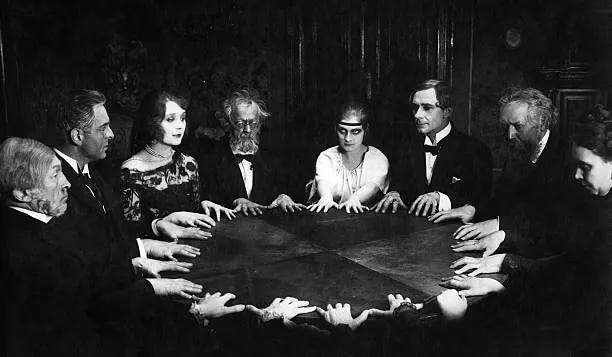
We tend to think of the Spiritualist movement that swept across Britain and the United States in the late 19th and early 20th centuries, with its séances, rapping tables, and spirit photographs, as all about ghosts. But in fact, fairies were often part of that same phenomenon. Mediums described not only spirits of the dead, but “elementals,” “nature beings,” and fae presences.
One of the most compelling instances of this weird overlap is the Cottingley Fairies case. In 1917, cousins Elsie Wright and Frances Griffiths from Cottingley, England, produced a series of photographs depicting themselves with what appeared to be fairies. These images, though later admitted to be hoaxes, were taken seriously by many, including Sir Arthur Conan Doyle, the creator of Sherlock Holmes and a staunch believer in Spiritualism.
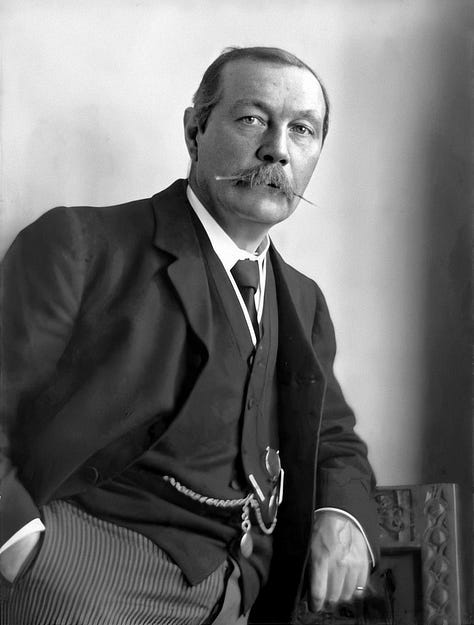
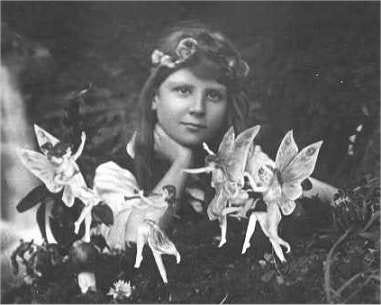
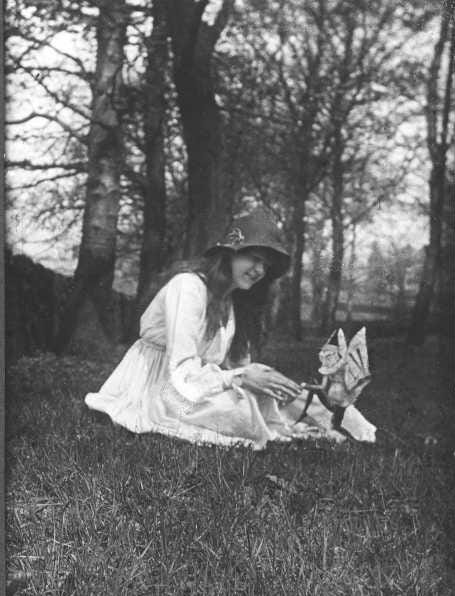
Doyle's involvement in the case was pivotal. He was introduced to the photographs by Edward Gardner, a Theosophist and Spiritualist, who received them from Polly Wright, Elsie's mother. Gardner and Doyle were convinced of their authenticity, with Doyle even writing an article for The Strand Magazine in 1920, endorsing the photographs as genuine evidence of the existence of fairies. This endorsement significantly influenced public perception, intertwining the concepts of Spiritualism and fairy lore in the public consciousness.
Beyond the Cottingley case, fairies were frequently mentioned in Spiritualist literature and practices. The Fairy Investigation Society, founded in 1927 (which still exists, by the way.), was dedicated to collecting and documenting sightings of fairies. This organization, while not exclusively Spiritualist, was influenced by the broader interest in the supernatural at that time. Their work reflects the period's openness to various forms of spiritual and mystical experiences, including encounters with the fae.
So, Figures like Sir Arthur Conan Doyle and Edward Gardner were instrumental in promoting the idea that fairies were not merely mythical beings but could be real, tangible entities that could be perceived under certain conditions (even if the Cottingley case wasn’t all they’d hoped). Their writings and lectures still tended to blur the lines between folklore, Spiritualism, and personal belief, contributing to an atmosphere where fairies were taken seriously as part of the spiritual landscape.
And that tradition hasn’t fully gone away. Today, many psychics and sensitives still report encounters with fairies. But are these the same fairies we know of from folklore? Or are they something different, shaped by the expectations of those who call them forth in the modern world? Fairies have always been slippery creatures, after all, tricksters, shapeshifters, reflections of human imagination as much as denizens of the Otherworld. Perhaps they simply adapt to the culture and the person that notices them, whether peasant, poet, or medium.
In this month’s video, I narrate six such fairy encounters, as told by psychics and mediums. You can watch it here:
I also explore the connection between ghosts and fairies in my novel The Ghosts of Nothing.
If you’re interested, the BookTuber Cronk The Book Guy recently reviewed my book, here:
Until next time,
Scary Fairy Godmother
No posts
Comments
Nothing yet. Say the first thing.
Sign in to join the conversation.