
This week, Allison (Huang) McFadden makes the case for creating white-collar positions that could work for full-time caregiving mothers—and calls on mothers to work together to bring about solutions.
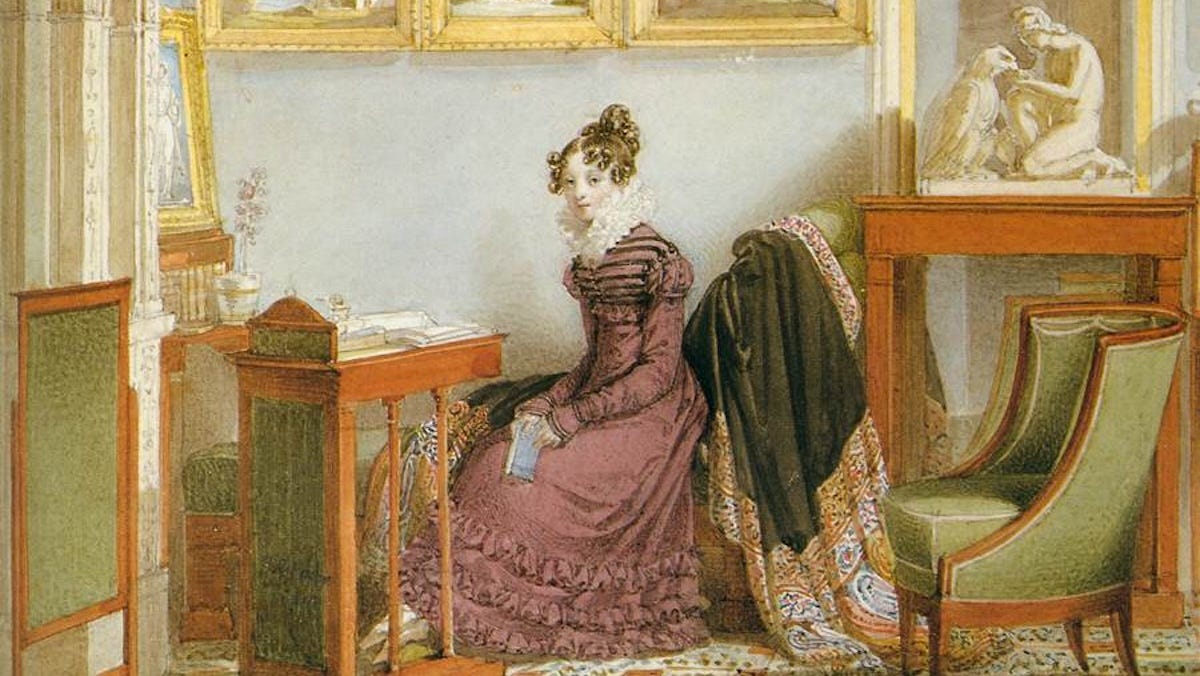
Allison Huang-McFadden
I was hesitant even to ask for remote part-time work. “Dear supervisor,” I imagined myself asking, “would you be able to keep our meetings to before 8am or after 8pm, or possibly during the actual work day depending on whether my one-year-old has gone down for a nap, which could start anywhere from 1pm to 2pm and end in as little as 45 minutes? Would you mind if I had to leave the call early to rock him back to sleep and possibly be unable to return? Would it be okay if I didn’t report for three weeks because we had back-to-back teething, sleep regression, and illness?” I could never ask such a thing. The whole notion flew in the face of the professional norms that characterize the white-collar workplace.
Are these norms based on immutable realities? Or could they be changed? It is true that certain kinds of high-pressure, tight-timeline work are simply not feasible at this stage of life with the caregiving choices I’ve made. Yet my ability to support my indigent clients has never suffered because I am a mom. In fact, after I became a mother, our rhythms fell in closer step.
This September 17-19, Fairer Disputations Featured Authors and friends are convening in Rochester, New York to find a better way forward for women. Space is limited—but we’d love to have you join us!
Editor-in-Chief Erika Bachiochi speaks with Featured Author Mary Harrington on how much of the early women’s movement has been overlooked—and how to form virtuous women and men today.
Next, Featured Author Victoria Smith writes about the possibility and experience of recovering from anorexia.

Victoria Smith
How can you change the shape of your own body, on your own terms, in such a context? This is especially hard if you are famous. You know how the press write about ‘normal’ celebrities who gain weight. The faux admiration (flaunting her curves! ditching the diet!, ignoring the haters!), the insincere pregnancy speculation, the side-by-side past-and-present photos. If you, an extra-thin woman, gained weight – if you were to emerge from hiding a perfectly unremarkable size – it would be noticed and it would be awful. I used to wonder why I (like so many other recovering anorexia sufferers) hated the expression “you look well”. I used to think it was because I saw “well” as euphemism for “fat”, and there is that, a bit. I also think it’s because I’d hear in it we’ve won. You lost. You gave in. It’s not your body. So much for that attempt at self-assertion!
And it’s so public. Your body is now a story and you can’t unmake it one. How do you control the narrative in such a way as to make it possible to be seen?
When Love Hits a Wall, Rachel Lu, Christendom Reborn
The Sexless Lives of Millennial Feminists, Poppy Sowerby, UnHerd
The Vice President’s New Baby and the Case for Paternity Leave, Katherine Brown Kelly, Institute for Family Studies
How Hollywood devoured Hayden Panettiere, Mary Harrington, UnHerd
Revealed: The New Radicalism Among Young Women, Scarlett Maguire, The New Statesman
Liberation and Dignity: Religious Feminism at a Crossroads, Virginia Karnstein, Overlong Memories
Postpartum mental illness has been in the news this week, which makes it an ideal time to revisit Rachel Lu’s piece on her own experience of postpartum OCD and the strength necessary to overcome it.

Rachel Lu
I think sometimes about the maladies to which women have supposedly been prone over the centuries. Hysterics! Nervous disorders! Get the smelling salts! Maybe in some ways we are “the weaker sex,” but how much of that is just a failure to believe that women, too, can be strong? In fact, we need to be. And that’s not just a metaphor, any more than labor pains, for a woman, are mere metaphor. Actual muscles may be part of the deal.
Comments
Nothing yet. Say the first thing.
Sign in to join the conversation.