
Marriage can become a strange kind of performance. You wake up beside the same person, share the same bed, raise the same child, and become so accustomed to the shape of your life that you stop noticing how far you have drifted from the person you once imagined becoming. There is something quietly frightening about realizing that the person you love can still feel like a stranger—not because the love has disappeared, but because routine has slowly buried everything that once made the relationship feel alive. Olivia Wilde’s The Invite understands that particular kind of loneliness with remarkable warmth, turning what could have been a conventional relationship comedy into something far more searching, sensual, and emotionally surprising.
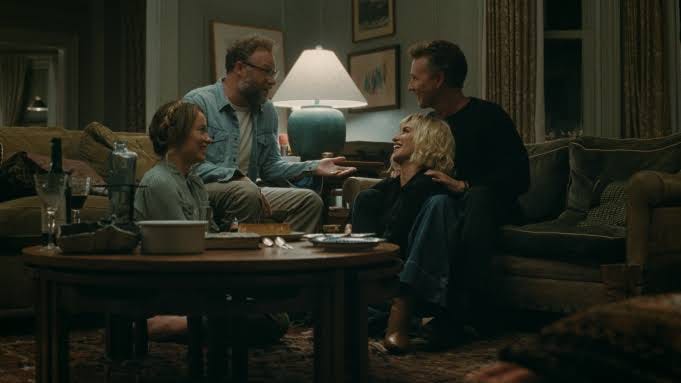
Angela (Olivia Wilde) and Joe (Seth Rogen) have built what looks like a comfortable life from the outside. They have a daughter, a beautiful home, and years of familiarity, but underneath that comfort is a marriage that has begun to suffocate. Their sex life has disappeared, their conversations become arguments, and neither seems particularly fulfilled. Joe has abandoned his dreams of becoming a musician, while Angela has grown restless with the isolation of being a stay-at-home mother. They still love each other, but somewhere between raising a child, paying the bills, and repeating the same routines, they have forgotten how to actually see one another.
Then there are their upstairs neighbors, Pina (Penélope Cruz) and Hawk (Edward Norton), a glamorous couple who seem to exist in an entirely different universe. Their relationship is loud, passionate, playful, and unmistakably sexual, much to Joe’s irritation and Angela’s fascination. When Angela invites them over for dinner, she isn’t simply inviting two neighbors into her home. She is inviting a completely different idea of marriage, adulthood, and desire into the carefully controlled world she and Joe have built.
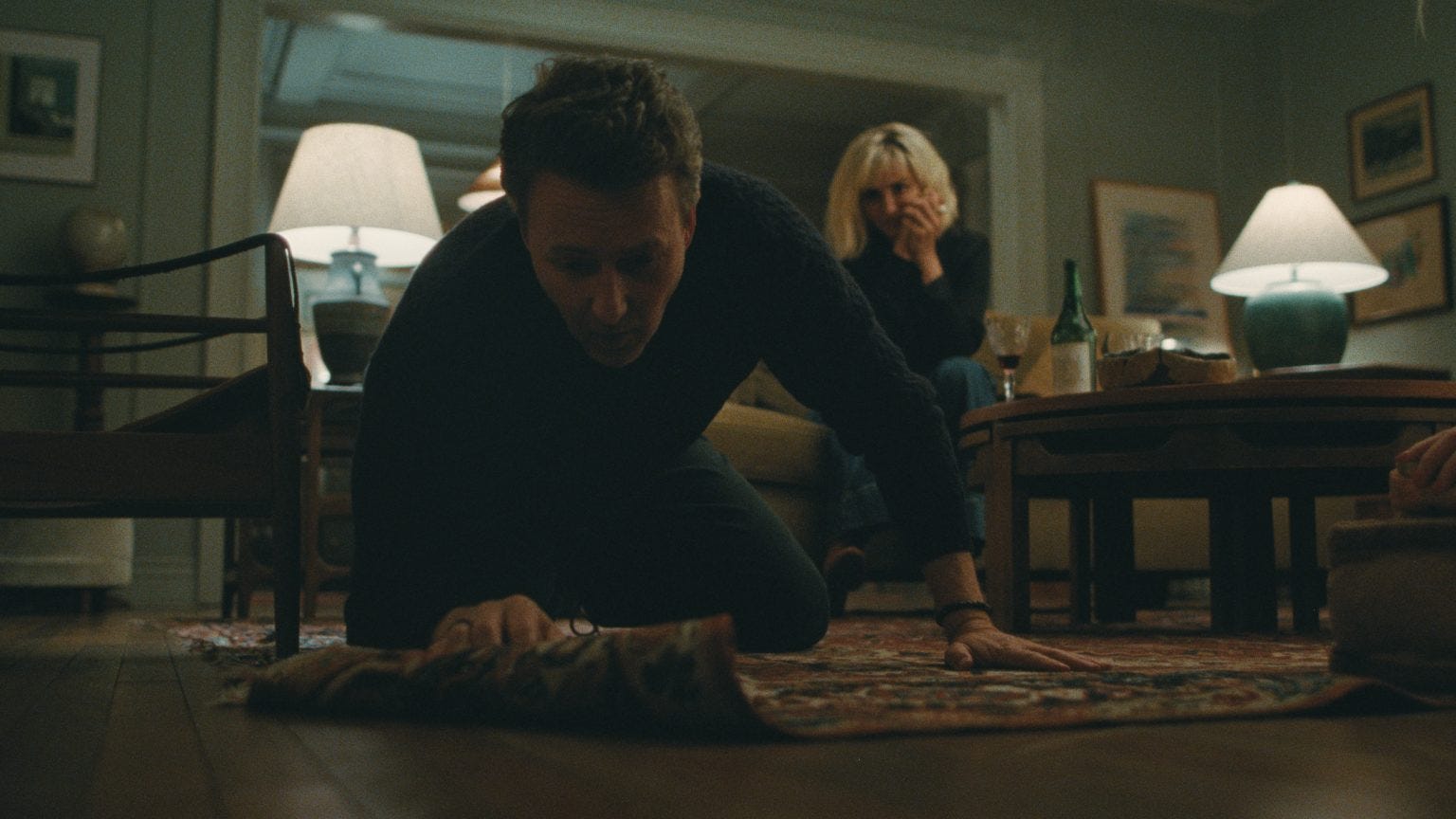
What follows is one of the most entertainingly uncomfortable dinner parties I’ve seen in a while. Wilde understands that the funniest conversations are often the ones in which everyone is desperately trying to pretend that nothing is wrong. Wine loosens inhibitions, attraction begins to blur fantasy and reality, and the evening becomes a strange little experiment in honesty. The movie keeps asking how much we are willing to reveal when we finally stop pretending that we are satisfied.
Wilde’s direction is the real revelation. She turns the apartment into a pressure cooker, knowing when a glance is more important than dialogue, when a silence is funnier than a joke, and when a seemingly harmless interaction is about to expose something these characters would rather keep buried.
The performances are terrific. Rogen brings an unexpected tenderness to Joe, using his comedic instincts to disguise a character deeply insecure about the direction his life has taken. Wilde gives Angela an equally complicated vulnerability, portraying a woman desperate to feel visible again. Cruz, however, is absolutely magnetic. Pina could have easily become a shallow fantasy figure, but Cruz gives her intelligence, warmth, sensuality, and mystery. Norton brings an effortless charm to Hawk that makes Joe’s discomfort completely understandable.
What makes the film work, though, is that sex is never treated as the entire point. The movie is interested in what desire exposes. Sometimes you want another person because you want them, and sometimes you want them because they remind you of a version of yourself that you have lost. For Angela and Joe, the possibility of crossing boundaries forces them to confront questions they have avoided for years: Are they still happy together? Do they still desire each other? Have they confused stability with fulfillment?
What I love most about The Invite is that underneath all of its sexual energy and wicked humor is a deeply compassionate film about loneliness—not the loneliness of being alone, but the more complicated loneliness of being with someone and realizing that you have stopped letting them see you. Marriage can become so comfortable that comfort itself begins to feel like a cage.
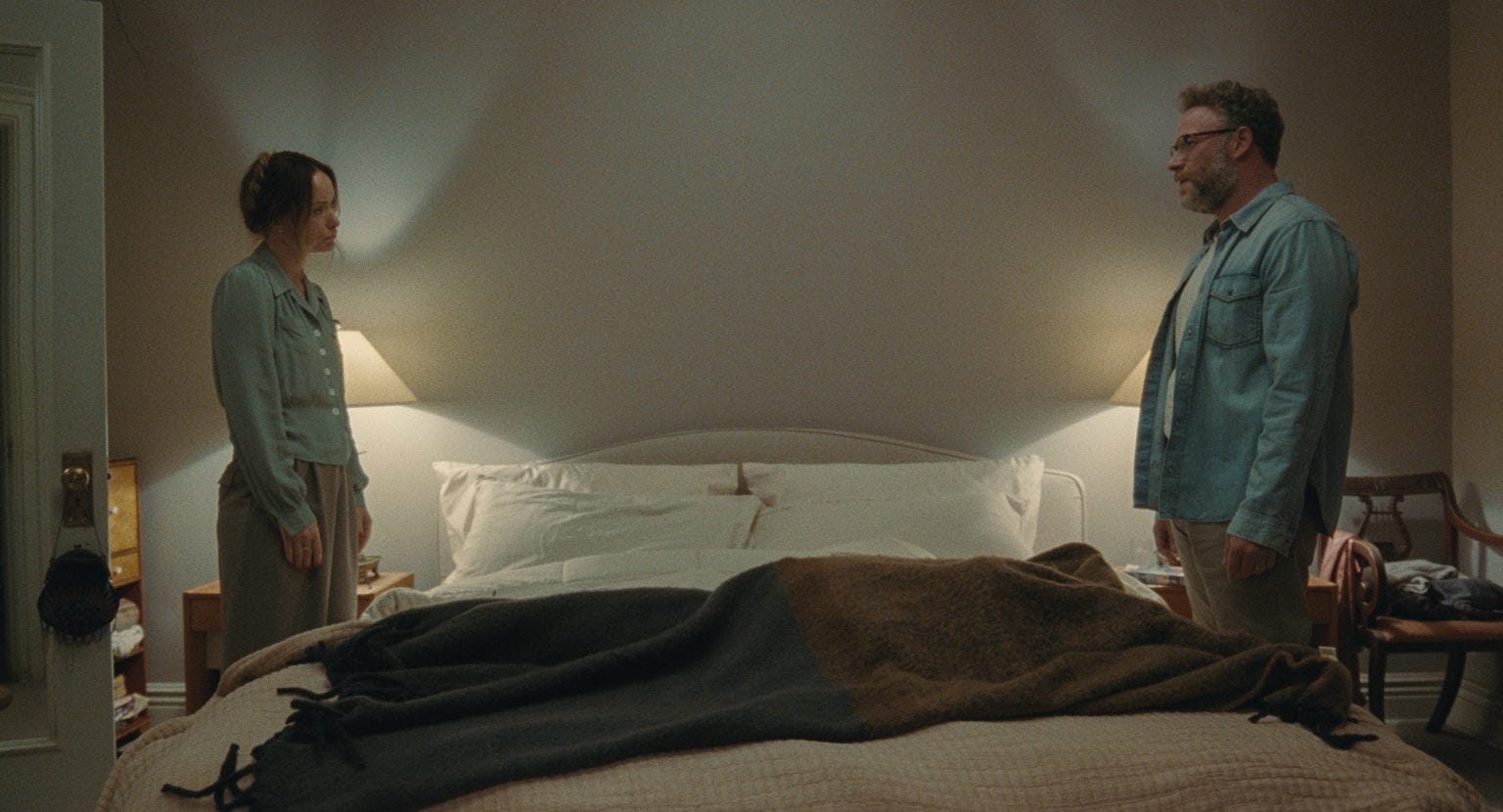
There is no easy answer waiting at the end, and I appreciate that Wilde doesn’t pretend there should be one. Desire doesn’t magically fix a marriage. Honesty doesn’t erase years of resentment. Sometimes all you get from allowing yourself to want something is the uncomfortable knowledge that you have been wanting it for a very long time.
That is what makes The Invite feel so alive. It is funny without being disposable, sexy without becoming shallow, and emotionally vulnerable without losing its sense of play. For me, this is Olivia Wilde’s best film as a director yet, and one of the year’s most unexpectedly delightful surprises. Most importantly, The Invite left me thinking about how easily we can become strangers to our own lives—and how sometimes it takes someone unexpected walking through the front door to remind us that there are still parts of ourselves waiting to be discovered.
Grade: 5/5
No posts
Comments
Nothing yet. Say the first thing.
Sign in to join the conversation.