
“The worst incident of nurdle pollution in Europe” is on our beaches. Mayor Kim McGuinness is not happy and there have been public protests over the weekend.
Sadly, there’s another death to report on the A1, we have movement on the city centre site with the mysterious 70% drop in its value (when it’s finished), and a new partnership between the North East and Homes England.
No 10 North opened for business on Friday with new Prime Minister Andy Burnham joined by regional mayors. Clinical and occupational psychologist Jenny Cozens - an Eyes & Ears regular - has first-hand knowledge of the government decanting to the regions and says it “failed rather spectacularly and very expensively”.
Also today, after years of inquiries, reviews and investigations into grooming gangs, how much more evidence do we need before addressing the gaps we already know exist, asks Debra Cowey, a North East-based sexual exploitation specialist.
Today’s edition ends with a video called ‘Brits were slim in the 70s. Seven things that changed that’.
It’s 15 minutes long. I would encourage you to watch so that you can be as enraged as me about what successive governments have done since 1979. Number 7, in particular, is shocking. The poor man was discredited, disgraced and shunned - then 17 years after his death it becomes clear that everything he said was right all along.
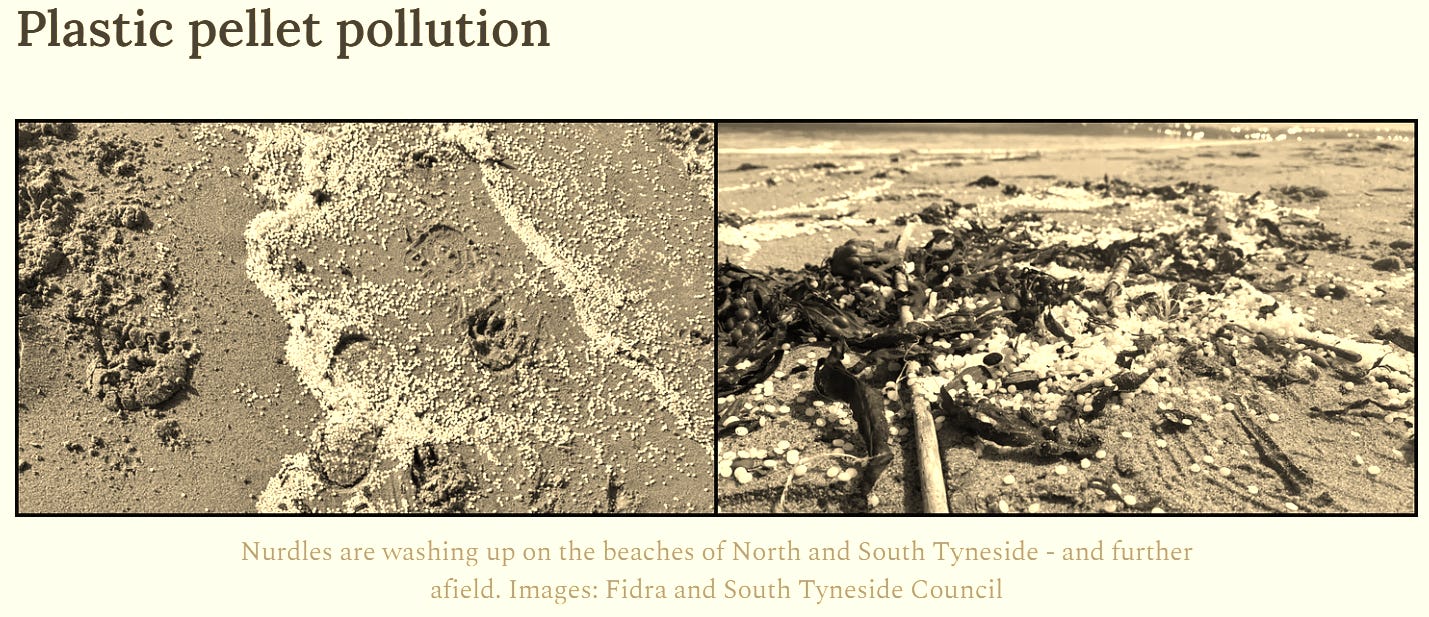
The spillage of millions of plastic pellets into the sea after an accident at the Port of Tyne last Sunday has sparked protests. The pollution is being seen as far north as Blyth and to Seaburn in the south.
North East Mayor Kim McGuinness has demanded that the owners of the two vessels involved pay for the massive clean-up operation. She said: “Sadly, it is already clear this looks like the worst incident of nurdle pollution in Europe, and our clean-up will be long and expensive. We must start from the principle that the polluter should pay, so North East taxpayers do not end up footing the bill.”
What are nurdles, why do they matter, and what will the impact be on the North East? The BBC has a very good explainer here including an interview with Heather McFarlane of The Great Nurdle Hunt website which we mentioned in Friday’s edition (Eyes & Ears 24.07.26).
Plans for a landmark office block behind Newcastle Central Station have finally been submitted for approval three years after they were first unveiled.
The proposed 12-storey development at One Founders Place is in the Stephenson Quarter, an area designated as an Accelerated Development Zone (ADZ) in the Newcastle City Deal signed with the government in 2012 - meaning any growth in business rate income is ringfenced and retained by the council.
A planning application submitted by Founders Place LLP, the partnership between the council and developers PfP-igloo, describes the scheme as a “major mixed-use development that will transform the former Stephenson Quarter”.
“Founders Place will be developed for offices as the primary use supported by a range of other uses including hotels, residential, leisure and other ancillary uses. A mix of uses will ensure that the site is vibrant throughout the day and night.”
The business rate bonus was guaranteed for 25 years so the council still has nine years left to reap the benefit.
In March 2023, Igloo Regeneration’s Peter Connolly spoke to Built Environment Networking ahead of a development conference at Newcastle Civic Centre. “I’ll be discussing exciting projects including the £450 million Stephenson Works scheme in Newcastle”. You can read that article here.
Stephenson Works was the name of the second phase of the Stephenson Quarter development and was later rebranded as Founders Place - when the GDV (Gross Development Value) dropped from £450 million to £136 million.
According to Microsoft Copilot: “GDV is what the whole scheme should be worth on the open market once it’s finished. In practice, GDV is used to judge whether a project stacks up financially. It’s the anchor number lenders and developers use to assess viability, profit, and risk.”
Regular readers will know that I have asked about this 70% drop before…
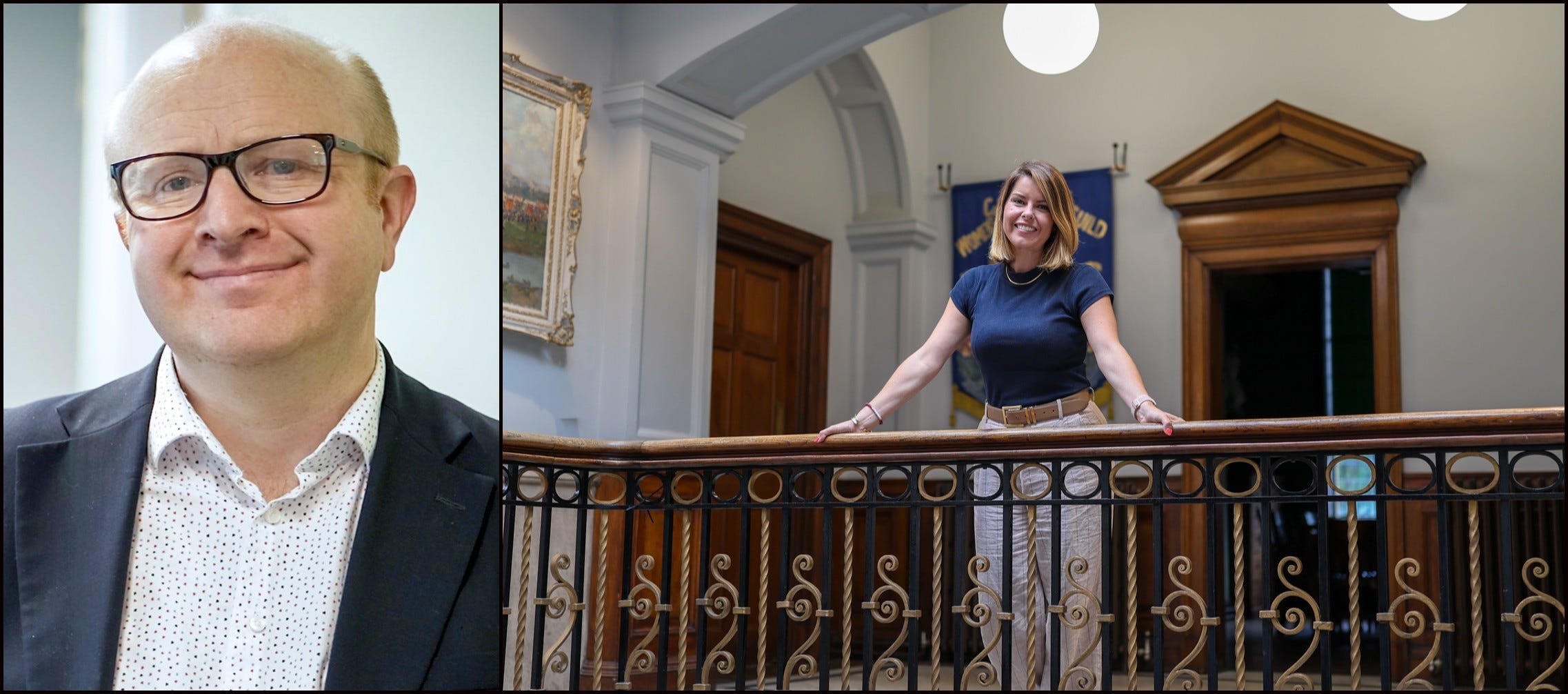
North East Mayor Kim McGuinness and Homes England have agreed a new partnership to accelerate the delivery of major regeneration, housing and infrastructure projects across the region.
At the heart of the partnership is the creation of a joint Major Projects Delivery Unit which will bring together expertise, resources and leadership from the North East Mayoral Strategic Authority, Homes England and local authority partners to unlock complex sites, support major developments and drive forward the region’s growth ambitions.
Tom Bridges, executive regional director at Homes England, said: “The North East has huge potential for growth, and this enhanced partnership, building on our already established Strategic Place Partnership, is exactly the kind of joined-up approach that unlocks it.”
I was driving through Northumberland on Friday afternoon. An unmarked police car with blue lights flashing and siren blaring passed me at speed. Two more police cars followed minutes later. Yes, something bad was happening on the A1. Again.
A fourth car soon followed. Traffic was coming to a halt. A lorry turned off on to a side road. Car drivers behind followed, me included, in the hope the lorry driver knew how to bypass the accident and get us back on to the main route north.
I’d never driven through Belford before. It looked lovely. But all the while I was thinking about what tragedy I was avoiding and how many peoples lives were changing forever as a result of what had just happened.
It turns out that a driver in his 80s died and a female passenger in her 70s is in a serious condition as a result of a collision between a car and a transporter lorry.
Despite protests, petitions, and cross‑party pressure, North Tyneside Council has decided to confirm the closure and sale of High Borrans outdoor education centre in the Lake District by November this year.
Councillor Tracy Hallway, cabinet member for education, inclusion, employment and skills, said: “I know what High Borrans has meant to generations of children and families. But this debate cannot simply be about nostalgia. It has to be about whether North Tyneside Council can responsibly continue to own and operate a residential outdoor education centre over 100 miles away in the Lake District.
“So I have a straightforward question for every councillor supporting this motion. What would you cut to pay for it? Adult social care? Children’s services? Road repairs? Libraries? Parks?”
Since the announcement over the closure of High Borrans (Eyes & Ears 10.07.26), the authority has maintained that the facility requires around £3 million in order to stay compliant, despite £900,000 being spent on the centre in recent years.
The North East received just 57 Green Flag awards for its parks and green spaces this year, the lowest in the country - most regions achieved over 120. An issue, as the BBC reports, could be that councils have to apply for, and pay for, the status. A 7ft bronze sculpture of football legend Brian Clough has been returned to Middlesbrough’s Albert Park after being taken away for repair. The third annual Stottie Week, which begins on August 10, is moving to “another level” after The Big River Bakery’s £25,000 award from Airbnb’s Best of British Fund. There will be a digital trail on the banks of the Tyne and a host of events involving schools and the local community. The family of former Gateshead MP Lord John Horam have announced that he died after a fall on his way home from working at the House of Lords on July 2. He was 87.
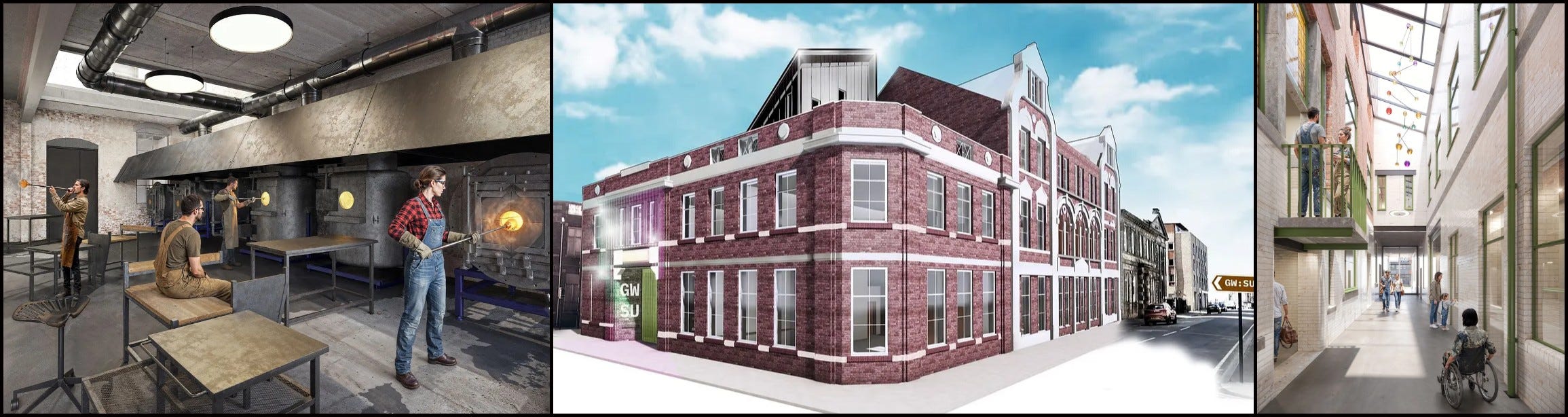
Images have been released to show how Glassworks: Sunderland might look, just days ahead of the proposed closure of the National Glass Centre.
The latter, at St Peter’s Riverside on the north bank of the Wear, is due to cease operations at the end of the month despite a concerted campaign by supporters to save it.
The architect-designed images of the proposed new facility have been submitted with a planning application to Sunderland City Council to develop the former Peter Smith Antiques building, in Sunniside, into a hub for glassmaking, ceramics and creative production. David Whetstone has more in Cultured. North East.
By Jenny Cozens
Clinical and occupational psychologist
Andy Burnham is going to move parts of his government up to Manchester. Good luck on that! I’m sorry, but the drive to locate a significant part of the government’s decision-making process anywhere north of Watford has been tried before - and failed rather spectacularly and very expensively.
In 1995 Quarry House was built at the end of the Headrow in Leeds, replacing an enormous council estate. The idea then was to house the Department of Health & Social Security there in order to make government seem rather less centralised.
The building is huge and spectacular - called The Kremlin by locals. Back then, as part of the enticement to the highest levels of London civil servants, it had a swimming pool and a nursery and was lavishly decorated with an extraordinary carpet in the entrance and art dripping from its walls.
However, if you’ve ever spoken with Southerners you’ll know that the distance from London to any city up north is far, far longer than the distance from those cities to the capital. I was working for the northern regional office at the time, but based in Leeds University as a senior research fellow. This was to make the NHS look as if it was spending less money on staff – supporting research rather than employing yet another civil servant. Remember, it’s all about the wording…
While those in the old northern regional office were delighted with the idea of the HQ moving close-by: not least, it would reduce their huge costs of travel to London meetings. But southern staff were far less enthusiastic. There was a period of ‘sort-of moving’ – sort-of, but not really - for some time.
Of course, the Secretary of State for Health had no intention at all in leaving Whitehall for a city like Leeds, even for beautiful carpets, the promise of a good restaurant, and decent beer. So senior staff spent much of their lives travelling the four or five hours up and down to London for brief meetings with MPs.
Apart from the cost of all this, there was also the problem that the IRA enjoyed issuing bomb-warnings to such a landmark northern building as Quarry House. The alarms would sound and the staff would casually troop down, over the magnificent carpet, to stand outside in the rain for the compulsory half-hour while the building was searched. I always took a raincoat if I was visiting…
Gradually, without its really being noticeable, those senior civil servants who had appeared to be moving north slipped back to their familiar comfort of London and its surrounds: despite long hours of commuting, the poor air, and nothing a northerner would call ‘countryside’... And there they’ve stayed.
I know Manchester is said to be a thriving and exciting city and a who-wouldn’t-want -to-be-there sort of place, but looking at the history of these previous attempts I suggest that Andy waits until global warming makes London an impossible place to conduct any sort of business. And then move north.
It won’t be long.
Jenny Cozens is a clinical and occupational psychologist living in Northumberland. She has worked in the NHS from local services to Whitehall; helped doctors survive their jobs; written books, and been agony aunt to Good Housekeeping and Parents. She is also a regular reader of Eyes & Ears.
You must know people who would value Eyes & Ears. Please share this with them.
By Debra Cowey
Sexual Exploitation & Systemic Reform Specialist
The Government’s national inquiry into grooming gangs marks another significant moment in our understanding of child sexual exploitation. But after decades of inquiries, reviews and investigations, we must also ask a difficult question:
How much more evidence do we need before addressing the gaps we already know exist?
One of those gaps sits in plain sight.
Much of our national conversation rightly focuses on children. Child Sexual Exploitation (CSE) has driven important changes in safeguarding, policing, public awareness and professional practice. That progress should be recognised.
Yet sexual exploitation does not suddenly end at the age of 18.
Coercion, manipulation, grooming and abuse continue into adulthood, but recognition of sexual exploitation often changes. As victims move beyond childhood, they may instead be viewed through the lens of homelessness, substance misuse, mental ill-health, domestic abuse, offending or ‘lifestyle choices’, rather than as adults experiencing ongoing sexual exploitation.
This became the focus of my recent research.
Alongside reviewing policy and practice, I undertook a national consultation with professionals working across safeguarding, policing, health, housing, advocacy and the voluntary sector to better understand how current systems respond to sexual exploitation across childhood and adulthood.
The findings were striking.
Only 10% of practitioners reported being very confident that sexual exploitation is identified before crisis or disclosure. More than half (53.3%) believed adults experiencing sexual exploitation are not adequately protected once they transition into adult services. Meanwhile, 90% reported regularly supporting individuals experiencing repeated or cyclical exploitation.
Perhaps the most powerful insight came not from the statistics, but from one practitioner who simply observed: “Once they are adults, they are seen as making ‘unwise choices’ rather than being exploited.”
That sentence stayed with me.
Not because it reflects poor practice by individual professionals, but because it highlights a wider systemic challenge.
Many dedicated practitioners are working incredibly hard within systems that have developed different legislation, thresholds, policies and safeguarding frameworks for children and adults. The result is that exploitation can become fragmented across services, making consistent recognition and coordinated responses far more difficult to achieve.
It is this pattern that led me to develop the concept of systemic erasure.
Systemic erasure does not mean victims are invisible. It means they may be visible to multiple agencies, yet their sexual exploitation is no longer consistently recognised, recorded or responded to as sexual exploitation.
That has significant consequences.
If exploitation is not recognised, safeguarding responses become inconsistent. Opportunities for prevention and disruption are reduced. National data becomes fragmented. Organisational learning is weakened. Most importantly, people continue to experience harm without receiving equal recognition or protection.
My recently published book, The Systemic Erasure of Sexual Exploitation: Beyond 18 – Structural Inequality in Protection, explores these issues in greater depth. It asks whether equality in protection has truly been achieved and proposes practical reforms to strengthen recognition, accountability and safeguarding across the life course.
The national inquiry provides an important opportunity to understand historic failures and improve accountability. But it should also prompt us to ask whether there are lessons we already know.
Because if we already recognise the gaps within our current systems, meaningful reform should not wait for another report.
The evidence is already telling us where we need to improve. The question is whether we are prepared to act upon it.
Further information, research, policy publications and books are available at:
Coloured Hearts CIC
https://colouredhearts.com/books-and-publications
This video is called ‘Brits were slim in the 70s. Seven things that changed that’. It isn’t your average 70s nostalgia-fest and it’s not really about the 70s but what happened in the years from 1979 onwards.
I didn’t know that the milk-snatching government of the late 70s also scrapped nutritional rules around school meals and turned kitchens into businesses.
There’s a few other things in here about fat, sugar, the food industry and how a leading scientist was wrongfully shunned and disgraced that shocked, surprised - and got me rather annoyed.
Now it’s your turn.
No posts
Comments
Nothing yet. Say the first thing.
Sign in to join the conversation.