
Here’s a famous picture. It’s by the master Flemish painter Jan van Eyck, who lived and worked in Bruges in the first half of the fifteenth century, where he painted his celebrated masterpieces, the Ghent Altarpiece, the Annunciation of Mary and this, The Arnolfini Portrait.
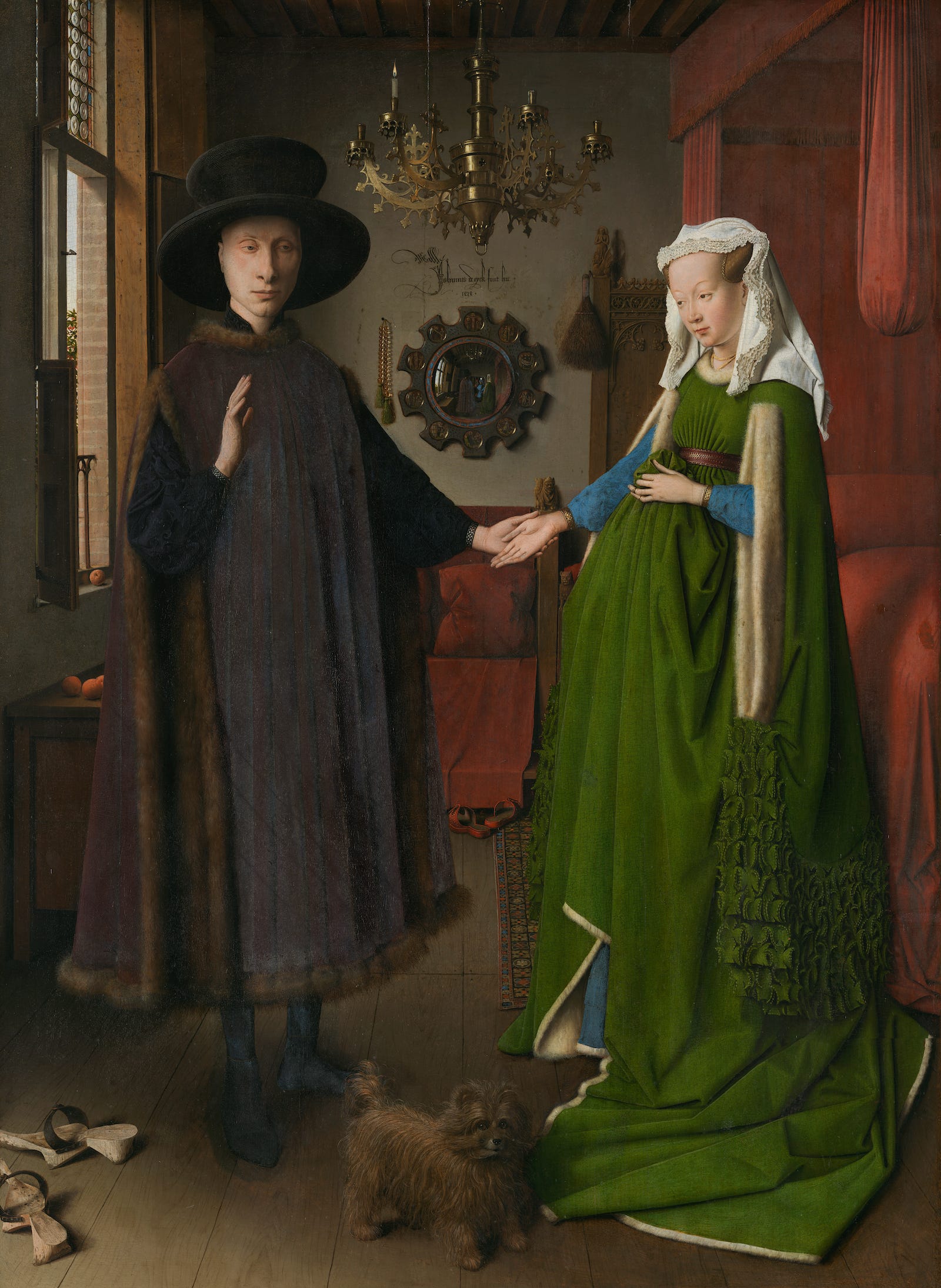
You’ve probably seen it before. I have. A lot. A small reproduction hangs in my living room, just behind me, and I am a regular at the National Gallery in London, where the original hangs, alongside what is believed (and what I believe) to be the artist, Van Eyck’s self-portrait:
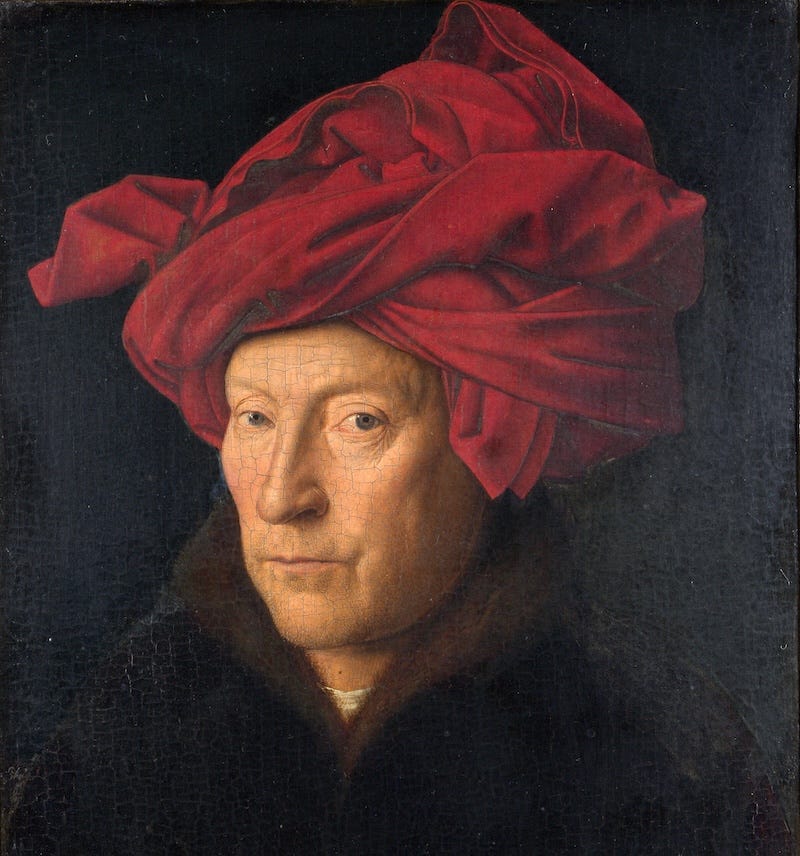
Look in to those eyes. Their coldness, combined with the tight, pursed, lipless mouth does not give the viewer a feeling of pleasure. You feel judged, and found wanting. But you are wanting, aren’t you? Van Eyck knows what’s wrong with you, he knows what to expect, and he is right. That is why you are disturbed.
Check out his wife:
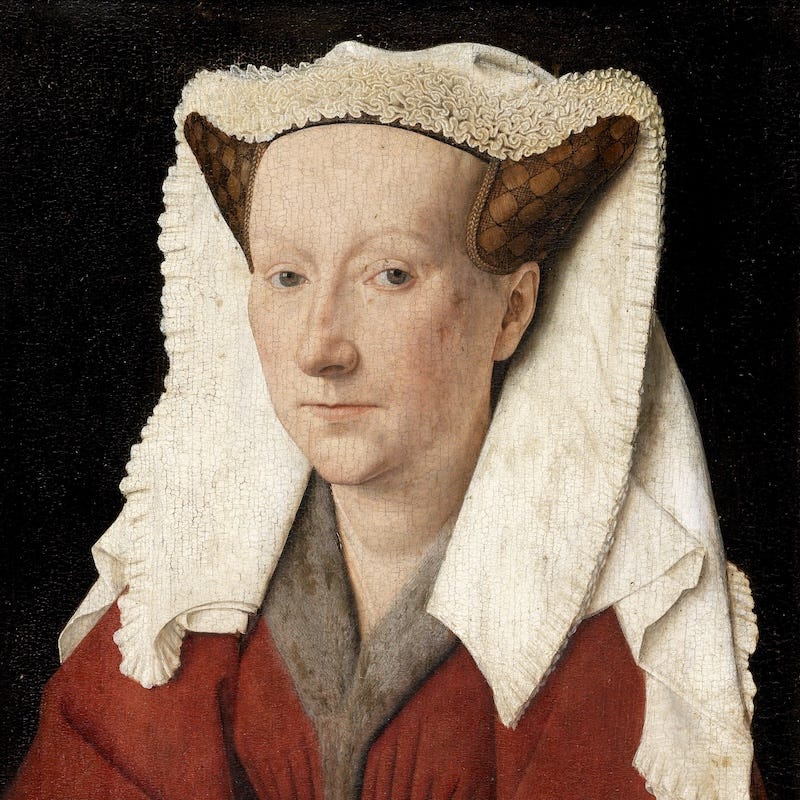
One supposes they got along well. She — yes, it is a she — is a little softer, a little more ready to accept she might be wrong, and there’s a touch of disappointment with life, about her right eye (our left) and her mouth might warmly titter, but her jaded left eye knows your game.
The tragedy then of the Van Eycks is that they refuse to be fooled, one of the luxuries of the human condition. That said, innocence is only one half of the pleasure of surrender, the other half, adoration, although it is not depicted on their faces here, was no stranger to them.
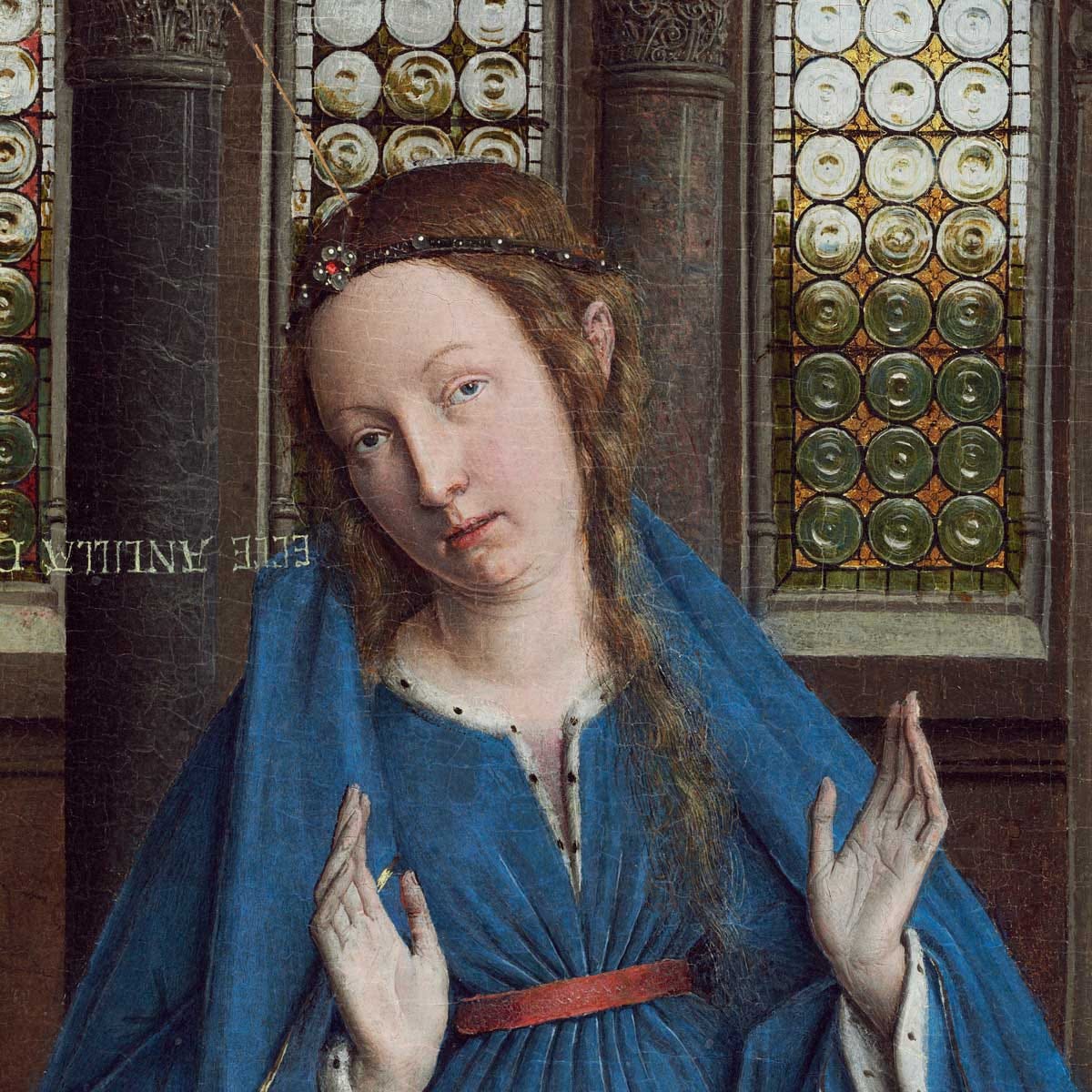
Take a look at one of Jan’s depictions of the Virgin Mary:
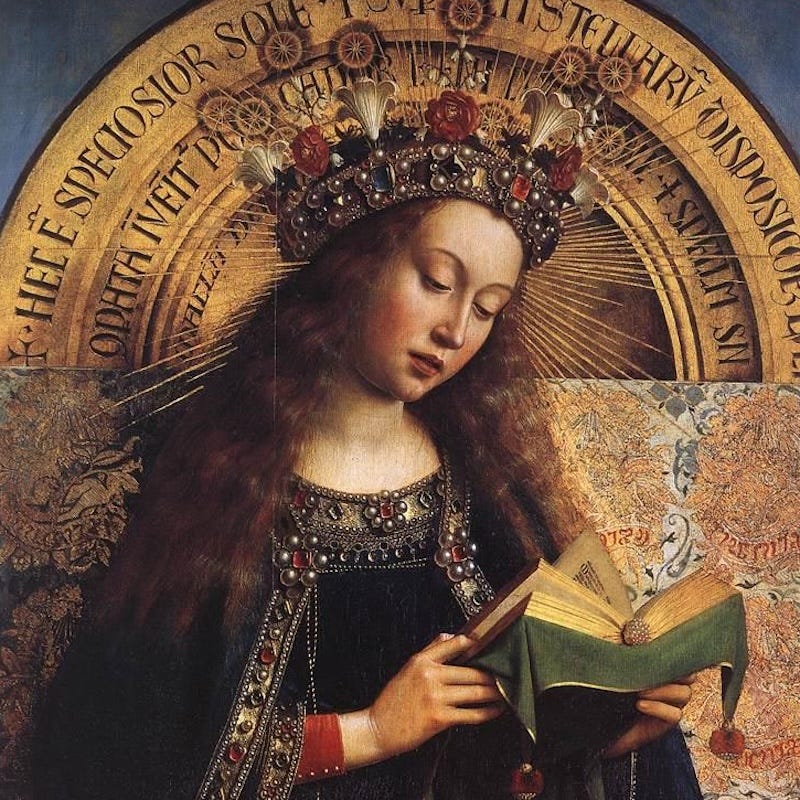
Van Eyck adores one half of Mary, the material presence of her. He adores it so much that we find ourselves closer to it, through him. The perfection of her flesh, and through that, the flesh of the world, are one in Van Eyck, who strove, like the great Flemish artists who followed him, to reconcile God with the world.
But then, look at her here. This is the Annunciation in which she is being told by Gabriel that she’s going to be the mother of God (the words express her modesty ‘I am but a handmaiden’). Mary here is also lavishly beautiful as a presence, but hardly the mother of God. She looks cynical and gormless, like an idiot savant.
You wouldn’t call Gabriel, the messenger of the Lord, innocent either under Van Eyck’s brush. He looks almost malevolent, not quite, but there’s not much warmth there. Perhaps a touch of mischief. To me Gabriel is thinking ‘Yes, it’s good news, but you’ve got some explaining to do with old Joe.’
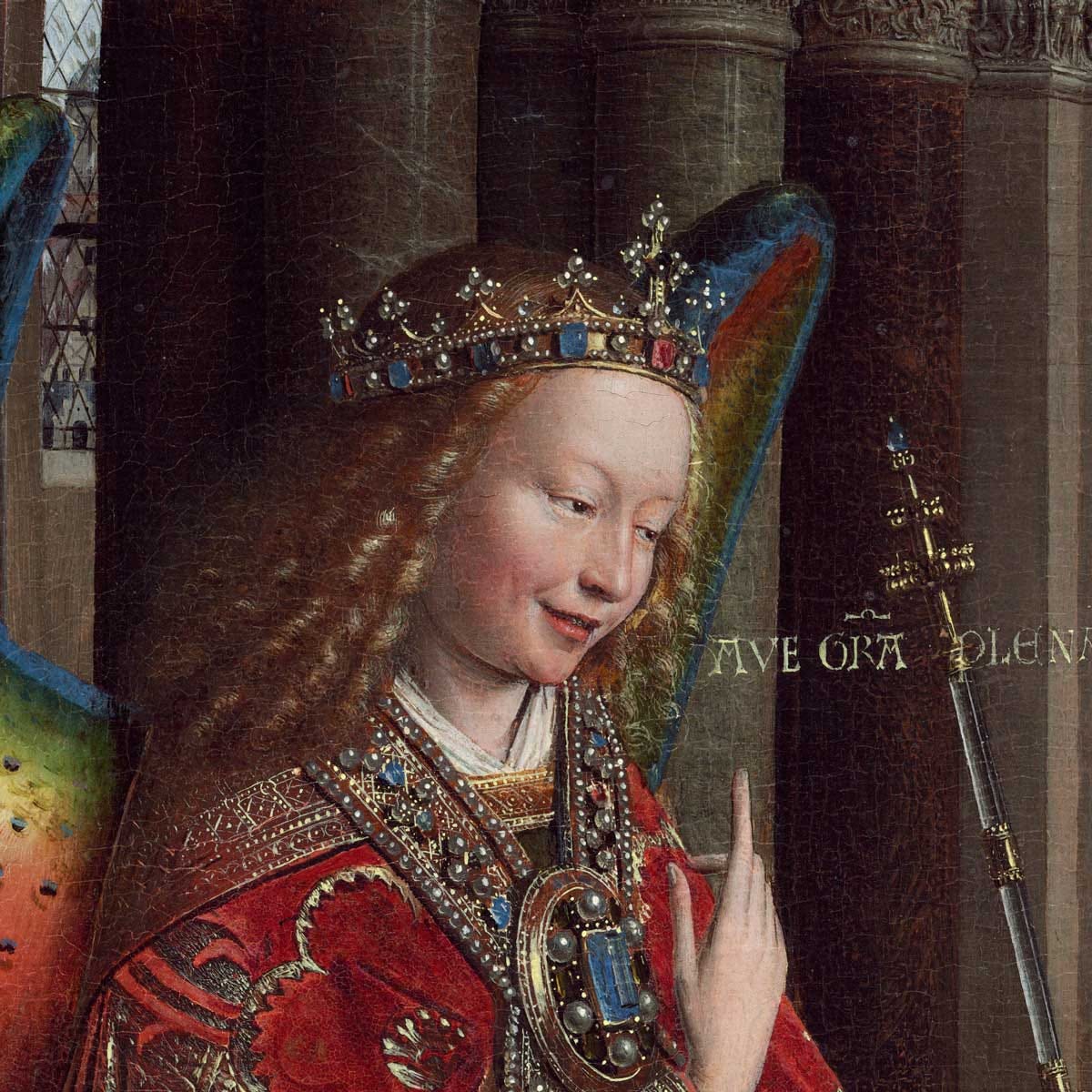
Did Van Eyck want to express these characteristics? Of course he did, he was one of the world’s greatest artists. He knew what he was about. It is just that his love, such as it was, is ice cold. There is no human feeling at all in his paintings, which is what makes them so fascinating.
Compare Van Eyks’s faces to Rembrandt’s.
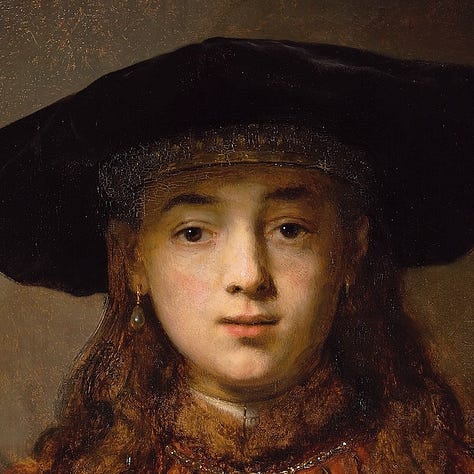
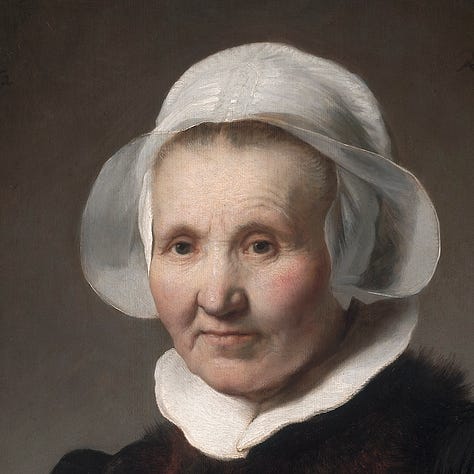
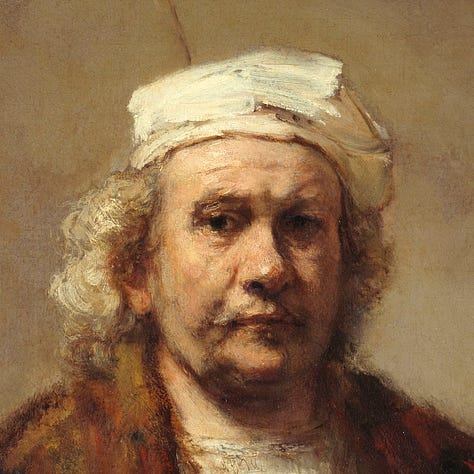
These are overflowing with the subterranean warmth of the human heart. You can stare into the eyes of these people for hours, and never get to the end of them. No so with Van Eyck’s characters, who astonish, but never absorb. Van Eyck was simply not as interested in human beings as Rembrandt was.
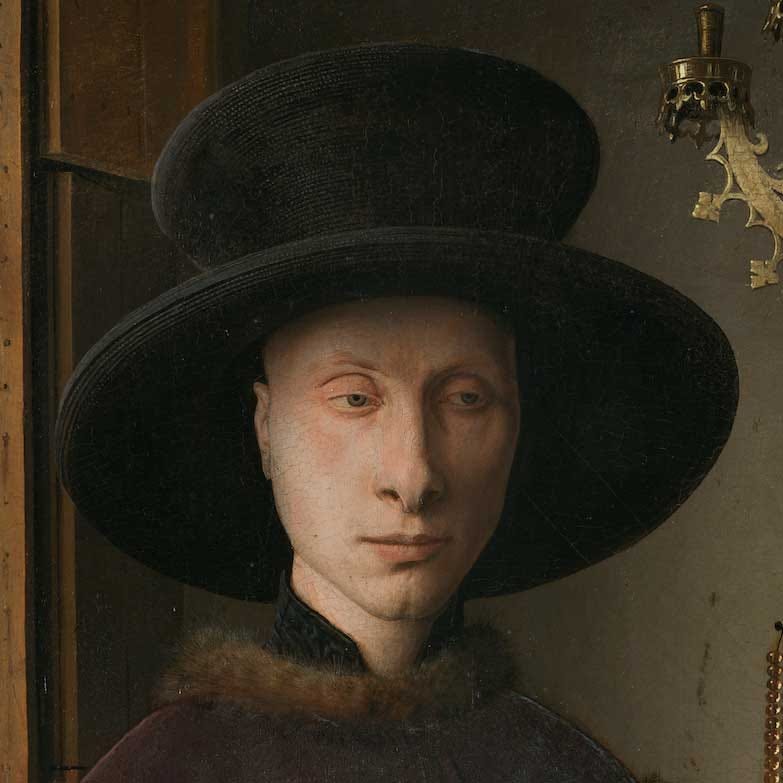
Van Eyck was interested in another kind of meaning; the strange and elusive meaning of the context which, in his work, is not subordinate to the extraordinary details, but arises from them. And this is what second-rate minds, snared by the fascinating facts, miss.
Take the famous mirror, in the Arnolfini.
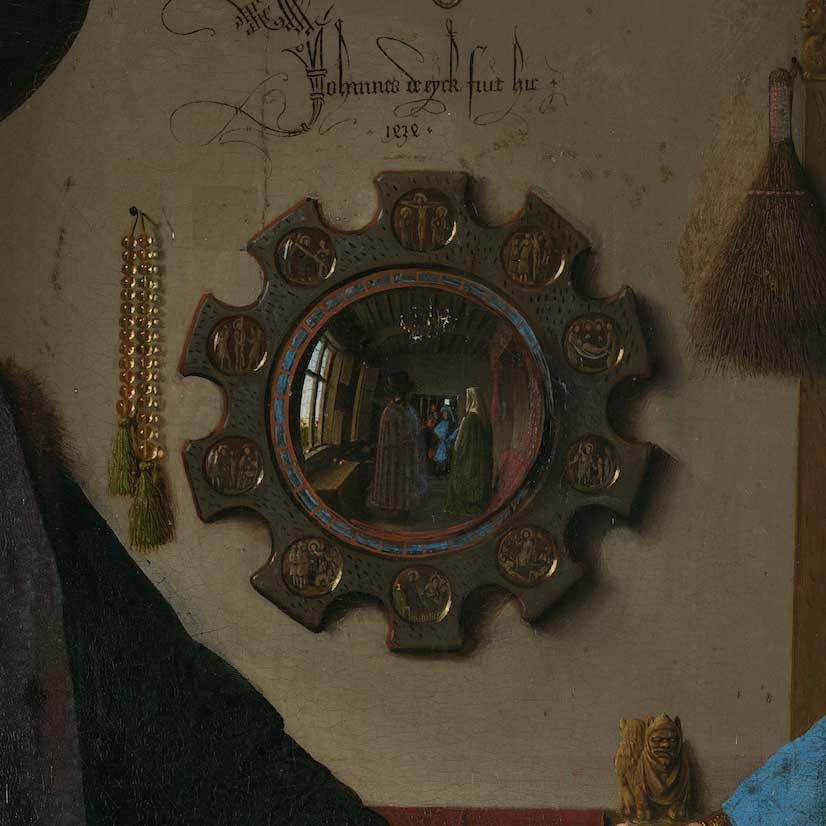
Here, as is well known, you have the back of the subjects, the artist, a fourth person (probably you, the viewer, in your nice red cloak) and, surrounding them, the stations of the cross, painted in breathtaking detail (each of those little images of Jesus is the size of your littlest fingernail1). Interesting isn’t it?
Look too at Van Eyck’s supernatural ability to render the materiality of the world, the sensation of it. We naturally bend into the picture to marvel at the brass of the chandelier, Arnolfini’s wooden clogs and and his wife’s wool and miniver-lined dress. All most interesting…
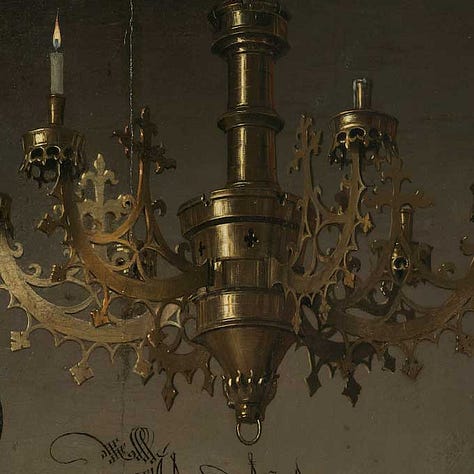
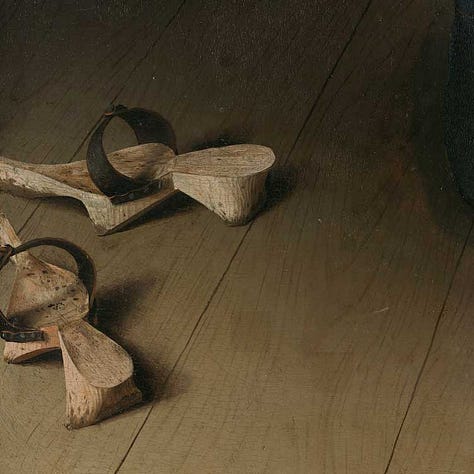
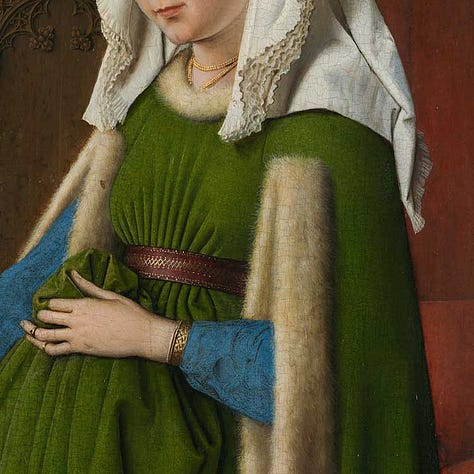
But my point is that these details, along with the various readings of the painting are secondary. It is merely interesting to speculate on whether, for example, this is an image celebrating a marriage proposal or, as is more likely, a memorial portrait mourning a death.2
It is merely interesting to consider the enormous wealth of these two people (2000 red squirrels would have been killed for the miniver, and the length of her hugely expensive dress of vivid green, when unfolded, would have been eleven yards long), and how this picture commemorates the rise of the new bourgeoisie.
And it is merely interesting to speculate on whether the wife here is pregnant (probably not), or on what the dog represents (fidelity and loyalty) or the oranges (more wealth, or fruit of the Tree of Knowledge?), or on why Arnolfini himself looks like Vladimir Putin (an ancestor? a time machine?).
Don’t get me wrong. Merely interesting is interesting. You have to ask these questions when faced with a work of art like this, and everyone does. I say that ‘second rate’ minds are only interested in them because, once they’ve exhausted the merely interesting facts, they move on, job done.
It is in the whole painting that Van Eyck’s truth is revealed, something that gallery goers very rarely take in, if at all. They bend in, they nod away at their audio guides, they take a photo with their phones, they chatter about technique, and they move on, missing the truth of this and of every other painting.
The truth is in the whole. As Schopenhauer wrote, ‘You must treat a work of art like a great man: stand before it and wait patiently till it deigns to speak.’ This means you don’t go in with questions and comments, what does this mean, what does that mean, ooh, look at the brushwork here, isn’t that the artist’s reflection…?
A great work of art does not, ultimately, speak in this way. It does not excite speculation, but stillness, and it does this through the whole, through the one thing the art meant to say, not the many things which contribute to that. If you ever have the opportunity to stand before the Arnolfini…3
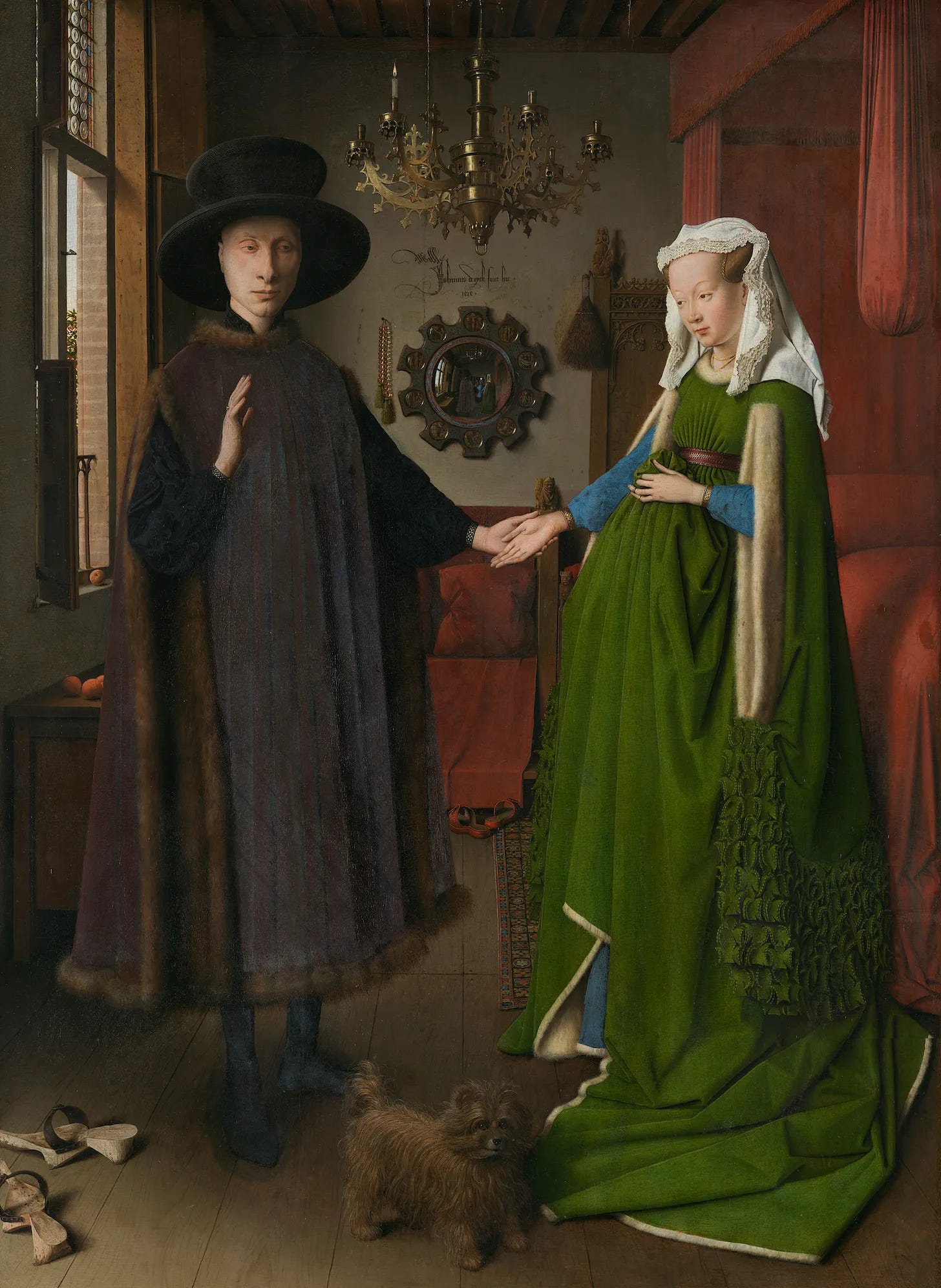
…wait patiently. Stand in stillness before the whole. Then you’ll hear a language you’ve never spoken, but which speaks directly to your innermost.
Of course there’s no need to go to the National in London. That might be impossible. There’s no need even to visit the national galleries of France, Holland, Austria, Spain or Italy — although if you visit the capital cities of those countries and decide not to take in their masterpieces, you’ve made a mistake.
There’s no need because such masterpieces are everywhere, painted with a greater hand even than Van Eyck’s. And as with The Arnolfini Portrait, to hear the language of these landscapes and portraits you must not go in with questions and comments. Wait patiently, till they deign to speak.
And was painted with a single hair!
The date of her death, the light on the chandelier, Arnolfini’s black dress and the stations of the cross on her side taking place after Christ’s death all suggest the latter.
And it goes without saying that a reproduction on the screen here, deprived as it is of aura, cannot possibly capture this. Please don’t think you are actually looking at the Arnolfini now, you’re reading about it.
Comments
Nothing yet. Say the first thing.
Sign in to join the conversation.