
During our 9-day Nile Cruise, we visited two temples that were each cut into thousands of pieces, then reconstructed at a different site. They even saved the stone dust from the sawed areas to refill between the stones. The Egyptians are very serious about their antiquities.
We were surprised by the level of security in hotels, airports, and around the temples, pyramids, and museums. To access many of these properties, a bomb sniffing dog first circled our bus. We entered through metal detectors and had all bags scanned. There was a clear police presence, though it wasn’t overwhelming.
But perhaps most surprising were the two guys in business suits with Uzi Pistols on their hips on our bus and accompanying us everywhere we went. It took Denise and me two days to spot the weapons, but when I did, I asked Sharif, “Is that really necessary?” He explained there had been a terrorist attack in 1997 at the Temple of Hatshepsut in Dayr al-Bahri.1 Six gunmen killed 62 people, primarily tourists, during a 45-minute assault.
After that, we had police everywhere…but seeing such a large presence made people uncomfortable. So most tour companies employ private security like those that travel with us. —Sharif
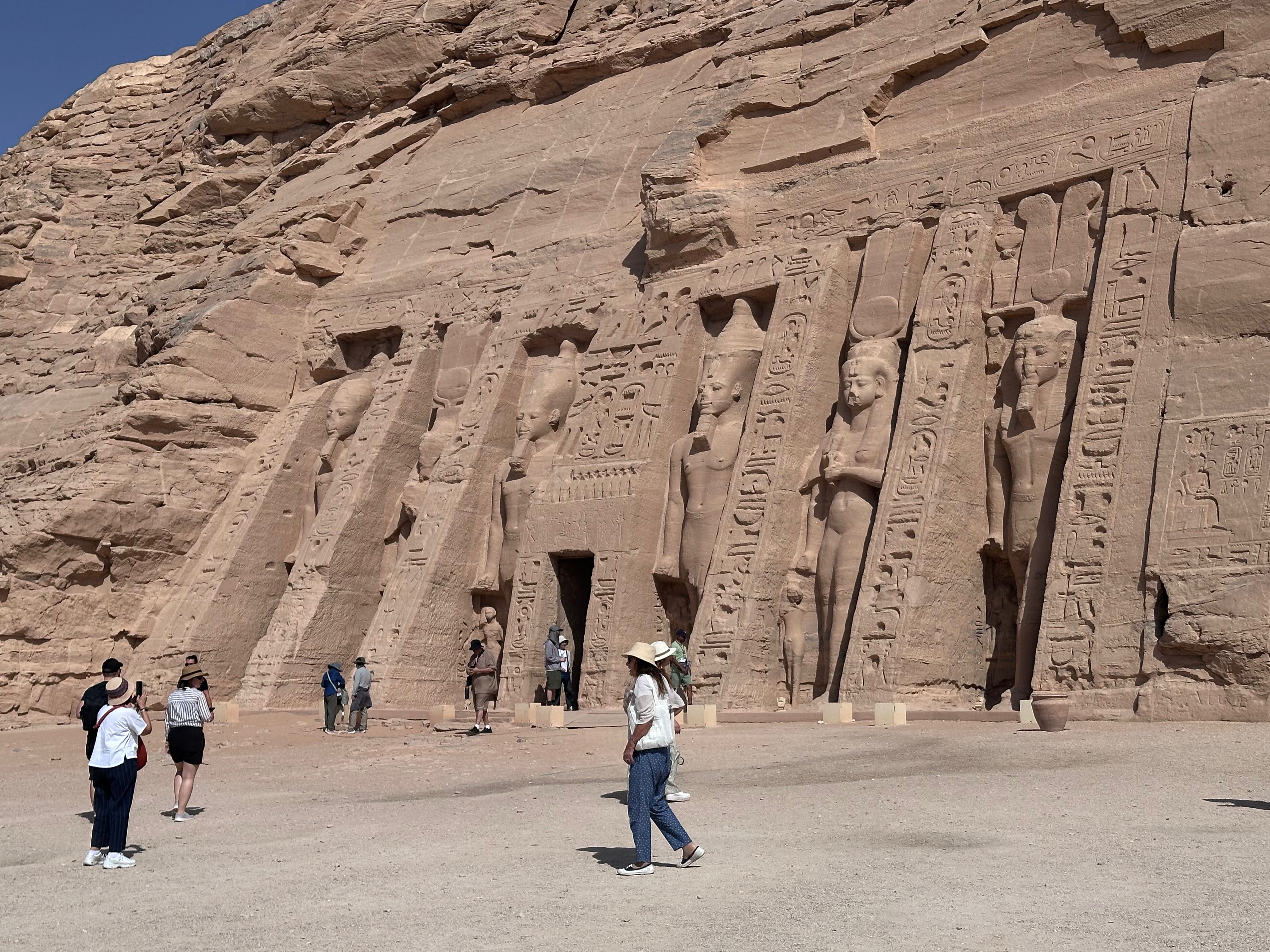
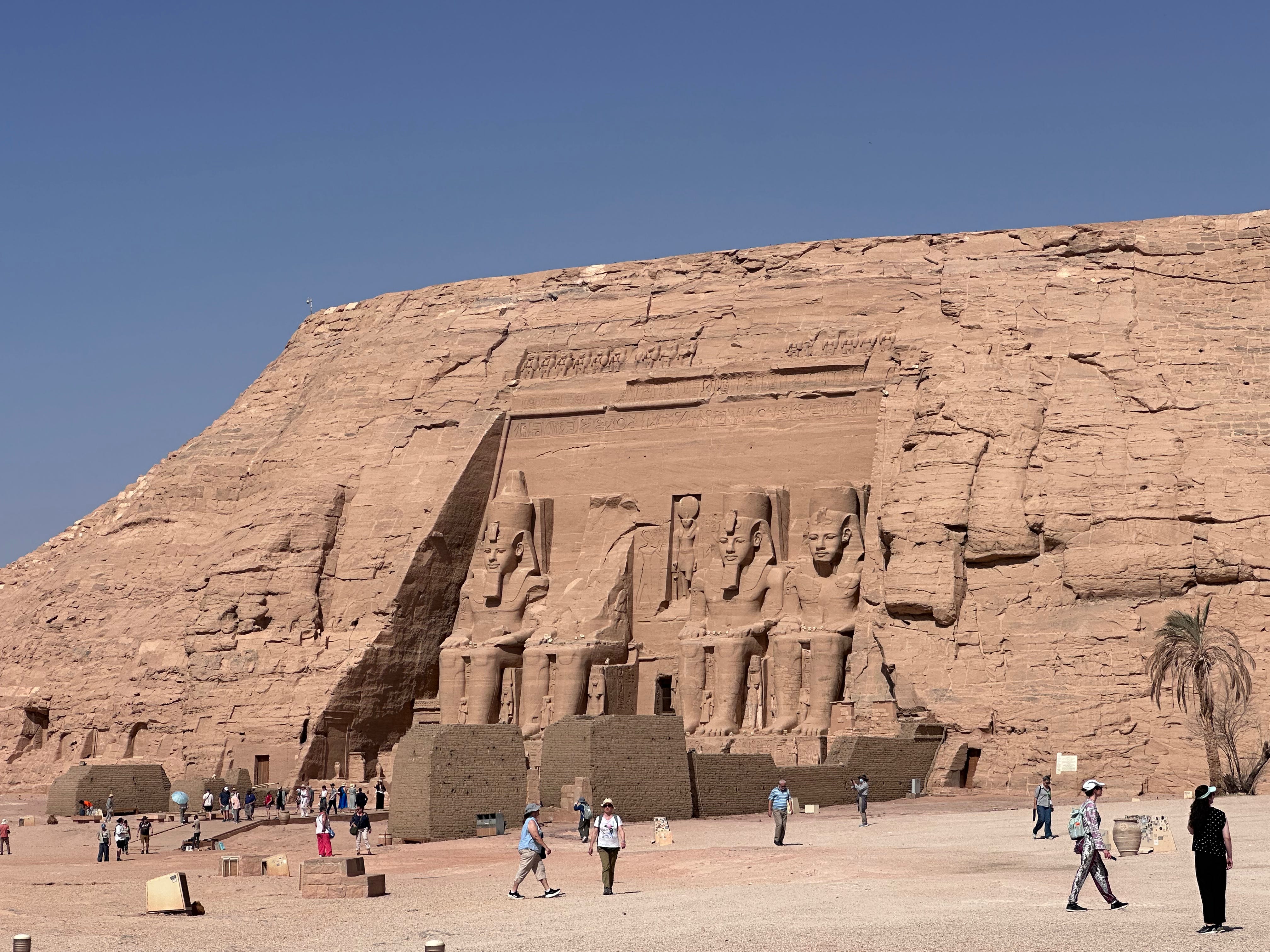
One of the things we like about Uniworld is that nearly everything is included in the price of the cruise. However, as Abu Simbel is over 140 miles from Aswan, where our boat was docked, this trip by plane came at an additional cost. The complex is situated very close to the Sudan border, now next to Lake Nassar. Built between 1264 BC and 1244 BC. Over the following centuries, this area became a giant dune. Discovered by a Swiss researcher in 1813, he wrote:
When we reached the top of the mountain, I left my guide, with the camels, and descended an almost perpendicular cleft, cloaked with sand, to view the temple of Ebsambal, of which I had heard many magnificent descriptions. There is no road at present to this temple... It stands about twenty feet above the surface of the water, entirely cut out of the almost perpendicular rocky side of the mountain, and in complete preservation. In front of the entrance are six erect colossal figures, representing juvenile persons, three on each side, placed in narrow recesses, and looking towards the river; they are all of the same size, stand with one foot before the other, and are accompanied by smaller figures... Having, as I supposed, seen all the antiquities of Ebsambal, I was about to ascend the sandy side of the mountain by the same way I had descended; when having luckily turned more to the southward, I fell in with what is yet visible of four immense colossal statues cut out of the rock, at a distance of about two hundred yards from the temple; they stand in a deep recess, excavated in the mountain; but it is greatly to be regretted, that they are now almost entirely buried beneath the sands, which are blown down here in torrents. The entire head, and part of the breast and arms of one of the statues are yet above the surface; of the one next to it scarcely any part is visible, the head being broken off, and the body covered with sand to above the shoulders; of the other two, the bonnets only appear. It is difficult to determine, whether these statues are in a sitting or standing posture; their backs adhere to a portion of rock, which projects from the main body, and which may represent a part of a chair, or may be merely a column for support. — Jonh Lewis Burckhardt, Travels in Nubia.
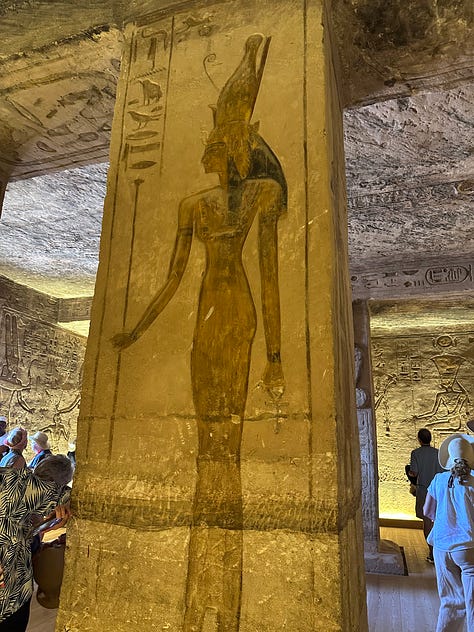
The complex was relocated in its entirety in 1968 so that it would not be submerged by Lake Nassar and the Aswan Dam reservoir.2 When I say in its entirety, I am not kidding. Starting in November 1963, they built a cofferdam around the temple to protect it from the rising waters. This 370-meter structure was extended 27 meters when the 1964 floods threatened to top the structure. Still water seeped in, requiring the installation of drainage tunnels, a pumping station, and drilling rigs to drill 15 deep wells. They then removed 300,000 tons of rock to free the temple from the hill into which it was built.
Scaffolding was erected inside the temple. They removed the roof and worked their way down … numbering more than 1000 20-30 ton pieces. After these were transported on sand cushions 208 meters further inland, they began reassembling the blocks onto a foundation. After assembling the Temples, a protective dome was constructed over them to protect them from the 300,000 tons of material removed from the original site. They also installed electric lights and a ventilation system hidden in the domes. The following short video provides a glimpse into the scale of the engineering challenge.
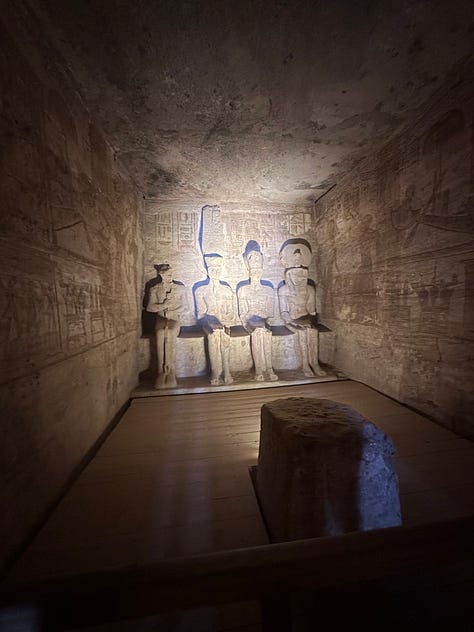
What makes this story even more fascinating is the fact that the ancient people were even more precise than their 20th-century counterparts. You see, Ramesses II was a bit full of himself and often placed himself alongside the Gods. (See left photo in gallery above.) He ordered that the light streaming in from the opening of the temple illuminate his face twice a year (on his birthday and the anniversary of his coronation). His ancient builders got it right, but the modern ones were off by 5mm … missing his face on these important days.
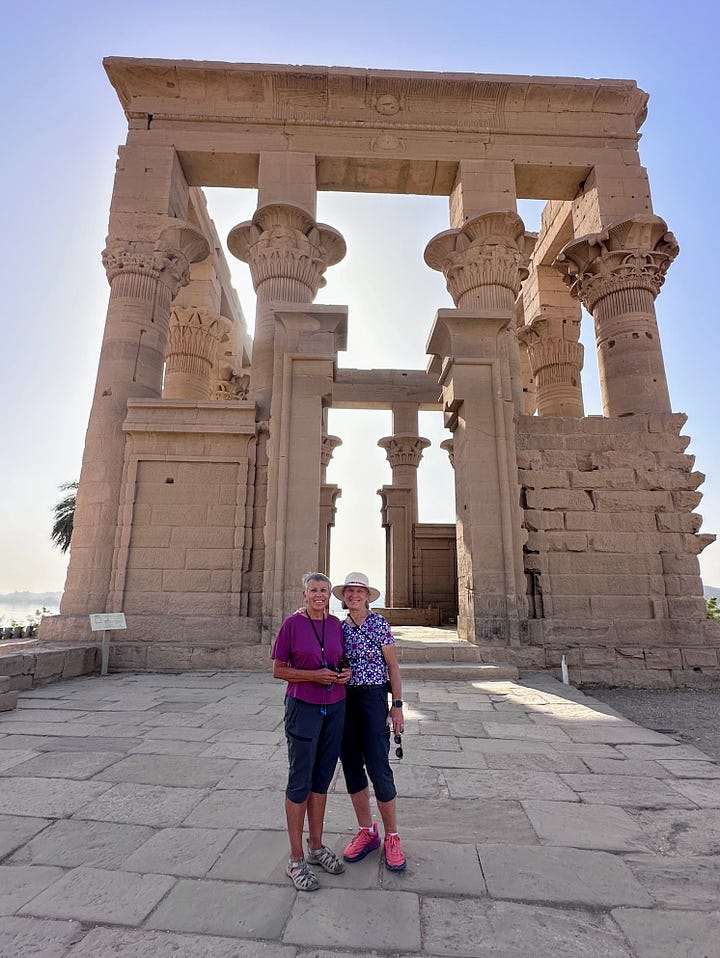
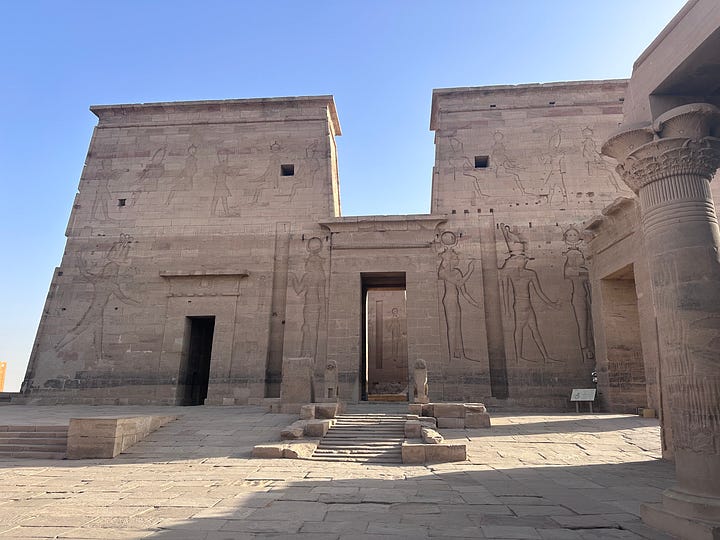
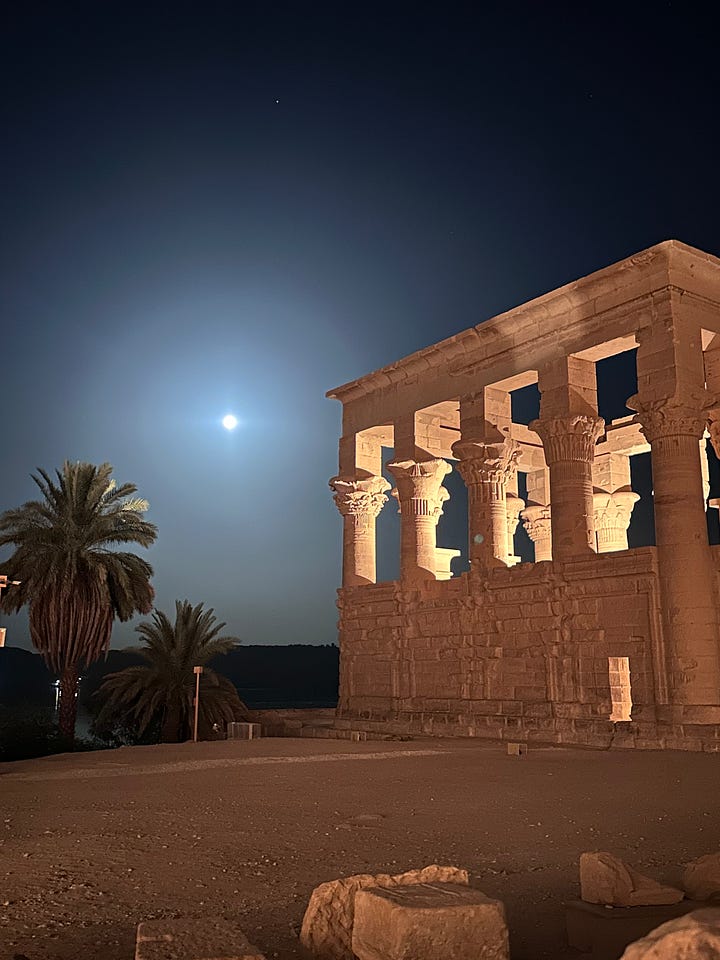
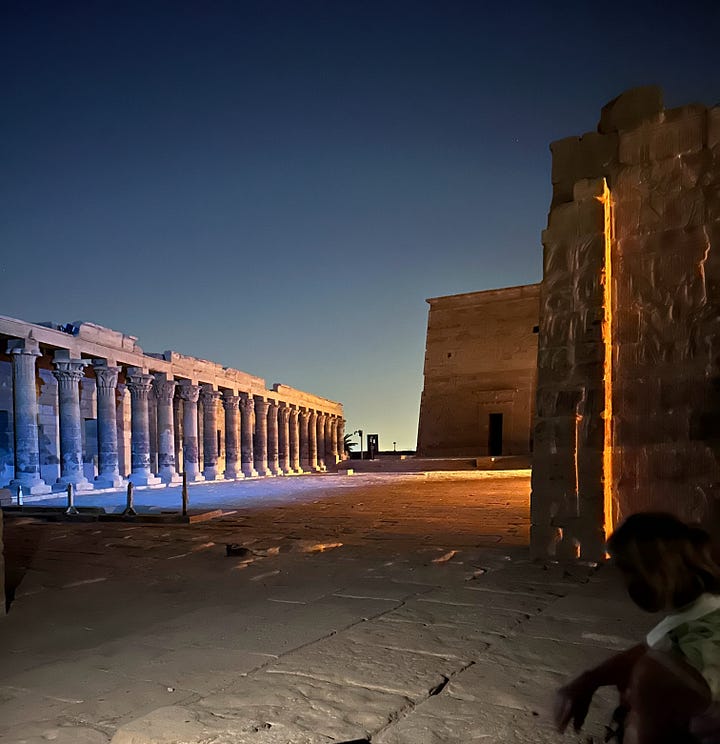
We also had the opportunity to visit a temple on an island, first at night and then the next morning. The evening light show included music along with a theatrical recording of a conversation between Isis and Horus. When we visited the next day, we learned that it was also part of UNESCO's international campaign to save the monuments of Nubia, which ran from 1960 to 1980. In this case, the temple was originally on an island submerged by floodwater and relocated to Agilkia Island, 500 meters away. Many consider this to be “the greatest archaeological rescue campaign of all time.”
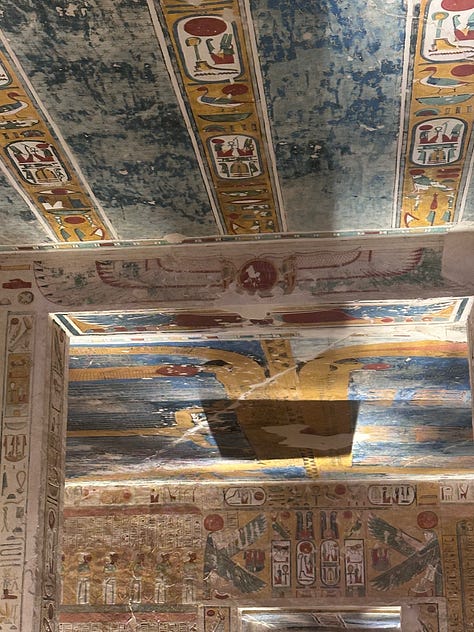
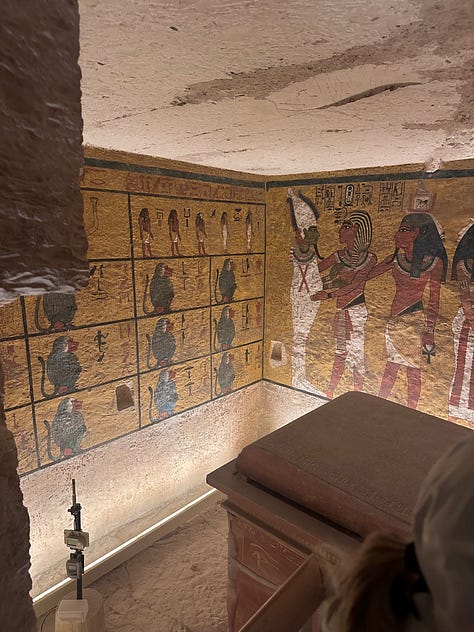
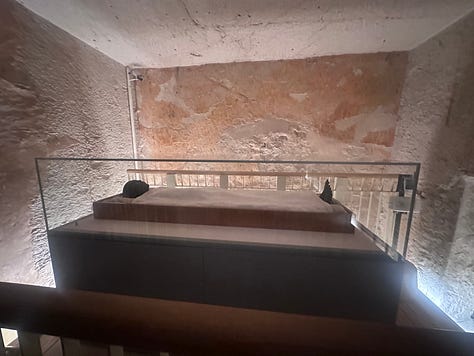
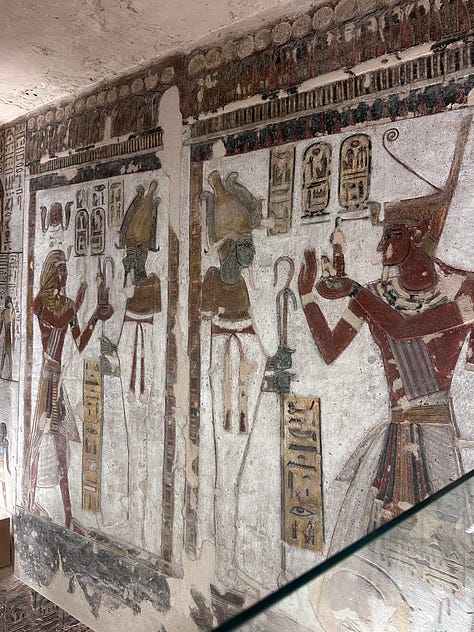
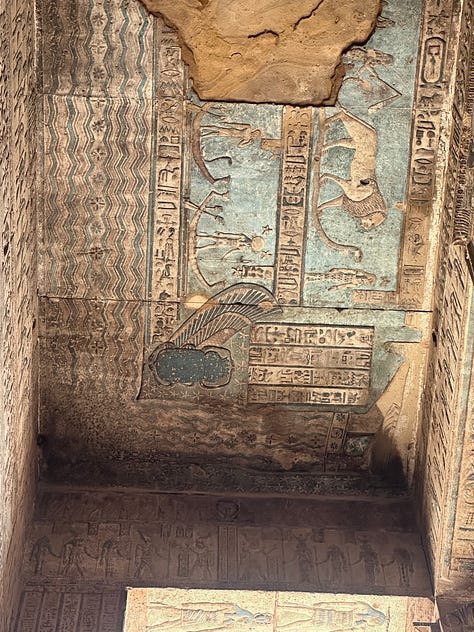
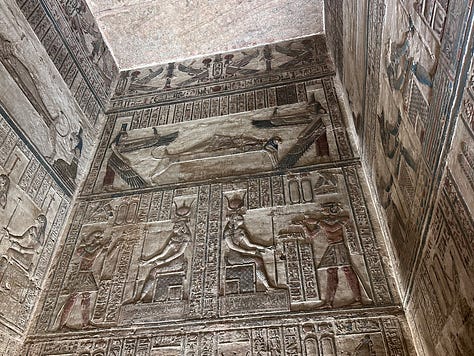
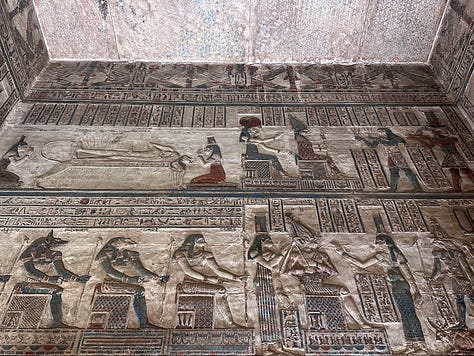
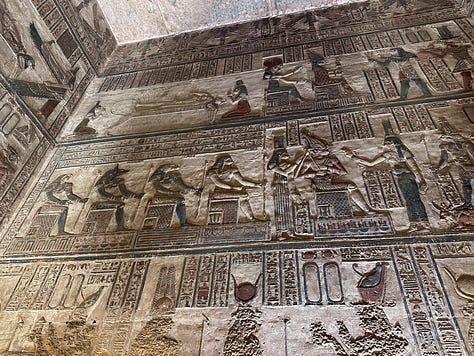
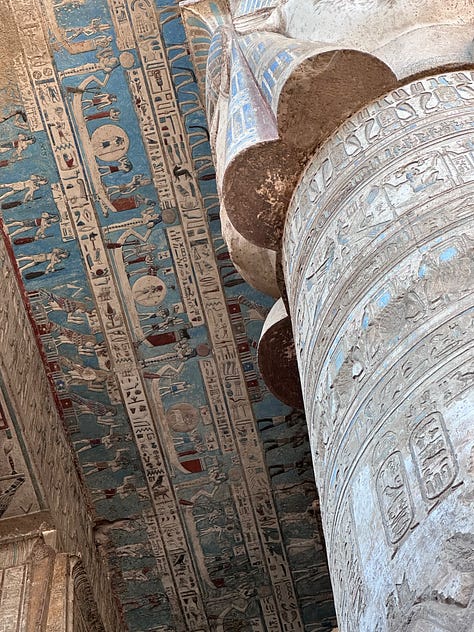
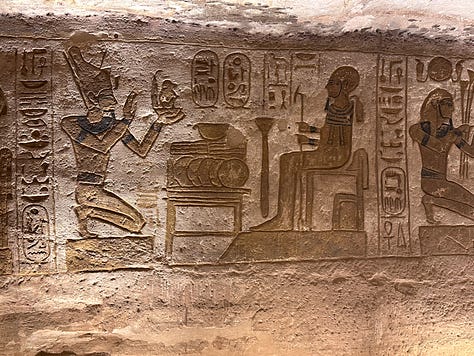
I’ve included photos of the magnificent colors you can see in many of the Temples. We learned these vibrant colors were created by grinding natural minerals (malachite, iron oxide-rich ochre, etc) and mixing them with binders like animal glue. They then applied the paint to freshly plastered surfaces. It really is remarkable how vibrant the colors remain!
Our trip ended back in Cairo, visiting the pyramids. I’m happy to write about this next time, but I don’t want to bore you. Let me know if you would like me to return to a more Portuguese-centric topic.
Até à próxima vez,
Nanc
BTW: we visited this Temple.
For a more thorough explanation of the process and some interesting photos, see An Epic Face Lift.
Comments
Nothing yet. Say the first thing.
Sign in to join the conversation.