
Following is a guest post from Paul Cummings, Arkansas-based creator of Handy Dandy Voter.Citizens are often told that if they care about an issue, they should contact their elected representatives.
Call the office. Send an email. Write a letter. Attend a meeting. Make your voice heard.
That advice is well-intentioned, but the system behind it is strained.
Legislative offices can receive enormous numbers of messages. Constituents may wait on hold, navigate contact forms, or write emails without knowing whether anyone will read them. Officials and their staff face the opposite problem: public input arrives through different channels and formats, with no simple way to determine what the district as a whole is asking them to do.
Citizens are encouraged to speak, but neither side has a reliable way to measure whether they were heard.
Handy Dandy Voter was created to address that gap. Although the platform includes voter information, civics education, government records, and candidate information, its central purpose is helping citizens regain a meaningful voice between elections.
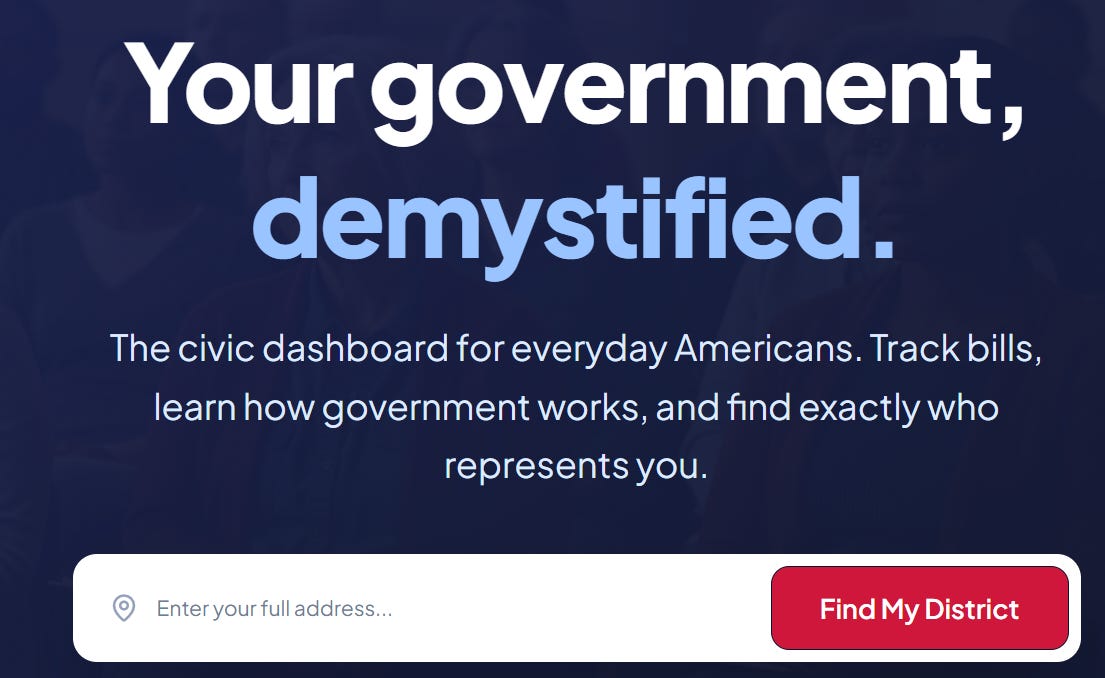
Most civic websites focus on Election Day, but democracy does not stop when the polls close.
Government continues making decisions every week. Legislatures vote on bills, local governments approve policies and spending, and school boards make decisions affecting families.
Citizens should have a practical way to participate before those decisions are made.
On Handy Dandy Voter, constituents can review an issue and indicate how they want their representative to vote. Instead of relying only on disconnected calls, emails, petitions, and posts, an elected official can see how verified constituents in the district are directing them on a particular issue.
The platform does not replace public meetings, letters, calls, or personal conversations. It adds something those channels often lack: a measurable district-wide record.
The elected official can see more than noise. The constituent can do more than hope.
Accountability should not be built around hostility.
Many public issues cannot be fairly explained in a slogan. Handy Dandy Voter gives representatives a place to explain proposed actions in their own words, including through video, describe tradeoffs, and answer common questions.
Citizens better understand what is being considered, while representatives hear from those they serve in a structured way—without reducing every issue to an angry comment section.
Participation is free for candidates and elected officials because access to constituents should not depend on campaign money or institutional backing.
Citizens are frequently told to contact their representatives, but they are rarely given an easy way to answer the next question:
Did the representative actually follow the wishes of the district?
Handy Dandy Voter preserves both sides of that record. Before an official vote, citizens can see how participating constituents directed the representative. Afterward, they can see how the official actually voted.
That comparison creates measurable accountability.
It does not assume that a representative must always follow the majority view recorded on the platform. New facts may emerge, competing responsibilities may lead to another conclusion, or an official may genuinely believe the district is wrong.
But when an official chooses a different course, the difference should be visible. The official should be able to explain it, and the public should be able to remember it.
That is how representative government should work: citizens give direction, officials make decisions, and voters evaluate those decisions in future elections. That record matters because campaign messages are often remembered more clearly than governing decisions.
Handy Dandy Voter is still in the early stages of public use, but the response has been strongly positive. Citizens are joining, and nearly everyone I have spoken with recognizes the value of a measurable voice before government decisions.
Every network begins with a handful of people. Even the largest platforms once had only their first few users.
The platform’s effectiveness will depend on meaningful participation within individual districts. As participation grows, constituent direction becomes clearer; as representatives join, the exchange becomes more informative.
However, citizen activity and the public accountability record can continue growing whether an individual office chooses to participate or not.
Handy Dandy Voter also includes polls, candidate and representative pages, civics and history classes, founding documents, and election information.
Those resources matter because informed participation requires more than outrage. Citizens need context, history, records, and a better understanding of how government works.
But the heart of the platform is accountability.
Political influence should not require a large donation, a paid lobbyist, a personal connection, or insider access. Ordinary citizens should be able to make their voices heard, and elected officials should have a clear way to hear them.
The goal is not to replace representative government.
The goal is to make it more representative.
No posts
Comments
Nothing yet. Say the first thing.
Sign in to join the conversation.