
Welcome to the latest edition of The Expand Democracy 3, written this week by Rob and Eveline. Typically released every two weeks, we highlight promising pro-democracy ideas and local, national, and global news. And don’t miss our complementary Democracy Lab podcast with a string of strong guests, most recently on the DC statehood and democracy.
Expand Democracy is a charitable organization that depends on donations from people like you. If you’re enjoying this newsletter, please share it with a few people who might find it interesting. Thank you!

Source: National Affairs The
The text of the Declaration’s second paragraph has become, in the words of Abraham Lincoln in an 1861 private note, the “apple of gold” at the heart of America. “We hold these truths to be self-evident, that all men are created equal, that they are endowed by their Creator with certain unalienable Rights, that among these are Life, Liberty and the pursuit of Happiness.–That to secure these rights, Governments are instituted among Men, deriving their just powers from the consent of the governed, –That whenever any Form of Government becomes destructive of these ends, it is the Right of the People to alter or to abolish it, and to institute new Government, laying its foundation on such principles and organizing its powers in such form, as to them shall seem most likely to effect their Safety and Happiness.”
Lincoln in his 1861 note explained their importance.
Without the Constitution and the Union, we could not have attained the result; but even these are not the primary cause of our great prosperity. There is something back of these, entwining itself more closely about the human heart. That something, is the principle of ``Liberty to all’‘ ---the principle that clears the path for all---gives hope to all --- and, by consequence, enterprise, and industry to all.
The expression of that principle, in our Declaration of Independence, was most happy, and fortunate. Without this, as well as with it, we could have declared our independence from Great Britain; but without it, we could not, I think, have secured our free government, and consequent prosperity. No oppressed, people will fight, and endure, as our fathers did, without the promise of something better, than a mere change of masters.
The assertion of that principle, at that time, was the word, ``fitly spoken’‘ which has proved an ``apple of gold’‘ to us. The Union, and the Constitution, are the picture of silver, subsequently framed around it. The picture was made, not to conceal, or destroy the apple; but to adorn, and preserve it. The picture was made for the apple --- not the apple for the picture.
Lincoln’s insight was not fully recognized in the decades immediately after the signing of the Declaration. The Declaration’s words took on more iconic significance over time, an embodiment of the principle that Americans must constantly update and renew the definition of what it is to live in our democratic republic. Lincoln in his Gettysburg Address said this beautifully:“Our fathers brought forth on this continent, a new nation, conceived in Liberty, and dedicated to the proposition that all men are created equal…. It is for us the living, rather, to be dedicated here to the unfinished work which they who fought here have thus far so nobly advanced. It is rather for us to be here dedicated to the great task remaining before us -- that from these honored dead we take increased devotion to that cause for which they gave the last full measure of devotion -- that we here highly resolve that these dead shall not have died in vain -- that this nation, under God, shall have a new birth of freedom -- and that government of the people, by the people, for the people, shall not perish from the earth.”
Lincoln spoke those words during the civil war. While not at literal war among ourselves today, we are contesting to have a democracy for all Americans. Our core belief at Expand Democracy is that those embracing the principles of liberty, equality, and respect for the consent of the governed must work to make democracy better than it has ever been before. In the words of Jane Addams, “The cure of the ill of Democracy is more Democracy.”
The cure requires not only innovation, but readiness to embrace innovation - not blindly, but with full openness to improvement. The signers of the Declaration of Independence were revolutionaries committed to a belief that “Whenever any Form of Government becomes destructive of these ends, it is the Right of the People to alter or to abolish it, and to institute new Government, laying its foundation on such principles.”
We have work to do. At the core of that work is bringing representative democracy into alignment with the principles of liberty and equality. We must move away from dividing our elections into geographic units decided by winner-take-all elections, but bring all Americans into elections with a popular vote for president, ranked choice ballots and proportional representation where all of us meaningfully engage with candidates, where we are free to securely cast votes, and where our votes are as likely to count toward securing a voice in government. It means upgrading how we obtain and evaluate information about the government and those seeking to lead it. It means exploring new modes of making participation outside of elections substantive. It means committing to a belief that we are a union, with all of us earning a seat at the governing table to work together for a common good that depends on responsiveness to all Americans.
Thank you to the readers of our newsletter engaged in this collective enterprise to advance and, yes, expand democracy.
Source: The National Civic League
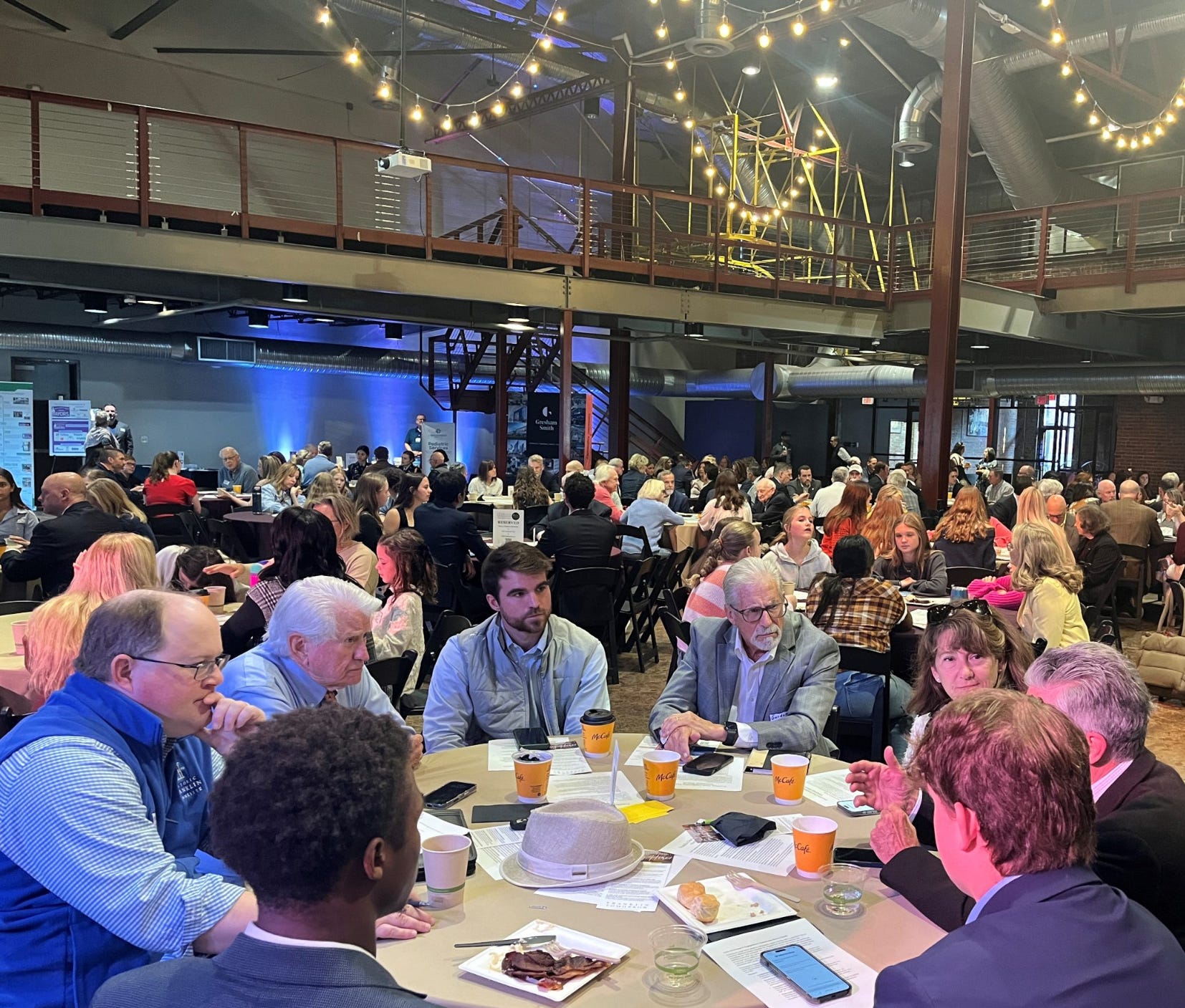
The public town meeting for elected leaders to engage with constituents is one of the oldest fixtures of American civic life. It is also, in many communities, one of the most broken. Long agendas, rigid procedural rules, and three-minute comment periods have produced a form of participation that often leaves residents feeling unheard and elected officials without a genuine picture of community sentiment.
The Center for Democracy Innovation at the National Civic League (NCL) has identified the official public meeting as a foundation of local democracy in need of renovation. Through its Better Public Meetings Project, the NCL has pioneered new tools in communities across the country, including a first-of-its-kind Community and Council Forum to bring deliberative sessions to official council meetings in Boulder, Colorado. The project has since expanded to seven communities, with work underway in cities including Anchorage, Alaska; Rochester, Minnesota; and New York City.
The approach is methodical and community-specific. NCL conducts a Civic Infrastructure Scan in each partner community, using semi-structured interviews, media analysis, and review of public documents to offer a broad view of civic life and the factors influencing how public meetings function. From there, the team facilitates an in-person public forum designed around deliberative dialogue rather than public comment, and delivers a set of tailored recommendations covering new participation pathways, digital tools, and meeting formats. Implementation support is available to help communities move from recommendations to practice.
Underlying the project is an overlooked observation that state laws governing local meetings frequently offer more flexibility than communities realize, and experimentation can allow public meetings to reach broader audiences and lift up new voices. Parliamentary procedure, specifically Robert’s Rules, has long functioned as an unquestioned constraint on local governance. NCL’s work suggests it need not be.
At the operational level, organizations like CivicPlus have developed practical guidance for local governments seeking to improve the mechanics of how meetings are run. This framework for efficient public meetings covers the entire process: early multi-channel promotion, digital agendas, hybrid participation, interactive tools like live polling, and concise speaker training. CivicPlus also emphasizes the importance of recording and archiving meetings to extend access beyond those who can attend in real time, and of soliciting resident feedback after each session to enable continuous improvement. Together, these practices address a core problem the NCL has also identified in that many residents do not attend public meetings because they do not know when they are happening, do not believe their presence will matter, or face practical barriers to participation that communities have the power to remove.
The Better Public Meetings Project connects to broader currents in democratic innovation, including the growing interest in sortition and civic assemblies as tools for securing more representative public input. Matt Leighninger, Vice President and directs the Center for Democracy Innovation, argues that civic assemblies function most effectively not as replacements for elected bodies but as complements to them. Deliberative processes, whether embedded in official meetings or structured as standalone assemblies, can fill the gap between what conventional participation produces and what genuine community representation requires.
For civic organizations working to strengthen local democracy, NCL’s Better Public Meetings Project offers both a model and a resource. Communities interested in bringing this work to their own public meetings can reach the Center for Democracy Innovation at democracyinnovation@ncl.org.
#3. Timely Links and Shorts
“The United States at 250: How the country has changed in the past 50 years”: Pew Research Center notes how much the US has changed since the last major milestone was 50 years ago, at its bicentennial on July 4, 1976. It identified and explained prominent trends across key areas of American life such as demographics, work, family and economics.
“The case for a cabinet-level Department of Democracy”: Latosha Brown writes for Ms. “The U.S. government maintains Cabinet-level departments dedicated to the defense of its borders, the stability of its financial system, the readiness of its military. It has no comparable institution whose singular mission is the protection of the democratic rights of its citizens here at home. That is the gap I am proposing we fill with a Department of Democracy: a durable, people-powered, enforcement-capable institution designed to protect voting and civic rights, monitor the conduct of all three branches of government, hold states accountable, and serve as a permanent firewall against the erosion of democratic participation.”
“How public celebrations quietly remake what it means to be American”: Catherine Simpson Bueker, Professor of Sociology, Emmanuel College writes for the Conversation, “In quantifying immigrants’ likelihood of becoming citizens and voting, I’ve come to see that healthy communities and strong societies require more than formal membership and turning out at the polls every few years; they require connecting with neighbors, feeling a sense of responsibility for one another and seeing each other as part of a shared democratic system. Public celebrations – such as parades, festivals and even road races – can help with this. They play a critical role in society, incorporating the newest Americans into the community and creating a greater sense of belonging for everyone.”
“Universal voting-by-mail increases voter turnout for both major parties”: From Caltech: “In recent years, voting by mail has been the subject of numerous lawsuits and attacks that often claim the process gives Democratic nominees and legislative bills an edge. But a recent Caltech study shows that sending ballots to all registered voters boosts turnout for both major parties.”
“The ranked ballot Is the pro-women, pro-voter, pro-democracy reform America needs”: Cynthia Richie Terrell writes for Ms Magazine: “While ranked ballots are undeniably the way of the future, with 77 percent of voters under 50 supporting this policy, the window for structural reform does not stay open indefinitely—time is of the essence. Women’s representation in Congress has not grown; it has contracted from 152 members to 150 members since 2024 with more Republican women departing than arriving. And as a result, the United States ranks well below international allies—that use different voting systems—in women’s representation. We are not going to close the representation gap by working harder within a system that was not designed to produce it. The rules determine the results, and always have.”
“I’ve never cared about local politics. Could AI change that?”: Zachey Klige in The Renovator. An excerpt: “CivicDigest produces AI-generated news reports on hyperlocal public affairs – city council meetings, zoning decisions, school board rulings, even HOA proceedings. The interface is pretty basic: type a city or topic into a search bar, hit “Generate”, and within a few minutes an audio summary appears, recapping your local council’s most recent meeting. Request the full broadcast and you get a fully composited AI news report in your inbox: an avatar of a young woman standing before a fabricated newsroom set, a headline bar and ticker scrolling below, reading a meeting summary.”
FBI’s Kash Patel throwing away dollars on investigating the 2020 elections: Donald Trump’s “big lie” won’t die. The Guardian reports on Americans’ tax dollars at work: “The FBI has asked its field offices across the country to dedicate more than 200 staffers to its investigation of the 2020 election in Georgia’s Fulton county. A memo obtained Thursday by the Associated Press calls for the FBI to ‘surge’ 260 investigative analysts and staff operations specialists to the effort, which it described as a ‘priority investigation.” It said each of them is to conduct a check of an estimated 708 records by 17 July.”
How we could have a national popular vote for president by 2028 -and why: This smart video the Recount’s Steve Morris on the pathway to adoption of the National Popular Vote interstate compact by 2028 may seem partisan, but it’s pragmatic - and the effort for this win would be good for all Americans and has always engaged with partisans across the spectrum.
“A bipartisan blueprint for better redistricting”: We need ambitious congressional election reform embodied by the Fair Representation Act, but Kevin Johnson of the Election Reformers Network lays out what we should be won now as proposed by the bipartisan Problem Solvers Caucus:. Its pillars are: once-a-decade redistricting national uniform standards using clear, objective criteria while rejecting partisan advantage and incumbent protection as legitimate goals; reducing partisan influence; and federal resolution of challenges.
Leadership Now and Icivics videos inspired by America 250: Leadership Now has a new videofrom business leaders “recognizing the people and institutions that make our elections work.” Icivic features the youthful winners the We Declare! challenge
No posts
Comments
Nothing yet. Say the first thing.
Sign in to join the conversation.