
During the height of the financial crisis in December 2008, President George W. Bush infamously said, “I’ve abandoned free-market principles to save the free-market system.” Bush’s brand of “compassionate conservatism” never sat quite well with fiscal conservatives. He created a new entitlement program, the Medicare prescription drug benefit, and ramped up discretionary spending. Although fiscal profligacy was the standard during the Bush administration, the Wall Street bailout was the straw that broke the camel’s back.1
Fiscal conservatives generally viewed the financial crisis as the product of government distortions in the housing and credit markets, combined with reckless private-sector behavior. They argued that federal housing policies, implicit guarantees for Fannie Mae and Freddie Mac, loose monetary policy, and the expectation that large financial institutions would be rescued had encouraged excessive risk-taking. From that perspective, the Emergency Economic Stabilization Act’s bailout amounted to corporate welfare that socialized private losses, while government intervention created a moral hazard by reinforcing the belief that firms deemed “too big to fail” would be rescued in future crises.
Fast forward nearly 18 years, with Trump back in the White House. Trump has never been someone committed to free markets. He’s not an ideologue. While some on the left portray him as the embodiment of capitalism, Trump’s economic worldview has always been decidedly transactional. He judges markets less by whether they’re free than by whether they produce outcomes he considers favorable.2 That has made him comfortable using tariffs, subsidies, industrial policy, and executive power to steer economic activity toward his preferred ends. That approach isn’t consistent with free markets or free enterprise.
During a press conference yesterday, Trump had a Bush moment. An unidentified reporter asked Trump about the “record profits” that Exxon and Chevron have supposedly seen. Trump complained that oil companies are “making too much money,” while, in the next breath, touting himself as “a big free enterprise guy.”
“Based on a shortage, they’re making too much money. I don’t like it. And I should be the last one to say, because I’m a big free enterprise guy, nobody bigger,” said Trump. “And you know, we’re going to see oil—when we’re finished with Iran, you’re going to see the prices drop through the floor. But they made too much money, too much money.”
“Chevron, too much money. ExxonMobil, too much, too much money. When you look at one company where they made 12 times what they made the year before, they’re going to give some of that back to the public. And they better cut the retail price, the consumer price. Too much money. You’re surprised I’m saying it. I’ll say it loud and clear. I’m not happy about it. Go ahead,” he added.
Now, the premise of the question was off base. Chevron did see its highest quarterly profit in six years, but it wasn’t a record. ExxonMobil actually missed the estimates for its quarterly profit but did see a four-year high. Although BP wasn’t mentioned, I should note that it saw its strongest quarter since 2022. Still, though, no record was set.
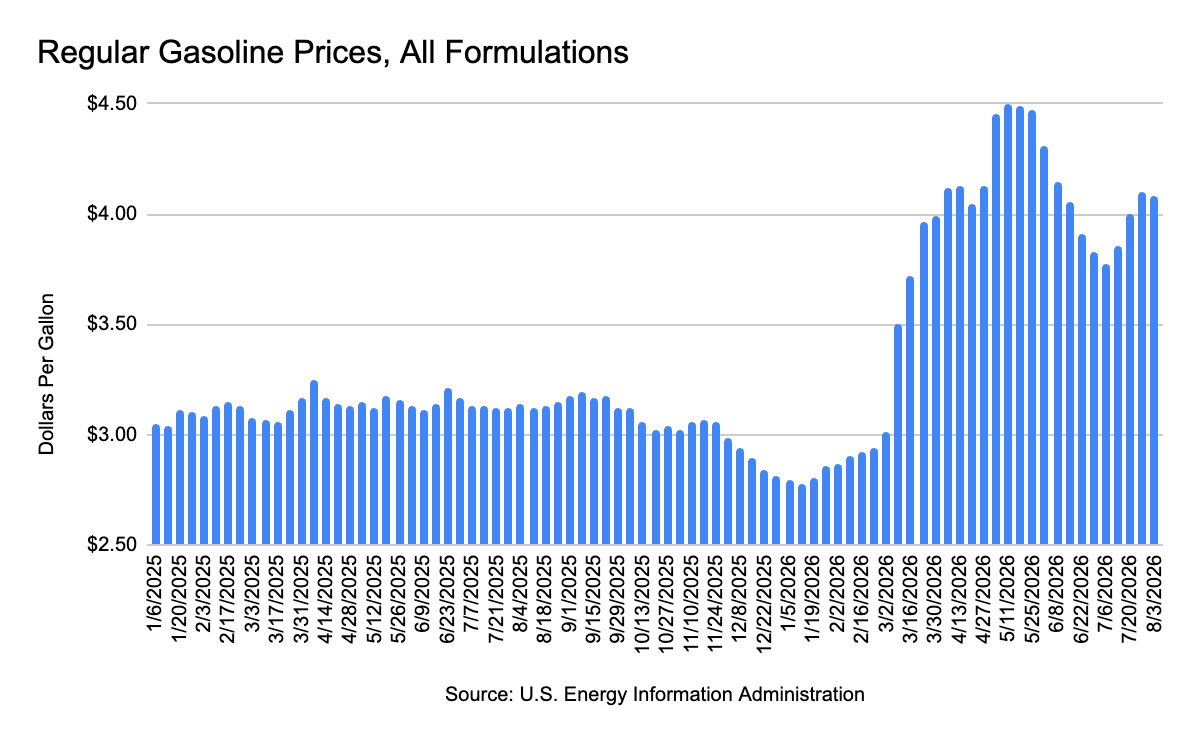
Of course, strong quarterly earnings don’t tell the whole story. These companies operate on net profit margins of roughly 6 percent to 10 percent.3 In other words, they keep about six to ten cents of every dollar they bring in after covering their costs. Their profits are measured in billions of dollars because they generate hundreds of billions of dollars in revenue, not because they earn unusually large margins. By comparison, many of the country’s largest technology companies routinely post profit margins that are two, three, or even five times higher.
That’s also the nature of the energy business. When crude prices fall, their profits shrink and can even disappear. When geopolitical events—like an unauthorized war against Iran—disrupt supply and drive prices higher, their earnings increase. Those swings are a feature of the market, not evidence that companies are doing something improper, such as price gauging, simply because they had a particularly strong quarter.
If Trump didn’t want oil and gas prices to rise, then he shouldn’t have started bombing Iran, the inevitable consequence of which would be to close the Strait of Hormuz, the chokepoint for roughly a fifth of global oil supply. That’s when oil prices and gas prices began to rise.
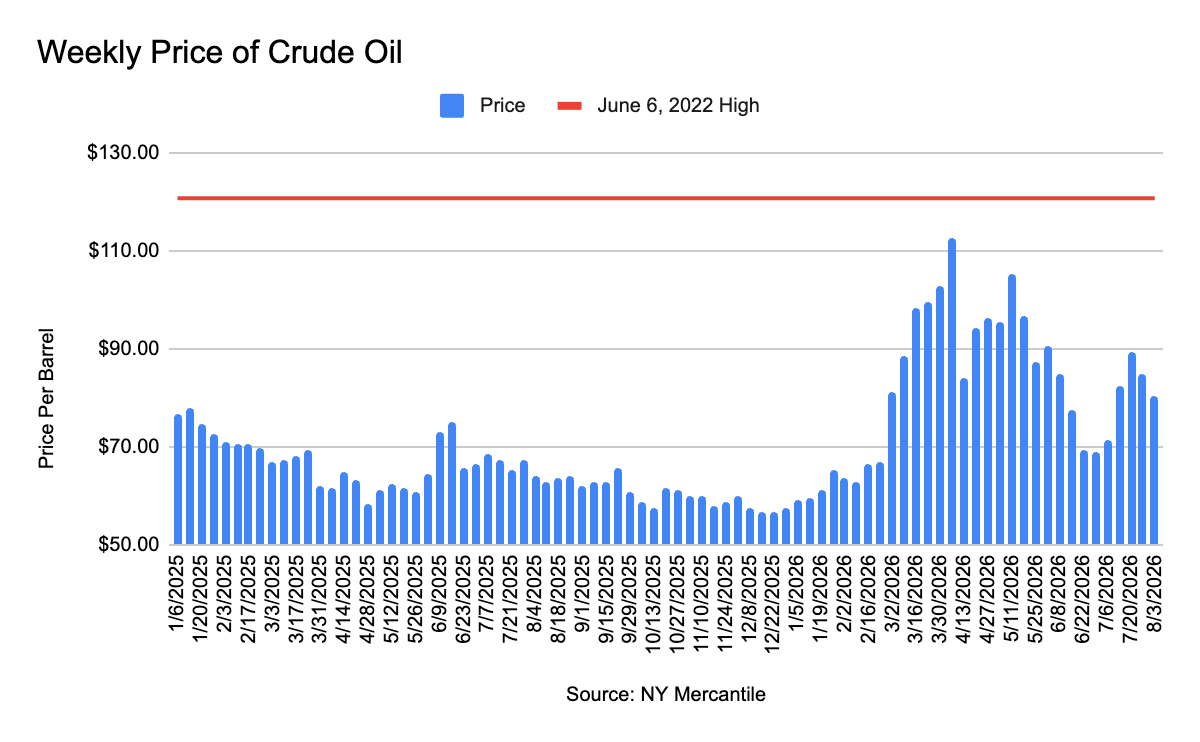
The irony is hard to miss. Fiscal conservatives spent years arguing that government shouldn’t punish companies for responding to market signals or earning profits during periods of high demand or constrained supply. They rejected calls for windfall profit taxes, price controls, and political pressure campaigns because prices and profits convey information that markets use to allocate scarce resources. Yet Trump is now attacking companies for responding to economic conditions that his own foreign policy helped create.
Free enterprise isn’t believing in markets only when they produce outcomes you like. It’s accepting that prices—including higher prices—and profits reflect changing conditions, even when they’re politically inconvenient. Trump’s complaint that companies are making “too much money” after increasing the risk of a supply shock isn’t a defense of free markets; it suggests a fundamental misunderstanding of how free enterprise actually works. It reveals that “free enterprise” functions more as a talking point than a guiding principle.
Regardless of whether or not the policies themselves are sound.
No posts
Comments
Nothing yet. Say the first thing.
Sign in to join the conversation.