
Nonna never planned lunch.
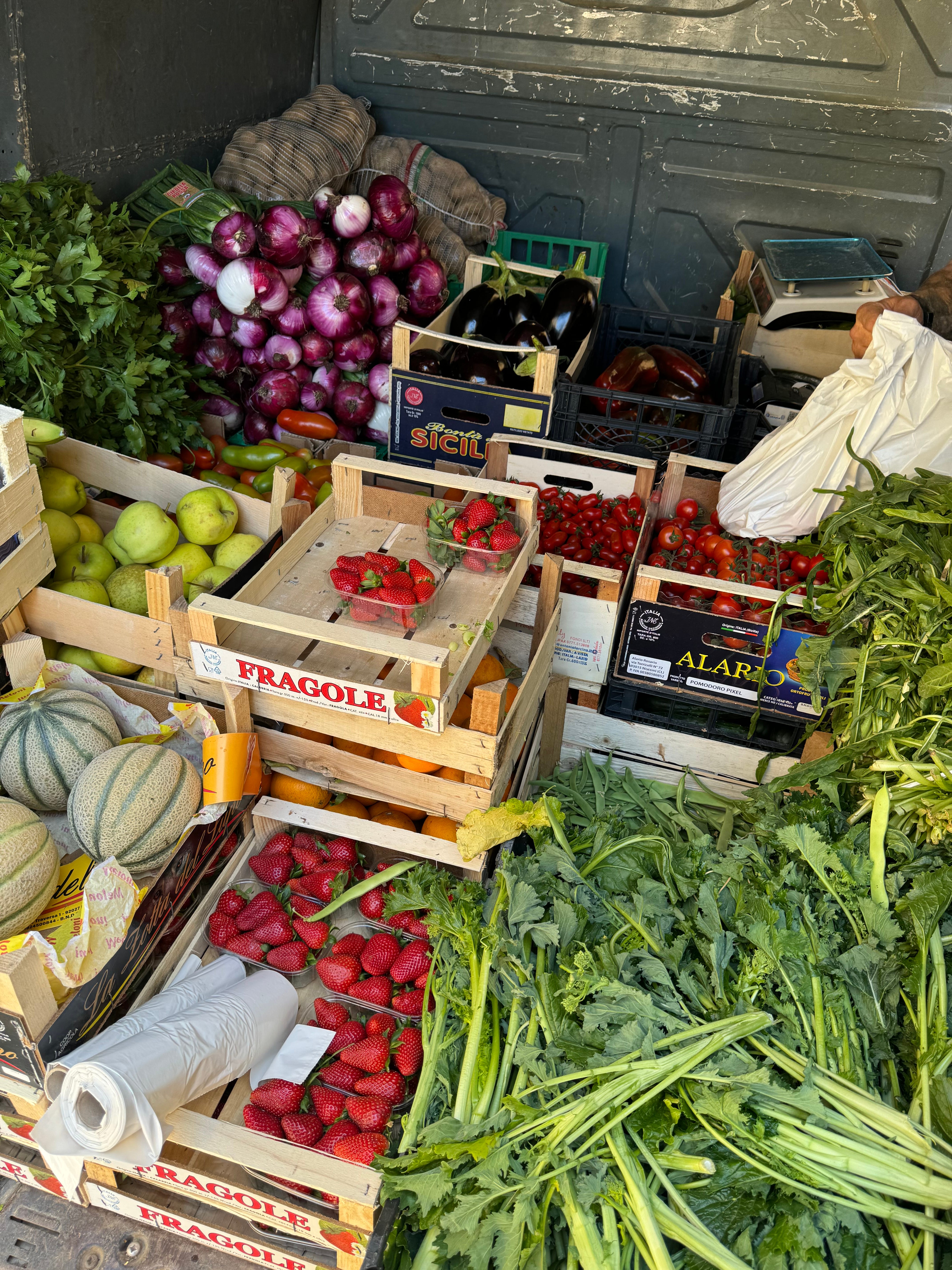
She didn’t open an app, scroll a recipe, or even check what was in the fridge. This spontaneity wasn’t born out of adventure. Planning was simply pointless — how could you plan what to make for lunch if you didn’t know what they’d have at the mercatino?
There was a glorious time before prepackaged grocery store foods. Before bananas came wrapped in plastic (because an inedible protective peel apparently needs to be wrapped). Actually, before bananas at all, because those were imported or “new food.”
This was when vegetables still had giant roots attached, dusted with dirt. When the fruit trees you’d watched ripen all season had finally made it to market, and you could buy some. Of course, they had to be different from the trees you grow in your own campagna (countryside) to justify the purchase.
How could you plan lunch when you didn’t know what the fisherman had caught? Maybe he’d pulled in cuttlefish or octopus. Maybe the butcher had just slaughtered fresh chickens. Or maybe there’d be no meat at all. So instead, you would take a trip to the cheese shop.
The plan for lunch was whatever was fresh and available.
No seven-step sauces. No weighed ingredients. It was exciting, spontaneous — and today feels refreshing and unrestricted because that’s where creativity in the kitchen thrives. And it’s also where quanto basta (QB) originated.
All of us have a QB story: “Grandma, how much salt do I add to rice?” “Quanto basta,” or “Until it’s good.” “Grandma, how much garlic?” “Until it suffices.”
In Nonna’s kitchen, there was no one explaining how to make fish actually taste good. Because when fish is fresh, truly fresh, caught that day, it already tastes good. It tastes like the sea. And that’s the flavor. It’s perfect. You don’t need to compete with it.
This is the great dilemma of modern cooking. We do too much. We add more ingredients to fix bad ingredients. More spice, more sauce to camouflage, not celebrate. The key to lunching like Nonna is simply enhancing. Because when something is truly fresh, it tells you everything you need to know.
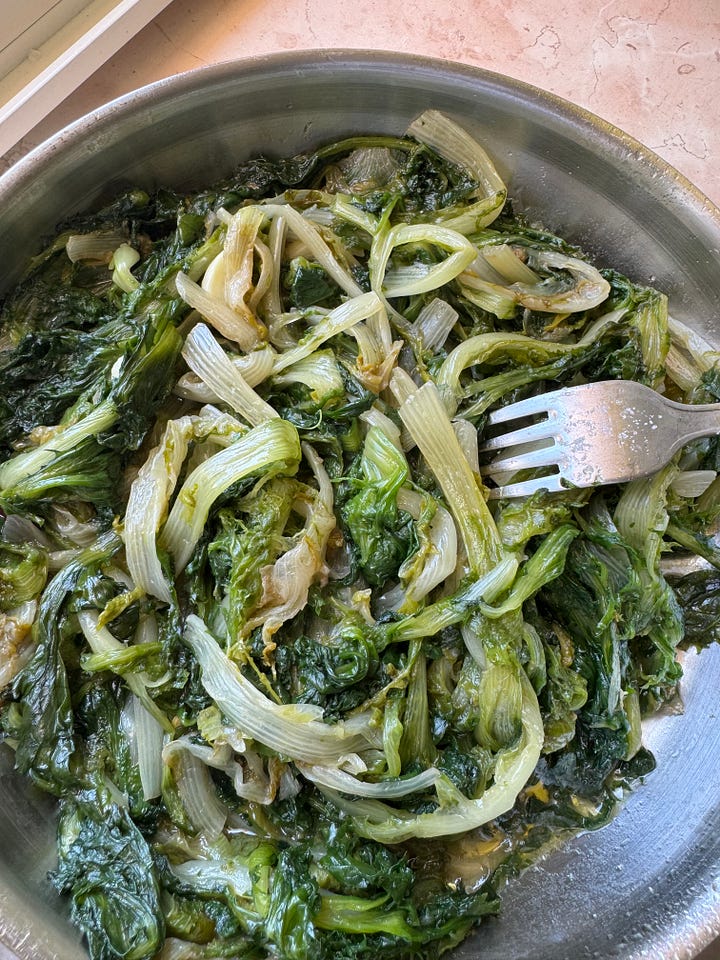
The pots are small. The pans are small. The knives are tiny and half the time not sharp. She’s cutting in the air, never on a cutting board, and drops everything straight into a hot pan. There’s no fuss. And although the proportions (& portions) of everything seem fit for a small child, your plate is somehow overflowing. And by the end of the meal, you might just roll out of the kitchen.
And that’s just how things work in Nonna’s kitchen.
While our modern supply chain is different from Nonna’s, you can copy her:
Shop your local farmers market for fruits and vegetables. Or in-store shop seasonally.
Get your meat at a local butcher. Look for vibrant cuts. Butcher shops will grind your beef to order if you ask.
Get your bacon at the deli counter and have them slice to order to get the thickness perfect.
When shopping for seafood, look for the fish eyes to be as glassy as possible, and the gills should be a vibrant red (not dark red, brown, beige)
This is how people in Calabria and rural southern Italy eat. It’s also where cucina povera, simple food made from what the land seasonally gave you, was born. We’ll explore cucina povera another day because it is the true foundation of Italian cuisine, and deserves its own moment.
The one thing Nonna always had on hand: good olive oil! Get our olive oil that’s 100% made in Calabria, Italy, from our groves below.
First, choose your menu.
Slices of Pecorino Crotonese, Scamorza, Ricotta, or Fresh Mozzarella. Serve with cured green olives, preferably pit in (it’s part of the ambience). Optional: cured meats.
Pasta with Asparagus and Mushrooms, Pasta with Peas, or Pasta with Anchovies.
*If you make eggs, skip the other proteins or just make 1
Fried Artichoke Hearts — you have to make these while it’s still artichoke season!
Fresh peas cooked & 2 fried eggs (per person) — Nostalgia on a plate. For the peas, heat oil in a pot with garlic and parsley on medium, let fry for 2 mins, then add peas and a splash of water. Add salt and pepper to taste, mix. Cover and let cook until peas are thoroughly cooked through. About 10 minutes. Serve eggs and peas on the same plate, keep the yolks runny.
Gateau di Patate — Potato pie, also delicious served with eggs as the protein.
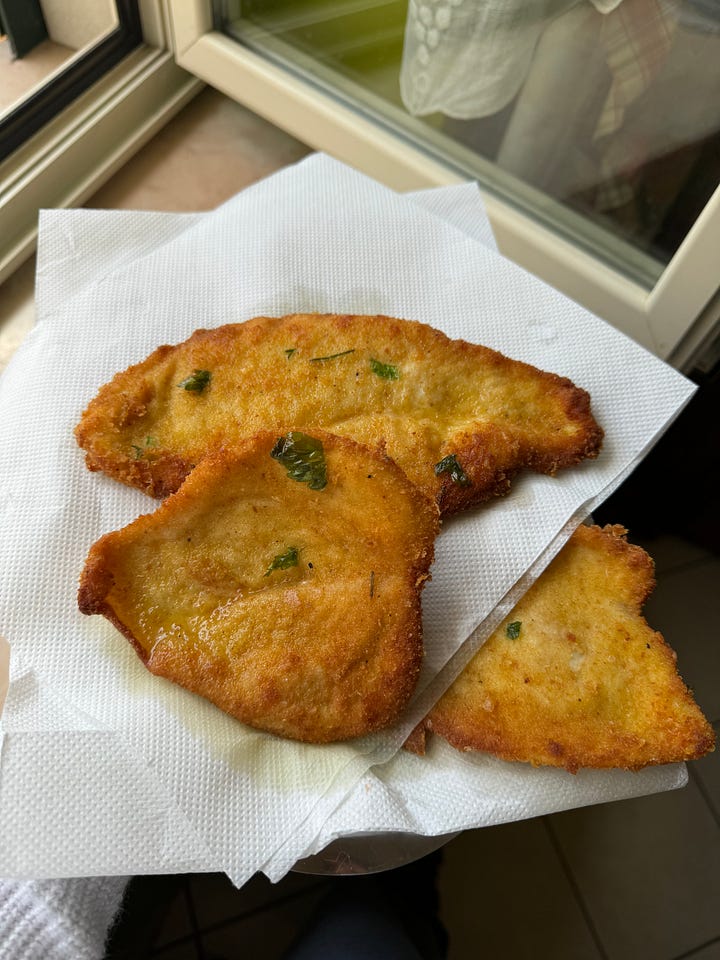
Chicken Cutlets — You can also make these with thin strips of beef or pork.
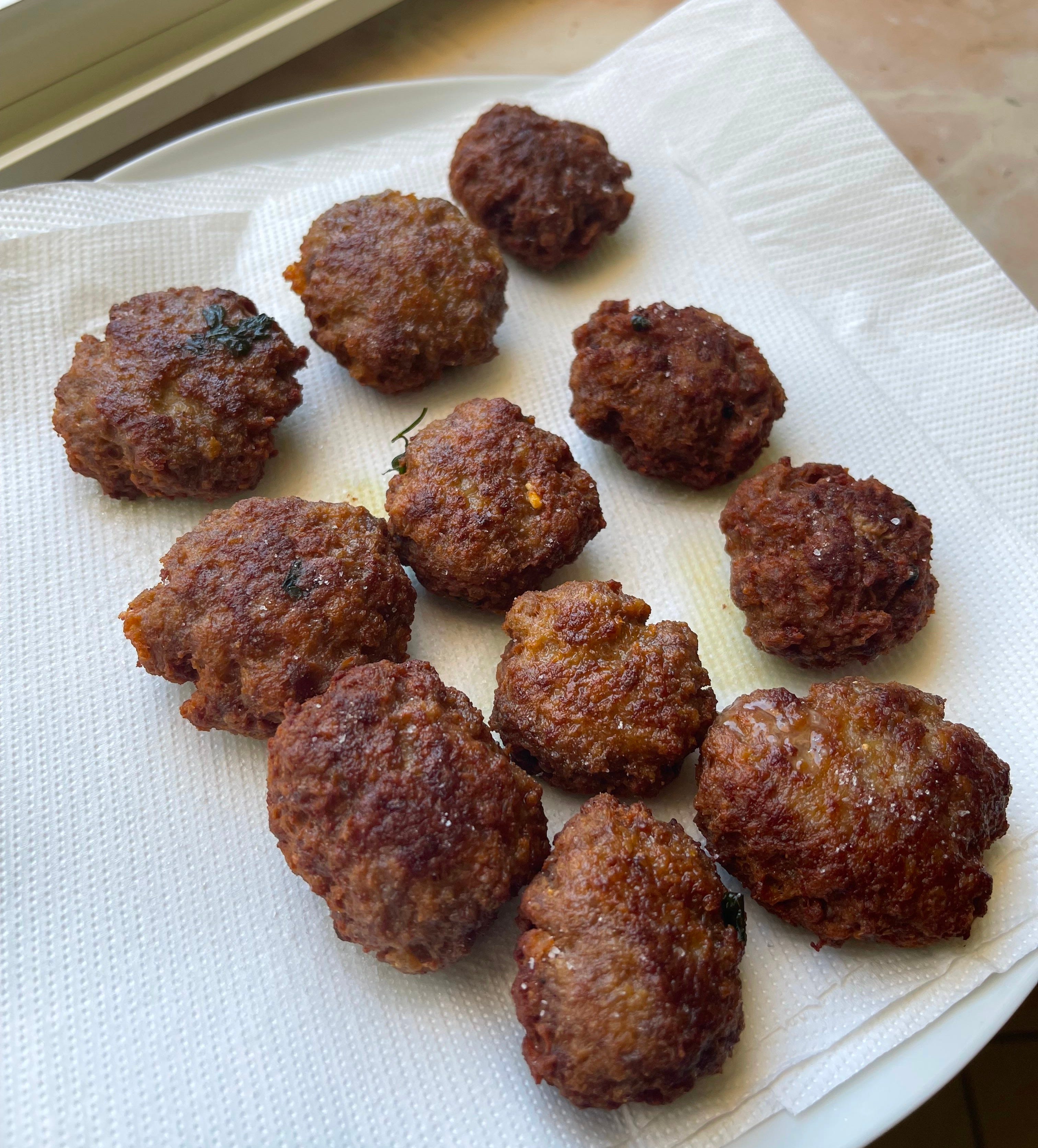
Meatballs — AKA vrasciole. These are the BEST meatballs and make your home smell like Nonna’s.
For fish, try Anchovies cured in oil (recipe in The Olive Oil Enthusiast)
We highly recommend an assortment of sweets from a bakery, or you can make a tiramisu.
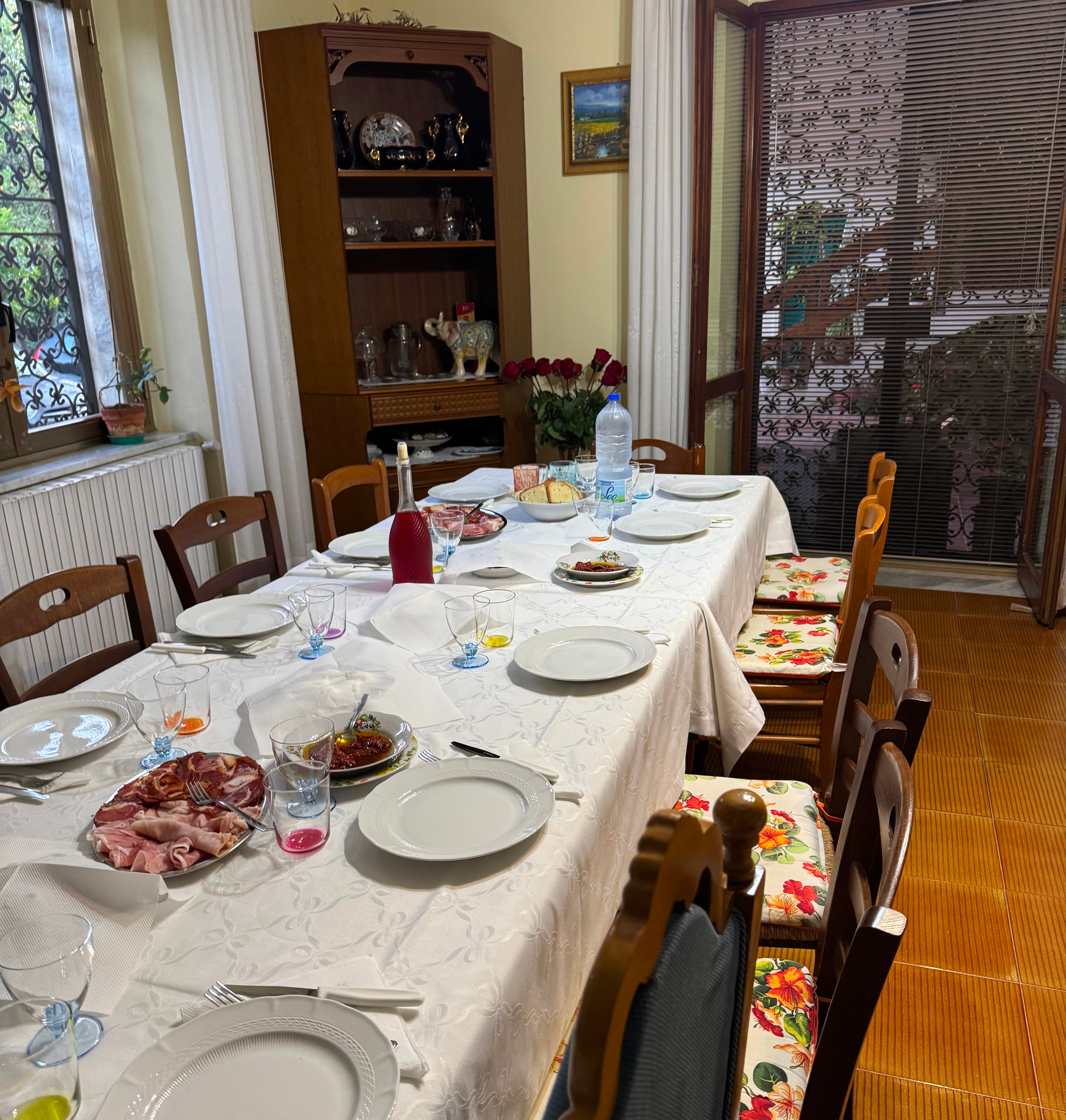
Nonna always has the best tablecloths. Pick your brightest or the one that best matches the meal. In our home, we skip centerpieces because there's too much food so there’s no space.
Set the table and don’t be afraid to break out the good stuff — your special china, the holiday cups and silverware, fabric napkins. That’s one area we break away from Nonna on.
Good tableware should be enjoyed today because you only live once, and life should be both delicious and fabulous.
All that’s left to do is open your favorite bottle of wine or pour a glass of iced tea. And most importantly, enjoy!
Send pics of your nonna tablescapes. Have a wonderful weekend.
We are again presenting with the New York Public Library! Our presentation is How to Build a New Brand in an Ancient Industry: Olive Oil.
This is an online event and will take place on April 29. Sign up here.
A presto,
-Giuseppe and Skyler
Comments
Nothing yet. Say the first thing.
Sign in to join the conversation.