
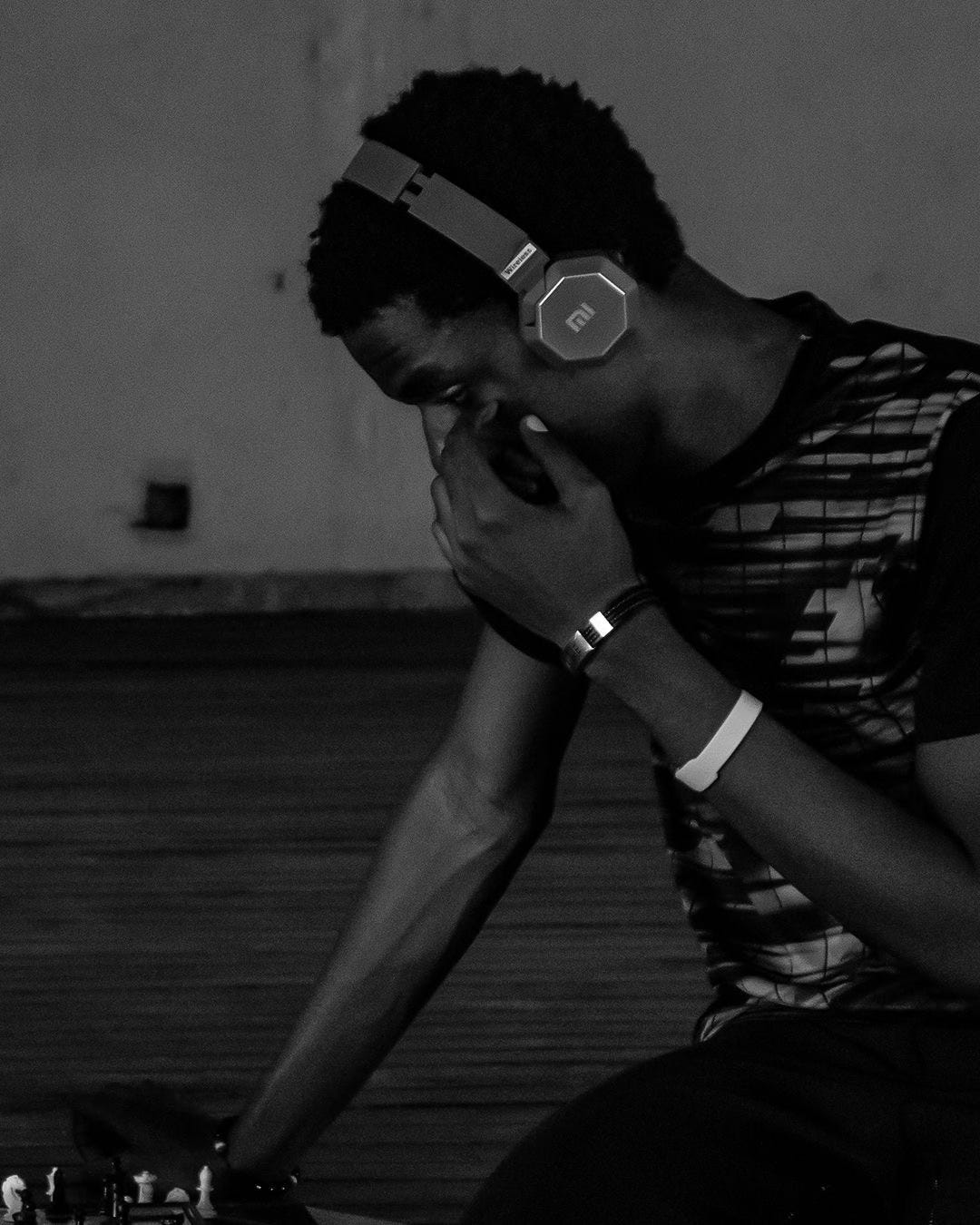
Photo: WisdomGodday1
My friend and I were excitedly discussing KWN’s highly anticipated single, Touch Myself when she suddenly had a revelation:
“You can’t make a song like this about a man. Name a song that has the same vibe as this one that is written about a man.”
I, being a hopeless romantic (no pun intended), instantly went into defense mode and started reviewing my mental rolodex. Sadly, I came up short and realized that most recent love songs were about women.
I love women. I AM a woman, and women are very much deserving of such songs that sing of pure love and tender devotion.
But what about men? Are they not deserving of the yearning that they give?
Most modern R&B songs directed at men are dedicated to detailing the negative experiences had with them. This is in stark contrast to the love ballads that we grew up on from the 70s to 2000s. Songs like Phyllis Hyman’s You Know How to Love Me, Teena Marie’s I Need Your Lovin’, and Destiny’s Child’s Cater 2 U kept our hope alive.
Disclaimer: Now, of course there were still songs about the toxic aspects of our grandparents’ and parents’ relationships, but the love experienced on both sides was still the focal point and main staple of R&B, side chicks and all. That same balance is missing in today’s form of the genre, however.
Today art is imitating life, with a few factors playing a part.
1. Evolving gender roles. Historically, men have viewed women as property; our singular purpose was to provide support to them, as they were considered our saviors. We were taught that our lives only improved when we attached our identities to them. They were essentially required to have a satisfying life. But now, women are no longer damsels-in-distress in need of saving. We are independent and spend our free-will discovering ourselves and exploring what we really desire from men. We no longer necessarily need them and aren’t reliant on them, so the value placed on having one has shifted and so have our expectations.
Their presence is no longer enough, so men now have to pivot their approach to love and change how they show it. In addition to being there physically, they now have to be present emotionally and mentally to engage in a genuine connection with their partner. Women now
want a friend, not just an overseer or provider, and some men (not all) aren’t equipped to handle that.
Another Disclaimer: Just because we aren’t requiring them to be sole providers anymore doesn’t mean that we don’t want anything. A kind, generous man is very welcome and much appreciated in the lives of most women.
2. Media portrayal of men in relationships. To be clear, there are some men who are actively trying to meet the standards of women. But they are overshadowed by the negative portrayal of men who don’t in media. In the golden age of R&B, shows like A Different World and films like Love Jones portrayed somewhat positive relationships, with love always winning in the end.
But the onset of reality TV has created a mutually toxic relationship between consumers and media. People tend to forget that reality shows like Love Island aren’t fully real. They are clipped and edited to push the narrative that gets the most engagement from viewers: toxic experiences in relationships with men and women whose approach and gestures of love haven’t evolved with the times. They are not direct reflections of the states of society and romance. It is only a frequency illusion, with it only seeming that they are due to us being constantly made aware of it through the massive engagement these shows and topics get on social media platforms. This seemingly inescapable propaganda that the media pushes practically programs us to not believe in love, and musicians are not exempt from this influence.
Musicians also experience this warped view of reality, and it reflects in their work.
They are the curators of the genre, and when they engage with this content, it impacts what they make and what we hear. It’s why we don’t get the same love songs of the decades prior. What we hear now in the genre from women and men is frustration in dating fueled by what has been ingrained in us by the media.
But as said before, this is a warped view of reality. Instead of noting that both sides are actively trying to meet the needs of each other while being open to their progress, most of us are solely focused on where we are lacking. This is evident in the gender wars seen on social media and in the music we hear today.
As women, what we should be focusing on are the men who are actively growing with us, as they are very much real and don’t deserve to be overshadowed by those who aren’t even trying. These are the men who deserve love songs.
With roles being more equal and balanced, yearning for them shouldn’t be the embarrassment that people think it is. Men proclaim their love for all that women are and do,
so women should also sing about how and what these evolved men have done to pivot and satisfy their newly recognized needs.
The experiences that women sing about when meeting the wrong man are valid. But we should not let that be the only narrative there is when it comes to relationships with men. The genre should equally reflect both experiences.
Music is a form of manifestation, and songs hold energy. If we only sing about the pain experienced when dealing with men, then that is what will manifest.
Yes, we may not need them anymore, but good men are still wanted, and we should make them feel that.
There are women in happy relationships and women dating genuinely good men, and they need their experiences manifested into songs, too. These songs dedicated to good men could even inspire other women caught in the spiral of negativity to open their eyes to the possibility of a good love.
We need love songs to manifest what we both want and deserve: love from one another. Romance requires two people, after all.
For just $5 a month, you’re directly investing in Black writers, Black ideas, and the future of independent Black media. Every subscription helps us commission original stories, platform new voices, and continue building E.N.D. into a living hub for revolutionary thought, culture, education, and community.
Thank you for helping us build something that belongs to us.
No posts
Comments
Nothing yet. Say the first thing.
Sign in to join the conversation.