

This essay exposes systemic racism, abuse of power, and lack of accountability within Texas law enforcement, urging citizens—especially non-white, racialized people—to know their rights, document encounters, and protect themselves against unjust policing.
In the early hours of September 29, 2025, around 1:20 a.m., my friend and I were pulled over in Freestone County by Officer Myers752. I was asleep in the passenger seat, headphones in my ears, when he approached, knocked on the window, and then aggressively opened the passenger door, demanding my ID. My immediate response was, “I just woke up, bro—what’s going on?” He threatened to tase me and demanded that I exit the vehicle. I calmly unbuckled and got out as he handcuffed me, making derogatory statements seemingly to provoke a response. Afterward, he subjected the driver to the same aggressive treatment, rifled through our car—including the trunk—and returned to question us individually.
When it was my turn, he joked, “Why are you shaking? Are you nervous?” I replied, “No, sir. It’s cold—my body is in shock—and I just woke up.” He pressed on, stating, “It looks like you’re out on bond. What’s it for—domestic violence?” I was unmoved. “What? If you can see that I’m out on bond, I’m sure you can see what it’s for, sir—and it’s not domestic violence,” I replied. “Looks like there’s a cup with some promethazine in there; your friend said it’s not his, so it’s gotta be yours, right?” he went on. I firmly responded, “I don’t know what you’re talking about, sir, and at this point you’re scaring me. I’m a passenger and I just woke up. You opened my door and immediately threatened to tase me for my ID. I need a lawyer; I have nothing to say to you.”
The encounter continued with the officer threatening to take the cup for testing and to arrest us on felony charges, only to release us with a “warning.” Only afterward did he explain that the stop was because our seatbelts appeared improperly fastened—a minor infraction, at the wrong time of night, on a dark stretch of Highway 45. What began as an officer’s emotional power trip escalated unnecessarily into threats of felony charges and aggressive intimidation before ultimately ending with a warning.
“Out here, my son is already considered guilty”
This type of arbitrary enforcement is not unique. In Tarrant County, Brown was wrongfully charged with offenses he did not commit after law enforcement mistakenly linked his identity to another suspect. Upon reviewing video of the actual suspect being pulled over, Brown recounted, the man in the video laughed when he realized Brown’s name had appeared instead. In open court, the prosecutor admitted, “We really messed this up,” and directed Brown to meet privately in his office. Brown also described his brother being arrested without a warrant while performing lawn care at home, in front of his wife and young children. These events echoed my own and Devonte’s wrongful arrest for capital murder in 2018, underscoring the systemic harm caused by law enforcement mistakes and the severe mental trauma inflicted on families, including children who witness such incidents.
Sadly, stories like this don’t stop there. Bobby Harper suffered from the same injustices in the ’90s and is still suffering today from a wrongful life sentence. Bobby was an innocent kid accused by a sheriff’s department and railroaded by a system. In 2025 it’s proven to be no different.
On July 16, 2025, a confrontation at Midlothian Community Park in Texas escalated into a stabbing. Christopher Robert Nienhuis, 18, was attacked by a group of white youths who hurled racial slurs, claimed to have a gun, and physically assaulted him. In defending himself, Christopher stabbed another boy—the son of an Ellis County sheriff’s deputy—who survived. Despite acting in self-defense, Christopher now faces life-altering charges.
Christopher was arrested, and his bond was not set until after 6 p.m.—an unusual delay, as the bail bondsman explained that the Midlothian judge typically issues bonds around noon. The bond was set at $355,000, a figure seemingly designed to overwhelm the family. “In my mind, they didn’t think we would pay it—we believed they were going to hurt him,” said his father, Mark Nienhuis, a combat veteran and two-time Purple Heart recipient.
Ultimately, after frantic coordination and financial strain, the family was able to post bond and secure Christopher’s release before authorities could transfer him to another facility. Mark recalled a Black officer saying, “Out of respect, I’ll try to hold him here as long as I can,” showing some compassion within a hostile system—while another officer warned bluntly, “If the sheriff comes in at 2 a.m. to move him, there’s nothing I can do about that,” underscoring the family’s fear and the unpredictability of the situation.
The ordeal began long before that night. The Nienhuis family moved from St. Louis to Texas after a house fire, seeking a slower pace of life. But within weeks of settling in, their sons were jumped at a local park by a group of white kids who shouted racial slurs. When police arrived, none of the white attackers were arrested—but all of the Nienhuis boys were handcuffed while the white kids drove up and down the street laughing and pointing.
None of the boys were placed on probation after that first attack, but the harassment continued. Later, Mark’s youngest son, Jayden, was placed on four months’ juvenile probation after witnessing a fight in a park he wasn’t involved in. Around forty other kids were there watching, but when police arrived and everyone ran, Jayden—who fell while running—was the only one caught and punished. None of the kids who actually fought, nor any of the other forty-plus who fled, received any punishment.
These incidents highlight the racial disparities and targeted treatment the family endured. “Out here, my son is already considered guilty,” Mark said. “Too many people of color moved in too fast, and the community is bothered.”
This series of events underscores not only systemic failures in law enforcement and judicial processes but also the profound consequences of racial bias, community hostility, and institutional negligence. Families trying to protect and raise their children in these environments are forced to navigate an often-hostile system where justice and safety are far from guaranteed.
In the state of Texas, we have come to find that you cannot trust your local sheriff’s department.
Hays County has faced similar challenges with law enforcement accountability. On December 12, 2022, Joshua Wright, a 36-year-old inmate, was fatally shot by a corrections officer while attempting to flee a hospital in Kyle, Texas. Though captured on body-camera footage, the grand jury indictment against the officer was later dismissed at the family’s request. The family filed a federal wrongful-death lawsuit alleging excessive force and constitutional violations. In San Marcos, Malachi Williams, 22, was fatally shot by a police officer after allegedly failing to comply with commands while armed. A grand jury ruled the officer’s actions justified, but Williams’ family disputes the findings and has released video footage advocating for justice. Additional Hays County incidents—including a civil-rights settlement for a former inmate whose hand was broken by a jailer and the April 2025 arrest of a jail officer for official oppression—further illustrate systemic failures in training, hiring, and evidence preservation.
Across Texas, these incidents reveal patterns of negligence, abuse, and resistance to transparency. In Tarrant County alone, over 65 people have died in custody since 2017. Two jailers were indicted for murder in 2024 following the death of Anthony Johnson Jr., and a DOJ review of jail conditions was initiated amid growing scrutiny. Despite these tragedies, local leadership has resisted oversight; Sheriff Bill Waybourn told commissioners in 2025 he would no longer brief them on jail deaths.
The families of Malachi Williams, Joshua Wright, and Christopher Nienhuis continue to advocate tirelessly for justice, using their personal experiences to push for meaningful change in their communities. Their voices, along with those highlighted in this article, remind us of the human cost behind systemic law enforcement failures. Amplifying these stories is crucial—not only to honor their experiences but to hold institutions accountable and push for reforms that prevent future tragedies.
Taken together, my own experience, Brown’s, Nienhuis’s, and the Hays County cases reveal a troubling and arbitrary system. Encounters with local sheriff’s departments in Texas can quickly escalate, often with devastating consequences, showing that trust without verification and accountability is not just misplaced—it can be dangerous.
Simply put, in the state of Texas, we have come to find that you cannot trust your local sheriff’s department. We live in a state where a citizen’s safety is no longer reliably dependent on an officer’s oath to “protect and serve” or on any rights they may have; it is instead determined by the officer’s present state of mind, beliefs, and emotional intelligence. As taxpayers, it is now up to each of us to be accountable for our own safety. It is no longer enough to know your rights—we are now obligated to know how to keep an officer safe and calm for our own protection. The tides have shifted; this process has always been dangerous for community members like myself—far too often profiled, antagonized, and undermined by law enforcement. It is now on us as a people to educate, inform, and document in order to protect ourselves, our loved ones, and our communities against a system that took an oath to protect and serve us.
We are not the problem; however, we must stand up and become the solution.
We are not the problem; however, we must stand up and become the solution. That involves being aware and knowledgeable of a few things: your constitutional rights, your universally declared human rights as a human being, and safety measures for yourself and an officer in an unsafe encounter.
Understanding your constitutional rights is essential, especially in a country where encounters with law enforcement can escalate quickly, as seen in the experiences of myself, Brown, Christopher Nienhuis, and countless others across Texas. Every U.S. citizen has protections under the Constitution that can serve as a shield in these situations.
The First Amendment guarantees freedom of speech, religion, and assembly. It protects you when speaking out against injustices, participating in protests, or challenging authority. The Second Amendment ensures the right to keep and bear arms, which can be critical for personal and property protection, though it is important to remain informed about local firearm laws.
The Fourth Amendment protects against unreasonable searches and seizures, meaning law enforcement generally must have probable cause and a warrant to search your person, vehicle, or home. Similarly, the Fifth Amendment protects against self-incrimination—you have the right to remain silent and to request an attorney when questioned by police. The Sixth Amendment guarantees a fair trial, including access to legal counsel, a speedy and public trial, and the ability to confront your accuser.
Further protections include the Eighth Amendment, which shields citizens from cruel and unusual punishment and excessive bail, and the Fourteenth Amendment, which ensures equal protection under the law and due process, preventing discrimination and arbitrary treatment.
In practical terms, these rights mean you can refuse to consent to searches without a warrant, remain silent while clearly invoking your right to an attorney, and document interactions with law enforcement when legal in your state. Understanding and asserting these rights can be a vital safeguard against abuse, intimidation, or wrongful arrest—circumstances all too familiar to the families and individuals highlighted in this article.
As of 2025, the Universal Declaration of Human Rights (UDHR) remains a foundational international document, setting forth fundamental human rights to be universally protected. Adopted by the United Nations General Assembly in 1948, the UDHR comprises 30 articles detailing an individual’s basic rights and freedoms, affirming their universal character as inherent, inalienable, and applicable to all human beings.
While the UDHR itself has not been amended since its adoption, its principles continue to influence global human rights standards and practices. In 2025, the United Nations Human Rights Council convened its 60th regular session, addressing key human rights issues and reaffirming commitments to uphold the rights enshrined in the UDHR.
Additionally, the Second International Decade for People of African Descent (2025–2035) was proclaimed by the United Nations, aiming to take concrete actions to confront the legacies of enslavement and colonialism, deliver reparatory justice, and secure the full human rights and freedoms of people of African descent worldwide. These developments underscore the ongoing relevance of the UDHR in guiding international efforts to promote and protect human rights across the globe.
When encountering law enforcement, it’s crucial to remain calm and deliberate to reduce perceived threats while still protecting your rights. Keep your hands visible, ideally on the steering wheel, and avoid sudden movements; if you need to reach for documents or other items, verbally announce your intentions first. Follow basic commands, such as pulling over safely, turning off your engine, and remaining seated unless instructed otherwise. Communicate clearly, politely, and respectfully, and avoid arguments or confrontational gestures—disputes can always be addressed later in court. If asked, provide your license, registration, and proof of insurance, and inform officers of any weapons in the vehicle. You may politely decline a search or choose to remain silent while requesting an attorney, but always do so without physically resisting. Minimizing risk also includes keeping pets secured, children safely restrained, and interior lights on at night so the officer can see clearly. By demonstrating calmness, visibility, and compliance, individuals can help de-escalate encounters while maintaining their constitutional rights.
The pattern is unmistakable: arbitrary stops, prejudicial assumptions, and institutional resistance to scrutiny create an environment where people—especially people of color—are vulnerable to abuse. In Texas, where local sheriff’s departments wield significant power, blind trust in the badge can be dangerous. Knowing your rights, documenting encounters, and supporting families who demand accountability are not optional—they are essential.
We are not the problem. We must be the solution: informed, organized, and relentless in pushing for reforms that protect our communities. As someone with years of experience encountering bad policing and sheriff’s departments—and as an expert on such systems—I encourage you not simply to take my word for it. Do some research in your community and the surrounding ones, and decide for yourself why I strongly believe and recommend: don’t trust your local sheriff’s department. Your life may depend on it.
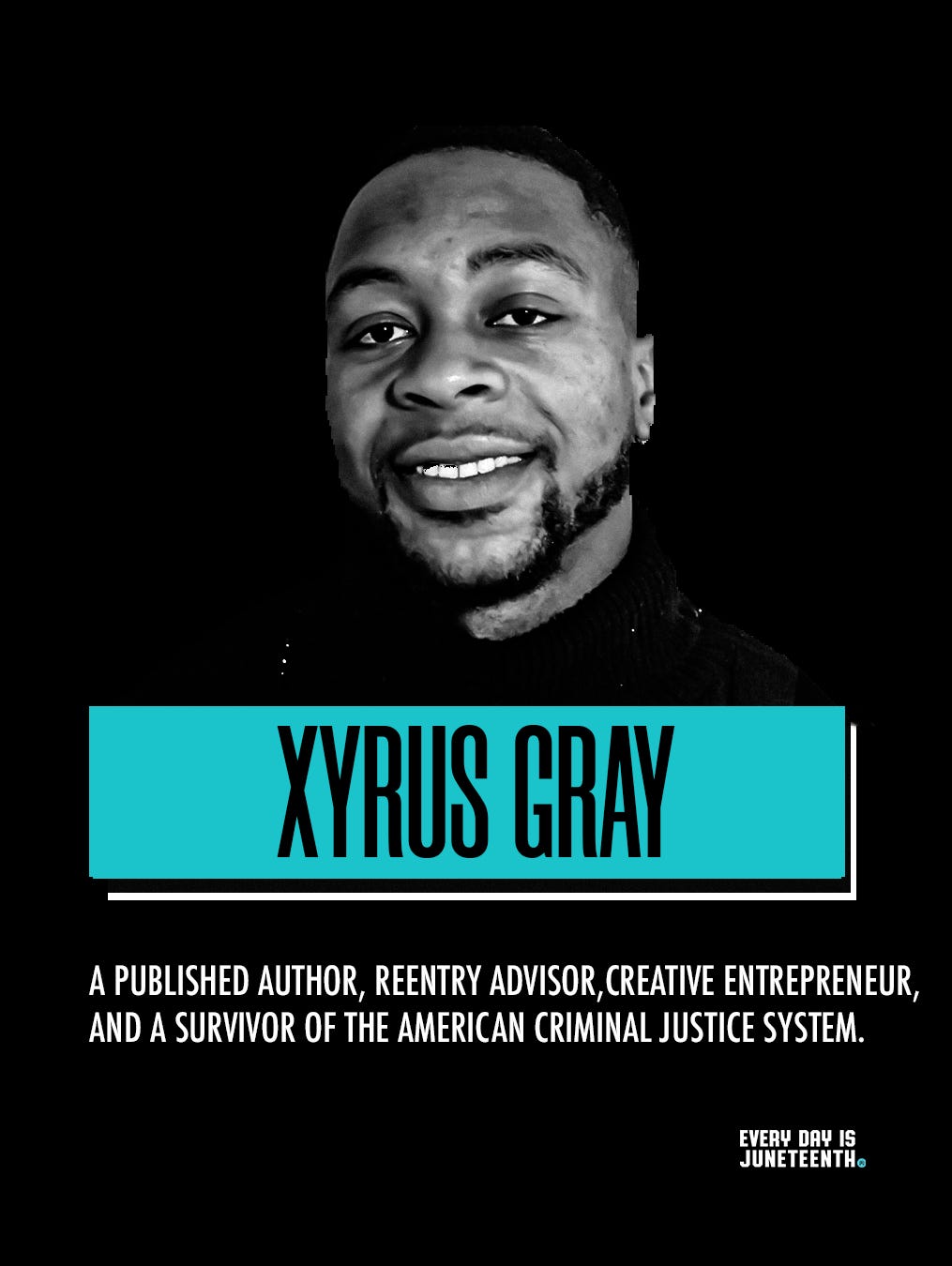
“I Killed A Man“ is a memoir about Xyrus Gray’s wrongful arrest and 5-year incarceration by the Hays County Sheriff’s Department. Visit shop.mrwelltravelled.com to purchase.
No posts
Comments
Nothing yet. Say the first thing.
Sign in to join the conversation.