
If Valerie Cherish is Dorothy Gale and Hollywood is Oz then Mickey Deane was, without question, her Tin Man. Whereas so many of the characters who occupied and swarmed the orbit of Valerie Cherish were demanding or demeaning, Mickey was both her loyal work companion as well as the avatar for us at home clocking many of Valerie’s, how shall we say… Valerie-isms. “Probably these cute Teddy Bears for Shayne,” Valerie says while shopping for pattern keys for the cast of her show in Season 1. “[She] probably calls them Toddy Bears.” Mickey laughs. Genuinely. In Season 2, when Valerie calls the star of Girls “Lela Durham,” Mickey gently corrects her: “I think it’s Lena Dunham.” When Valerie corrects him, saying she’s right, and then saying the name correctly, the camera cuts to him looking miffed. But no matter the situation, Mickey was there in a jiffy. Until he wasn’t. Robert Michael Morris, who played Mickey on Seasons 1 and 2 of the series, passed away in 2017.
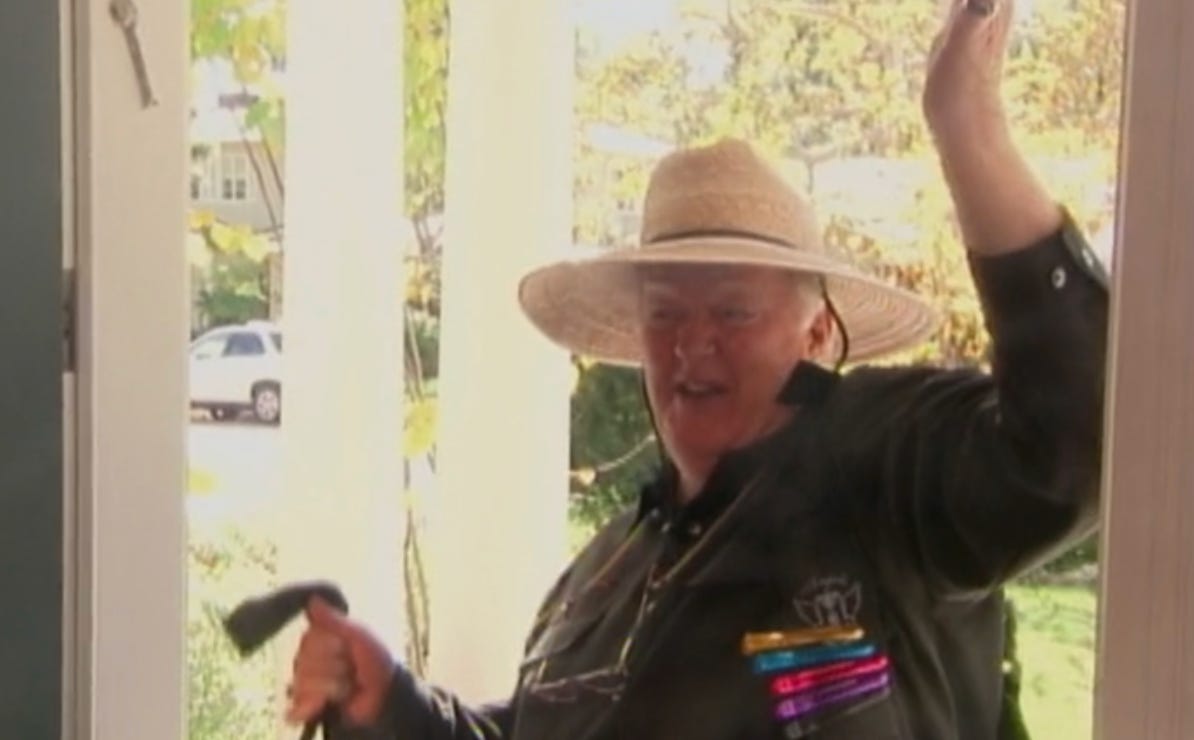
A looming question — and one of the reasons why co-creators Michael Patrick King and Lisa Kudrow thought the show might never come back — was how to bring the band back together without its beloved back-up singer. In Episode 1 of Season 3, we see that Valerie has a portrait of Mickey in her dressing room and he’s later mentioned when it’s revealed that Mickey passed away of COVID. His face and name bookending the premiere episode felt like a satisfying acknowledgement of a character so indelible to the series. So imagine my and many longtime fans’ surprise when in Episode 3, “Valerie Faces Reality,” our famed redhead is forced to do more than just acknowledge his death, but to confront it. The result was both sweet and touching, but most of all earned. But beyond that, it also managed to feel quintessentially The Comeback in not allowing sentimentality to exist without egg on the face. “I laughed, I cried, I made grotesque noises doing both at the same time,” Vulture’s Louis Peitzman wrote in his review.
“Lisa has a giant spiritual side to her so there was no way that she and I weren’t gonna honor him, but we didn’t want to do an episode that was solely about honoring him,” Michael Patrick King told me during our chat for the show’s companion podcast.
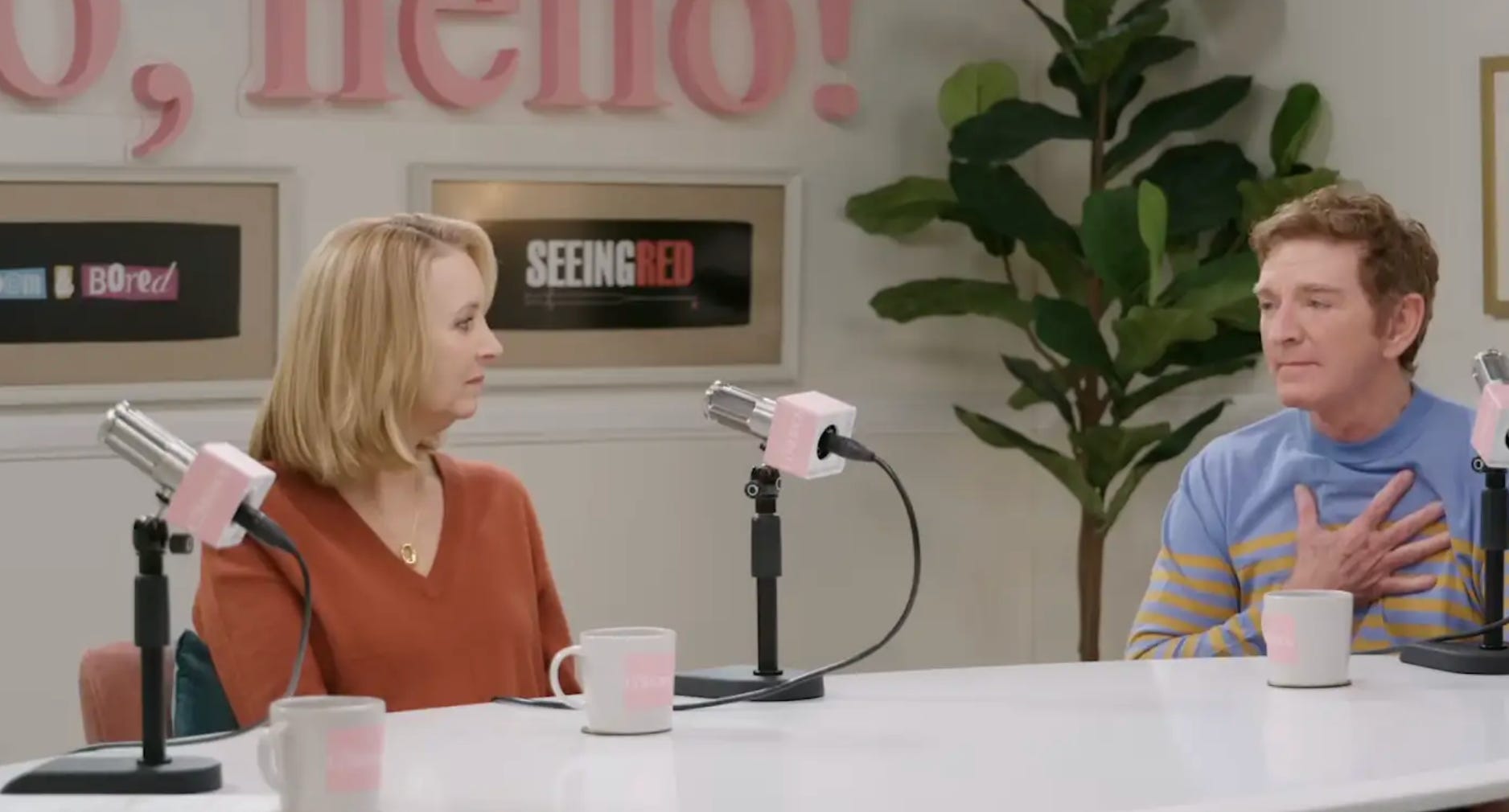
At the start of the episode, Valerie is podcasting (“It’s a podcast: they’re supposed to be sloppy and unprofessional, that’s the charm”) with her new hairstylist Tommy when she mistakenly calls him Mickey. “Tommy is kind-of a placebo [for Mickey],” King told me. “She’s getting someone who thinks she’s fabulous,” he says. “Same era,” Lisa Kudrow added. “And then our fun is that he’s not Mickey at all; he’s his own being,” King says.
We see that play out in a scene later in the episode when Valerie expresses annoyance that Tommy brought the wrong wigs to set. “Sorry, but Mickey would have either picked them up or told me to bring them in,” she tells him. “I didn’t know you had wigs, so I couldn’t tell you to bring them in,” Tommy tells her, standing up for himself in a way Mickey wouldn’t have. And then he says the quiet part out loud. “Because I’m not Mickey. I’ll never be Mickey. Mickey isn’t here.”
Valerie’s uncomfortable. Maybe it’s the cameras, maybe it’s the raw emotion bubbling up. She leaves, saying she needs to run her lines. Tommy follows her. The cameras try to do the same, but Tommy demands privacy. He apologies. She does the same. “Now maybe can I be a big help to you?” he asks her with a gentleness we don’t often see Valerie receive. “This isn’t really about wigs. It’s about Mickey. I think you’ve got some unfinished business there,” Tommy suggests. Valerie, ever the deflector, tells him he’s wrong and continues on. Of course, he’s not only right, he’s right on the money. “He’s different than Mickey in that he’s 85 and has a direct line to the truth,” says King. “Mickey was a little more pliable. He’d let her pretend that she’s right. Tommy goes right for it.”
We then go to the storage facility that houses Valerie’s wigs, an artifact that belonged as much to Mickey as it did to her. And it’s that Valerie has stored Mickey’s ashes as well. “One thing that Lisa was adamant about was that Valerie designed his ashes box,” King says. “I kept seeing it as something ornate, something sparkly,” Kudrow added. Only the ashes can’t be found. She had it safe on a shelf at her home (right next to her People’s Choice Award, naturally) in Brentwood but now with the move to Hollywood, she’s not sure where he’s gone. And she feels now is the time to spread his ashes because of the connection between the soundstage her new show is shooting on and it being the place where Mickey’s favorite movie, Now, Voyager, was filmed. She sees that as a sign. “From the second I stepped on that soundstage, Jane, I just thought… yeah, Mickey, here he is.”
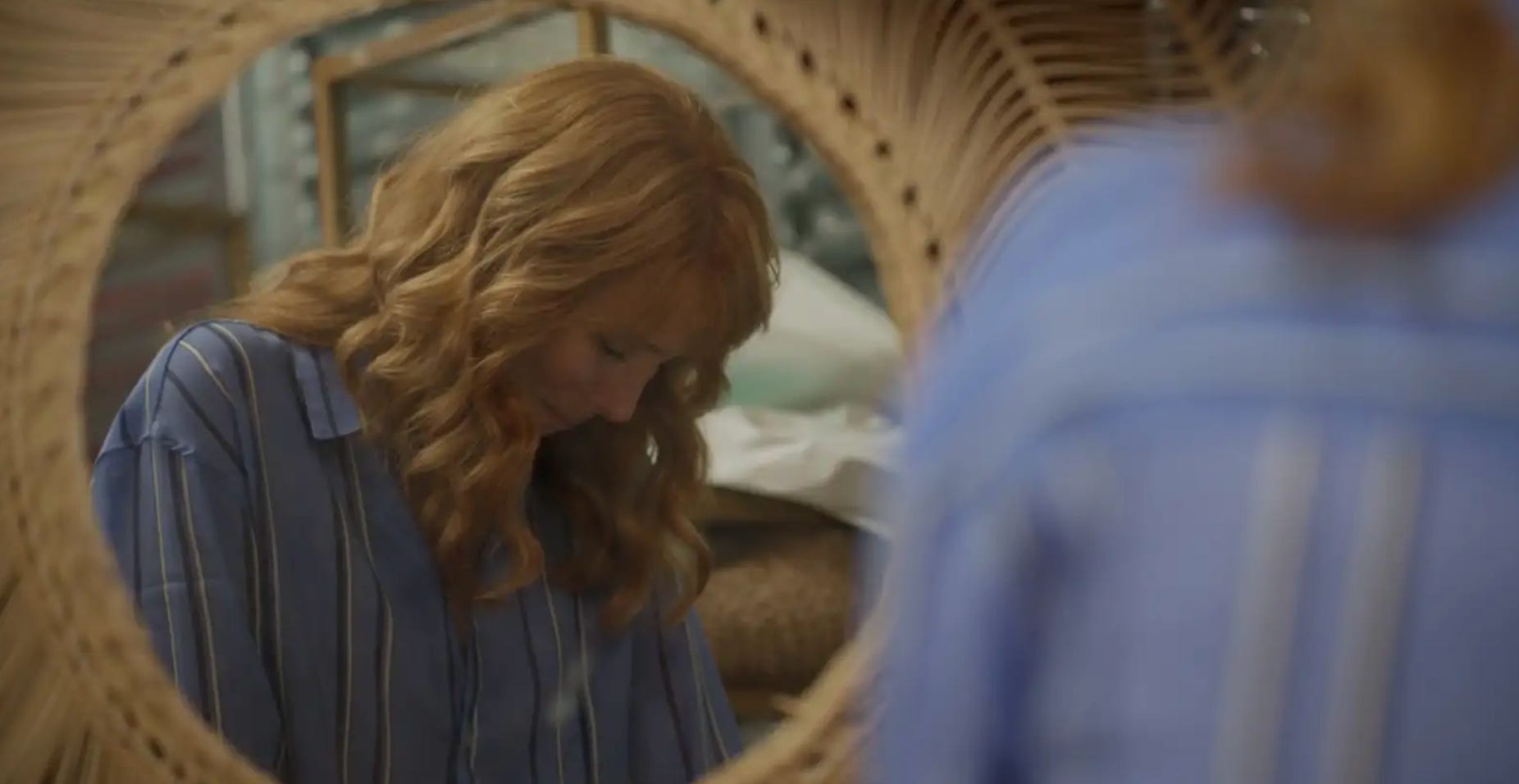
Only he’s not. She can’t find the box, she can’t find him, and thus she can’t properly grieve. “Can’t have lost Mickey,” Valerie says. “Bad enough I couldn’t be with him at the hospital. Remember COVID wouldn’t let us visit? Wouldn’t let me in. Didn’t want him to be there alone, sick.” And then it happens, spontaneous and gut-wrenching, Jane’s cameras capture a private moment in which Valerie, while rifling through boxes, stops to let the grief wash over her. She bows her head and expresses a kind of sadness we’ve never seen from Valerie. It’s at once heartbreaking and awe-striking. You’re sad for Valerie and happy to see Lisa Kudrow revealing a new and thrilling layer of Valerie.
Later, in her dressing room, Tommy discovers Mickey’s ashes in one of the boxes Valerie hadn’t properly searched through. “What’s this beautiful thing?” Tommy asks.
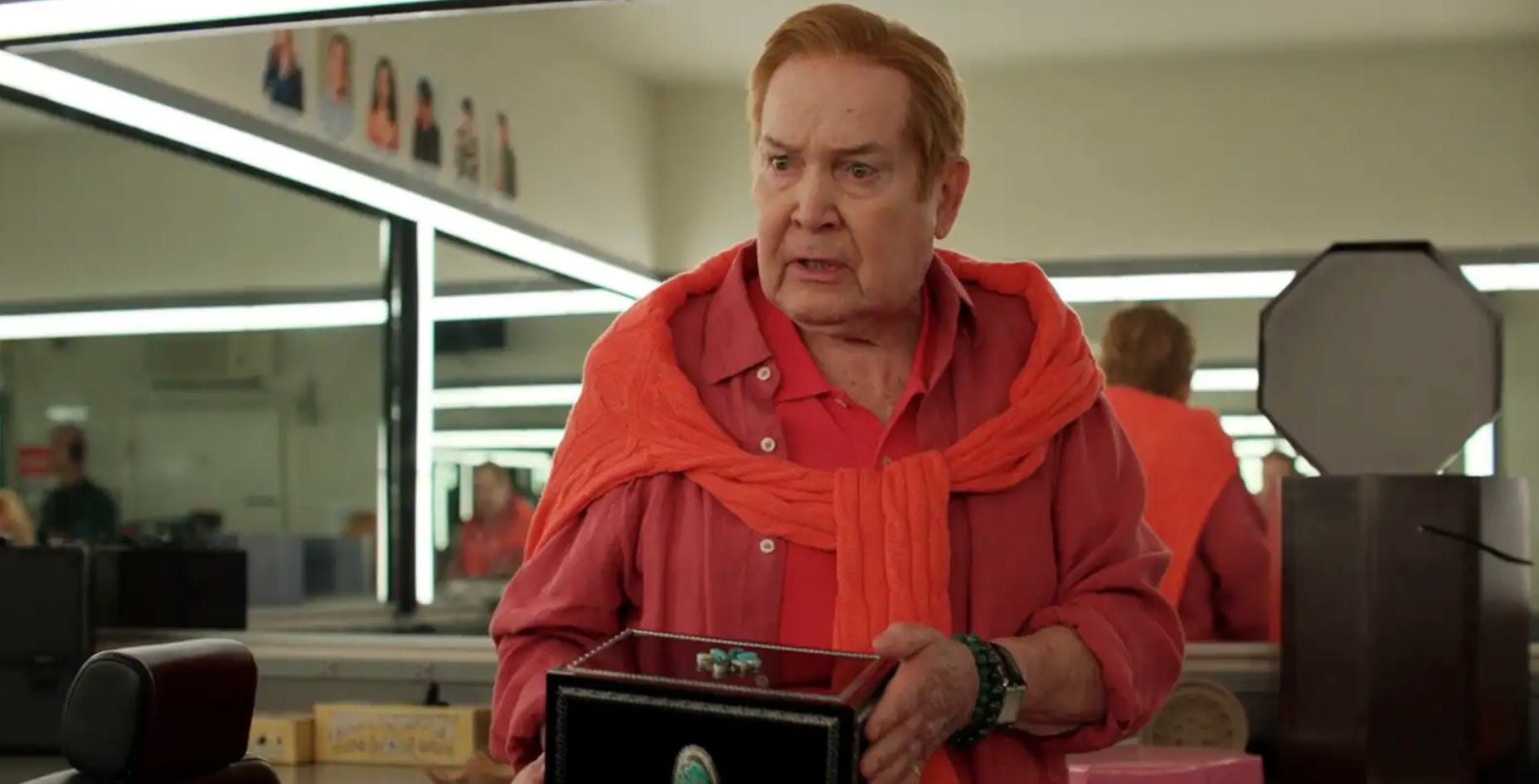
“Oh my God, there he is,” Jane says as the camera slowly zooms in on Valerie’s face, one that brims with relief, love and resolve. (“Emmy, now!” I found myself chanting at so many moments during this episode.)
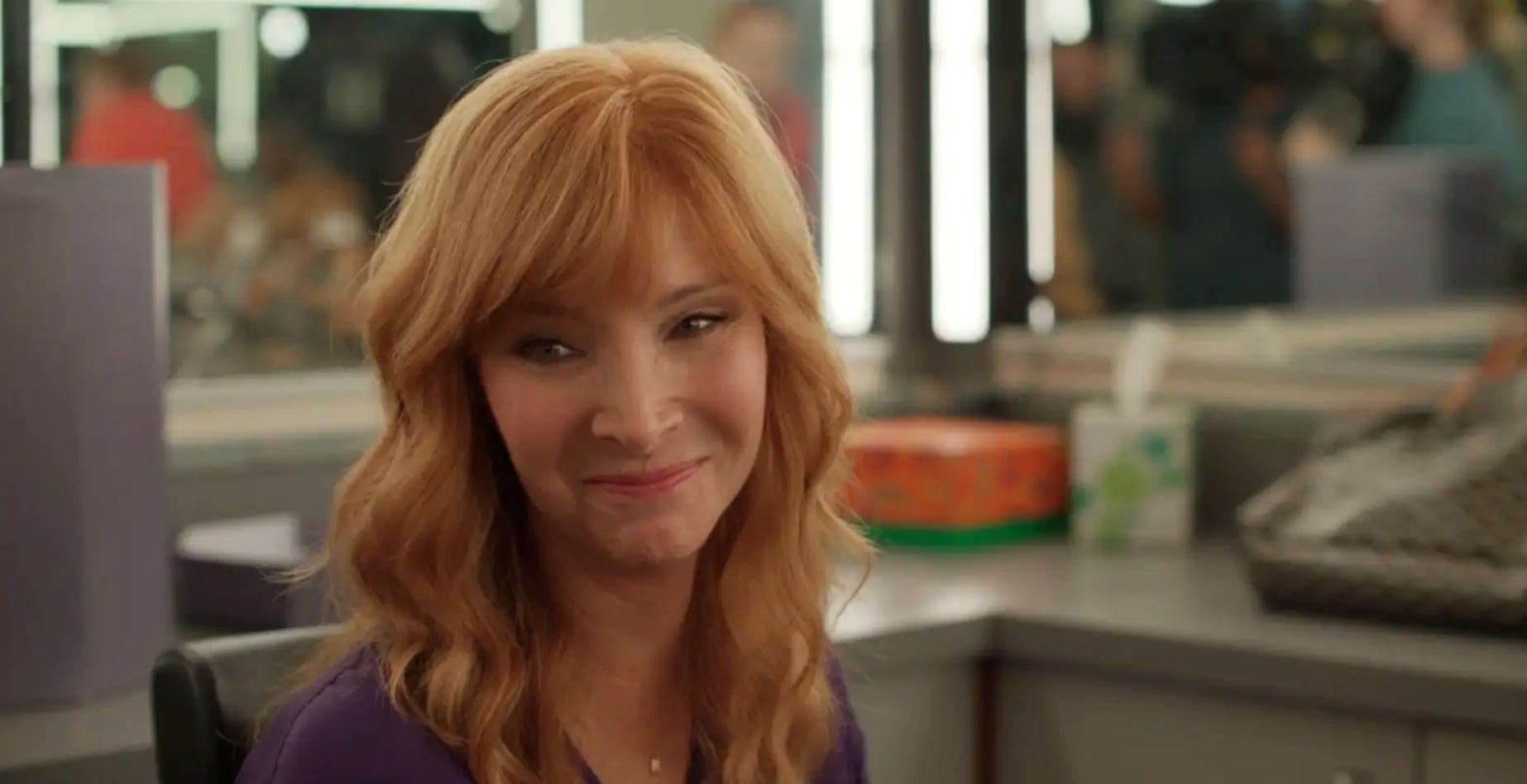
“Good for you,” Tommy tells her. “Yeah,” she says, picking up what Tommy’s putting down in recognizing that it’s not just about finding the box.
And so Valerie, appropriately, decides to go to the roof of the soundstage and release Mickey’s ashes. “Well, dear Mickey, I wish you were here,” she says. “But why ask for the moon when we have the stars?” she asks, once again misquoting Now, Voyager.
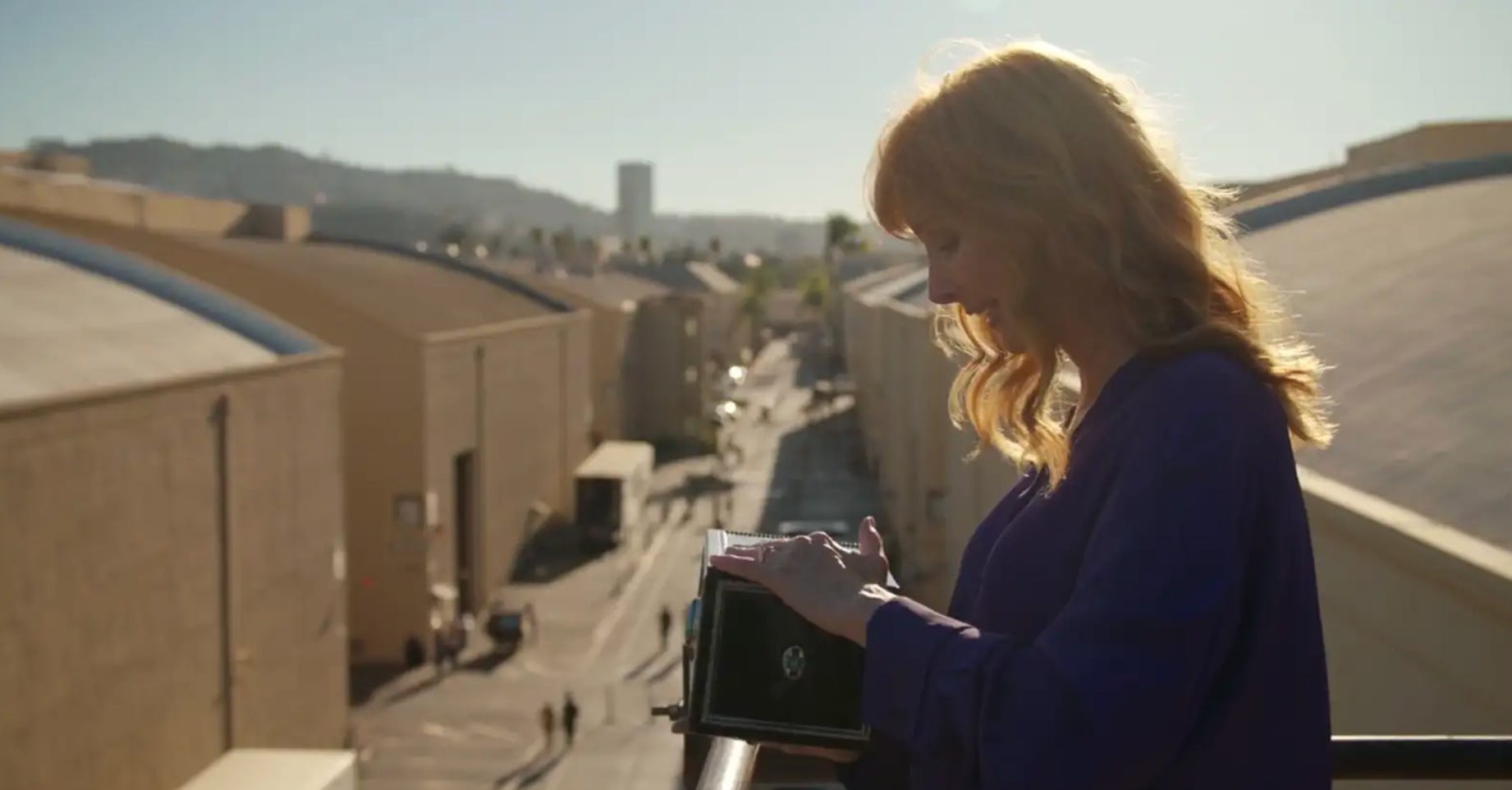
She opens the box and lets the ashes begin to pick up wind as the opening coos of Donna Summer’s “Last Dance” begin to play. “Oh, Mickey. Mickey! Mick! Mick! Mick! Bye, buddy! Fly!” Tommy shouts from down below.
In our podcast, King told me:
“If you listen very closely, we did not put any wind effect in, but there is an actual audible wind that is on some microphone somewhere that when you mix the show you try to improve, and I was like, ‘Under no circumstances can that wind be gone. I don’t know where it came from.’”
And then, because it’s The Comeback, we have a security guard asking what they’re doing up there and demanding they come down.
“The first season was referencing reality TV and what was the great magnet of reality TV? Characters that were real people that wandered in front of the camera,” King explains.
“So if Valerie was going to be an actress in front of the camera, we needed her to have somebody who was not an actor. By the time I met him in college, Robert Michael Morris was a theater teacher and then after all that he had retired. But what he always was was authentically theatrical. We knew that Valerie needed a supporter, a blind follower, like a Saint Bernard, like a cask of rum in the cold, someone who’s going to give her that. So we wrote Mickey with the idea of Robert and I called him up and said, ‘I have some good news for you. Lisa and I have written a show, there’s a part in it for you, based on you.’ And he was great. He never had a fear. It was literally just couture comedy. He just was perfect.”
Oh, how he was.
Bye, buddy!
Fly!
Comments
Nothing yet. Say the first thing.
Sign in to join the conversation.