
For much of the 2020s, one of the most agreed-upon strategies to address the housing crisis was to eliminate single-family zoning. In turn, the idea went, we would produce “missing middle” housing: duplexes, triplexes, and fourplexes. This was hailed as “gentle density” that would provide greater access to the American Dream. One of the candidates in Los Angeles’ mayoral race, Nithya Raman (trained as an urban planner btw…), continued to rest her housing agenda on missing middle in a recent interview. “My vision of adding more housing in Los Angeles is about adding gentle density in some of these single-family neighborhoods. These are two- and three-story buildings, duplexes,” Raman said.
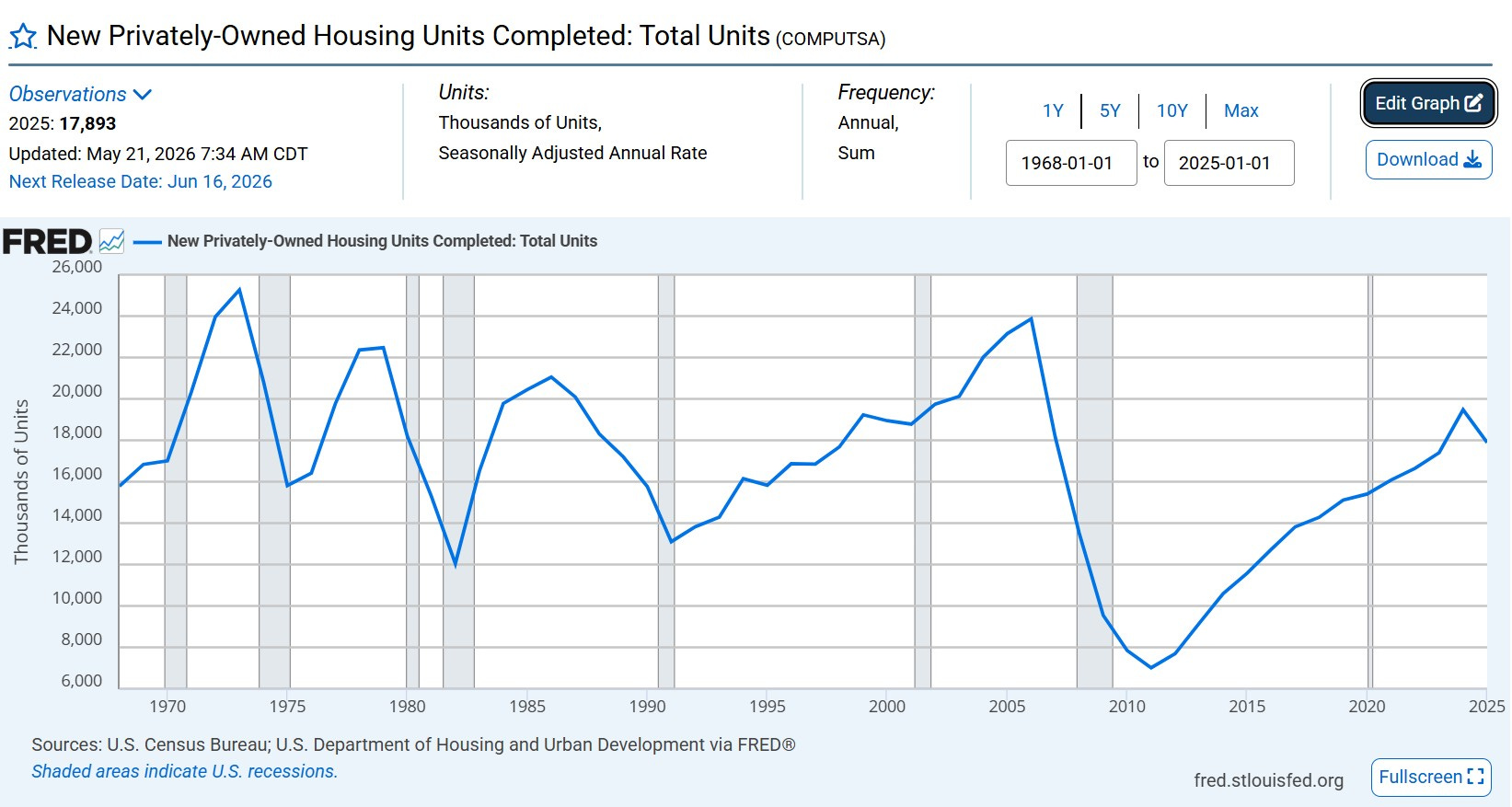
Given the reliance on missing middle as a housing strategy, I was curious whether reforms intended to spur missing middle—e.g., eliminating single family zoning, lot splits, etc.—had made a difference. I found the data on housing units completed somewhat remarkable. I pulled data from the St. Louis Fed’s housing data compilations and I’ve reproduced some of the charts below.
The good news…total housing units completed is way up overall. There is a downward trend within the last year that I’ll address in a future post, but the overall total number of units produced is headed in the right direction as the graphic below shows.
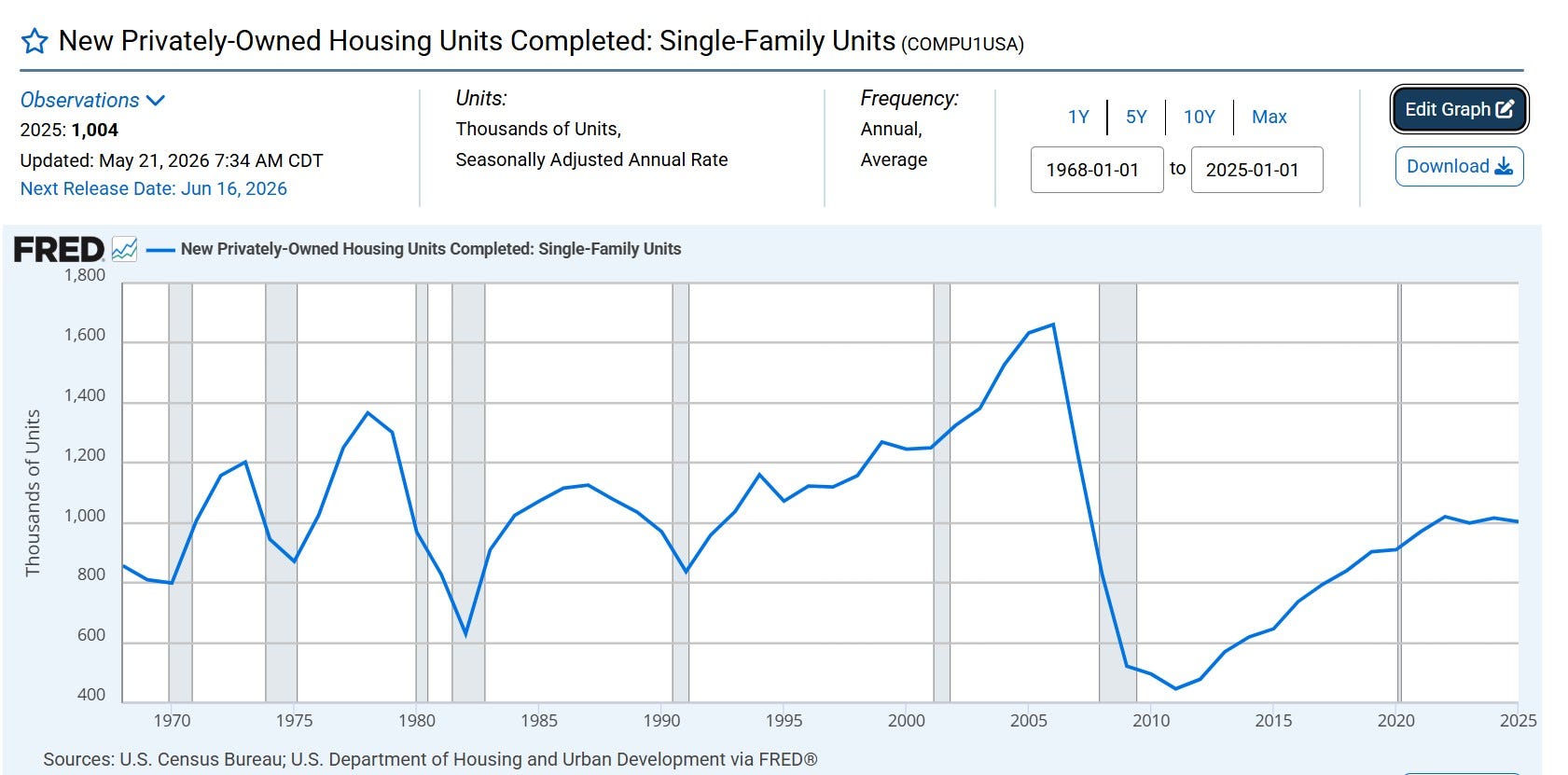
But that leaves the question: what type of housing is being built? And the answer there is really important. One thing we are building is…single-family housing, as the graphic below shows.
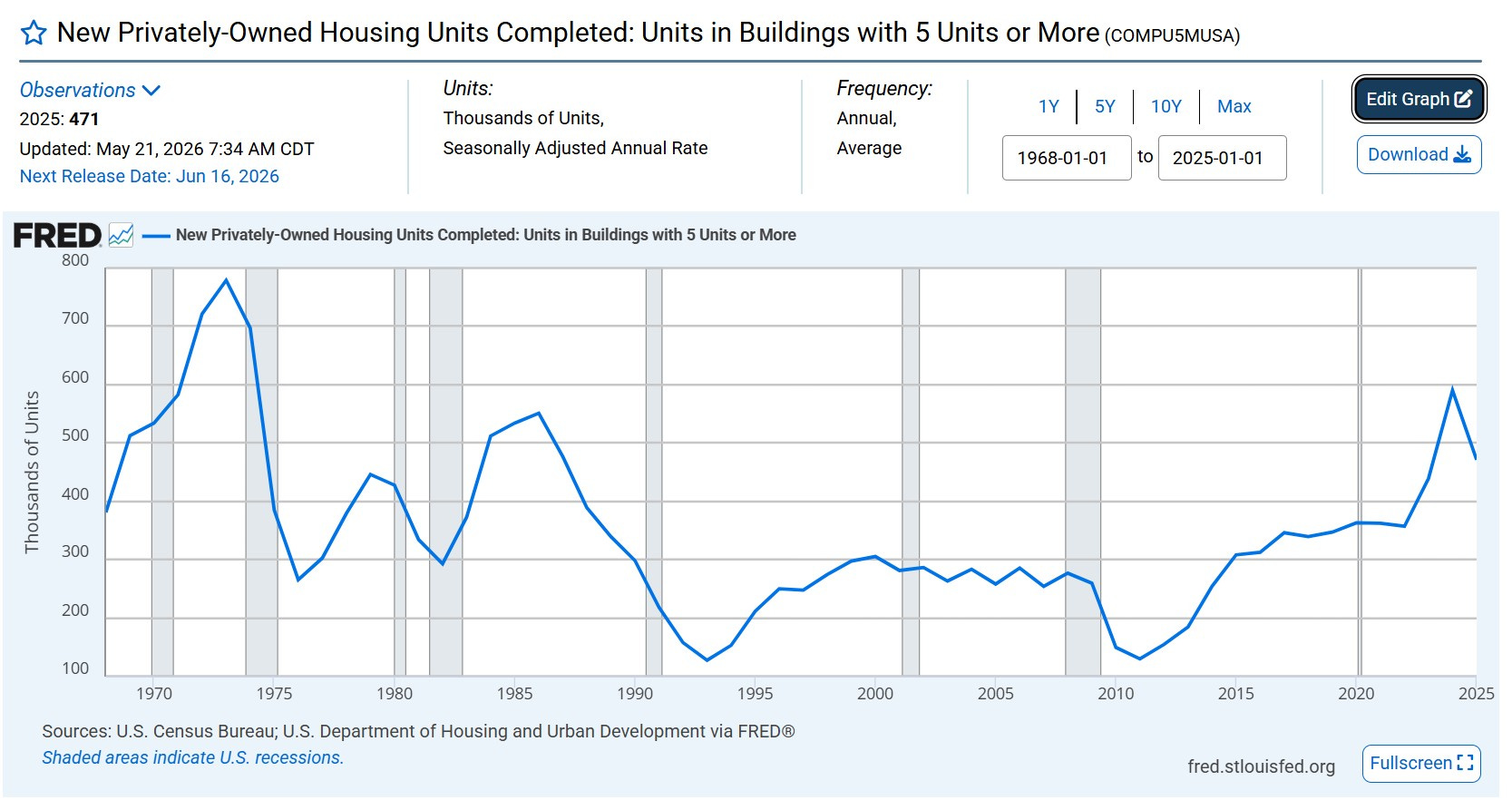
Another thing we are building…and building a lot of…is buildings with 5 or more units, as shown in the graphic below.
One thing we are NOT building a lot of is…buildings with 2-4 units, as shown in the graphic below.
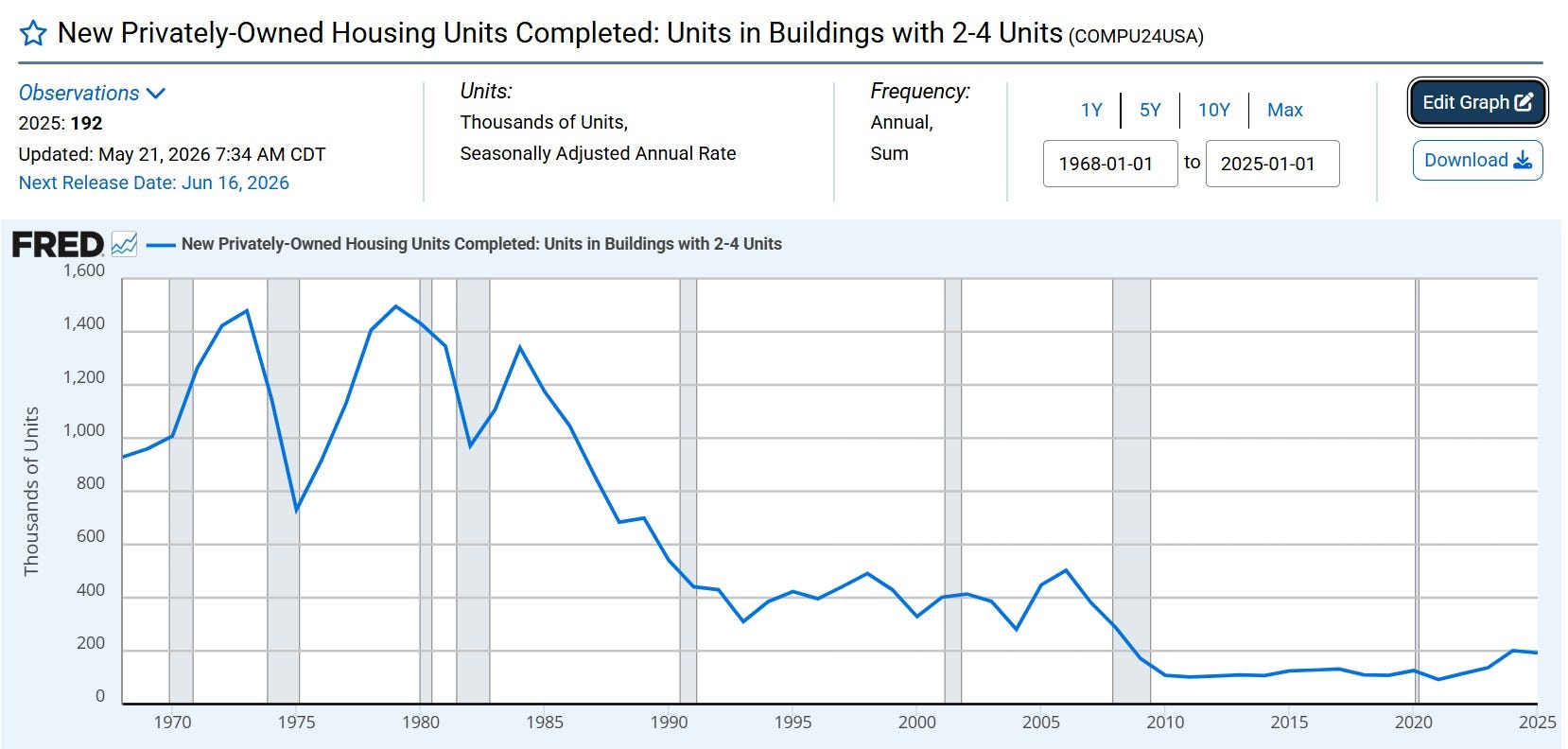
In other words, of the three major project types—single-family, buildings over 5 units, and buildings 2-4 units, the ONLY type that we are not building a lot more of is missing middle.
I realize some may say…this is units completed, not housing starts. But you can go look at the St. Louis Fed data and see that housing starts largely track the units completed trend.
While there are political and social reasons to favor missing middle, for whatever reason, it simply isn’t getting built. And I think planners and politicians thinking about the housing crisis need to take this seriously. Even in light of deregulation of the single-family district, the market doesn’t seem to want to build missing middle. It’s worth more thought to understand why, and build housing strategies that take such reasons into account.
No posts
Comments
Nothing yet. Say the first thing.
Sign in to join the conversation.