
We get more calls than we used to.
In medieval times, your life would revolve around the few calls you got. You would wake to the rooster’s call, heed the call to prayer, gather with the town crier’s call, and occasionally be called to arms—all'arme in Italian, literally the source of the word alarm. The expectation was that you would answer the call: to refuse was to bring shame upon yourself.
Today, we are inundated with calls—friends, spam, countless push notifications—each demanding our attention throughout the day. With these calls, you are always presented with the option to accept or decline.
There is a certain feeling of guilt that comes with declining. I feel terrible when I don’t respond to a friend’s message, or leave an email unanswered. Each time we choose not to engage like this, the shame gets repressed. Somewhere in the depths of my subconscious, the unanswered obligations are probably eating away at me, making me slightly more anxious throughout my day.
With billions of people all feeling this feeling, it makes sense that we would end up with memes about receiving calls. Shortly into Trump’s first presidency, we got the “Obama is calling” memes; in 2023 we got “John Pork is calling,” depicting a photoshopped pig character. By 2025, the genre exploded, resulting in “fih is calling” and “the big leagues are calling.”
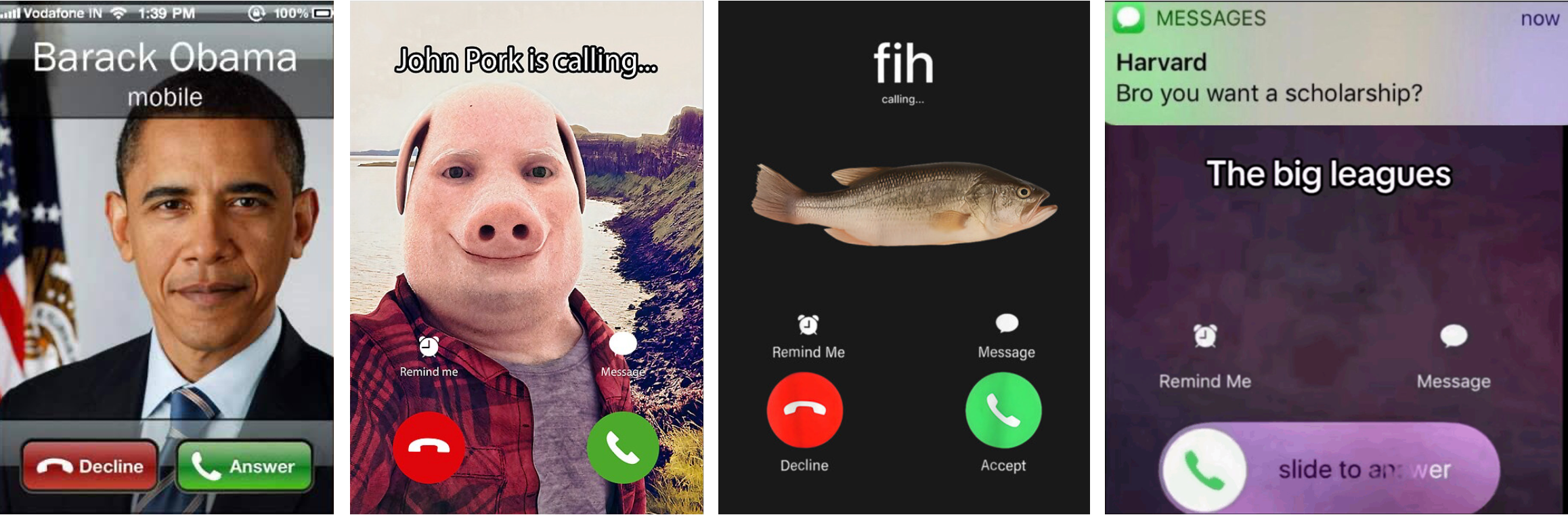
The immediate joke, of course, is the absurdity of the caller ID. There is no reason you should have John Pork or “the big leagues” in your phone contacts, which creates a humorous dissonance between expectation and reality.
Beneath this layer, however, there is the more timeless call for your attention. The phone interface makes you the real subject of the meme. Barack Obama and the fish want to speak to you specifically. This raises two questions: what could they possibly want, and should I answer this?
For Harvard and “the big leagues,” the answer is obvious. The meme ironically validates you, exhorting you to join a position of importance in society. And yet, because you have the agency to ignore them, you are elevated as even more important.
Obama achieves a similar effect, but the post-presidency timing of the meme positions him more as a character from your past, briefly emerging from that shameful place in your psyche. You already let his party get voted out of office, ignoring your previous calling when it mattered most. Now he is summoning you back to your political duty—if you ignore him, you repeat that earlier failure.
John Pork and “fih” are even more direct representations for representations in your subconscious. If you’re online enough, their calls make you recall previous memes. Like Tung Tung Tung Sahur, they emerge from seemingly nowhere to summon your engagement and redirect it to your own “brainrot.”
Both characters are visually unappealing, which is the point. They are like old acquaintances you’re trying to avoid. You are primed to want to decline, to push back the memories until they surface again. Like “the game,” they are an ongoing, inescapable infohazard always haunting the back of your mind. In this way, they call attention to the oversaturation of our memetic ecosystem—why are we getting so many more calls than we used to?
There is one final divergence which I find the most important. John Pork was always a product of the internet, originally created with digital tools to serve as a “virtual influencer” on Instagram. The fish, meanwhile, is primal. The earliest people emerged from fish, hunted fish for survival, and inscribed images of fish as sacred symbols. Fish are literally the spawn point: the word “spawn” comes from fish, and now we mostly use the word in video games.
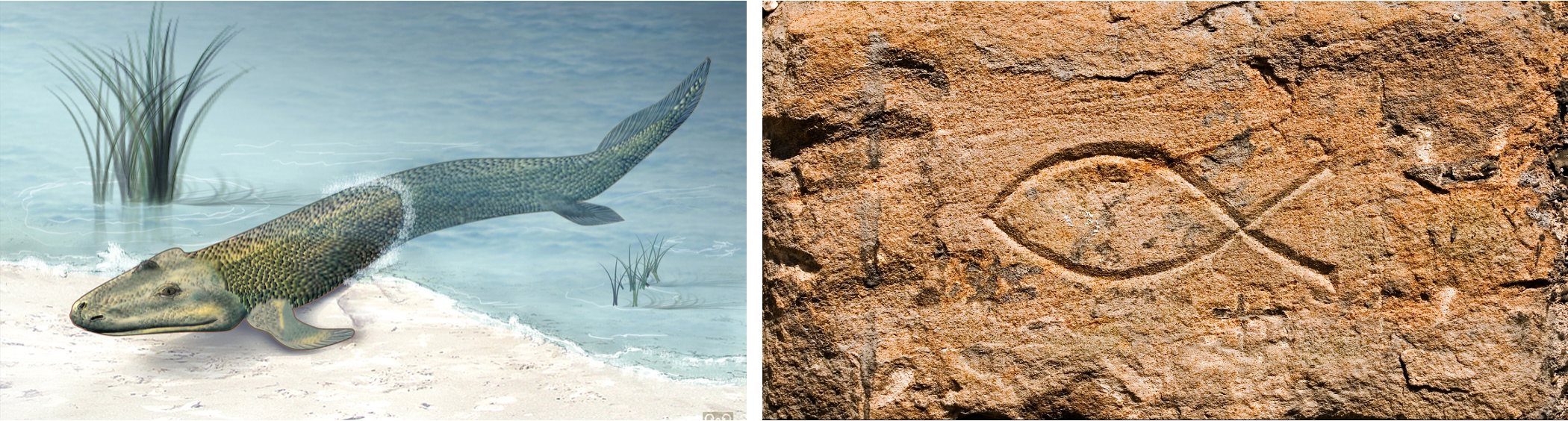
The call of “fih,” in juxtaposing something ancient with a modern interface, doubles as the call of the wild. It cuts through our hypermediated reality, summoning us back to a more natural state of being. The very instinct to decline shows how alienated we’ve become from our own roots.
Are you going to accept the call?
If you can make it, I’m hosting a mass reading of Howl by Allen Ginsberg tomorrow at 5:30 sharp in Washington Square Park, NYC. Free books for the first three hundred people to arrive. RSVP here or just show up.
No posts
Comments
Nothing yet. Say the first thing.
Sign in to join the conversation.