
I have taken apart more electronics than I can count.
A transistor radio, a Nintendo 64, a Raspberry Pi, a full desktop stripped to the bare board and built back up again. When we got our first modem, the handshake tone coming through the speaker was the most interesting sound in the house, and what sat on the other end of it changed what I thought a computer was for.
That was more than thirty years ago and I still love this stuff. It is why I pay attention, and it is why I have no interest in pretending the industry should not exist.
All of that connection has to live somewhere physical. Data centers are not new, and the industry was building them long before anyone used the words artificial intelligence in a sentence about electricity prices. What is new is the scale and the speed, and the fact that one building can now ask a regional grid for more power than the county it sits in. When I say data centers I do not only mean the AI campuses that are easy to point at. I mean all of it, from the racks serving the game on your kid’s tablet to the multi-gigawatt sites training frontier models.
Every one of them should have to explain itself before it gets built. Not after.
Technology can do extraordinary things. It can also flatten a community that never got a vote on it. I am not willing to let the broligarchy gaslight us into calling that progress.
Start with a town in California that never got the chance to say anything at all.
Gilroy, California calls itself the garlic capital of the world. If you’re not a vampire, it’s a delightful place to visit.
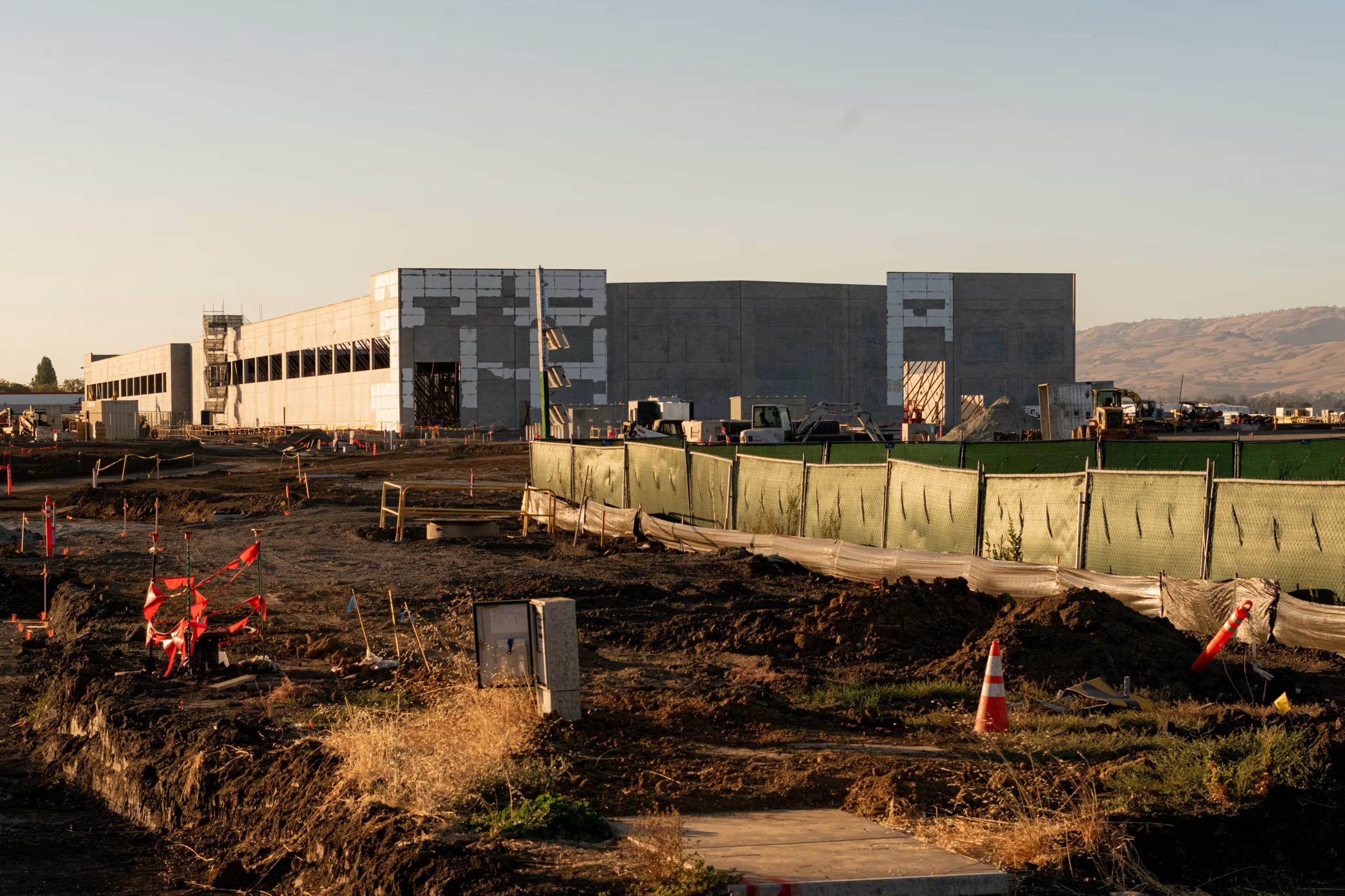
In July 2025, one city employee — the community-development director — signed off on a $2 billion Amazon data center on 56 acres of farmland thirty miles south of San Jose. No public meeting. No council vote. No hearing. The parcel was zoned for industrial development along a freeway under criteria written forty-five years ago, and the project met them, so a signature was all the law required.
Amazon had applied in 2020. The city ran a full environmental review. There were public notices and a comment period, and the comment period closed in September 2024. When a resident named Rosa Rodriguez wrote to city staff in February of this year asking to weigh in, a planner informed her the window had shut seventeen months earlier.
The Wall Street Journal obtained five years of emails between the company and the city.¹ They show two parties negotiating carefully, and they show both sides managing what the public would learn. When residents raised concerns in January about the risk of a battery fire like the one at Moss Landing, Gilroy’s fire marshal wrote that officials should “limit the level of technical detail that is distributed publicly,” because the company’s fire-suppression systems were proprietary. An Amazon official said he would find out what could be shared.
The residents packing council meetings this spring were not fighting a proposal. They were watching construction. An elementary school teacher told the council that most people in town learned about the project only after the work started, and she was right. The mayor’s defense was that Gilroy has approved big industrial projects this way for years and nobody minded when it was a food-distribution center.
He isn’t wrong about the process. That’s the problem with it.
Nothing in this story is illegal. Nothing in it is even unusual. A company found a jurisdiction where the zoning code predated the internet, satisfied it, and built. The only thing that failed was the assumption that a project of that size would have to face someone before it broke ground.
Before anyone in Maryland feels superior about this, Montgomery County has been permitting data centers under a zoning category written for cable television systems.² Dickerson got its approval from a hearing examiner who found it fit that category. Same story, different decade of obsolete code.
Loudoun County, Virginia is the global center of gravity for this industry, with more than six hundred data centers in the state. One of them, owned by Vantage Data Centers in Sterling, powers itself with eight bus-sized natural gas turbines and dozens of backup diesel generators, sitting in a residential neighborhood. It is currently the only self-powered data center in Virginia, which is worth saying plainly, because it makes Sterling an early case rather than a typical one. Early in the direction everything else is moving. Its 2023 state permits allow ninety-five tons of nitrogen oxides a year and more than fifty-six tons of soot.
In March, the Piedmont Environmental Council published an analysis it had commissioned from Michael Cork, a biostatistics research fellow at Harvard’s T.H. Chan School of Public Health. Using the facility’s own permitted limits, Cork estimated the pollution could cause between $53 million and $99 million in annual health costs and between 3.4 and 6.5 premature deaths a year.
What happened next is documented in internal emails Politico obtained through a public records request.³
Piedmont sent the report to Michael Rolband, the director of Virginia’s Department of Environmental Quality, two days before publishing it, as a courtesy. Rolband forwarded it to seven staffers in under five minutes and asked for a review. The report went public at 8 a.m. on March 4. DEQ had a draft critique inside of three hours.
Some of his own staff told him the agency shouldn’t be doing this. A manager in the Office of Air Quality Assessments wrote that the magnitude of the health impacts wasn’t surprising and that modeling staff don’t comment on health effects. Asked for more, he said flatly that he was not a health scientist and that the agency was not qualified to conduct that review. He suggested they not make a big deal of it.
Rolband pushed anyway. He told staff that Piedmont had been in touch with his boss and wanted to criticize the agency, and that DEQ needed a critique that would survive public scrutiny. Then he emailed the report to Vantage’s senior manager for public policy, told him staff were reviewing it, and invited the company to comment publicly.
“Thanks for flagging,” the Vantage executive wrote back.
The state environmental regulator tipped off the regulated company about a health study of its facility, over the documented objection of his own air quality staff, and the company thanked him for the heads up.
Read that sentence again. That is not a regulator. That is a fucking public relations department that happens to issue permits. The agency’s April report echoed arguments the company had made privately, criticized Cork’s modeling, and declared Loudoun County one of the best localities in Virginia for population health, citing 2023 data from before the facility was operating. A former DEQ director who ran the agency from 2002 to 2006 called the report unusual and said determining community health outcomes is not the department’s job.
Cork ran his models again using the actual emissions DEQ disclosed in its rebuttal. Lower numbers, same conclusion: $33 million to $63 million in annual health damage, two to four premature deaths.
Here is what makes Sterling different from Gilroy. In Gilroy, disclosure didn’t happen. In Sterling, disclosure happened, the permits were public, the emissions limits were published, an independent researcher did the arithmetic — and the agency holding the information turned into the industry’s press office.
Transparency is necessary. It is nowhere near sufficient. The permit told you exactly how much soot was allowed. It just couldn’t make anyone act on it.
On August 8, Amazon confirmed it is investing in a natural gas power plant attached to a data center in Pecos County, Texas.⁴ Thirty-five turbines. Up to 7.65 gigawatts. Permitted to release thirty-three million tons of carbon dioxide a year, which would make it the single largest source of climate pollution in the country, roughly double the coal-fired James H. Miller Jr. plant in Quinton, Alabama, the current record holder. Plants rarely emit the full amount a permit allows, and Amazon’s almost certainly won’t. The permit is the ceiling the company asked for and the state agreed to.
But nobody applies for headroom they never intend to use.
Then came the company’s statement. The facility, a spokeswoman said, would be “powered by new on-site generation that won’t raise electricity costs for Texas families.”
That claim is true in a narrow and deliberate sense. The plant will not initially connect to the wider grid at all. No interconnection queue. No capacity market. No transmission upgrade cost allocation. No state utility commission proceeding where a ratepayer advocate gets to cross-examine anyone.
The reason developers are building their own generation is speed — waiting for a utility connection can take years — but the side effect is that the facility exits every regulatory structure that exists to make large electricity consumers answer for what they consume.
Dominion Energy in Virginia is fielding about ten new large-load connection requests a month. Its backlog of proposed data centers runs to seventy gigawatts, three times the utility’s all-time peak demand. Some of those projects will wait in line. The ones with enough capital won’t. They will do what Amazon is doing in West Texas and build behind the fence, where the queue and the tariff and the hearing don’t reach.
Every accountability mechanism this country has for large electricity loads attaches to a facility that faces the grid. The industry has figured out how to stop facing the grid.
So what would a law that actually caught this look like?
I’ve drafted one.
It’s called the Data Center Accountability Act, it runs five titles, and it applies to any facility designed to draw 20 megawatts or more at full build-out. That threshold is deliberate. Twenty megawatts running continuously is on the order of ten to twenty thousand households, it is far above anything a local colocation provider or a hospital server room will ever hit, and it is measured across facilities under common sponsorship on adjacent parcels so that nobody escapes by slicing one campus into five nineteen-megawatt companies. The rules should scale with the footprint. Below the line, nothing in the bill touches you.
The first section that matters isn’t in any of them. It’s Section 4, and it says the Act applies to a covered facility regardless of its electric service configuration, whether grid-connected, co-located, behind-the-meter, or operating in complete isolation from the transmission system, and that no arrangement respecting the source or contractual structure of a facility’s power exempts it from anything. Pecos County is why that section exists. A bill that only regulates data centers taking utility service is a bill the industry will route around in about eighteen months.
Title I is disclosure, and it starts from the recognition that the federal government tried this once and gave up. The Corporate Transparency Act built a beneficial ownership registry at FinCEN in 2021.⁵ That registry was never public — the statute makes reported ownership information confidential by default — and in March 2025 Treasury exempted every domestically formed entity from reporting at all, by interim final rule, leaving a regime that reaches foreign-registered companies and essentially nobody else.⁶ That rule was still in force this spring, more than a year after FinCEN said it would finalize something.
In May, the Government Accountability Office reported that the exemption had removed more than 99 percent of the entities that had previously been required to report, said Treasury had not determined how to close the resulting gap, and recommended that it do so. Treasury disagreed with the recommendation.⁷ A registry that covers less than one percent of the companies it was written for is not a registry.
So Title I creates a reporting duty that arises under its own authority, that cannot be waived or suspended by regulation, and that produces a public, searchable, machine-readable database with a one-year deadline and money appropriated to build it. Ownership traced through every entity in the chain to the ultimate natural person, company, or government. Tenants above a quarter of a facility’s compute identified, with nondisclosure clauses purporting to forbid that disclosure declared void as against public policy. Annual reporting to FERC on power, water, generators, and interconnection costs.
Above a hundred megawatts, mandatory national security review of foreign-government-linked investment with the investment-fund exception closed, because the current exception lets sovereign wealth money through any structure with a non-foreign general partner sitting on top of it. That provision exists because of a site in Montgomery County, and the chain there is documented rather than suspected.⁸ The proposed Dickerson campus sits on a retired coal plant site bought by a Florida company, is being developed by a Newport Beach firm with roughly five employees and no completed data center anywhere, and in August 2025 that developer took a growth investment from AGC Equity Partners, a London asset manager running about $6.5 billion.⁹ AGC’s Form ADV, filed with the Securities and Exchange Commission under penalty of perjury in March 2026, discloses the rest. The Public Institution for Social Security of Kuwait holds a controlling stake in Wafra International Investment Company. Wafra holds a significant minority of AGC’s parent. AGC’s parent controls the SEC-registered entity. Those relationships have been continuously true since 2009.
None of that appears anywhere in the county’s permitting file, because nothing requires it to. The only reason any of it is knowable is that one small affiliate in the group manages $25 million for non-U.S. clients through a Cayman fund and therefore has to file something. Structure the group slightly differently and the disclosure disappears entirely. That is the whole argument for Title I in one sentence: what the public knows about who owns critical infrastructure in its own backyard is currently an accident of where a filing threshold happened to land. Above five hundred, a full environmental impact statement with FERC as lead agency before service begins.
Title II is the generators. New fossil-fueled backup is prohibited at covered facilities, existing diesel retires within seven years, and retired capacity can only be replaced with non-emitting systems. Not diesel-to-gas. Out.
There’s a detail here that ought to be in every conversation about this industry and almost never is. EPA’s new source performance standards for stationary compression-ignition engines generally require them to meet the same tier standards as mobile nonroad diesel engines, with Tier 4 the most stringent.¹⁰ But engines used only for emergencies, standby generator sets, which is precisely what data center backup is, are exempted from the toughest Tier 4 requirements, specifically the ones that would demand add-on controls like particulate filters.¹¹ EPA lets those engines run up to a hundred hours a year for testing and maintenance before anything else applies.¹² A single data center campus in Maryland sought approval for 168 diesel generators totaling more than five hundred megawatts. Under current federal law, those engines answer to a weaker standard than a bulldozer.
Maryland demonstrates the rest of the problem. In August 2023 the Public Service Commission refused to exempt those 168 generators in Adamstown from certificate review, and the developer walked away that October. In January 2024 the Moore administration introduced Senate Bill 474, redefining generating station to push emergency backup generators outside the certificate process altogether. It passed unanimously. The governor signed it that May. The Act did add something in exchange: owners of exempted backup units now file an annual report with the Department of the Environment listing when and why the generators ran, and that report is public and unredacted unless it poses a security risk. That is a real disclosure requirement and it is worth acknowledging. It is also a record of what already happened, traded for a review of whether it should happen at all.¹³ At Dickerson, the original applicant had accepted a binding condition of no diesel generators in exchange for its 2024 approval; the developer that took over the project filed a modification in December 2025 proposing them anyway, and the Montgomery Countryside Alliance put the resulting backup capacity on the order of 1.2 gigawatts for a campus advertised at 360 megawatts.⁸ The condition held right up until the moment somebody wanted it not to.
That sequence is why the floor has to be federal. A state can bargain away its own oversight in a single session, unanimously, in an election year. This bill closes that exemption for facilities of this size. That is not a new burden invented out of nowhere. It is the removal of a carve-out that nobody would defend out loud.
Title III is the ratepayers, and it does at the wholesale level what states cannot do alone. FERC would be required, under its existing Federal Power Act authority to police unjust and unreasonable rates,¹⁴ to make large facilities procure capacity equal to their contribution to system peak, assign incremental capacity and network upgrade costs directly to the facility rather than socializing them across everyone else’s bills, and require co-located and behind-the-meter facilities to pay for the reliability services they take from a grid they claim not to use. Amazon’s statement about Texas families is the exact proposition this title is built to test. If a facility genuinely imposes no cost on anyone else, the tariff will show it, and the company loses nothing. If it does impose costs, the people paying them get to see the number.
Title IV is the workforce, and it is the title I added last, because the first draft didn’t have one and that was a hole. Any facility taking federal money, federal loan guarantees, or a FERC-approved interconnection has to pay Davis-Bacon prevailing wages, put at least 15 percent of construction labor hours into registered apprentices, and observe the apprentice-to-journeyworker ratios the programs already set. That is not invented. It is the same framework federal clean energy tax credits have used since 2023,¹⁵ lifted over to an industry that has so far gotten the public benefits without the public conditions. Facilities also have to report construction hours, apprentice hours, union hours, permanent headcount, and wage rates by classification, so that the jobs numbers in the press release can be checked against the jobs that exist. Workers can sue for unpaid wages directly. And nothing in it preempts a project labor agreement or any stronger state standard.
I should be straight about what none of this does. It does not answer the question the apprentice in Warren is asking, which is what happens when the build-out ends. A biennial Labor Department report on that is in there. A report is not an answer.
I should also be straight about what the bill would not have done in Gilroy. It would not have stopped that signature. The zoning code was local, the closed comment period was local, and no federal disclosure statute forces a California city to hold a hearing it doesn’t want to hold. What Title I would have done is put a $2 billion facility, its owners, and its projected power and water draw on a public federal database before it could energize, which means the teacher and the college student organizing against it would have had something to find in 2024 instead of a construction site in 2026.
That’s a smaller claim than I’d like to make. It’s also the honest one.
Title V is one paragraph and it is the paragraph I’d defend hardest. Everything above is a floor. Any state, any county, any town that wants to go further keeps every bit of its authority to do it. Nothing in this bill preempts a stricter local law, and nothing in it hands a company a federal permission slip to wave at a planning commission. Gilroy is now considering an ordinance to require planning commission approval and community meetings for projects like this. That ordinance should survive this bill completely intact, and under Title V it does.
The strongest argument against all of this is not a lobbyist’s argument. It is an engineering argument, and it is a good one.
Behind-the-meter generation is a genuine solution to a genuine problem. Interconnection queues run years deep. A company that builds its own power plant is not taking capacity away from anybody, is not competing with a hospital or a school district for the same transformer, and is not adding load to a system already straining. Amazon’s claim about Texas families is not a lie. In the narrow sense it describes, it’s true. It’s okay to be angry about that.
There is a second argument, and it is that the demand is real. The compute has to sit somewhere. If it doesn’t sit in Pecos County or Frederick County it sits in a jurisdiction with weaker air rules, weaker labor law, and no public records act at all, and the people who currently have standing to complain about it lose even that.
Both of those are serious. Here is where they stop working.
Building your own power plant removes a facility from the grid’s accounting. It does not remove it from the county. The turbines still sit in somebody’s neighborhood, the diesel still runs during testing, the water still comes from somewhere, and the health costs still land on whoever is downwind, which the Sterling numbers put between $33 million and $63 million a year for eight turbines. Pecos County is getting thirty-five. Self-supply changes who bills you. It does not change who breathes.
The word carrying the weight in Amazon’s statement is “initially.” Facilities built off-grid have every commercial reason to interconnect later, sell excess power, and buy backup service, and when they do, the cost allocation fight starts on terms already settled in their favor. The bill treats that the same day one and day one thousand, which is the entire point of Section 4.
There are two more objections, and they aim at the parts of the bill I’ve spent the least time defending.
The first is security. Publishing power draw, water use, generator counts, and tenant identity for every facility over 20 megawatts builds a map, and the people who would find that map most useful are not ratepayers. The industry will say critical infrastructure in the first sentence of its response, and the concern is not fabricated. My answer is that the bill already exempts classified federal workloads from tenant disclosure, that essentially all of this information is already filed with somebody, sitting in county permit files, state air permits, water applications, and interconnection queues, and that the only thing the bill changes is whether an ordinary person can find it without hiring a lawyer and filing four public records requests. A map that adversaries can already assemble and residents can’t is not security. It’s asymmetry, and it runs against the people who live there.
The second is engineering, and it is the better objection. Data centers are built to uptime standards that assume backup power can run for days, not hours. Battery storage at that duration and that scale is expensive, and at the largest facilities it is genuinely unproven. I think a seven-year phase-out is enough runway, and the best evidence for that is the industry’s own marketing. the developer at Dickerson advertises the site by pointing to a 2,000 megawatt-hour battery storage system that RWE Clean Energy is building on roughly seventeen acres next door.¹⁶ When a developer sells storage at that scale as a feature, it forfeits the argument that storage at that scale is impossible. But I could be wrong about the timeline, and if the engineering case is real, the honest fix is a narrow extension tied to demonstrated infeasibility at a specific site, granted publicly, on the record, with a deadline. Not a permanent exemption for an entire industry, which is what current law gives them.
On the last argument, the race-to-the-bottom case proves too much. It’s an argument against having any standard anywhere, and applied consistently it ends with no state ever regulating anything. Every jurisdiction is somebody’s low-standard jurisdiction. Maryland is Virginia’s. The answer is a federal floor, which is what this is.
There is one more group of people in this story, and everything above does less for them than I want it to.¹⁷ That’s a problem and I’m not sure I have a true solution.
At the Detroit Electrical Industry Training Center in Warren, Michigan, about 850 apprentices are learning a trade while the largest construction boom of their lifetimes reshapes the demand for it.¹⁸ OpenAI’s project in Saline Township is the biggest single investment in Michigan history, needing hundreds of electricians on ten-hour days, seven days a week. An Indeed analysis found hourly installation and maintenance jobs at data centers pay 42 percent more than similar work in other fields. Google has put $50 million into expanding apprenticeship pipelines through the IBEW and its contractors, aiming to lift annual enrollment from 19,500 toward 30,000. BlackRock has committed $100 million. Meta has budgeted $115 million for the first year of a program that runs people through four weeks of training and onto its sites.
These are good jobs. They are also, obviously, temporary. A 29-year-old apprentice quoted in the Times wants to buy a house in the next year and is doing the math on what seven-day weeks cost him. A 22-year-old in her second year said working on a data center feels like helping build a weapons factory. And a man who left early childhood education for the trades asked the question the entire industry is avoiding: “Where do those workers go?”
Nobody has an answer. A Georgetown workforce researcher offered the best case, that the buildout trains a generation of electricians who move seamlessly into a housing boom right as data center demand cools, and then said it probably won’t happen that way.
I want those apprenticeships to exist. I want them to be union apprenticeships, four years deep, teaching a full trade rather than four weeks of task training that expires with the project. But the honest version is that this industry is buying labor peace and political cover along with the labor, and everyone involved knows it. A carpenters’ union official said it plainly: locals endorse projects they’ll work on and sit out the ones they won’t, and the developers are getting community advocacy they didn’t have to do themselves. That’s not a knock on the workers. It’s a description of what happens when the only institution offering people a path into the middle class is the one asking for a permit.
Four stories. In Gilroy, the process worked exactly as written and the public never entered it. In Sterling, every fact was disclosed and the agency holding the facts went to work for the company. In Pecos County, the facility is being built somewhere the rules don’t reach. In Warren, the people building all of it are being handed the best paychecks of their lives and no idea what comes after.
None of these is a scandal in the sense of somebody breaking a law. But that’s what makes them worth writing about. Every one of them is a system doing what it was designed to do, in an era it was not designed for, against companies with more capital than the jurisdictions regulating them will see in a century. If we don’t talk about them, it’s going to keep happening over and over.
Disclosure is the floor, not the ceiling. Sterling proves the floor alone doesn’t hold — you can publish every permit and still lose, if the agency reading them decides whose side it’s on. But you cannot get to the ceiling without the floor. You cannot argue about a facility’s water use, its generators, its owners, or its effect on your bill if none of that is written down anywhere you can reach.
So: write it down. Make it public. Make it enforceable by ordinary people in court, without waiting for an administration that feels like enforcing it. Put a federal floor under the whole thing and leave every state and county free to build higher.
If you want something to do this month rather than this Congress, the Dickerson conditional use modification goes before the Office of Zoning and Administrative Hearings on September 10 and 11. That hearing is open, the record is public, and a hearing examiner already refused once to strike a resident’s testimony when a developer’s attorney asked him to.
The full text of the Data Center Accountability Act is below. Read it, take it, send it to your legislators, and use whatever parts of it are useful to you. I’m not in Congress. The bill doesn’t need me to be.
Demand action. Demand change.
Zusha Elinson, “How Amazon Built a Data Center in a California Town Without Anyone Noticing,” The Wall Street Journal, August 7, 2026. https://www.wsj.com/us-news/how-amazon-built-a-data-center-in-a-california-town-without-anyone-noticing-8610bb67
“Atmosphere Data Centers challenges Elrich’s moratorium on permit review,” Bethesda Today, July 16, 2026 — on the Cable Communications Systems zoning category and the hearing examiner approval. https://bethesdamagazine.com/2026/07/16/atmosphere-data-centers-challenges-elrichs-moratorium-on-permit-review/
Ariel Wittenberg, “Emails show how Virginia regulators downplayed data center health concerns,” Politico, July 25, 2026. https://www.politico.com/news/2026/07/25/virginia-regulators-data-center-air-pollution-health-environment-01004442
Hiroko Tabuchi, “New Amazon Data Center Stokes Worry It Would Be the Most Polluting Power Plant in the U.S.,” The New York Times, August 8, 2026. https://www.nytimes.com/2026/08/08/climate/amazon-data-center-texas-pollution.html
Beneficial ownership information reporting requirements, 31 U.S.C. § 5336 — confidentiality of reported information at subsection (c). https://uscode.house.gov/view.xhtml?req=(title:31+section:5336+edition:prelim)+OR+(granuleid:USC-prelim-title31-section5336)&f=treesort&edition=prelim&num=0&jumpTo=true
Beneficial Ownership Information Reporting Requirement Revision and Deadline Extension, interim final rule, Financial Crimes Enforcement Network, published March 26, 2025 (FR Doc. 2025-05199). https://www.federalregister.gov/documents/2025/03/26/2025-05199/beneficial-ownership-information-reporting-requirement-revision-and-deadline-extension
U.S. Government Accountability Office, Corporate Transparency: Treasury Should Address Gaps in Ownership Information Resulting from Expanded Exemptions, GAO-26-107967, May 29, 2026. https://www.gao.gov/products/gao-26-107967
Ethan Wechtaluk, “The Dickerson Data Center Has a Disclosure Problem,” The Loophole, May 29, 2026 — documenting the AGC ownership chain from Form ADV (SEC, filed March 27, 2026; CRD 339362, adviserinfo.sec.gov), the reversal of the no-generator condition, and the Montgomery Countryside Alliance backup capacity estimate. https://open.substack.com/pub/ethanformd/p/the-dickerson-data-center-has-a-disclosure
“Atmosphere DC secures investment from AGC Equity Partners,” Data Center Dynamics — AGC is a London-based alternative asset manager with roughly $6.5 billion under management. https://www.datacenterdynamics.com/en/news/atmosphere-dc-secures-investment-from-agc-equity-partners/
Standards of Performance for Stationary Compression Ignition Internal Combustion Engines, 40 C.F.R. Part 60, Subpart IIII. https://www.ecfr.gov/current/title-40/chapter-I/subchapter-C/part-60/subpart-IIII
U.S. Environmental Protection Agency, “Fact Sheet: Proposed Standards of Performance for Stationary Compression Ignition Internal Combustion Engines” — stating that Tier 4 requirements for stationary emergency diesel engines do not require add-on controls. https://www.epa.gov/stationary-engines/fact-sheet-proposed-standards-performance
U.S. Environmental Protection Agency, “Fact Sheet: Final Amendments to Emission Standards” — on the emergency engine category and the 100 hours per year permitted for testing and maintenance. https://www.epa.gov/stationary-engines/fact-sheet-final-amendments-emission-standards
Maryland Senate Bill 474 (2024), the Critical Infrastructure Streamlining Act, enacted as Chapter 411 of 2024, approved by the Governor May 9, 2024 — amending the definition of “generating station” in the Public Utilities Article and adding the annual generator reporting requirement at § 7-207.3. https://mgaleg.maryland.gov/2024RS/Chapters_noln/CH_411_sb0474e.pdf
Congressional Research Service, “The Legal Framework of the Federal Power Act,” IF11411 (January 22, 2020) — Sections 205 and 206, 16 U.S.C. §§ 824d, 824e. https://www.congress.gov/crs-product/IF11411
Internal Revenue Service, “Frequently asked questions about the prevailing wage and apprenticeship under the Inflation Reduction Act” — Davis-Bacon rates and the registered apprenticeship labor-hours, ratio, and participation requirements. https://www.irs.gov/credits-deductions/frequently-asked-questions-about-the-prevailing-wage-and-apprenticeship-under-the-inflation-reduction-act
Atmosphere Data Centers, Dickerson, MD project page — listing a 2,000 MWh battery energy storage system in development adjacent to the site. https://atmosphere-dc.com/data-centers/dickerson-md/
Ethan Wechtaluk, “The Data Center Next Door,” The Loophole, April 2026. https://open.substack.com/pub/ethanformd/p/the-data-center-next-door
Lydia DePillis, “A.I. Companies Are Recruiting Electricians and Carpenters by the Thousands,” The New York Times, July 29, 2026. https://www.nytimes.com/2026/07/29/business/economy/data-center-electricians-training.html
No posts
Comments
Nothing yet. Say the first thing.
Sign in to join the conversation.