
Hi Everyone!
It’s Conor here from Outer Beach Conor and I’m back with a September launch update.
We’re looking at all of the ETF launches in the US during the month.
I’ll be putting an opinion on each launch, and I’ll also single a few out to analyze a little more deeply to explain my reasoning.
The goal is to segment them by what version of helpful to the market I think they are.
Here are my metrics:
Good: Anything that may already exist in another form but is an honest attempt at reskinning the cat. Largely investor-positive.gi
We’ll See?: May not exist yet, either as an asset type, strategy, or anything else in ETF format. Can be quite investor-positive. Requires analysis.
Bad: A fund that plays on an existing asset or strategy but without a value-add, sometimes with a value loss. Leveraged products, income products, high expense versions of existing product types with no discernible add-on. Almost always benefits the issuer instead of the investor.
Keep in mind that everything in here is just my opinion.

I’m happy to hear all challenges to my assigned ratings in the comments or via DM.
Breakdown:
For September, I ended up with the following breakdown:
Good: 49 launches
We’ll See: 2 launches!
Bad: 64 LAUNCHES!
This month there were not only a LOT more launches but a LOT more bad launches. We doubled from 32 to 64 in the bad column.
We had 49 good launches, indicating the rapid overall launch cycle that we’re in.
I wouldn’t expect October to be quite as active with the US government shutdown in effect halting most SEC activities.
We have some great entries here.
Average expense ratio of about 50 bps.
Mostly due to a higher number of structured product and global equity strategies that are more expensive to operate.
Also note again that a solid number of these new funds are operating with wavers on expense ratios that are NOT reflected in this analysis except when noted.
I like that we’re getting some competition in the ultra-low fee equity and low-fee active fixed income products.
Global X U.S. 500 ETF (GXLC) is a 2bp alternative to the ever-popular S&P 500 products, running on a Solactive index.
Nuveen has 2 new bond products, both under 10bps.
We even have a Research Affiliates indexed equity product for 15bps.
Feels like a great value. Lots of global products and defense sector focused products.

Once again, we’re seeing just giant spaghetti cannons of launches for every IPO, flavor-of-the-month, and meme-worthy stock.
2X leveraged products, questionable income products, and leveraged questionable income products, it’s all here!
I’ve also put some equity strategies in here for being wildly expensive.
Any equity product tracking an index in the US or developed ex-US markets should not cost 70 bps. Looking at you Defiance, Sofi, and others.
There are also some “unconstrained” equity funds in there that are not only expensive but are just active stock picking.
You can pay a quarter of the price of some of these and end up invested in the same 30 stocks that these will inevitably buy.
Tsk, tsk to some of these funds charging over 1.5%. Even with wavers, one of them is still over 2%. Sounds more like a mutual fund to me!

We have two entries this week.
I could have picked a few more but with so many to get through, I’m going to play favorites but don’t worry, I didn’t pick PRSD because I already write about that too much!
We’re starting hot here. I love the ticker. We’ll see if they keep it both true and real.
As you would expect from the name, TRIL is the first ETF designed to give investors exposure to Trillion Dollar Assets (their caps, not mine).
What’s novel about this is that they’re not just looking at companies with market caps over $1T but also crypto ETFs.
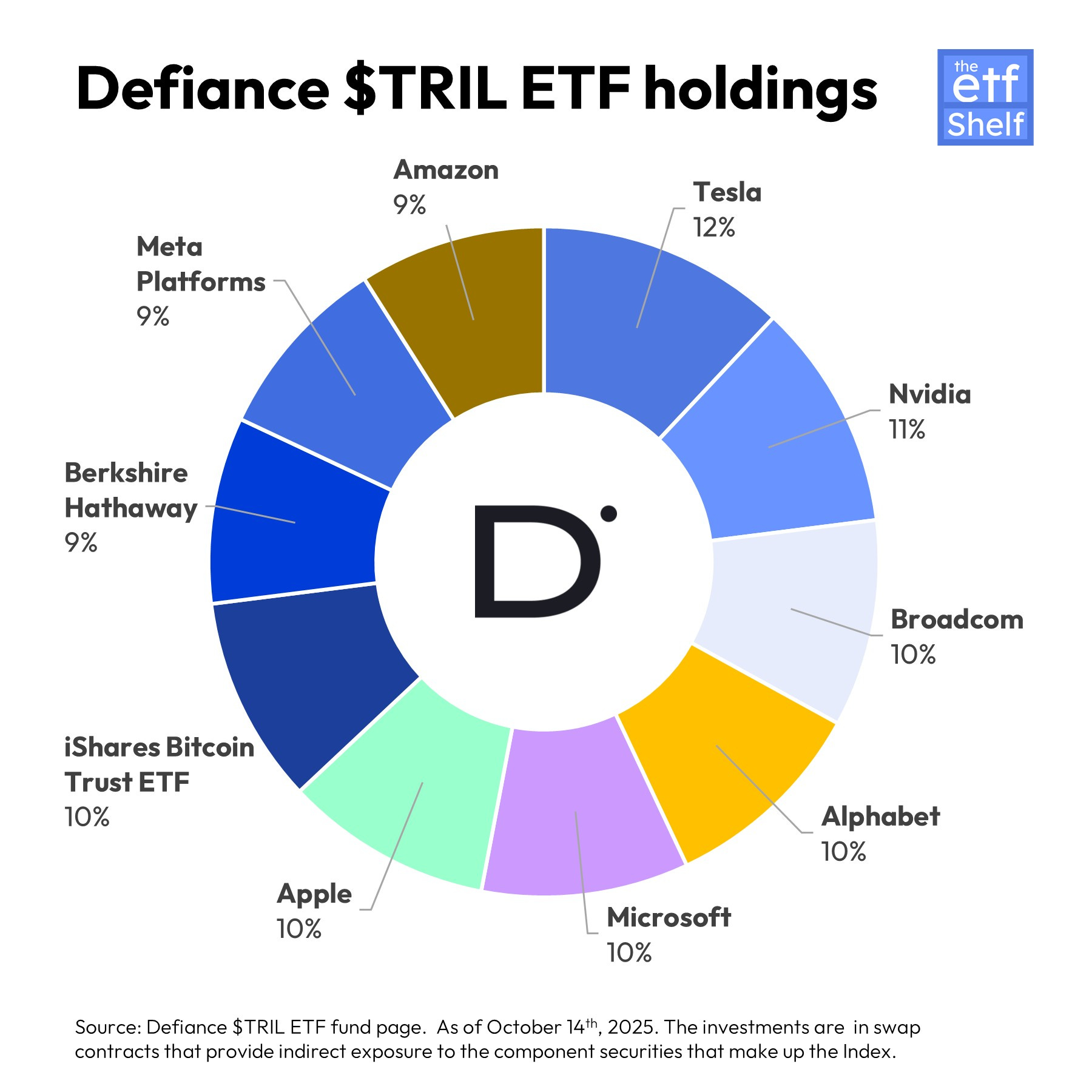
For now, that just means IBIT but could easily grow to include others.
I think this is a pretty fun product. It’s not insanely expensive like some of Defiance’s other offerings. 49 bps for an indexed product is on the steep side but not out of bounds.
I’ll put this mostly in the Good column as I like innovative products that combine asset classes like this.
Our second “We’ll See” is from Simplify.
They’ve partnered with VettaFi to offer a private credit ETF.
If you know anything about me is that I cover everything to do with private credit products fairly deeply.
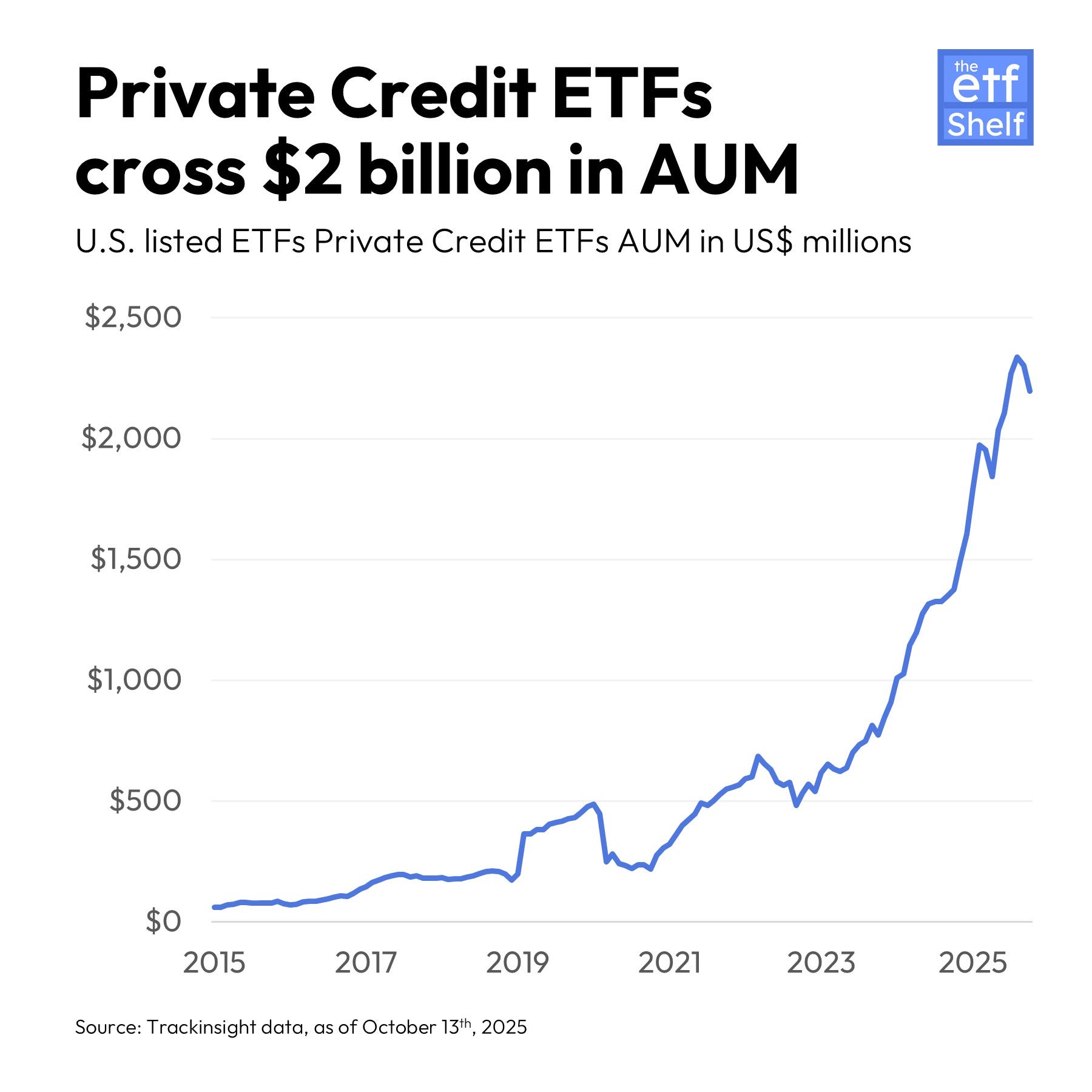
PCR brings something VERY novel and I think super cool to the table, it has an active credit hedging mechanism in the product. Simplify pioneered this strategy in their CDX (not that CDX) ETF.
It uses two bespoke fixed income indices (One quality and one junk) and uses them to create offsetting total return swap exposures. By going long the quality and short the junk, the ETF is able to hedge out some of the potential downsides when credit conditions tighten up.
The ETF gets their private credit exposure via business development companies (BDCs) and publicly-traded closed-end funds (CEFs) which is what about half of the offerings in the space utilize versus CLOs or direct private credit.
I prefer CLOs but these are an easy second choice and the most popular product in the space (BIZD) uses BDCs so who am I to argue! PCR has an expense ratio of 76 bps which is a bit high but I think it’s justified considering the sophistication of the product.
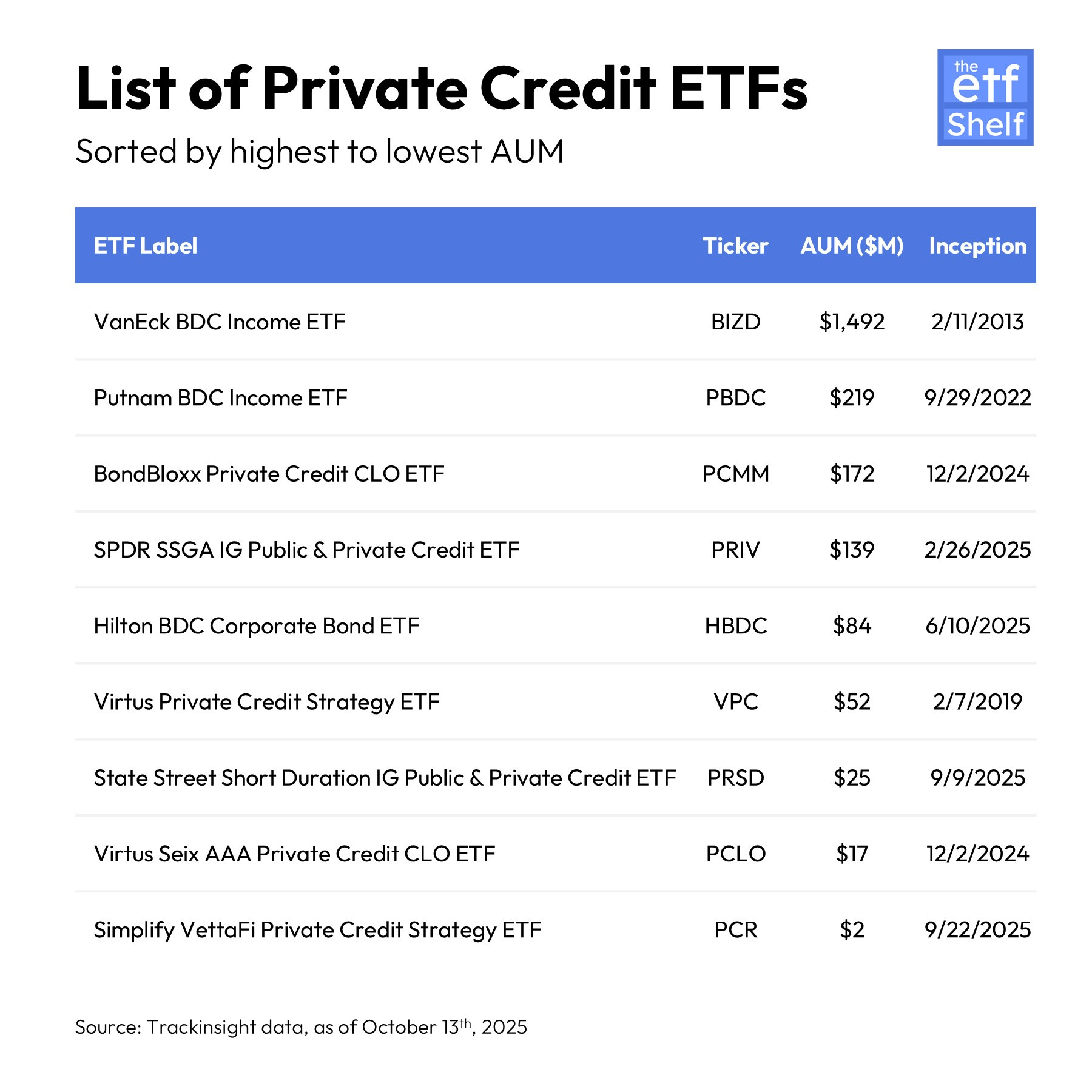
I know this is a pretty nerdy one but I’m giving this a hearty Good and hoping that Simplify can get some cash into this. I’ll be watching it closely.

I’ll try to keep a cadence of these going every month.
If you’d like to see me take a look at anything in particular, please comment.
I’m happy to dive into any ETF product that you’d like to see.

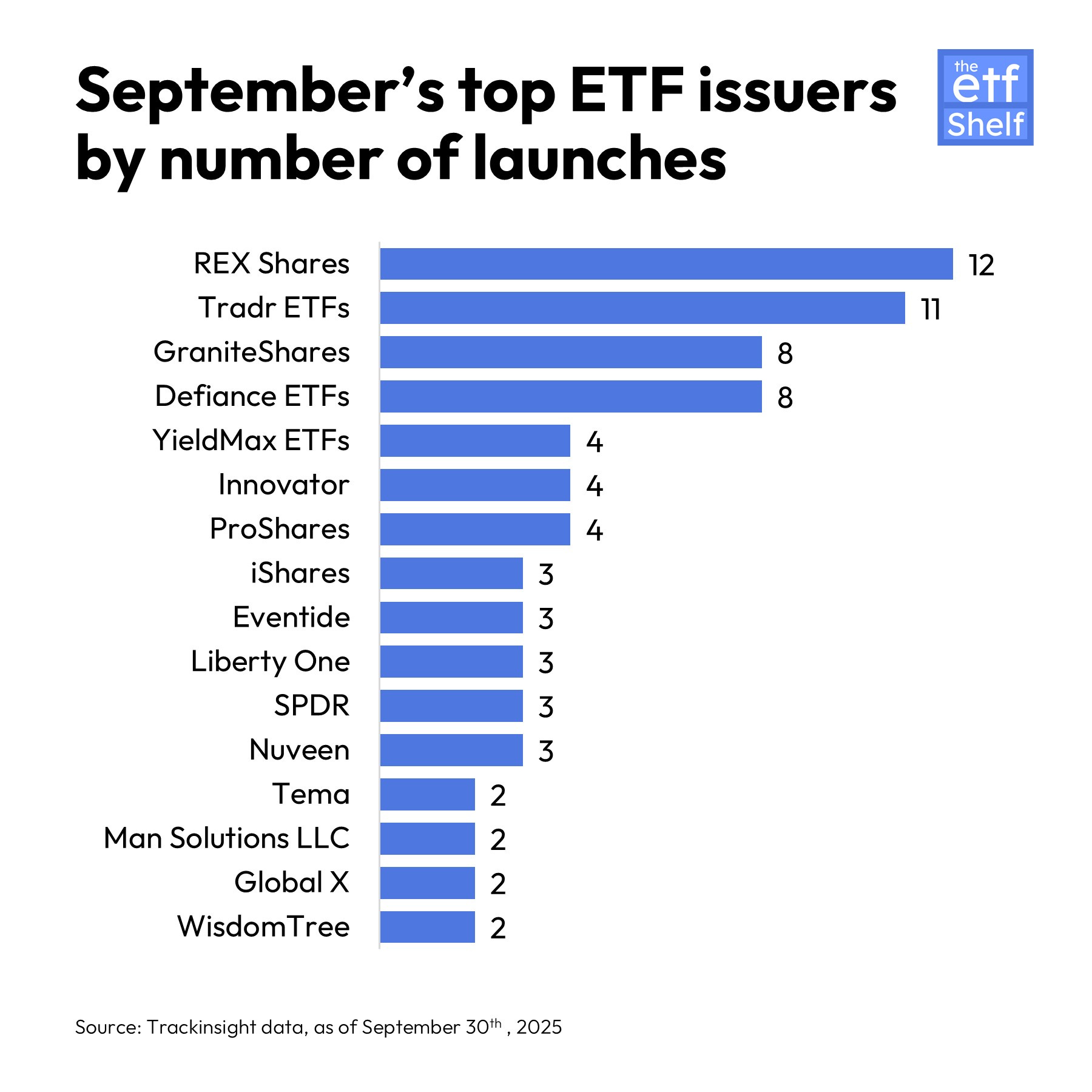
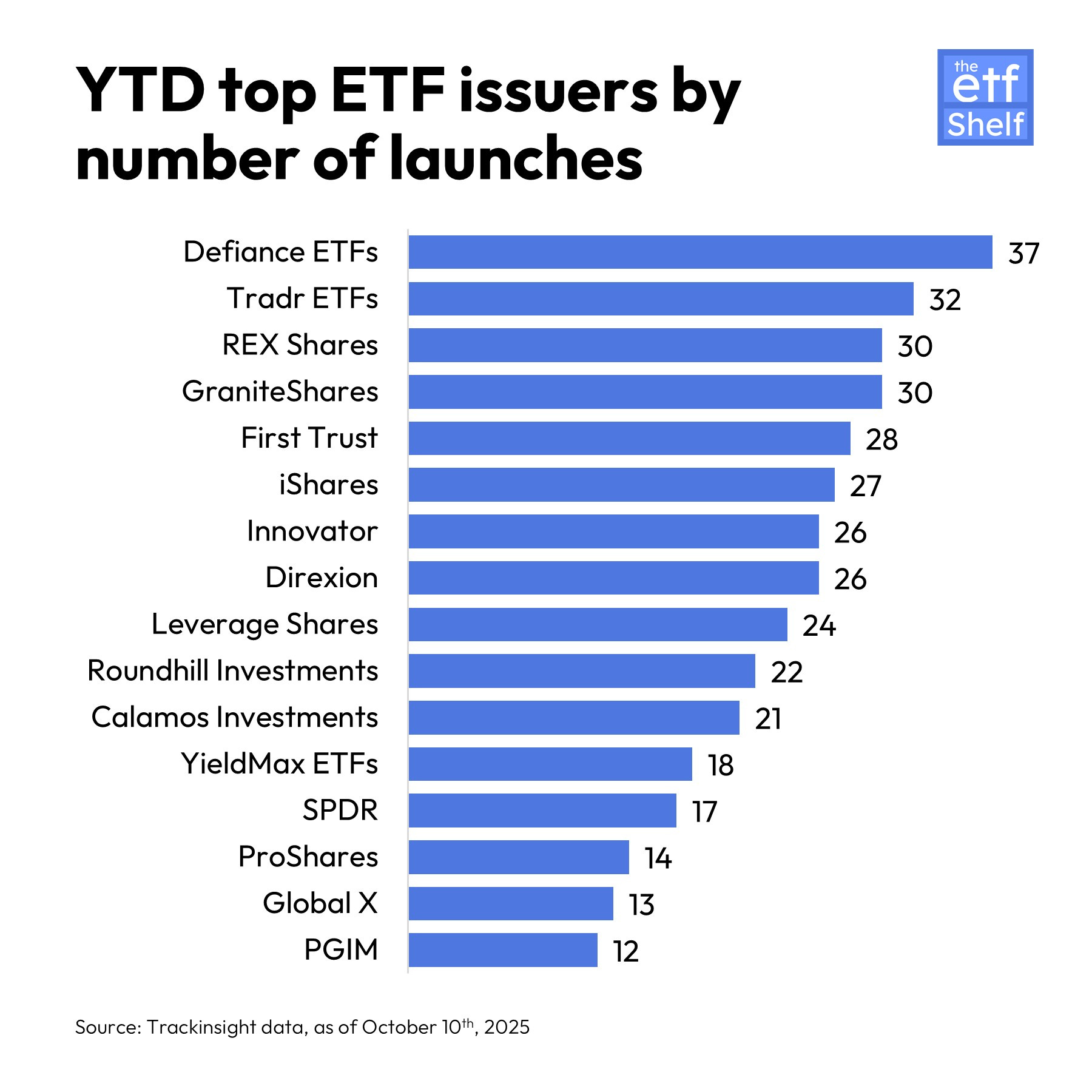
With the surge in leveraged and options-based single-stock ETF launches, it’s no surprise that Defiance, Tradr, REX, and GraniteShares rank among the year’s most active issuers.
As filings for new 3x long and short funds accelerate, expect these issuers to climb even higher on the leaderboard.
This newsletter is for informational purposes only and is not financial advice. The opinions expressed by any author or co-author are strictly their own and do not necessarily reflect the views of the publisher. We do not guarantee the accuracy of the information or calculations provided. It is essential to consult a qualified financial advisor before making any investment decisions. We are not responsible for any errors or omissions in the data. Investing in ETFs or any financial instrument involves risk, and you should conduct your own research. Past performance does not guarantee future results. By using this newsletter, you agree to these terms and conditions.
Comments
Nothing yet. Say the first thing.
Sign in to join the conversation.