
Can photography bear the burden of history?
I’ve carried this question in the back of my mind for years. But it crystallized this summer when I visited Catch the Spirit at the Brooklyn Museum. The exhibit, a showcase of photographer Consuelo Kanaga, left me considering the role of photography in our increasingly digital age.
We're living in a photography-first era. Our media consumption shifted from text to photos, then videos, and soon AI. Our textbooks can now show our world and cultures in a way that feels more tangible and realized than text ever could. A small computer in your pocket can take thousands of photos for you in a snap.
Photos used to be reserved for special occasions. You needed a professional to sit you down, light the scene, and take the snap. Then they needed to go develop the film in a dark room and hope the result looked good enough. What was photographed was whatever photographers and those who could afford them deemed valuable.
During my research process for this piece, I learned that the first American privacy laws were created because of instant photography. At the time, the fear was someone could “take” your photo. It was a new notion one’s identity could be captured and distributed with such ease.
Nowadays, the notion of photography and photographers has been democratized. We are all photographers and we are all photographed. What used to be a few hundred photos captured per hour now is closer to 60k+ per second in today’s world. Walking into Catch the Spirit, I thought about how our identities are “taken” each day we step outside. The photos where we’re passing by and trying to live our lives but our identities get flattened, turning us into background characters in someone else’s story.
Trillions of photos are now taken each year, but can this growing deluge of photos bear the burden of our history and society? Kanaga’s exhibit highlighted to me that it depends on who’s behind the camera.
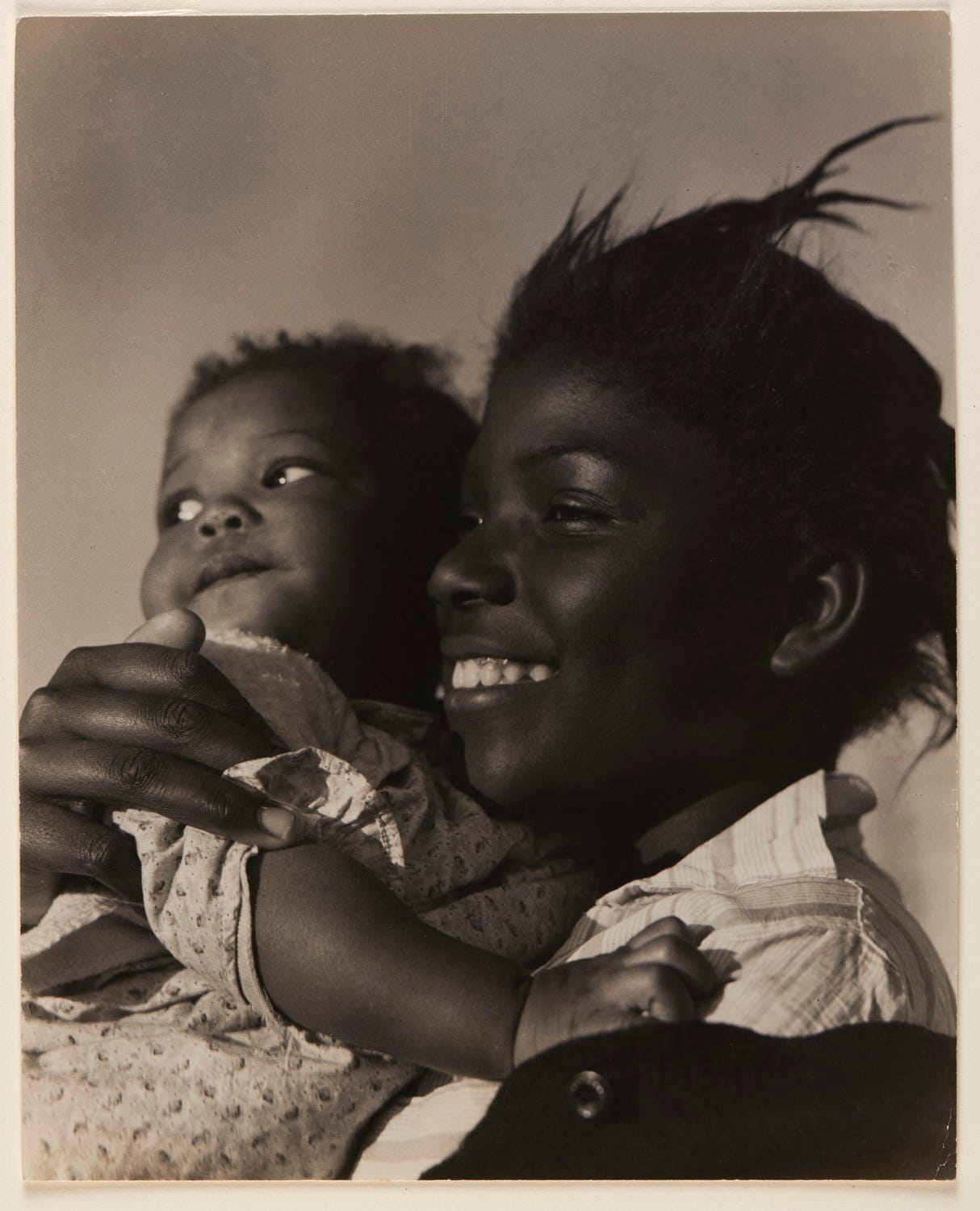
Consuelo Kanaga (American, 1894–1978) was a photojournalist (a rare role at that time for women) known for her modernist still lives and portraits. She often used her camera to confront urgent social issues of her time, from urban poverty to labor rights to racial terror and inequality. Her works that today might appear mundane were radical often catching the spirit of her subjects instead of how society tried to bucket them.
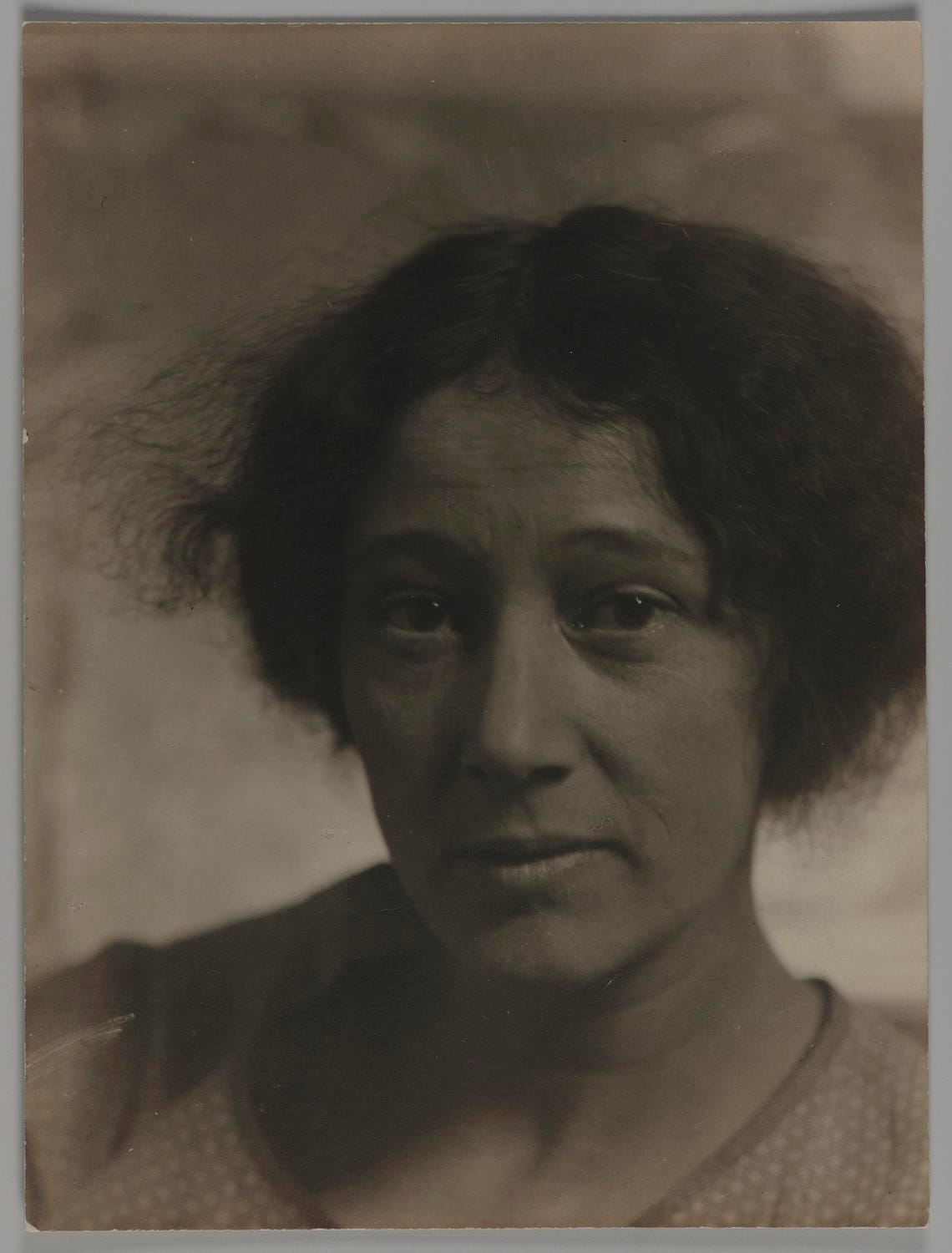
At first, I thought her photos were nice but not that special. People smiling, hands held, and joy. The photos depicted people from around the world. Many of the people around me casually walked through the gallery looking at the photos in between staring at their phones looking at the latest meme or snapping a photo with their partners and friends to show themselves in the museum.
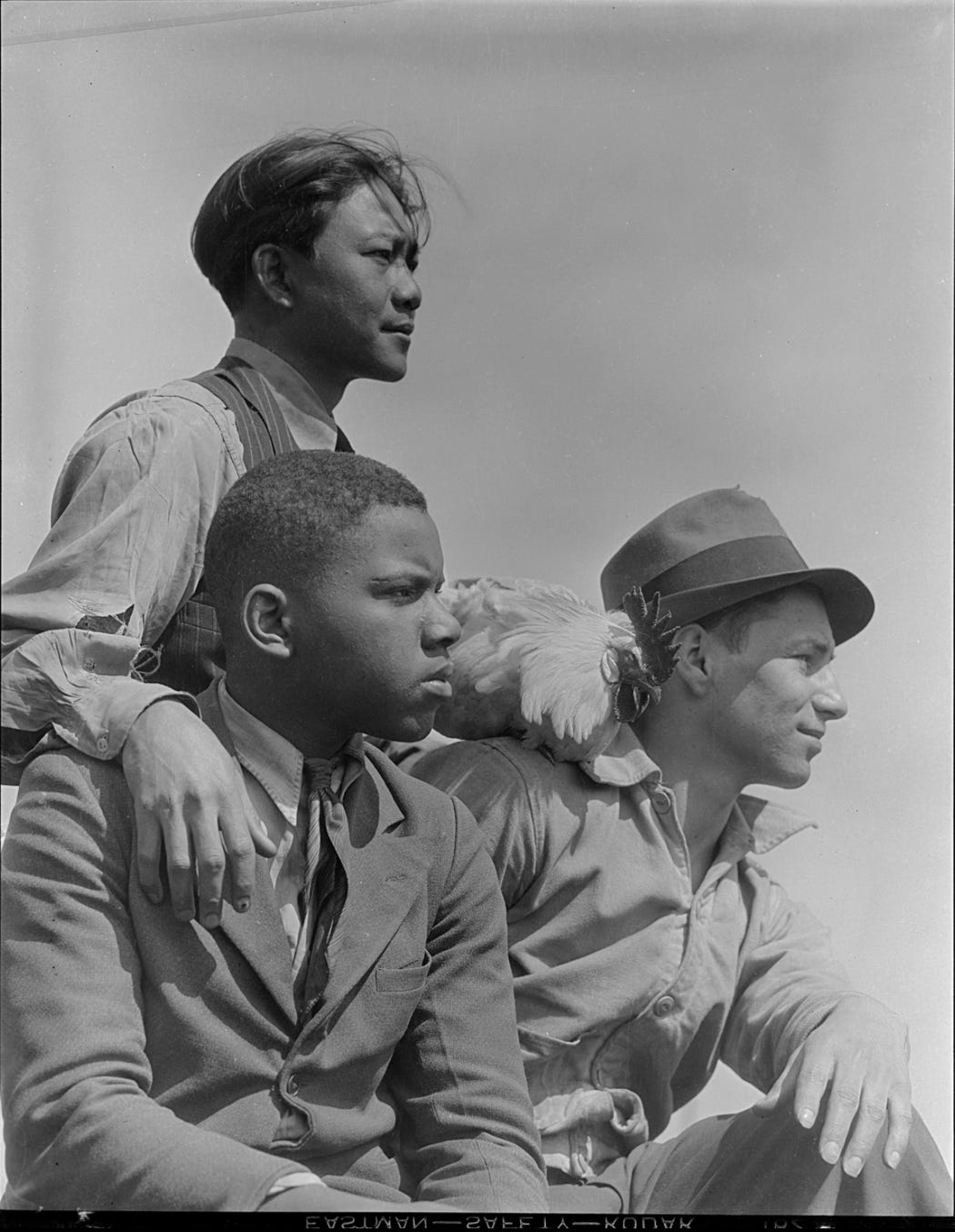
Yet as the others tuned out and moved on something nudged me to go back and take my time. I didn’t need to speed through the exhibit like I do making it through a set of Instagram stories. I’m so glad I did.
Going back to read the context to the photos, I was surprised by the effort required not only to take the photo but to create the works before me. Today, a photo appears instantly with one snap. For Kanaga, her work required immense focus and physical editing to realize and capture the spirit she intended to photograph. In particular, Kanaga “used flash as well as burning and dodging, darkroom techniques that manipulate exposure times in select areas of a photographic print, to increase the contrast between shadows and highlights. In addition to toning her prints with metals like gold, she added pencil or graphite to bring out features.”
While I was first exploring the gallery as if these photos took moments, in reality many took hours if not days of immense work from planning the photo shoot to realizing them to create the final result. On top of the technical planning and realization, was the act of deciding what to photograph and more importantly, how. In particular, Kanaga’s photo of Kenneth Spencer (1933) is one that absolutely changed my perspective.
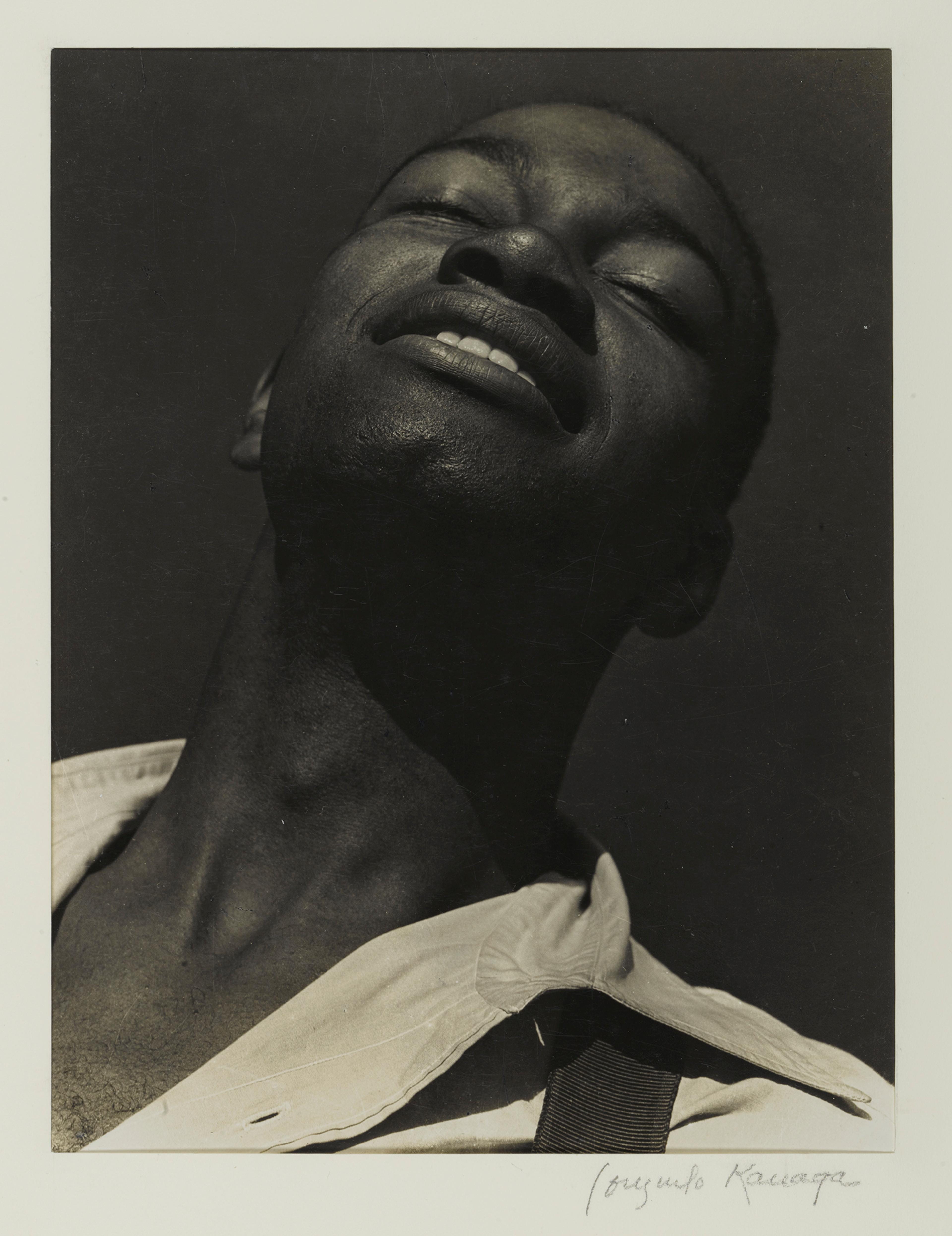
It’s a stunning photo. And it’s incredibly radical under the surface when you consider it was taken by a white woman (1) working as a professional photographer (2) taking a photo of Black man in the era of Jim Crow and immense American racism (3) where the Black man is portrayed happy and ebullient with even his shirt open and free. It may seem less radical today, but in that light you realize the power it took to create a photo I, and many others in the exhibit, had almost overlooked.
I’ve thought a lot about how a photo speaks a thousand words but also how what it speaks is dictated by who realizes said photo. I think of how as a kid, my classmates would think of the American founding fathers with pride and of their noble efforts but when I would share my Ghanaian heritage they’d assume it meant a lineage of poverty and desolation. It was deeply upsetting but what should we expect when the history books we have often display the former with distinction and pride and the latter with desolation and despair?
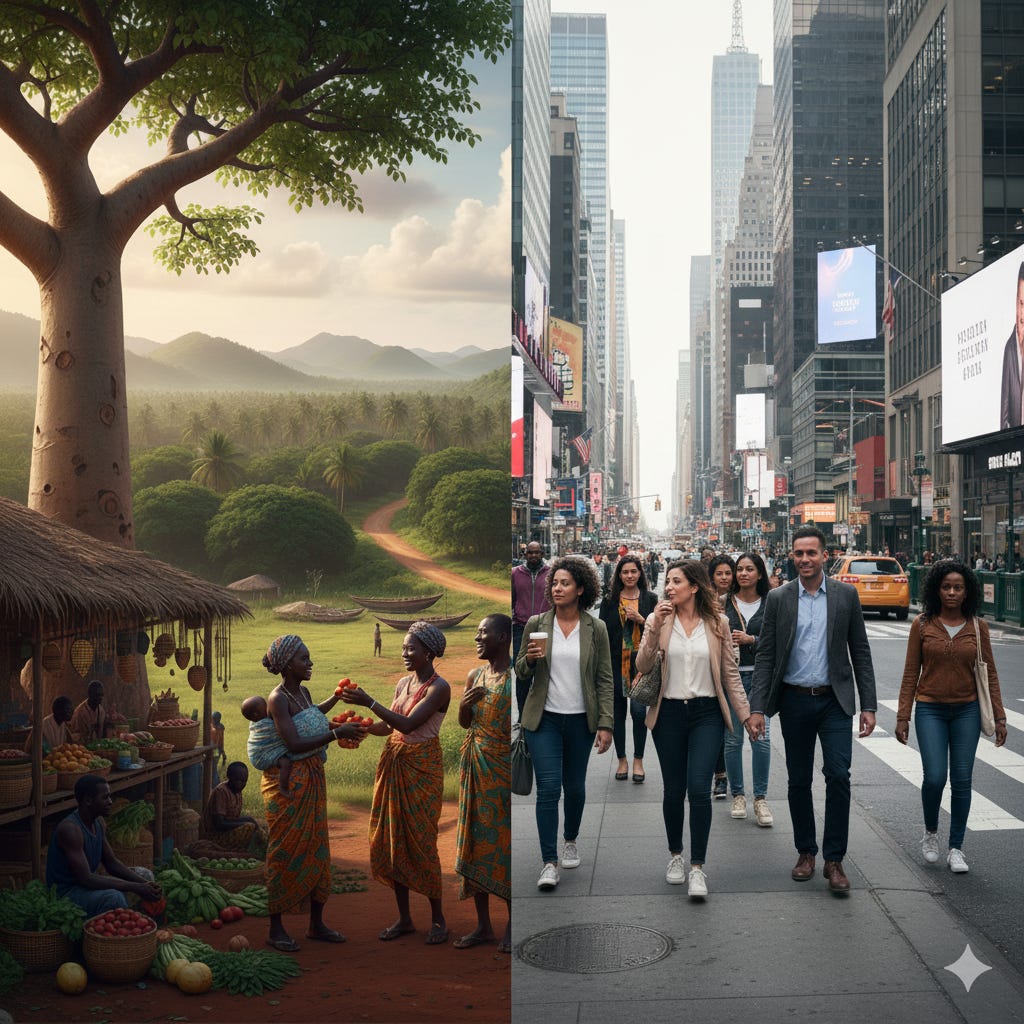
It would be nice to think AI image generation models could improve this. When I prompted Google Gemini to generate a photo of people in Ghana on the left and America on the right, the result was telling: Ghana appeared only as huts & markets, America as a bustling metropolis. Today’s AI can’t resist the very biases Kanaga challenged nearly a century ago — we’re still fighting the same battle, only now with algorithms instead of darkrooms.
Ease of access to photos means nothing if we’ve lost the ability to understand the context and power of a photo. Kanaga traveled across the U.S. and abroad, including Morocco, taking photos and capturing the spirit of the places she went in stark contrast to her contemporaries. In one letter she sent in 1927 she stated: “I am sick of seeing colored men and women abused by stupid white people.” A comical line today, she was already sharing views like this during a decade where lynchings and racial terrorism against Black Americans was the status quo. She could have kept quiet or kept her, at the time, radical views private, but Kanaga, inspired by the New Negro movements spearheaded by leaders like Alain Locke, introduced this into her works.
One of her earliest surviving works encapsulating this was Hands (1930). The photo is a close-up of embracing palms, one presumably belonging to a Black man and the other to a white woman.
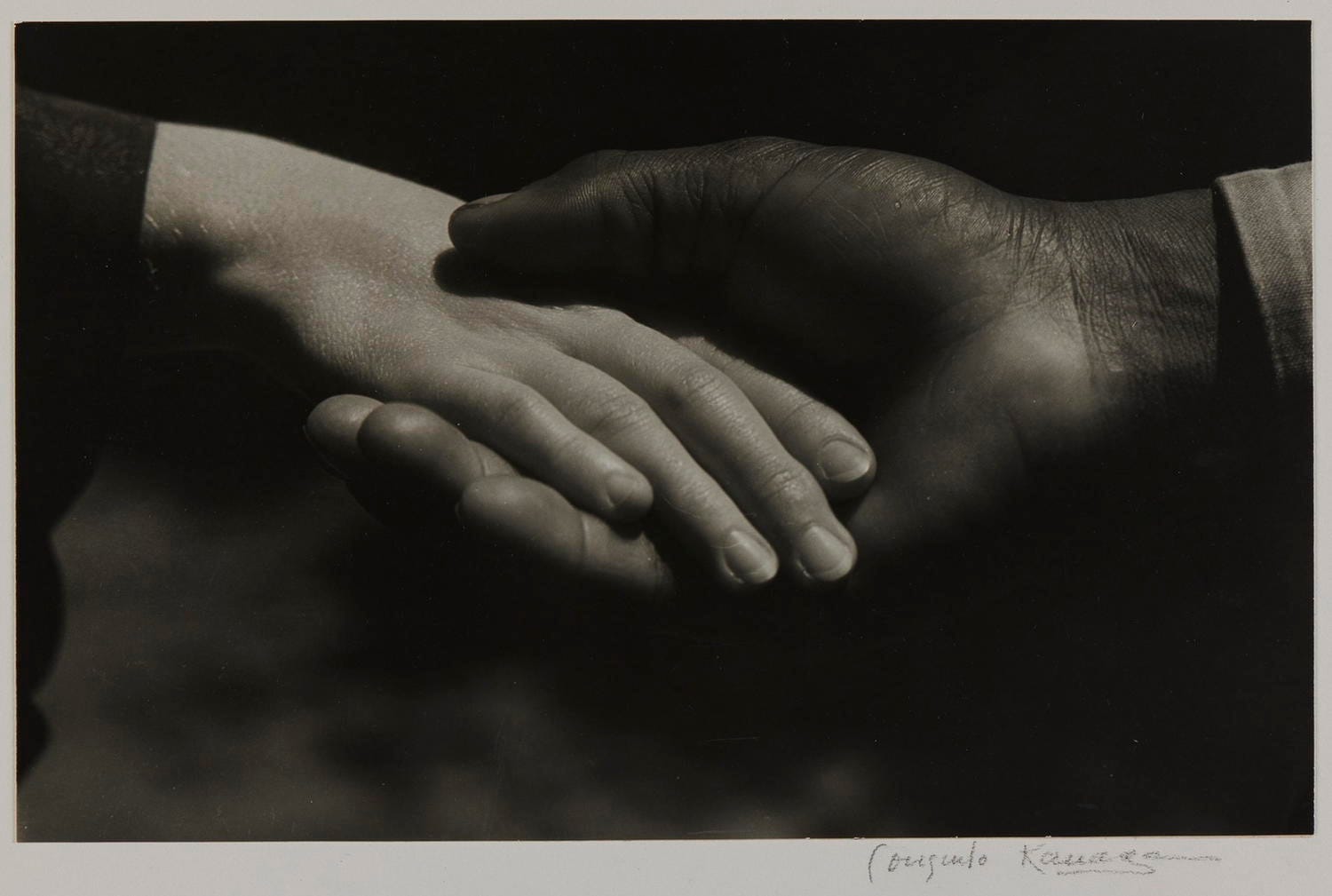
Kanaga’s uplifting photographs of Black sitters can be seen as political statements against racism, countering dominant narratives and asserting what she believed was the intrinsic beauty and equality of Black people. I think about the fact interracial marriage in America was illegal less than a hundred years ago. In South Africa it was illegal for a Black person working the same job as White person to be paid even the same salary until 1994. The photos we take and the ones we share matter. Photography has advanced rapidly to the point we think of black and white images as automatically meaning old but I’d argue none of these are that long ago in the context of our societies.
The idea of devoting time and resources to photograph a happy Black man was considered radical less than a century ago. And I never saw a “historical” photo like this until seeing Kanaga’s exhibit this summer. I’ve seen photos of Black individuals looking stoic in spite of the racism, hate, and death threats lobbied against them sure, but happy and living life? Not so much.
Kanaga’s vision and works have inspired monologues within me about what does it mean to “catch the spirit.” Photography will bear the burden of history but what matters more is ensuring we empower and highlight the people that are best working to push the medium forward as a tool to remind us that despite our differences, we are all fundamentally the same. We all deserve the right to be happy and be perceived as living in our spirit. We deserve to be represented with dignity. A photo may speak a thousand words, but only if we teach a new generation of photographers the power they hold.
The notion of catching the spirit can be harrowing because it requires a terrifying inner reckoning. Of acknowledging the world we live in versus the one we dream about. Of seeing who we want to be versus where we might be now. Of having to consider others and the second order effects over just how we feel in a given moment. Of what we want to see versus what shows up as light converts to the pixels that load up to make the digital photos of today.
But big changes don’t come from settling with the status quo. We are doomed to repeat history if we are unable to understand our past and push to change it. To take photos is a privilege. It’s an opportunity many before of us were gatekept from. And as we accumulate more photos every second, I encourage all of us to consider the burden of history woven into the photos we’ve seen and consider how we can continue to consider to catch the spirit of people and not our preconceived notions. Photography can and will change.
As I finish this post, Facebook has announced a new social feed where all content is AI-generated, and OpenAI just launched a similar product. These tools promise reach and novelty, but compared to Kanaga’s painstaking craft, they risk stripping away the context and intentionality that give photography its power. As AI-generated images flood our feeds, Kanaga’s lesson feels urgent: context and intentionality matter more than sheer abundance. Before you snap your next photo, ask yourself: What spirit am I capturing, and whose story will it tell?
No posts
Comments
Nothing yet. Say the first thing.
Sign in to join the conversation.