
For many teams, the words “Project Management Office” (PMO) conjure up images of bureaucracy, excessive documentation, and process for the sake of process. PMOs too often become known as the department of “no”—a place where ideas go to slow down.
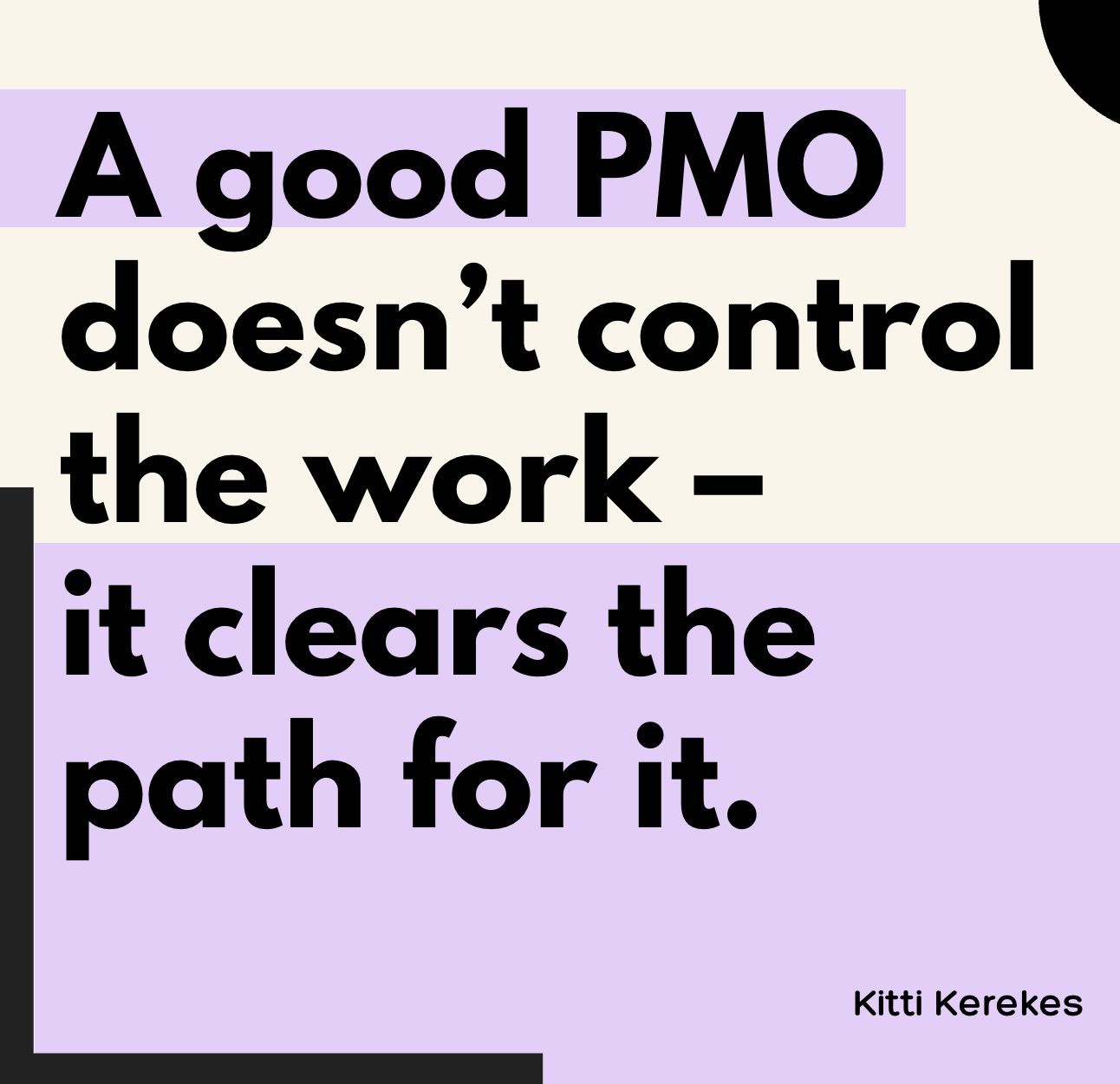
But at their best, PMOs don’t just manage delivery—they enable it. A good PMO doesn’t get in the way of work. It makes the work clearer, faster, and better aligned with what actually matters. It provides structure without stifling momentum.
The gap between a burdensome PMO and a high-functioning one is usually cultural, not just operational.
Thanks for reading Essentially Leading! This post is public so feel free to share it.
A good PMO works like a bridge. It connects strategic intent with tactical execution. It makes sure everyone is working from the same playbook, while leaving space for flexibility and judgement. It doesn’t just push templates and timelines; it asks smart questions, removes blockers, and elevates risks before they become disasters.
At its core, a good PMO:
Aligns projects with business outcomes, not just deadlines.
Offers tools and guidance without becoming dogmatic.
Supports project leads as thought partners, not gatekeepers.
Fosters visibility, clarity, and trust across teams and leadership.
It’s less about controlling the work and more about supporting the people doing it.
The most effective PMOs know that process should serve progress—not the other way around. That means regularly reviewing which processes are helping and which are simply inherited legacy rituals.
In Reinventing Organisations, Frédéric Laloux talks about how self-managed teams in progressive companies adapt structure based on real-time needs. The lesson here: flexibility doesn’t mean chaos—it means maturity. A good PMO creates just enough scaffolding to keep things moving, but not so much that it paralyses the team.
There’s a helpful parallel in the world of software development. Agile frameworks like Scrum and SAFe offer structure, but they're intended to be adapted, not obeyed rigidly. Similarly, PMOs work best when they act as enablers, not enforcers.
Many PMOs focus on enforcing compliance—standard formats, mandated tools, recurring reporting cycles. These things have value, but they shouldn't be the main event. When a PMO is focused solely on “are you doing the process?”, it misses the bigger question: is the process helping you succeed?
Great PMOs flip that script. They ask, “What’s getting in your way, and how can we help?” They prioritise coaching over checking. They become strategic partners, helping teams connect the dots between day-to-day delivery and longer-term business priorities.
A good PMO works like a bridge. It connects strategic intent with tactical execution.
The PMO at Google Cloud, for example, has famously shifted toward enabling rather than enforcing, focusing on stakeholder alignment and delivery clarity rather than project policing. This mirrors what McKinsey found in their research on transformation offices: the most effective ones operate more like internal consultancies, not command centres.
If you’re involved in shaping a PMO—whether you're running one or working closely with one—these resources are worth digging into:
Measure What Matters by John Doerr explores how OKRs can align teams and shift focus toward meaningful outcomes.
Project to Product by Mik Kersten reframes how organisations manage work, advocating for flow metrics instead of legacy project KPIs.
The PMO Strategies Podcast hosted by Laura Barnard is a goldmine for modernising PMOs and aligning them with business strategy.
Gartner’s research on adaptive project management offices offers practical insights for evolving beyond traditional models.
You know a good PMO not just by what it delivers, but by how people feel working with it.
Teams trust it.
Leaders rely on it.
It creates clarity without creating fear.
And above all, it remembers that its job is not just to deliver projects—it’s to deliver value.
If you’ve worked with (or inside) a PMO that really worked—or one that didn’t—I’d love to hear your take. What made the difference? What should we rethink or reinvent? Drop a comment or hit reply—I’m all ears.
No posts
Comments
Nothing yet. Say the first thing.
Sign in to join the conversation.