
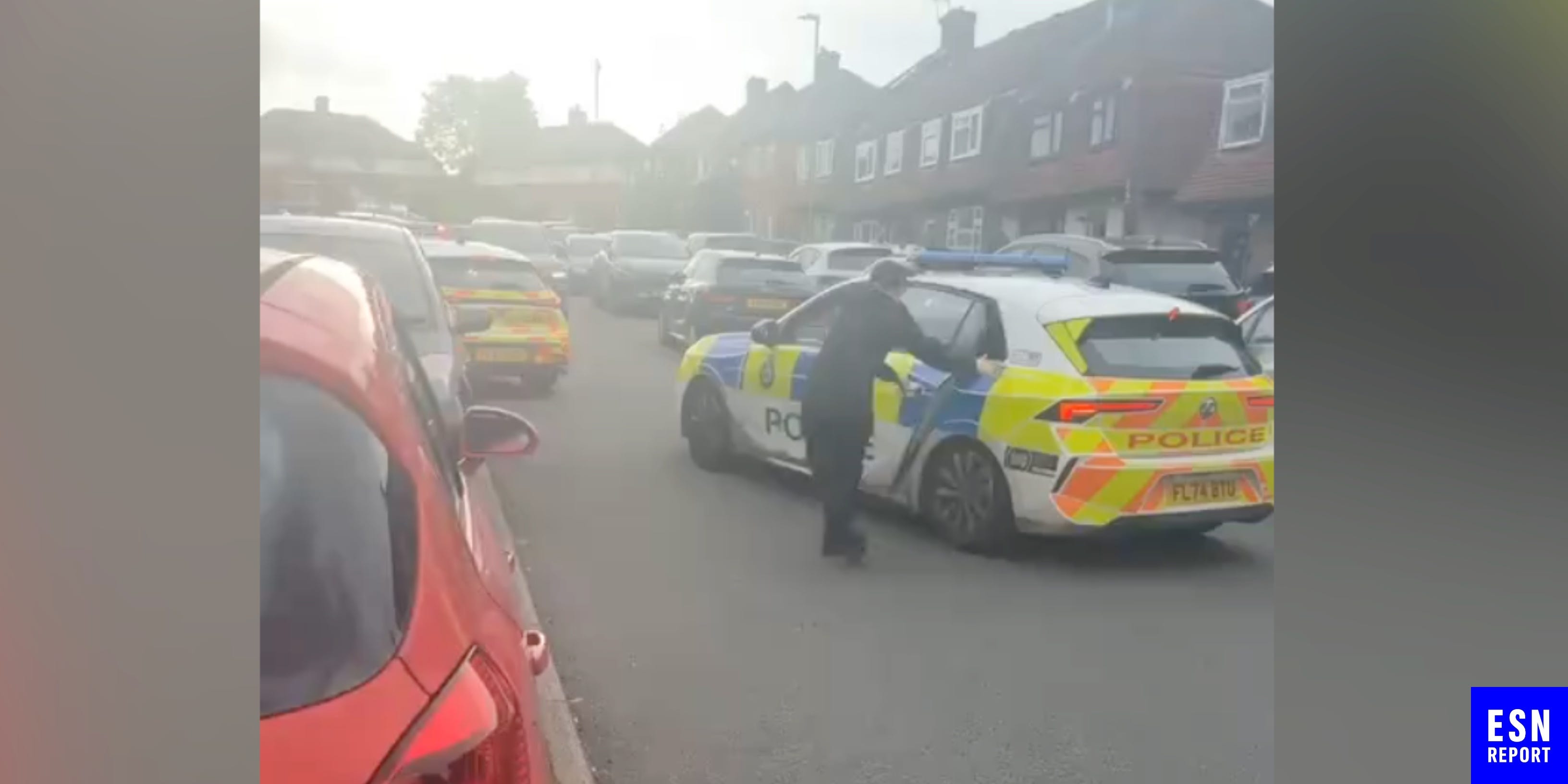
A short video, sent to us by one of our readers, shows something that, during my own time serving on the thin blue line, I remember people trying, but never achieving. Trying to let prisoners, or detained persons, out of police vehicles.
More often than not, it was the friend or family member of the DP who was trying to let the criminal escape back into the community. But occasionally, professional bystanders would also try to set wrong’uns free. Would they have tried if their loved one had been a victim of crime? In today’s Britain, who knows.
In the short clip, a young male walks up to the near-side rear door and pulls the handle. Inside, his pal, who had just been arrested, is sitting there in cuffs (front stack)
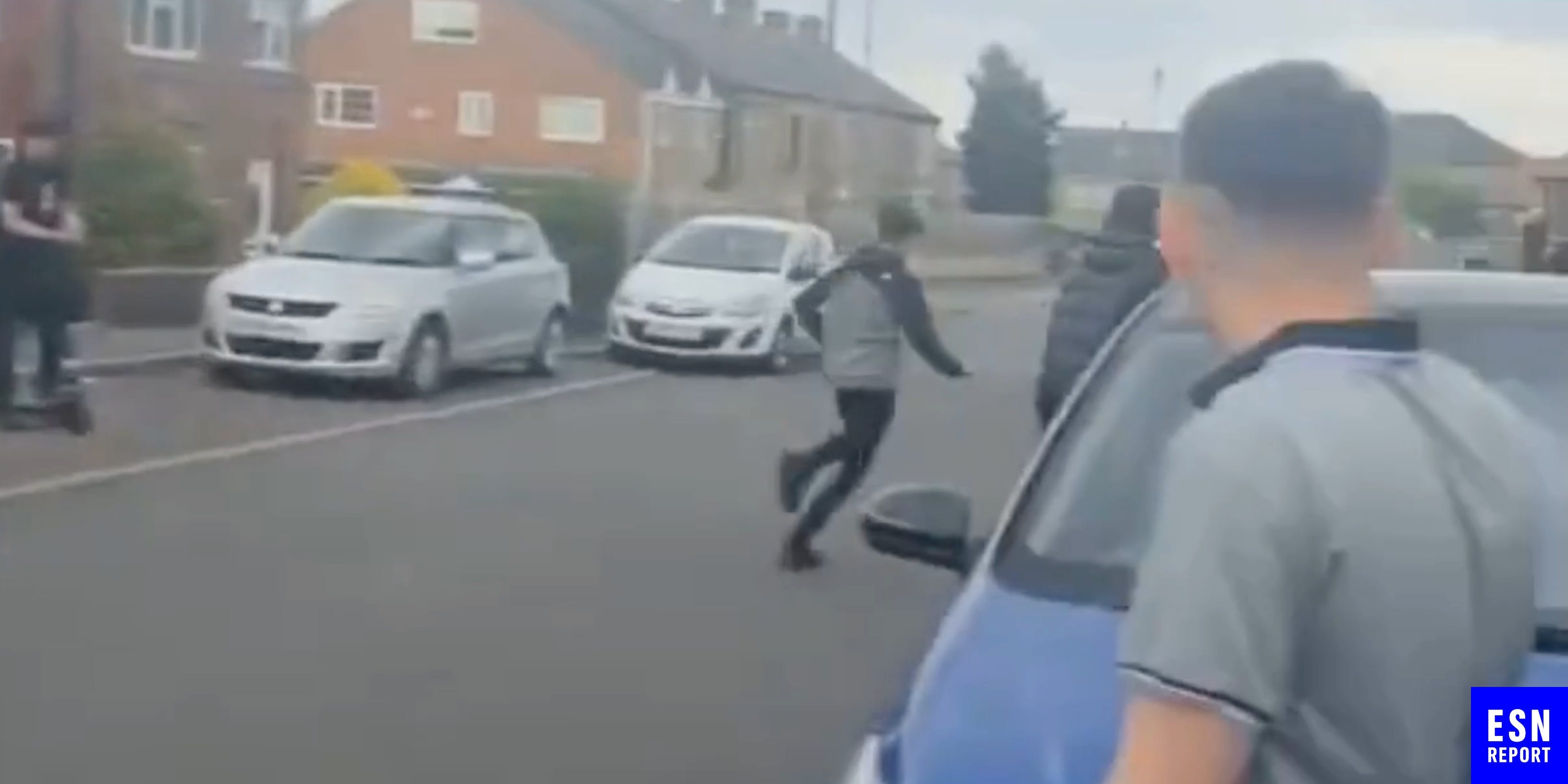
The door opens, and the DP see his opportunity to run for the hills, so he gets out, still cuffed, and makes off, cheered on by the other people who had gathered to watch the police out in the wild.
The front seat passenger in the police car is the first officer to chase after the fleeing male. But by the time the police officer exits, the cuffed male is already out of sight.
As a former Met Police officer who spent 9 years on a 999 response team in east London, I am not surprised by the audacity of the male who set the prisoner free. Technically, he could be arrested for several different offences.
However, the judicial system being what it is at the moment, the 18+ hours of paperwork that would go into arresting the male who assisted the suspect will probably not be worth the slap on the wrist that he would end up getting.
When I first saw the clip, a few things stood out. And, as many of our readers currently serve in the emergency services family, or indeed are supporters of our emergency services, I think that it is worth spending a few minutes unpacking what happened and why.
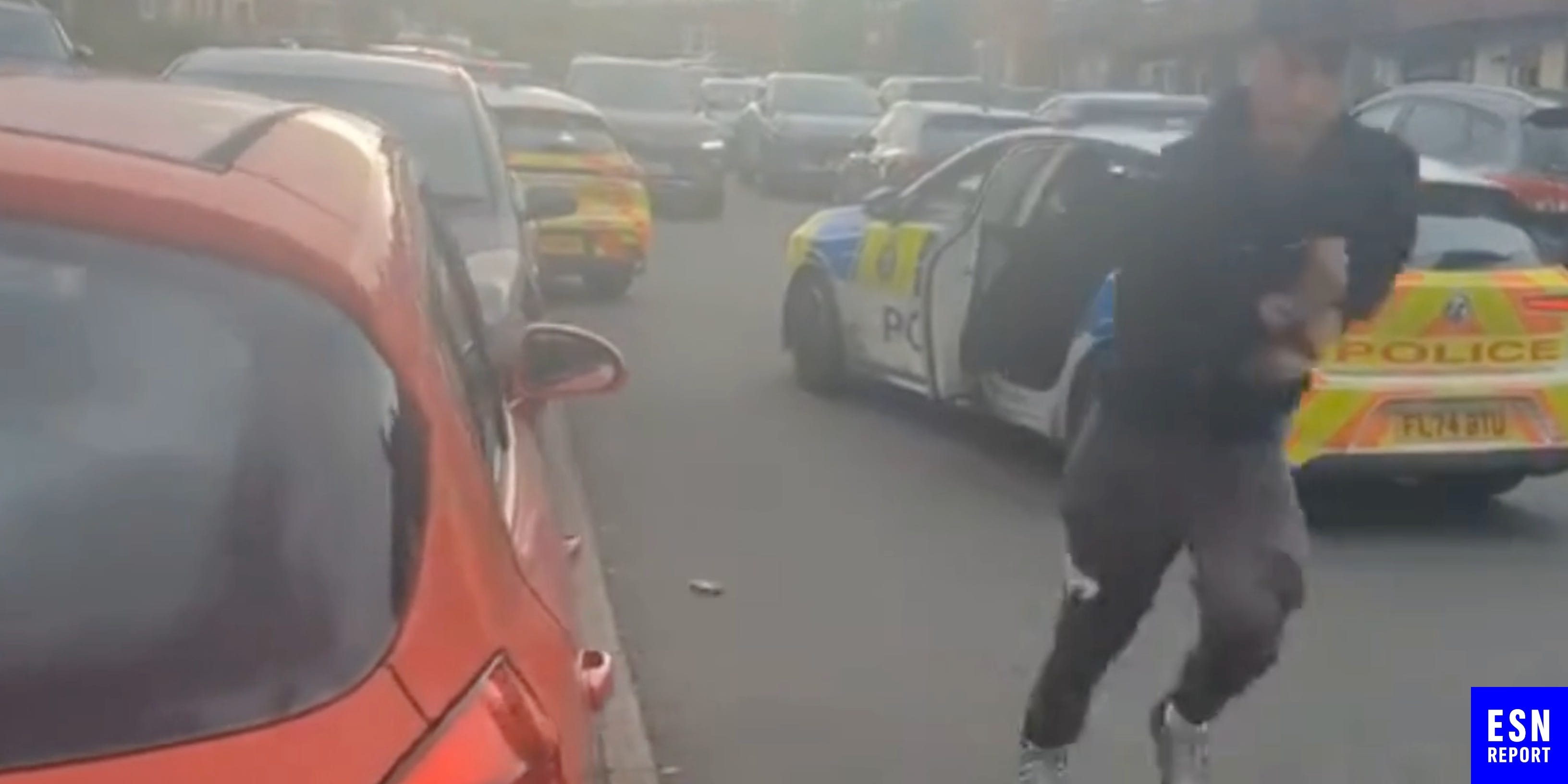
One of the first things that I noticed was that it was not the officer who was in the back of the police car who was the first to exit. I doubt very much that the DP was allowed to sit in the back of the car on his own, although I could be wrong. But let’s assume that there was an officer in the back of the car.
The first police officer to give chase was the chap who was in the front passenger seat of the police car.
In 99.9% of police vehicles I transported prisoners in, the rear doors were fitted with child locks. So, when engaged, they cannot be opened from the inside, which explains why the front-seat passenger, or ‘operator’, was the first to run after the wrong’un.
So, this potentially explains why the officer in the back did not get out first, despite probably being the first police officer to see what was going down before the prisoner legged it. However, that would not explain why the male was not grabbed before he made good his escape.
But the bigger point, for me at least, is about what comes next…
Most police cars come with an auto-lock security feature, which is particularly useful for when no van is available to transport prisoners. When the car drives off, the doors lock automatically. It stops anyone from the outside from being able to open a door and, well, let a prisoner escape.
I am not here to hammer the officers who were in this clip. I have been in this situation myself, as I am sure many front-line police officers who have spent a decent bit of time on the front line also have.
By the time the DP is in the back of the car, you have already been through the process of responding to the call, working out what is happening on the scene, i.e. who is a victim, informant or witness and who needs arresting.
You have already maybe got into a roll-around. The adrenaline might have piqued and might now be slowly seeping back out of your system, replaced instead by fatigue, especially if you are ten hours into a 12-hour shift where you have not even had the chance to get a break.
So, the auto lock feature on your car is definitely at the top of your mind in situations like this. In the video, it looks like there was the potential for a hostile crowd to develop, so leaving the scene without having to worry about your windows being put in with bricks becomes more of a priority.
But, of course, the video is a very good and very real reminder of why the auto-lock feature should be engaged when you are forced to convey a prisoner back to custody in a police vehicle that is not a station van.
No details have come out, or been made known to us by the person who sent us this video, regarding where or indeed when this happened. We do not know what the person in the back of the car was arrested for, or why he was detained.
We also do not know if he was caught and taken back to custody. However, the chances of a male being able to run away whilst cuffed are very slim. And that comes from personal experience (being the police officer chasing, not the person who is cuffed!).
Either way, you can imagine that the arresting officer probably had to make their way to the nearest Mr Kipling outlet to pay his or her dues for (losing) a prisoner, albeit temporarily.
If you would like to see the video or support our experience-based reporting, please become a paying subscriber, as the video itself is under the paywall below.
We aim to talk about the front line of the emergency services based on our experience of serving, rather than the current ‘reporting’ being churned out by the MSM who have no experience of serving on the front line of the emergency services.
If you would prefer not to become a paying subscriber, then no doubt the video is out there doing the rounds on social media somewhere. And remember, if you have got a video that you would like us to take a look at, then feel free to email our team via contact@emergency-services.news
PAID SUBSCRIBERS CONTINUE BELOW
The article continues below for paid subscribers.
The full reader-submitted video, which you can watch below
Why the auto-lock gets missed even by experienced officers, and the cognitive load problem no one talks about
What the likely consequences are for the officers involved: misconduct, words of advice, or something else entirely
Front stack versus rear stack: when custody officers choose each option, and what that decision means if your prisoner decides to run
A plain-speaking reminder from a former officer on the one habit that makes this a story about someone else
Comments
Nothing yet. Say the first thing.
Sign in to join the conversation.