
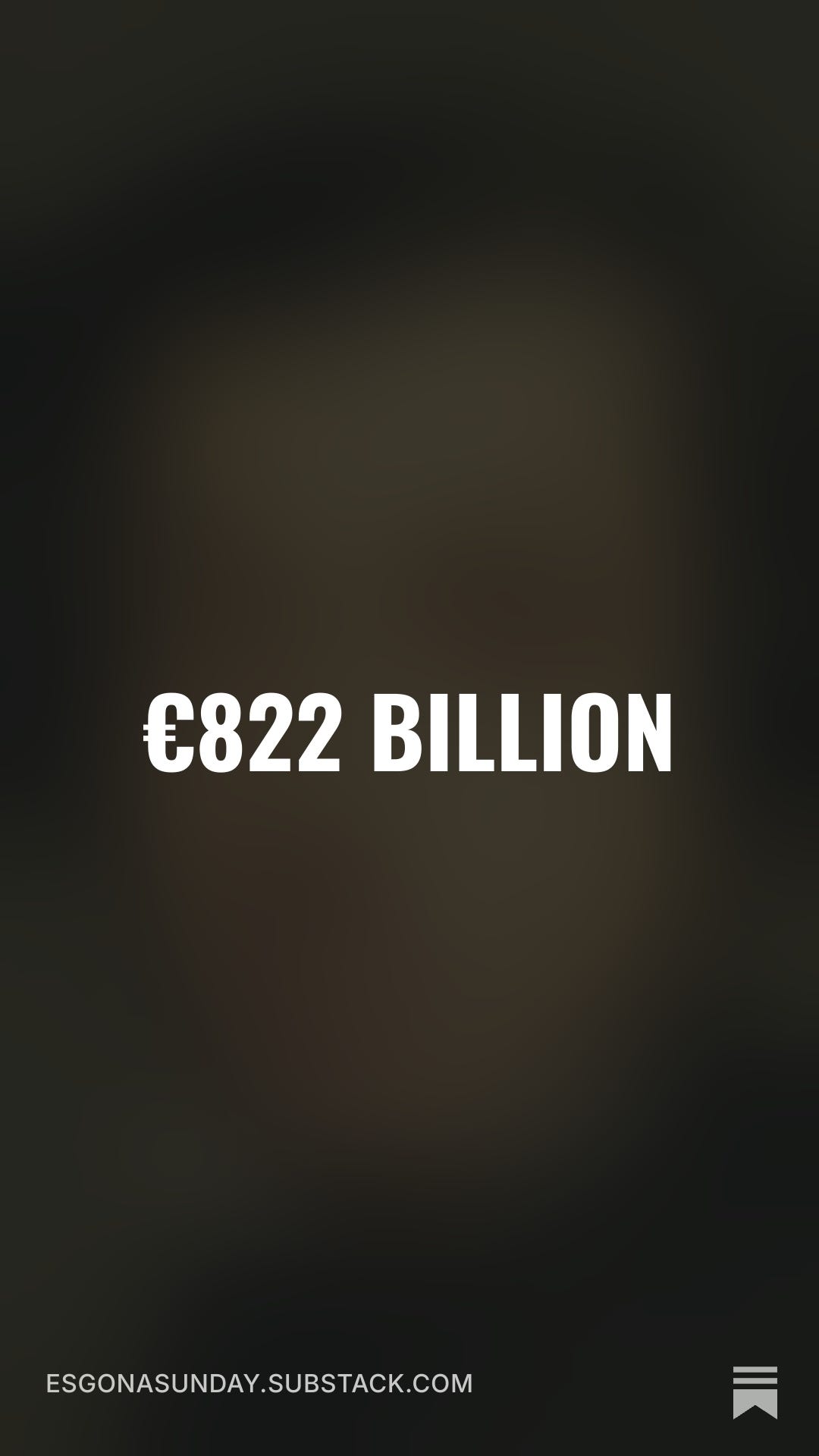
822 billion. That’s the damage bill Europe has run up from floods, storms, droughts and heat since 1980 — and a quarter of it, €208bn, landed in just the last four years. €180bn: the cumulative hit to the EU economy from this single summer’s heat and fire, according to Triodos Bank — nearly wiping out the bloc’s entire 1.1% growth forecast for the year. €15.6bn-€19.1bn: this season’s wildfire losses alone in Spain, France and Greece, on AccuWeather’s full accounting. €36bn a year: what climate change could cost London alone by the 2050s. $100bn: global economic losses from natural catastrophes in the first half of 2026 by itself. And the trend line on all of it points one direction — up, at a structural 5-7% a year, according to Swiss Re.
Governments are covering almost none of it. Less than 20% of Europe’s climate losses are privately insured, under 3% in Bulgaria, Croatia, Cyprus, Lithuania, Malta and Romania. The other 80%-plus lands on the state by default. Meanwhile the EU is spending €29bn a year on adaptation against an EU-estimated need of €70bn — a shortfall of more than €40bn every single year, compounding.
This is not a weather story. It’s a public-finance story.
Bruegel, the Brussels think-tank, has a name for where this leads: the climate-sovereign doom loop. It runs like this — climate damage hits a government’s finances; weaker finances mean less money for adaptation and flood defences; less adaptation means the next disaster costs more; costs escalate again. It’s the sovereign-bank doom loop of the eurozone debt crisis, replayed with wildfires and heatwaves instead of bad mortgages. The European Central Bank has already flagged the mechanism in its financial stability work — and warned that with insurance this thin, the state becomes the insurer of last resort, whether it planned to be or not.
Comments
Nothing yet. Say the first thing.
Sign in to join the conversation.